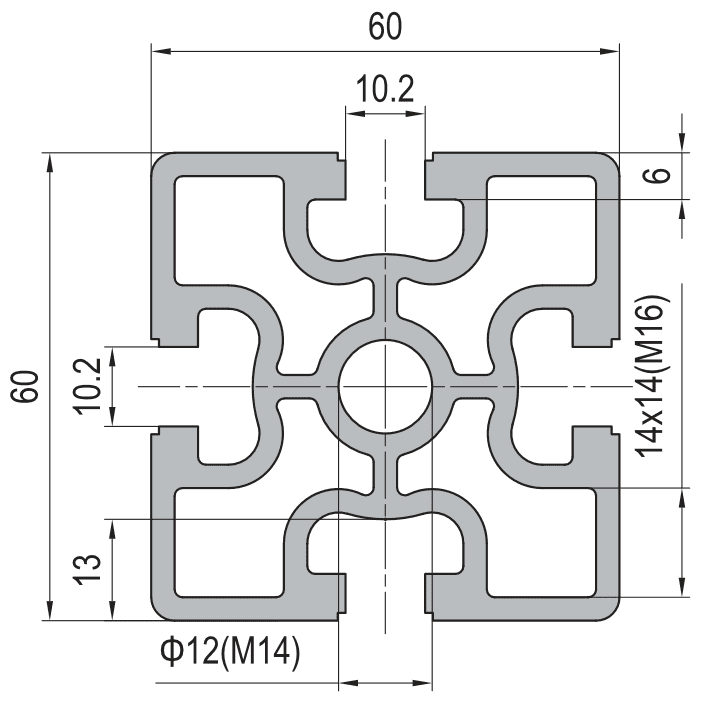
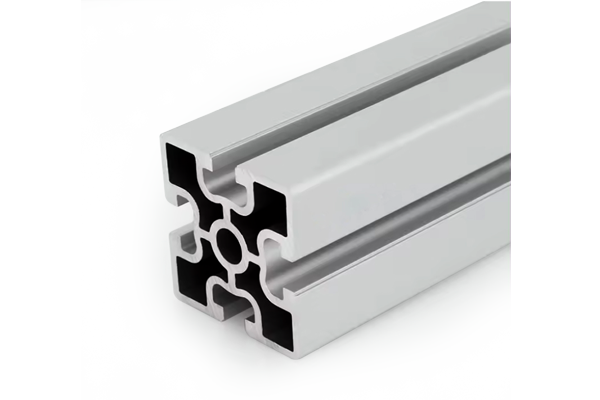
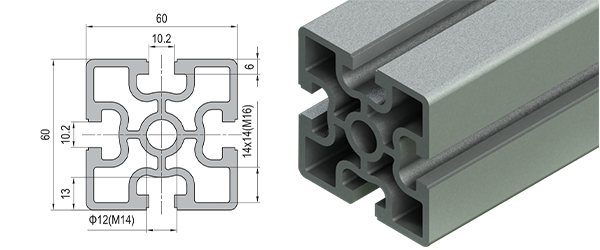
60 series aluminium profiles are slotted extrusions on a 60 mm module with a 10 mm T-slot, in sizes such as 60×60, 60×120, 120×120 and 120×240. They are used for machine beds, heavy gantry structures and large frames where the section has to be deep enough to keep a multi-metre span straight. They take M8 and M10 fasteners and are assembled by bolting rather than welding.
Below: how a machine bed differs from a frame, when aluminium is the better answer than a steel weldment, and the design points that decide whether a large bed stays accurate.
A machine bed is not a frame
A frame holds things in position. A bed has to do three more jobs at once, and each of them constrains the design.
- It carries the process loads — cutting forces, accelerating masses, vibration from a spindle or a drive — not just static weight.
- It provides the datum for the machine geometry. Rails, bearing faces and mounting pads are located relative to the bed, so the bed's flatness and stability set the machine's accuracy.
- It manages vibration. Aluminium has low internal damping compared with cast iron, so a bed has to be made stiff and heavy, or filled, or isolated, rather than relied on to absorb vibration by itself.
That third point is the one most often missed. A bolted aluminium bed can be every bit as stiff as a steel one, but it will ring longer unless mass or damping is added. Practical measures are to fill closed sections with a damping material such as epoxy granite or dry sand, to add mass low in the structure, and to keep the structure closed rather than open.
The common sections
| Section | Slots | Typical role | Notes |
|---|
| 60×60 | 4 | Posts, brackets and general members of a large structure | Available in light and heavy walls |
| 60×120 | 6–8 | Machine bed rails, gantry beams, platform main members | The most-used section in the series |
| 60×180 / 60×240 | 10–14 | Long bed rails and deep beams | Depth in the bending plane replaces a larger square |
| 120×120 | 8 | Columns, heavy bases, machine corner posts | Stiff in both directions |
| 120×240 | 12–16 | Structural beds and heavy gantry columns | Compare against a welded steel weldment before specifying |
Aluminium or steel for a machine bed?
This is the decision that matters at this size, and it is worth making explicitly rather than by habit.
| Criterion | Bolted 60 series aluminium | Welded steel weldment |
|---|
| Stiffness per kilogram | Higher — aluminium sections are deep and light | Lower per kilogram, but steel is cheaper per kilogram |
| Damping | Low; needs added mass or filling | Better inherently; cast iron better still |
| Re-configurability | Excellent — unbolt and re-use | None once welded |
| Machining after assembly | Needs a large machine; usually done on sub-assemblies | Same limitation, but weld distortion must be relieved first |
| Corrosion | Anodised or mill finish, no painting required | Requires painting or galvanising, and fails at weld seams |
| Lead time and logistics | Shipped flat, assembled on site, no welding skill needed | Fabricated and stress-relieved before machining |
| Best for | Machines that will change, prototype and low-volume builds, clean environments | Permanent high-volume machines with high dynamic loads |
Practical point: the deciding question is usually whether the machine will change. If the bed will be re-configured within its life, a bolted aluminium structure pays for itself the first time it is modified. If it will not, a steel weldment is normally the cheaper and better-damped answer, and no amount of clever detailing changes that.
Designing a bed that stays accurate
Four rules come up on almost every large aluminium bed.
Separate the structure from the datums
Do not use the extruded slot as a locating feature for rails or spindles. Bolt a machined steel or aluminium plate onto the bed and machine the datums into that plate. The profile provides stiffness; the plate provides accuracy. This also makes the datums replaceable if they wear.
Close the section
An open structure twists; a closed one does not. Where a bed is built from separate members, adding end plates and intermediate diaphragms converts an open frame into a torsionally stiff box for very little material. This is the single most effective change that can be made to a large bolted structure.
Design the feet as part of the bed
A machine bed rests on three or more points. Three points define a plane and never rock; four points almost always do. Use levelling feet at a three-point or a three-plus-levelling arrangement, and decide at the design stage whether the bed will be grouted or isolated from the floor, because that choice affects the vibration path.
Plan the machining sequence
Datums should be machined after the structure is assembled and bolted, not before. A sub-assembly machined flat and then bolted into a frame that pulls it out of flat has lost its accuracy. The normal sequence is: assemble the structure, check the diagonals, then machine the datum plate in place or bolt on a pre-machined plate that has been checked after assembly.
Assembly and site work
60 series structures are almost never shipped assembled. The normal arrangement is marked sub-assemblies with the matching hardware, cut to a cut list, with end taps and mounting holes already machined. Two practical points reduce site risk. First, tolerance the diagonals of each sub-frame rather than only the member lengths — a frame is square when its diagonals are equal. Second, use two load paths at every structural joint; at this scale a single anchor connector is not sufficient, and a connector plus a joining plate is the normal arrangement.
Finishing
Satin anodised clear or black is standard for anything that will be handled, cleaned or seen. Mill finish is used where the structure will be painted on site or concealed, and is significantly cheaper on large members. Because anodising is a batch process, a large structure should be anodised in one batch if the shade has to match across members; on very large projects it is worth agreeing that in advance. Film grades are described under anodised aluminium profiles.
Specifying a 60 series order
At this size, send the layout and the load case first. We can advise on section, orientation, bracing and the aluminium-versus-steel question before anything is cut, which is where most of the cost and almost all of the risk sits. Include the section, the wall variant, the slot width, the finish, the cut list, the quantity and the joints that carry structural load. Standard sections are quoted within one working day. Related ranges: 50 series, 40 series, stairway and platform systems, connecting elements, joining plates and levelling feet.