4080 vs 4545 Aluminium Profile: Which for Your Frame
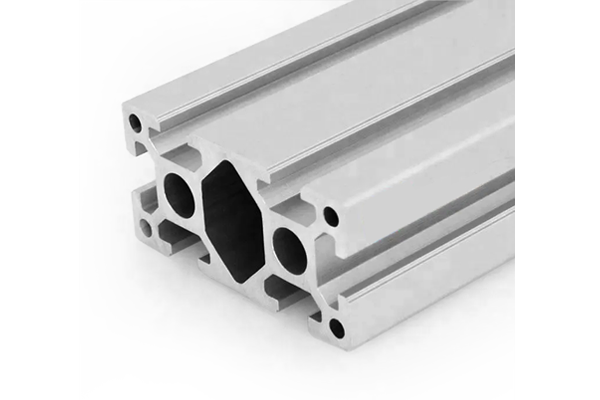
Engineering Design · 4080 vs 4545, square vs rectangle, series 4080 vs 4545 Aluminium Profile Choose 4080 when the load is directional and you stay in 40-series hardware; move to 4545 when you need equal stiffness on both axes in a 45-series square. Deflection still governs — 4080 runs 1.30–3.60 kg/m, 4545 runs 1.15–3.30 kg/m. […]
4040 vs 4080 Aluminium Profile: Which for Your Frame
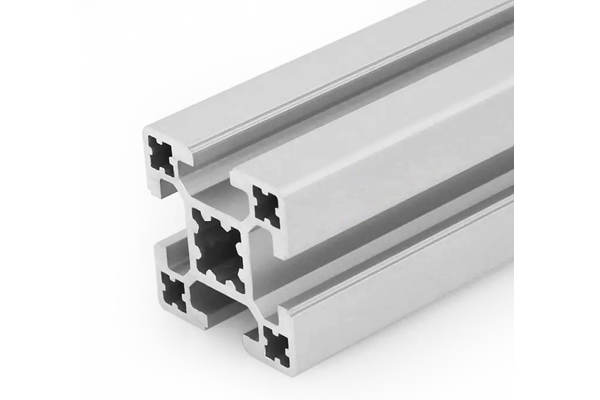
Engineering Design · 4040 vs 4080, orientation, long rails 4040 vs 4080 Aluminium Profile Choose 4040 when the frame is light and short; move to 4080 the moment span or load starts to govern. The switch is driven by deflection, not strength — 4040 runs 1.05–2.35 kg/m, 4080 runs 1.30–3.60 kg/m. Decide on Strong-axis I […]
3030 vs 4040 Aluminium Profile: Which for Your Frame
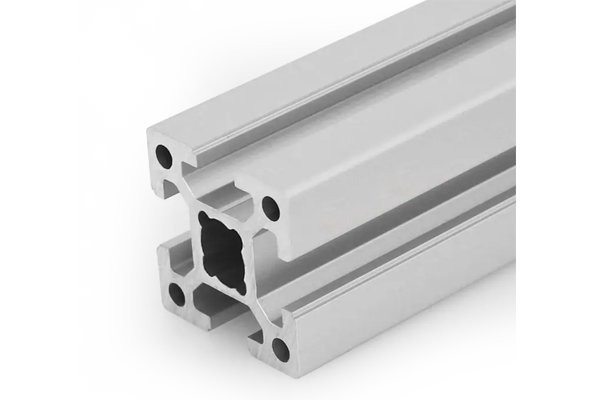
Engineering Design · 3030 vs 4040, stiffness jump, industrial frames 3030 vs 4040 Aluminium Profile Choose 3030 when the frame is light and short; move to 4040 the moment span or load starts to govern. The switch is driven by deflection, not strength — 3030 runs 0.62–1.15 kg/m, 4040 runs 1.05–2.35 kg/m. Decide on Ix […]
2020 vs 3030 Aluminium Profile: Which for Your Frame
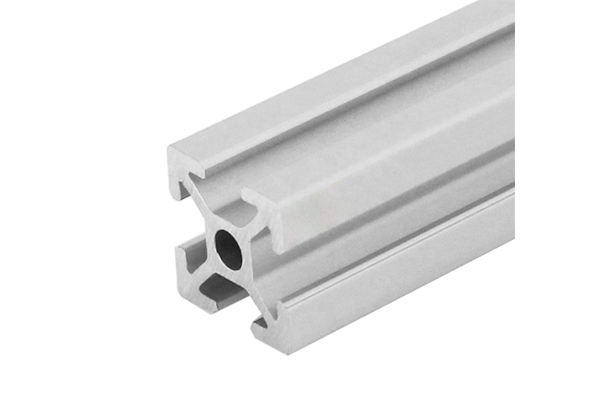
Engineering Design · 2020 vs 3030, deflection, frame size 2020 vs 3030 Aluminium Profile Choose 2020 when the frame is light and short; move to 3030 the moment span or load starts to govern. The switch is driven by deflection, not strength — 2020 runs 0.38–0.62 kg/m, 3030 runs 0.62–1.15 kg/m. Decide on Span, payload, […]
What Is a 4080 Aluminium Profile? (Weight, Slot and Load)
Engineering Design · 40×80 section, kg/m, slot What Is a 4080 Aluminium Profile? A 4080 aluminium profile is a 40 × 80 mm T-slot section. In the grownparts range it runs 1.30–3.60 kg/m depending on wall thickness, with slot variants across the range (table below). Envelope 40 × 80 mm Mass band 1.30–3.60 kg/m Reference […]
What Is a 4040 Aluminium Profile? (Weight, Slot and Load)
Engineering Design · 40×40 section, kg/m, slot What Is a 4040 Aluminium Profile? A 4040 aluminium profile is a 40 × 40 mm T-slot section. In the grownparts range it runs 1.05–2.35 kg/m depending on wall thickness, with slot variants across the range (table below). Envelope 40 × 40 mm Mass band 1.05–2.35 kg/m Reference […]
What Is a 3030 Aluminium Profile? (Weight, Slot and Load)
Engineering Design · 30×30 section, kg/m, slot What Is a 3030 Aluminium Profile? A 3030 aluminium profile is a 30 × 30 mm T-slot section. In the grownparts range it runs 0.62–1.15 kg/m depending on wall thickness, with slot variants across the range (table below). Envelope 30 × 30 mm Mass band 0.62–1.15 kg/m Reference […]
What Is a 2020 Aluminium Profile? (Weight, Slot and Load)
Engineering Design · 20×20 section, kg/m, slot What Is a 2020 Aluminium Profile? A 2020 aluminium profile is a 20 × 20 mm T-slot section. In the grownparts range it runs 0.38–0.62 kg/m depending on wall thickness, with slot variants across the range (table below). Envelope 20 × 20 mm Mass band 0.38–0.62 kg/m Reference […]
Who Owns the Extrusion Die After Tooling Is Paid?
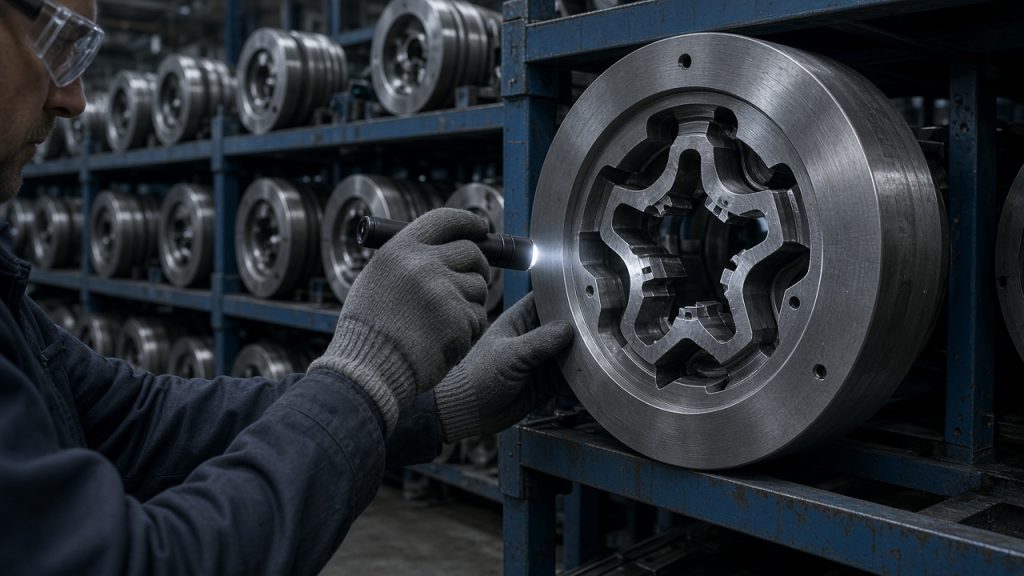
Sourcing · die ownership, transfer, breakage risk Who Owns the Extrusion Die After Tooling Is Paid The buyer who pays the tooling fee still carries the risk if ownership, exclusive use and return terms are not written — payment alone does not always transfer title. Three handling models are common: customer-owned exclusive, mill-owned amortised, and […]
Custom Aluminium Extrusion: From Drawing to Production
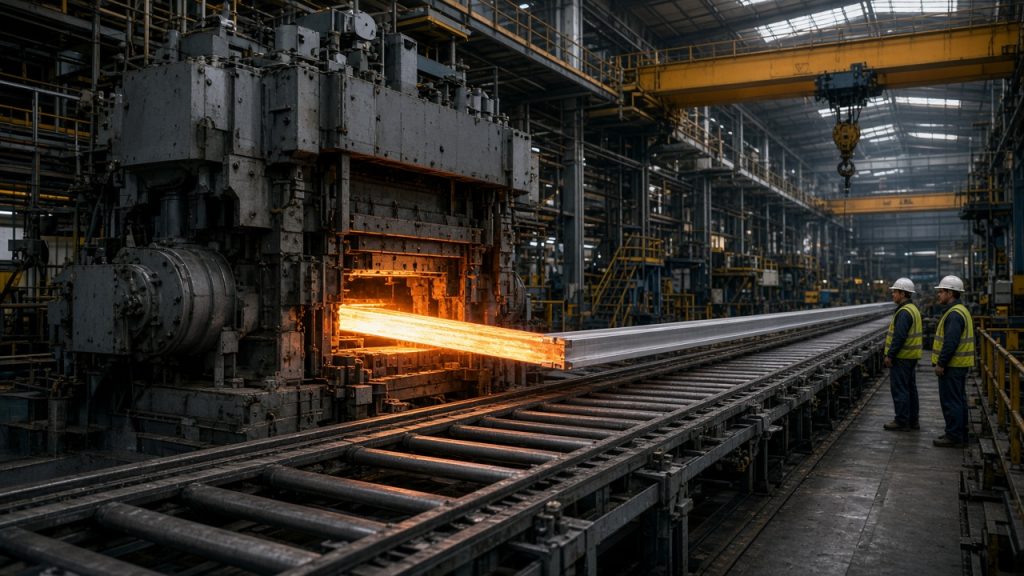
Sourcing · custom section, drawing to production Custom Aluminium Extrusion: From Drawing to Production Plan 30–40 days to first load with a new die and anodising, or 12–20 days on an existing die and mill finish — then add fabrication, packing and transit. The calendar is stage-bound: drawing review, die work, trial, finish and cut, […]
Aluminium Profile Weight per Meter Chart (20–60 Series)
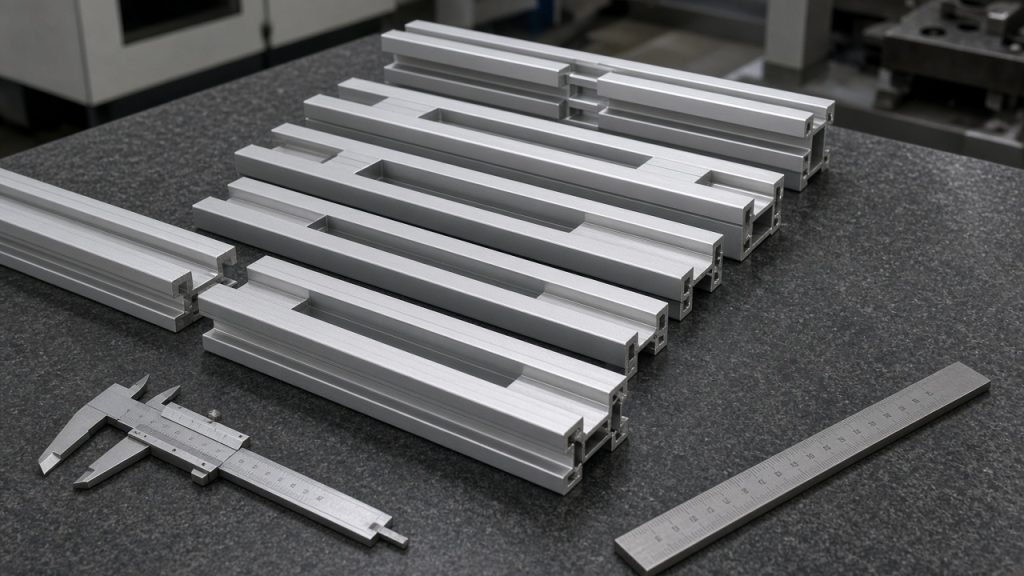
Engineering · kg/m, Ix, EN 755-9 Aluminium Profile Weight per Meter Chart (20–60 Series) A typical 45×90 six-slot 6063-T5 rail weighs 4.10 kg/m with I ≈ 68 cm⁰ about its strong axis; wall and straightness follow EN 755-9 (wall ±0.15 mm class on common light sections, straightness 1.5 mm/m, twist 2°). Use kg/m for mass […]
Aluminium Extrusion Capacity: What a Factory Can Actually Deliver
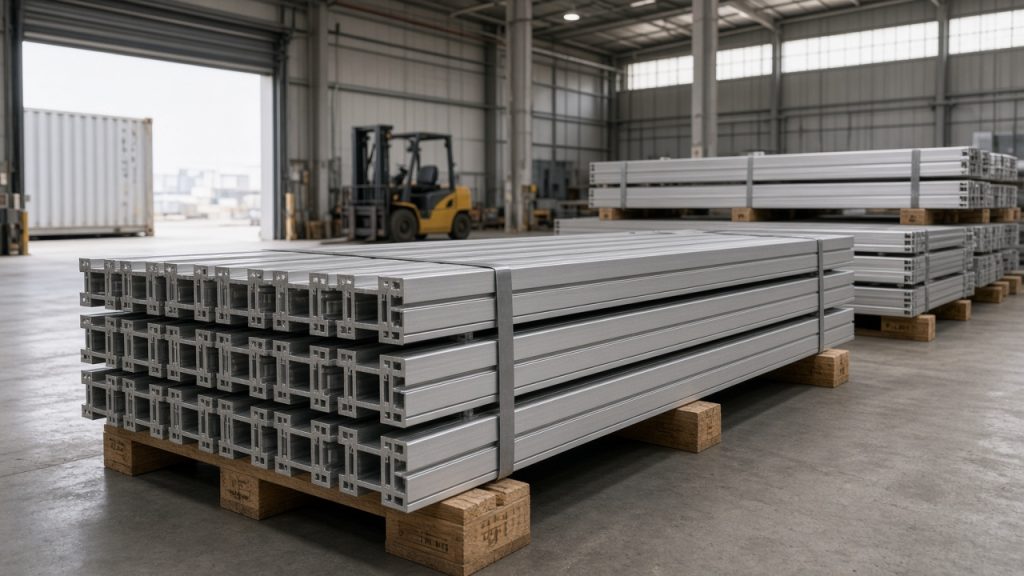
Sourcing and Procurement · capacity, stock, door-to-door Aluminium Extrusion Capacity: What a Factory Can Actually Deliver Door-to-door time is production stages first, then about 18 days sea freight from Shanghai or Ningbo — not a single “fast delivery” number. Capacity only matters when you can convert tonnes per month into open press slots, finish time […]
Aluminium Profile Applications
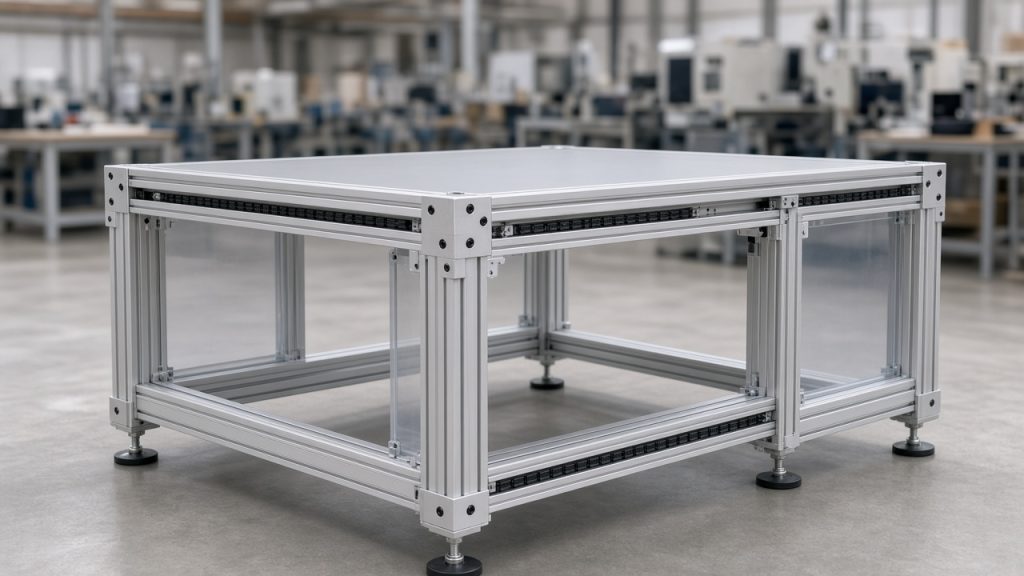
Applications · workbenches, robot cells, joints, torque Aluminium Profile Applications The everyday joint is an external corner bracket with M6 or M8 T-nuts: it squares a bay fast, stays serviceable, and carries bench and guard loads when torqued correctly. Build frames from that joint, then size the section for span — not the other way […]
Cut-to-Length, Drilling and Tapping: What Fabrication Adds
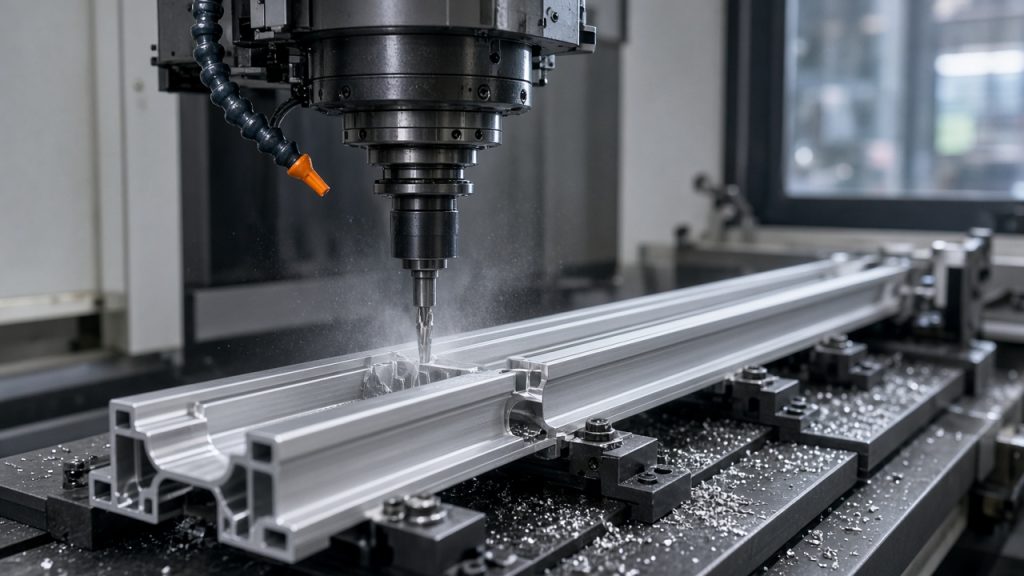
Sourcing · cut-to-length, drilling, tapping Cut-to-Length, Drilling and Tapping: What Fabrication Adds Expect 12–20 days on an existing die and mill finish, or 30–40 days with a new die and anodising, before fabricated members leave the plant — then add CNC queue for holes and taps. Fabrication turns stock bars into kit parts with cut […]
What Your Extrusion Drawing Must Show (and What Costs You Money)
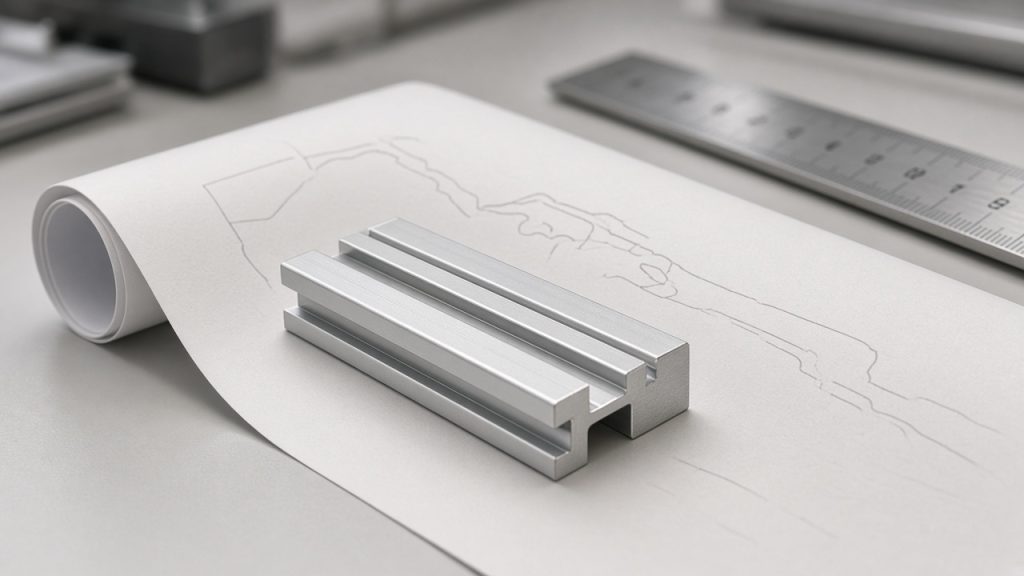
Engineering Design · drawings, RFQ, DFM What Your Extrusion Drawing Must Show (and What Costs You Money) Plan 30–40 days to first load with a new die and anodising, or 12–20 days on an existing die and mill finish — then add fabrication, packing and transit. The drawing package decides whether those stages start clean […]
Aluminium Profile Basics: What the Series Numbers and Slot Codes Mean
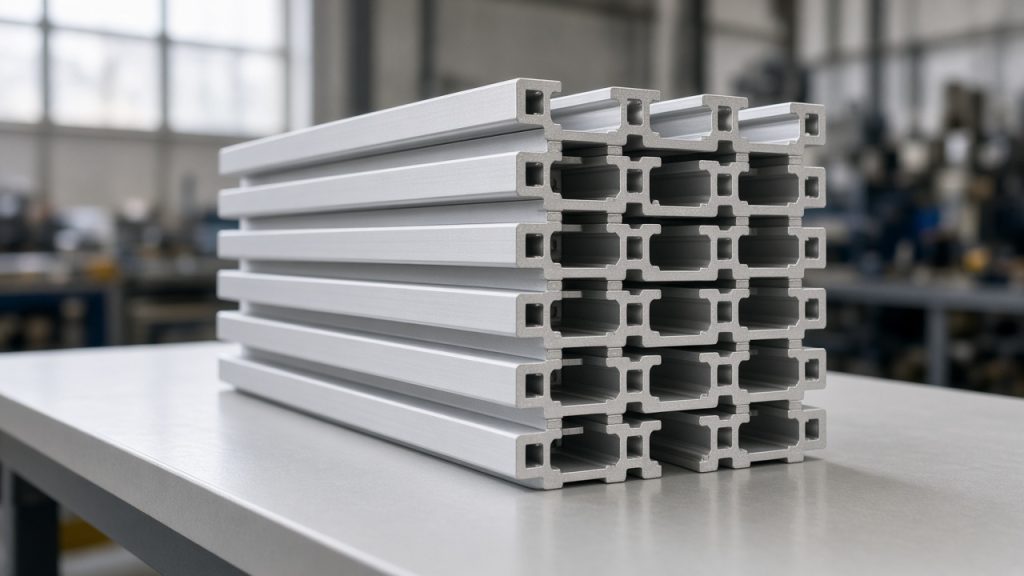
Engineering Design · series, slot codes, naming Aluminium Profile Basics: What the Series Numbers and Slot Codes Mean A code such as 4040 means a 40 × 40 mm envelope; 2020 is 20 × 20 mm and 4590 is 45 × 90 mm. The series digit locks the slot family that your nuts and brackets […]
How to Request a Quote for Custom Aluminium Extrusion (RFQ Checklist)
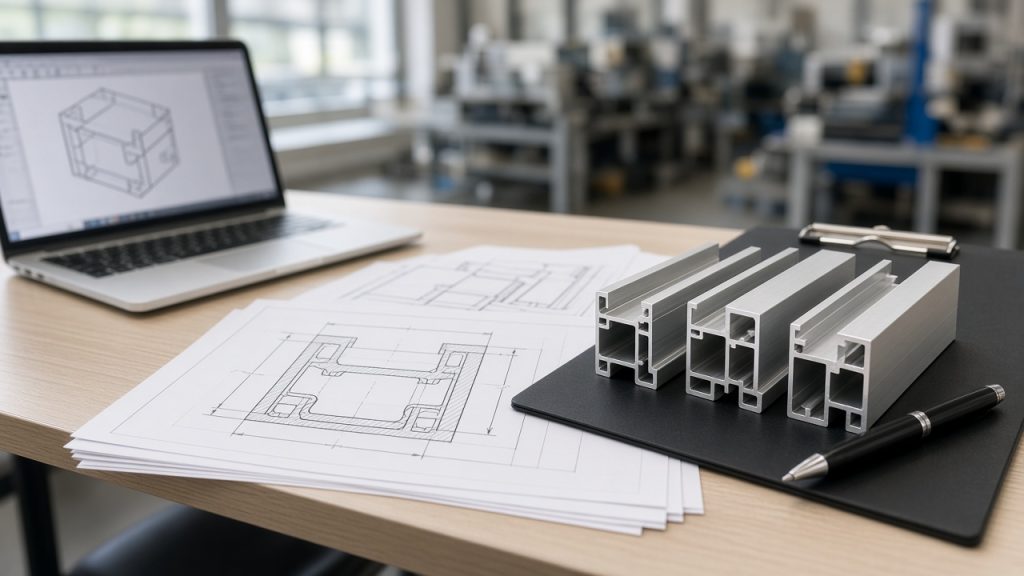
Sourcing · RFQ pack, quote compare, validity How to Request a Quote for Custom Aluminium Extrusion (RFQ Checklist) A complete custom extrusion programme typically runs 30–40 days to first load with a new die and anodising, or 12–20 days on an existing die and mill finish — drawing review, tooling, press, finish and packing in […]
Slot Dimensions Explained: 6 mm, 8 mm and 10 mm T-Slots
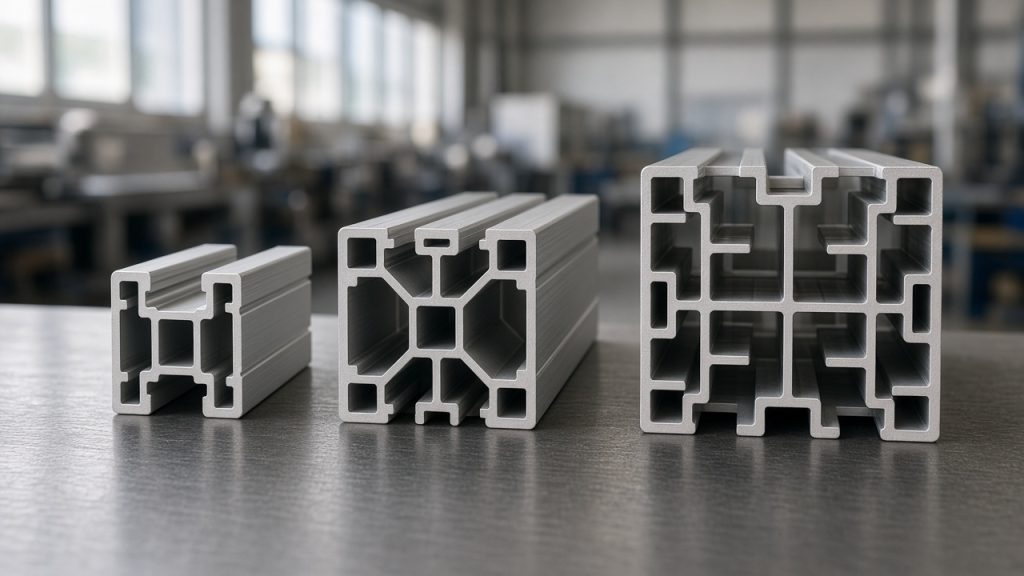
Engineering · slot geometry, series, hardware fit Slot Dimensions Explained: 6 mm, 8 mm and 10 mm T-Slots A 45 × 90 mm six-slot 6063-T5 bar weighs 4.10 kg/m with I ≈ 68 cm⁴ on the strong axis, and under EN 755-9 the wall sits within ±0.15 mm while straightness is held to 1.5 mm/m. […]
How to Fix Panels, Guards and Accessories to Aluminium Profiles
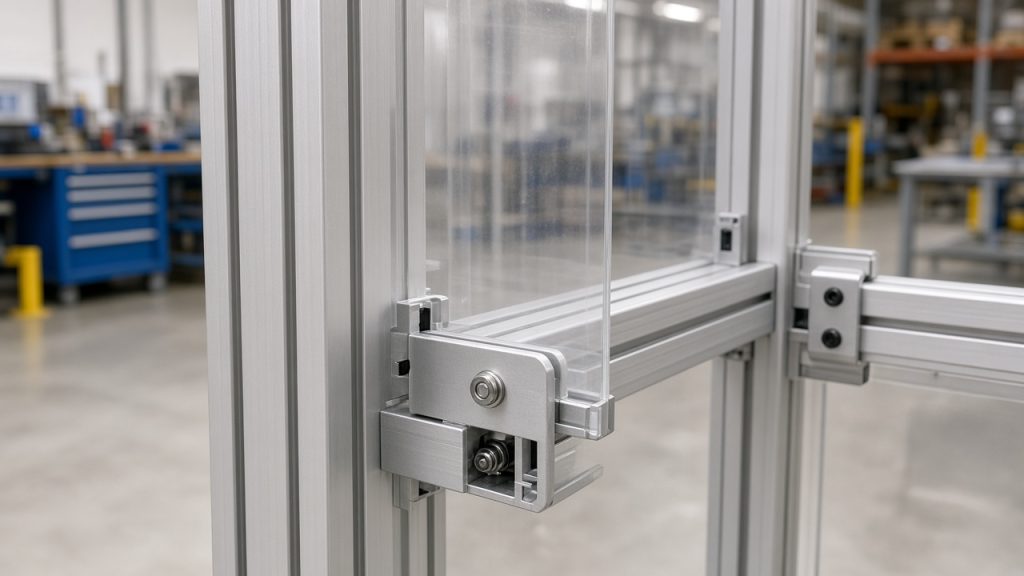
Engineering Design · panels, guards, switches, cable trays How to Fix Panels, Guards and Accessories to Aluminium Profiles The everyday panel fix on industrial T-slot is a retainer or clamping strip into the slot, backed by T-nuts where the panel must come off for service. That joint holds the panel; it does not replace the […]
Moment of Inertia and Section Modulus of T-Slot Profiles
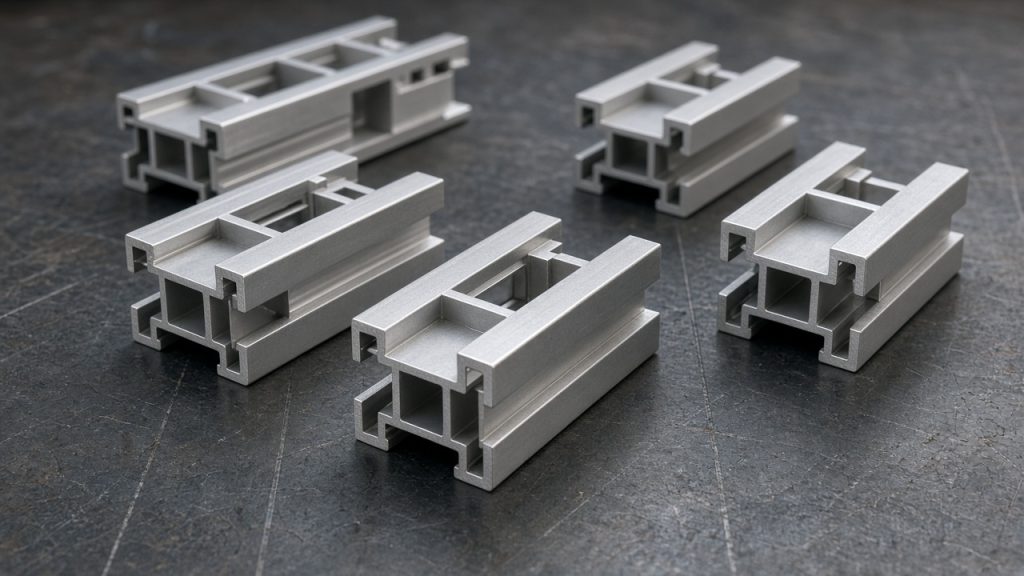
Engineering Design · moment of inertia, section modulus, thermal Moment of Inertia and Section Modulus of T-Slot Profiles A typical 20 × 20 mm T-slot bar in 6063-T5 carries about 0.49–0.50 kg/m with Ix = Iy ≈ 0.72–0.74 cm⁰ — values taken from the nominal section under EN 755-9 geometry, not from the outline alone. […]
Building with T-Slot: Frames, Fences, Workbenches and Guards
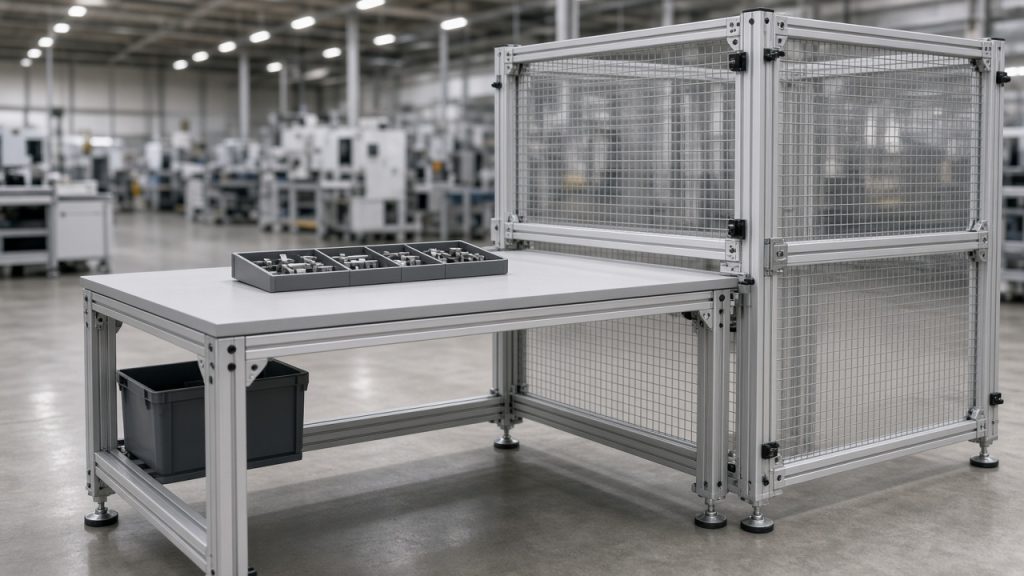
Applications · frames, fences, workbenches, guards Building with T-Slot: Frames, Fences, Workbenches and Guards The everyday joint is an external corner bracket with M6 or M8 T-nuts: it squares a bay fast, stays serviceable, and carries bench and guard loads when torqued correctly. Build from that joint, then size the section for span and deflection […]
T-Slot Cross-Brand Compatibility: Bosch, Item and Generic
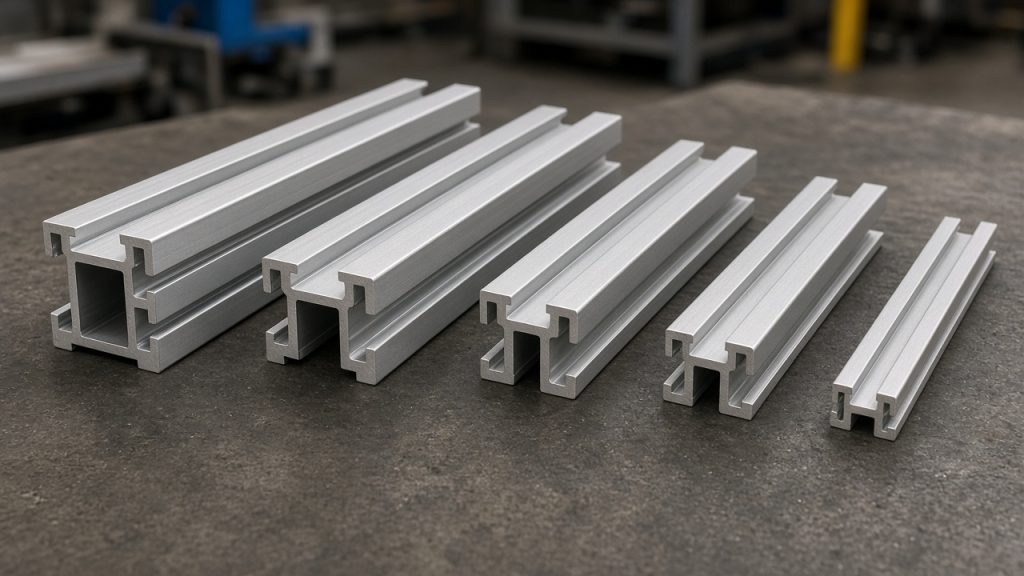
Engineering Design · slot, brand, interchange Cross-Brand T-Slot Compatibility Slot width is standardised; slot depth, pitch and fastener geometry are not. A 40-series profile from one brand will not always take another brand’s nut. Decide by load and span first, then lock one slot family so hardware stays interchangeable. Decision order Load → span → […]
How to Join Aluminium Profiles: Joints, Brackets and Torque
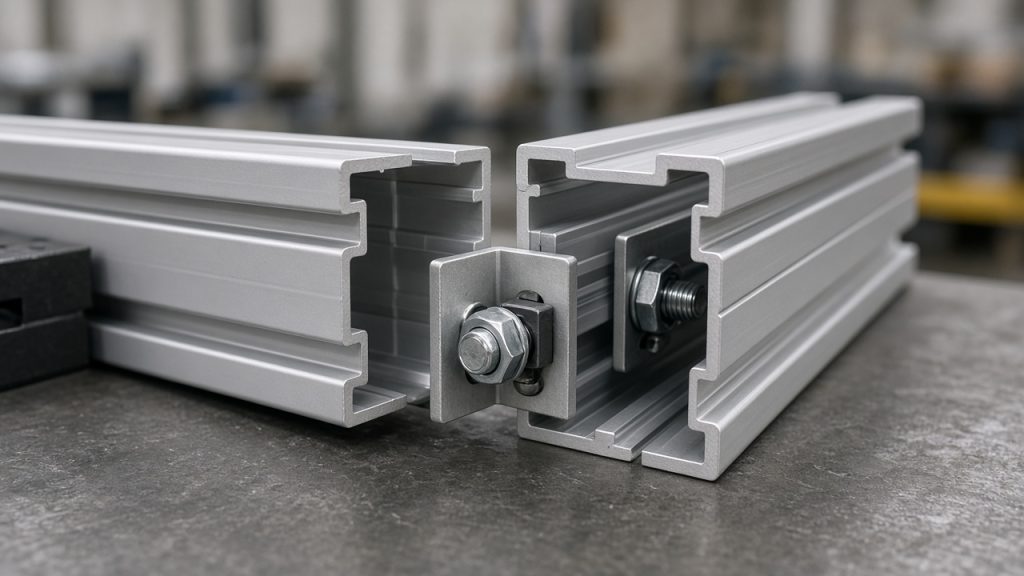
Engineering Design · joints, brackets, torque How to Join and Assemble Aluminium Profiles Most 40-series frames fail at the joint, not the profile. The joint decides the stiffness, not the section. The everyday industrial joint is an external corner bracket with M6 or M8 T-nuts: quick to square, serviceable, and strong enough for benches and […]
What EN 755-9 Allows: Aluminium Extrusion Tolerances
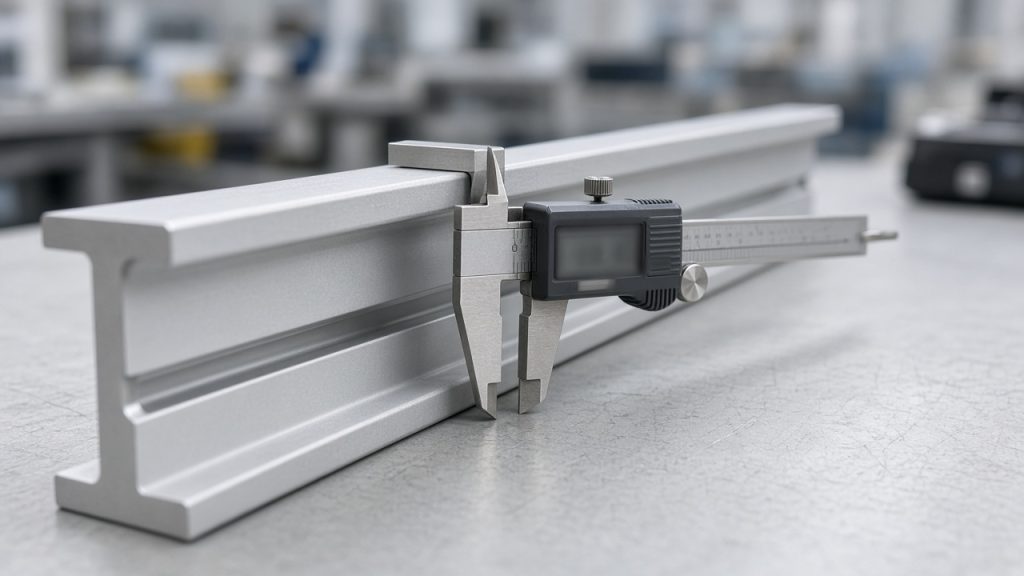
Quality · EN 755-9 wall, straightness, twist Aluminium Extrusion Tolerance Chart (EN 755-9) Standard extruded profiles hold wall ±0.15 mm, straightness 1.5 mm per metre and twist 2° under EN 755-9 — anything tighter is a different process, not a different supplier. A 45×90 six-slot 6063-T5 at 4.10 kg/m with I ≈ 68 cm⁴ is […]
Aluminium vs Steel, Extruded vs Cast: What Actually Changes
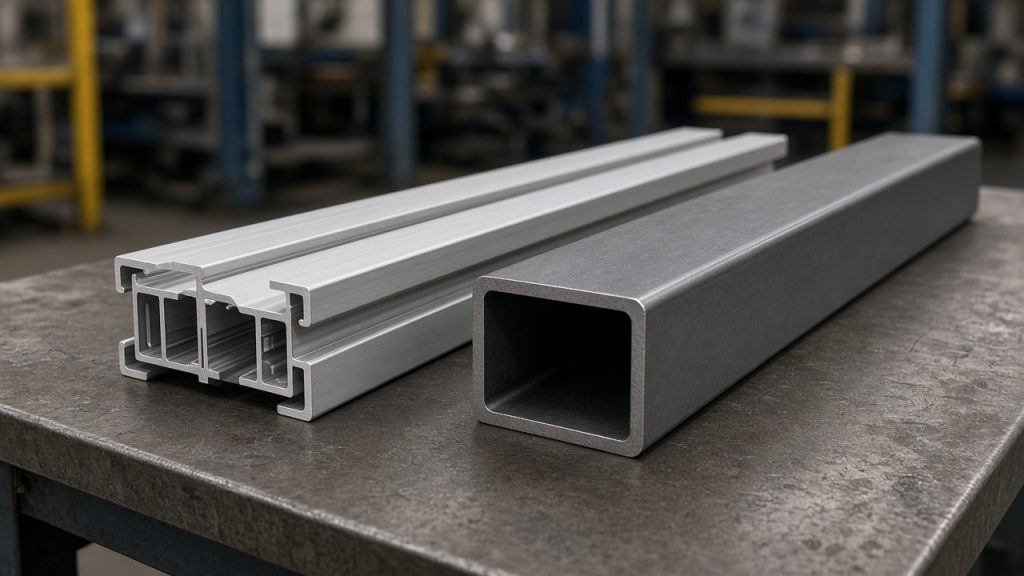
Materials · section size, slot type, frame metal Aluminium vs Steel, Extruded vs Cast: What Actually Changes For a reconfigurable workbench or machine frame, extruded 6063-T5 T-slot beats welded steel on change cost and weight, and cast iron is the wrong comparison: a 40×40 at about 1.55 kg/m and I ≈ 9.7 cm⁴ already carries […]
6063 vs 6061 vs 6082 and T5 vs T6: What Changes in Practice
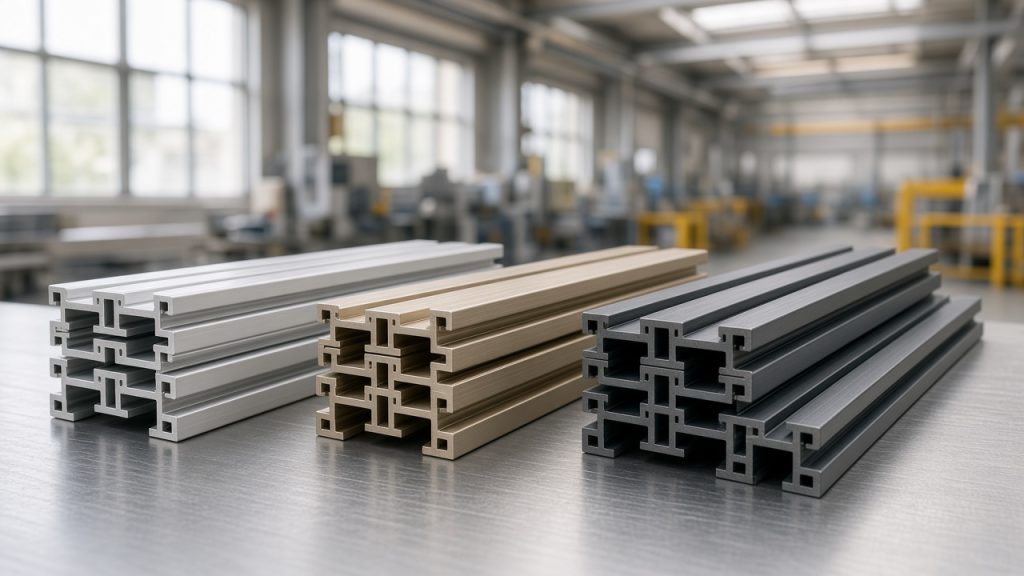
Materials · alloy, temper, substitution 6063 vs 6061 vs 6082 and T5 vs T6: What Changes in Practice For catalogue T-slot such as 2020–4040, specify 6063-T5 when finish and slot geometry matter; move to 6061-T6 or 6082-T6 only when the drawing demands higher yield for structural or heavily machined parts. Stiffness barely changes — E […]
Aluminium Profile Max Span: Deflection Table by Section
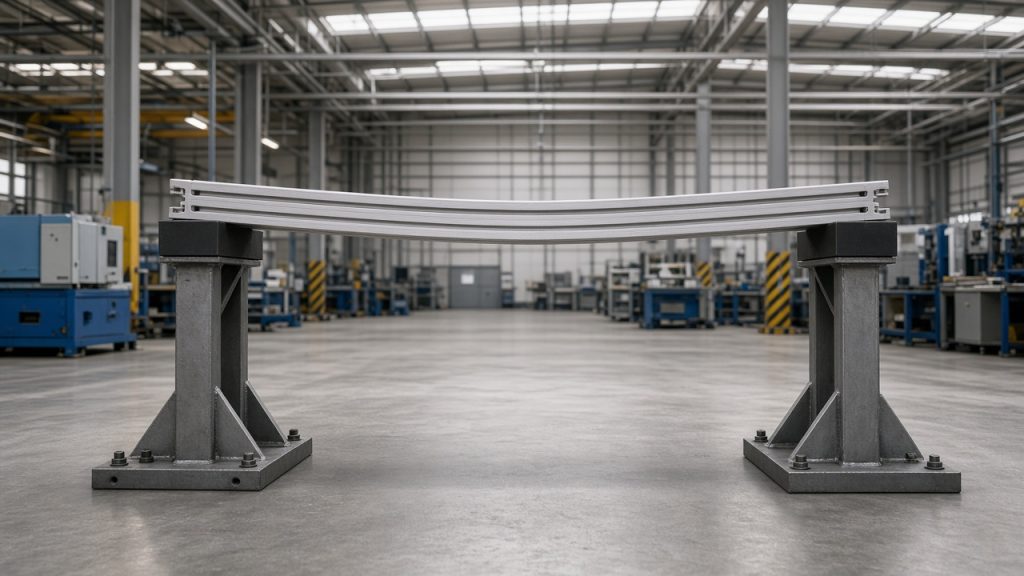
Engineering Design · span, deflection, section data Maximum Span and Load for Aluminium Profiles A 4040 profile carries about 150 kg over 2 m before deflection becomes the limit — not strength. Deflection governs, not yield: aluminium’s modulus is roughly one-third of steel’s, so serviceability (L/500 or L/360) fails long before the section reaches 6063-T5 […]
Which Profile Size for Your Application: A Selection Guide
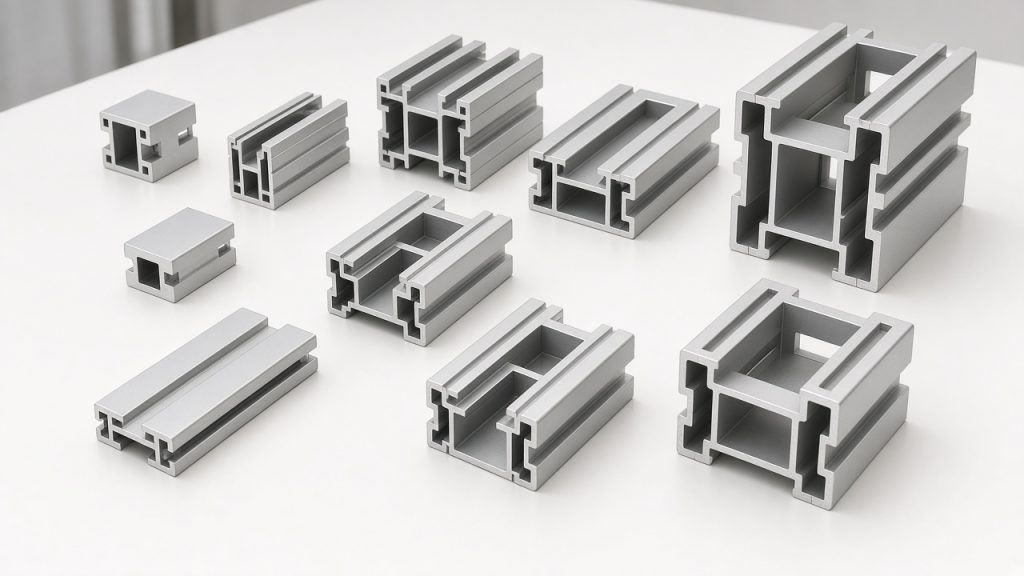
Engineering Design · section, slot, load band Which Profile Size for Your Application: A Selection Guide Pick the series by the governing constraint first: load, unsupported span, or slot/hardware — then lock one series across the frame. For a typical workbench at 1 m spans under ~50 kg, 3030 or 4040 is the practical band; […]
Aluminium Extrusion Die Cost (2026): Price by Section Size
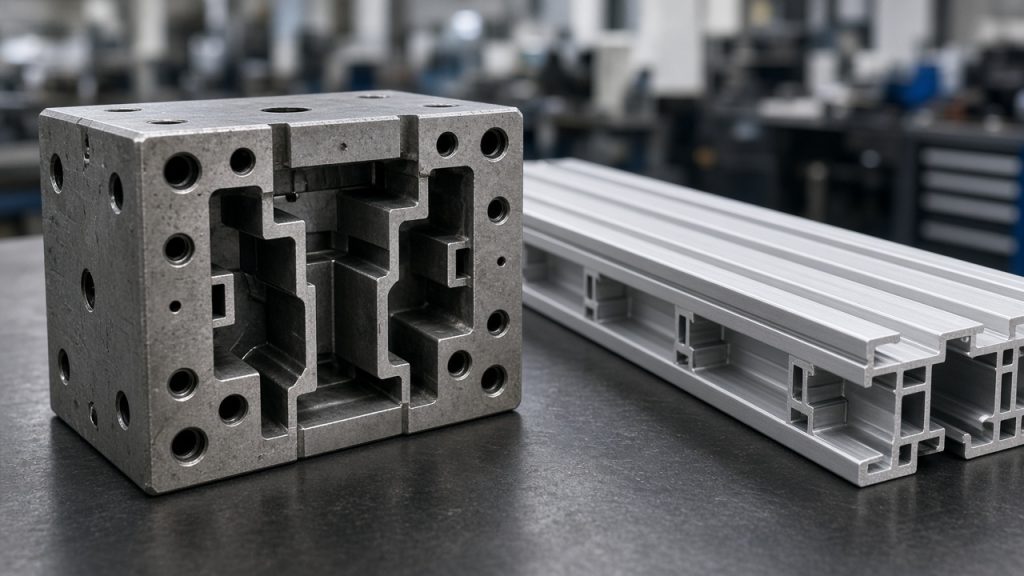
Sourcing · tooling cost, ownership, amortisation How Much Does an Aluminium Extrusion Die Cost? In 2026 a custom aluminium extrusion die in China typically costs about US$400–3,500 for common industrial T-slot and solid sections, and more for large hollows. The number is set by three things: the circumscribed circle, whether the section is hollow, and […]
Aluminium Extrusion Price per Meter: How the Number Is Built
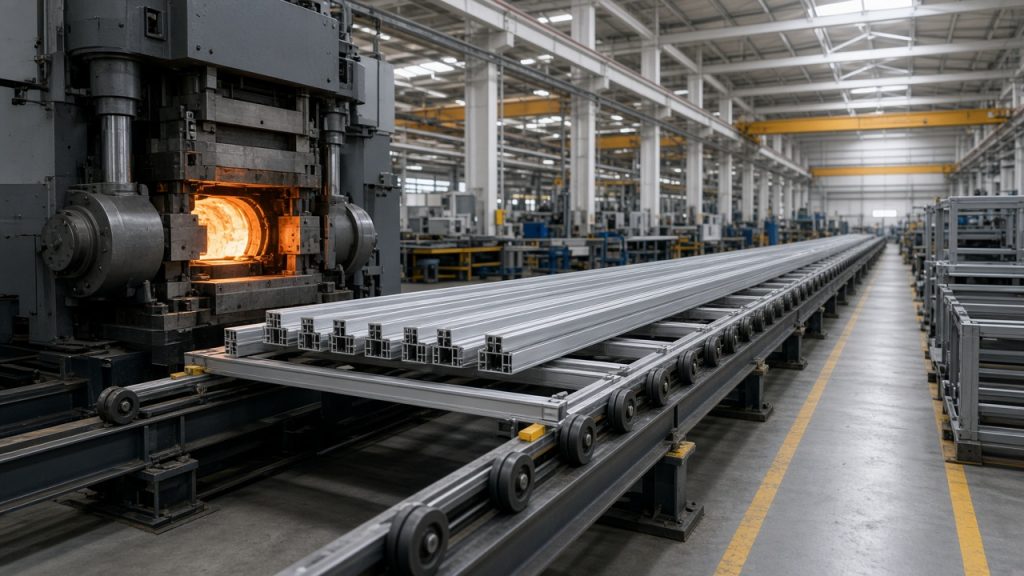
Sourcing · metre price, mass, die share Aluminium Extrusion Price per Meter: How the Number Is Built In 2026 China-factory FOB metres for silver-anodised T-slot typically sit around USD 1.40–2.20/m for 20×20 and USD 4.20–6.50/m for 40×40 at mid volume, because price per metre is kilograms times dollars per kilogram plus a share of die […]
Aluminium Extrusion Lead Time: New Die vs Existing Die
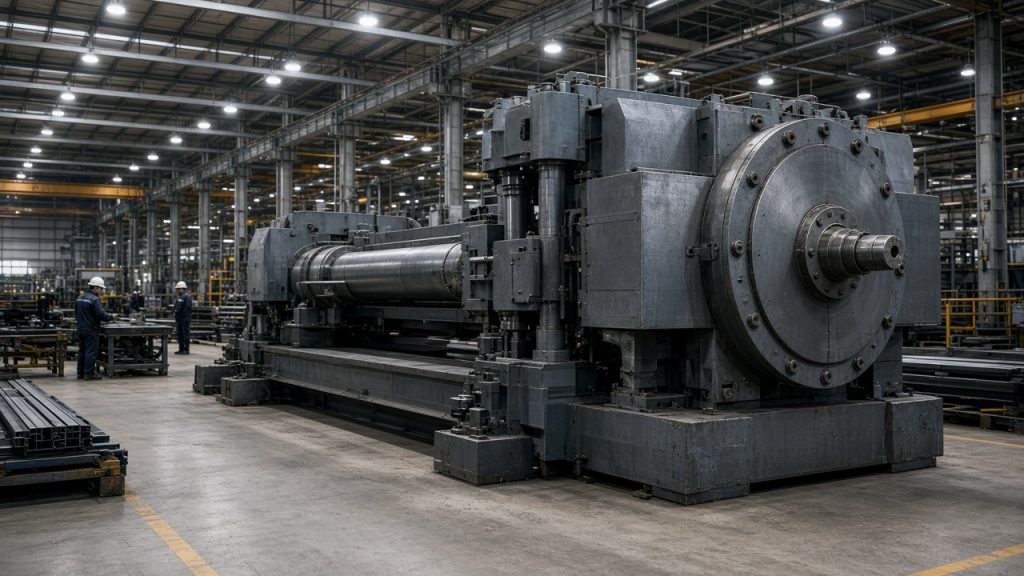
Logistics · die status, finish, sea transit Aluminium Extrusion Lead Time Door-to-door for a China T-slot order is typically 30-40 days (30–40) with a new die and anodising, or 12–20 days on an existing die in mill finish, plus about 18 days at sea from Shanghai or Ningbo. The calendar is production stages first, ocean […]
Cross-Brand T-Slot Compatibility: Interchangeability Is a Hardware Question
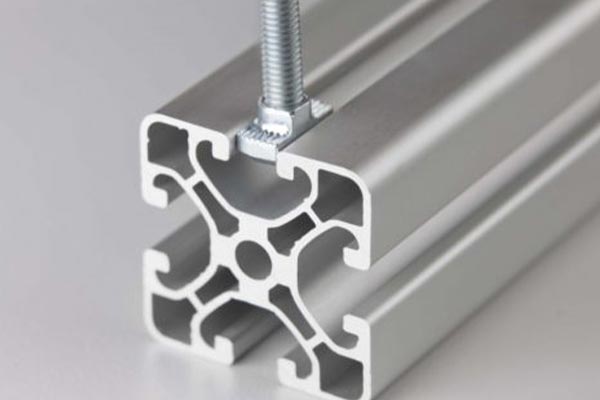
Sourcing · slot geometry, hardware, interchange Cross-Brand T-Slot Compatibility: Interchangeability Is a Hardware Question Two 40 by 40 profiles from two suppliers can have the same outline, the same weight and the same price per metre, and accept none of the same hardware. The number that decides it is not on the drawing, and it […]
Extruded vs Cast Aluminium: Stronger in One Direction, Not in All of Them
Process choice · grain flow, porosity, fatigue Extruded vs Cast Aluminium: Stronger in One Direction, Not in All of Them The claim that extruded aluminium is stronger than cast is true, and it is true under conditions that a specification usually leaves out. The two processes produce different grain structures, different defect populations and different […]
Robot Cell Framing in Aluminium: Stiffness, Damping and the 2025 Safety Revision
Robotics · stiffness, safety, cycles Robot Cell Framing in Aluminium: Stiffness, Damping and the 2025 Safety Revision A robot cell is usually specified as a frame with a robot bolted to it. It is actually a stiffness and damping problem, a fatigue problem, and now a standards problem, because the robot safety standards were revised […]
Aluminium Greenhouse Profiles: A Snow Load Problem With a Condensation Problem
Protected cropping · snow, condensation, chloride Aluminium Greenhouse Profiles: A Snow Load Problem With a Condensation Problem A greenhouse is sold on light, ventilation and yield. It is engineered as a snow-loaded roof on slender posts, with a condensation problem underneath it and a galvanic problem at every place the aluminium touches something else. The […]
Aluminium Workbench Fit-Out: When the Accessories and the Joints Compete for the Same Slot
Workbenches · the accessory layer Aluminium Workbench Fit-Out: When the Accessories and the Joints Compete for the Same Slot The top and the frame are two separate design problems, and we have written about them separately. The layer that decides whether a bench actually works is the one above that: what hangs off it, and […]
30 Series T-Slot Profiles: The Middle That Has to Justify Itself
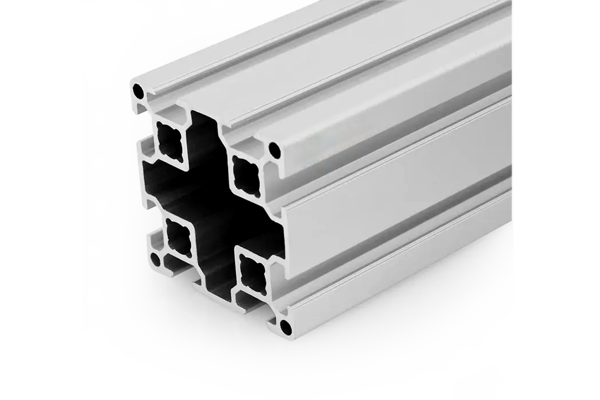
30 series · the middle of the range 30 Series T-Slot Profiles: The Middle That Has to Justify Itself Between the light 20 series and the standard 40 series sits the 30 series. It is a good system, and it is also the one most often chosen for the wrong reason, because the reason to […]
Aluminium Profile Anchor Pins: A Preloaded Joint, Not a Pin
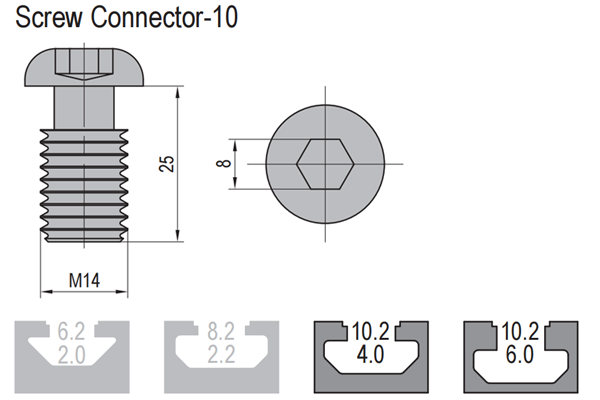
Connectors · preload and metallurgy Aluminium Profile Anchor Pins: A Preloaded Joint, Not a Pin Anchor pins are usually sold on alloy grade and surface finish. What decides whether the joint holds is different: how much clamping force the pin actually develops, and whether the aluminium thread it goes into can carry that force without […]
20 Series T-Slot Profiles: Where the Limits Actually Are
20 series · light framing 20 Series T-Slot Profiles: Where the Limits Actually Are The 20 series is the smallest common framing system, and the usual mistake is to treat it as a scaled-down 40 series. It is not. On a 20 series frame the fastener and the slot lip normally govern, and the profile […]
Aluminium Profile Display Boards: The Panel Is the Hard Part
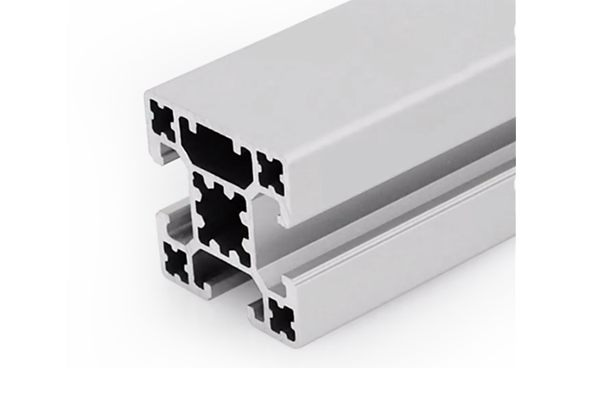
Display and notice boards · panel support Aluminium Profile Display Boards: The Panel Is the Hard Part A display board is quoted as a frame and delivered as a panel problem. The frame is the straightforward half. Holding a flat panel flat, without visible fixings, and being able to change the content later, is where […]
Aluminium Pergola Profiles: A Beam Problem With a Water Problem
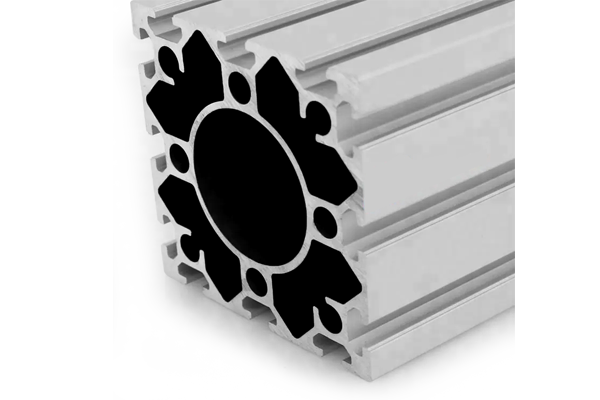
Outdoor structures · wind, water, movement Aluminium Pergola Profiles: A Beam Problem With a Water Problem A pergola reads as a framing project and is usually bought as one. It is actually three problems stacked: long beams that must not visibly sag, a roof that has to shed water, and a fixing into a building […]
Aluminium Partitions: The Three Performance Numbers Behind the Aesthetic
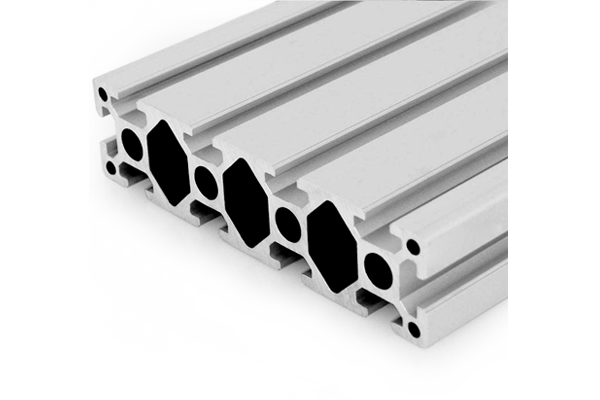
Partitions · performance and acceptance Aluminium Partitions: The Three Performance Numbers Behind the Aesthetic Partitions are usually sold on appearance and design flexibility, and they are accepted on three numbers that have nothing to do with either: how much sound they stop, how they behave in a fire, and whether a tall run stays upright […]
Lean Pipe vs T-Slot Profile: Two Interface Philosophies, Not Two Generations
Modular systems · interface philosophy Lean Pipe vs T-Slot Profile: Two Interface Philosophies, Not Two Generations Lean pipe and T-slot framing are often presented as an older and a newer way to do the same thing. They are not. One joins by friction around a round tube and the other by mechanical lock in a […]
Aluminium Workstations: From Fixed Benches to Reconfigurable Cells
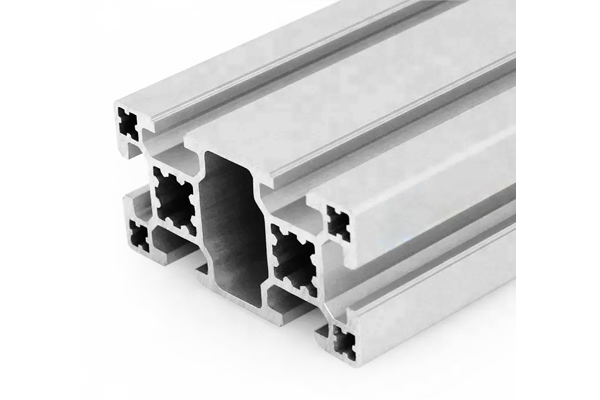
Workstations · reconfigurability Aluminium Workstations: From Fixed Benches to Reconfigurable Cells The move away from fixed benches is usually described as a modern design trend. It is not. It is a response to a measurable thing: how often the work changes. Once changeover frequency is high enough, the cost of rebuilding a welded bench outweighs […]
Aluminium Conveyor Frames: Why Belt Tracking Is a Geometry Problem
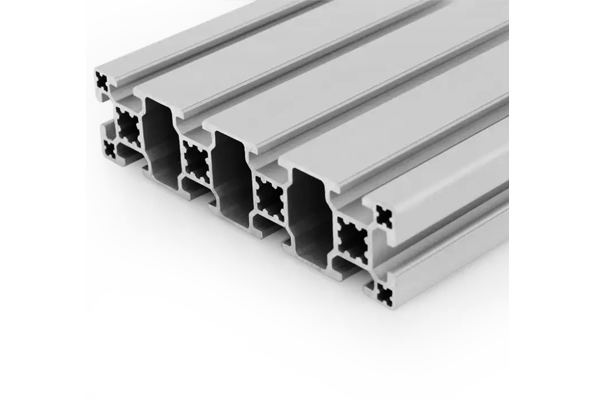
Conveyor framing · geometry and tolerance Aluminium Conveyor Frames: Why Belt Tracking Is a Geometry Problem When a conveyor belt walks off centre, the belt gets blamed and the frame gets ignored. In most cases the belt is doing exactly what the geometry is telling it to do, and the geometry was set when the […]
Aluminium Profile Stairs and Platforms: The Geometry and Load Rules Behind Them
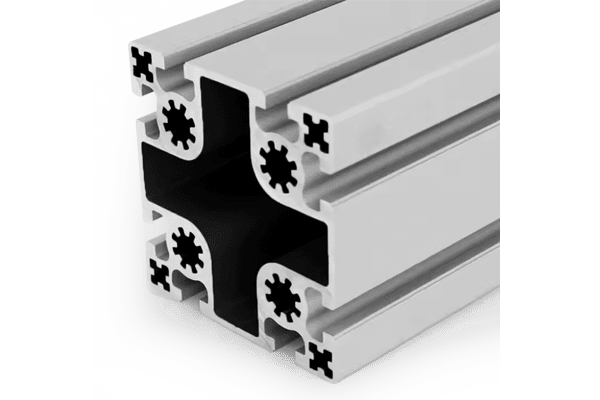
Access structures · load and geometry Aluminium Profile Stairs and Platforms: The Geometry and Load Rules Behind Them A stair is not a frame with steps on it. It is one of the few aluminium structures where the dimensions are dictated by rule rather than by choice, and where the governing case is a person […]
Aluminium Profile Shelving: It Buckles and Tips Before It Bends
Shelving · stability Aluminium Profile Shelving: It Buckles and Tips Before It Bends Shelving is one of the few framing applications where strength is almost never the governing limit. The upright is a slender column, the assembly is tall relative to its depth, and the failure that arrives is a stability one. Governing mode Buckling, […]
Aluminium Profile Workbenches: Design the Top and the Frame as Two Separate Problems
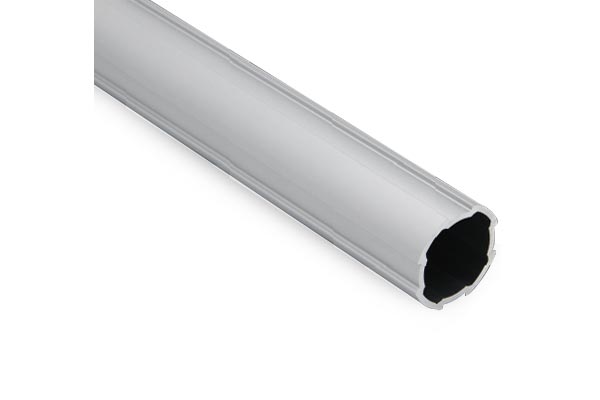
Workstations · frame and top Aluminium Profile Workbenches: Design the Top and the Frame as Two Separate Problems A bench has to carry a load and present a flat surface, and those two requirements pull in opposite directions. Trying to satisfy both with one set of members is why benches end up over-built in the […]
T-Slot vs V-Slot Aluminium Profiles: The V Is a Raceway, Not a Cheaper T
Profile geometry · T-slot vs V-slot T-Slot vs V-Slot Aluminium Profiles: The V Is a Raceway, Not a Cheaper T V-slot profile looks like T-slot profile with a different groove shape. It is not. The V is a running surface for wheels, and a section designed to guide a wheel is making a different set […]
T-Slot Aluminium: The Slot Mouth Is the Interface Standard, Not the Series Name
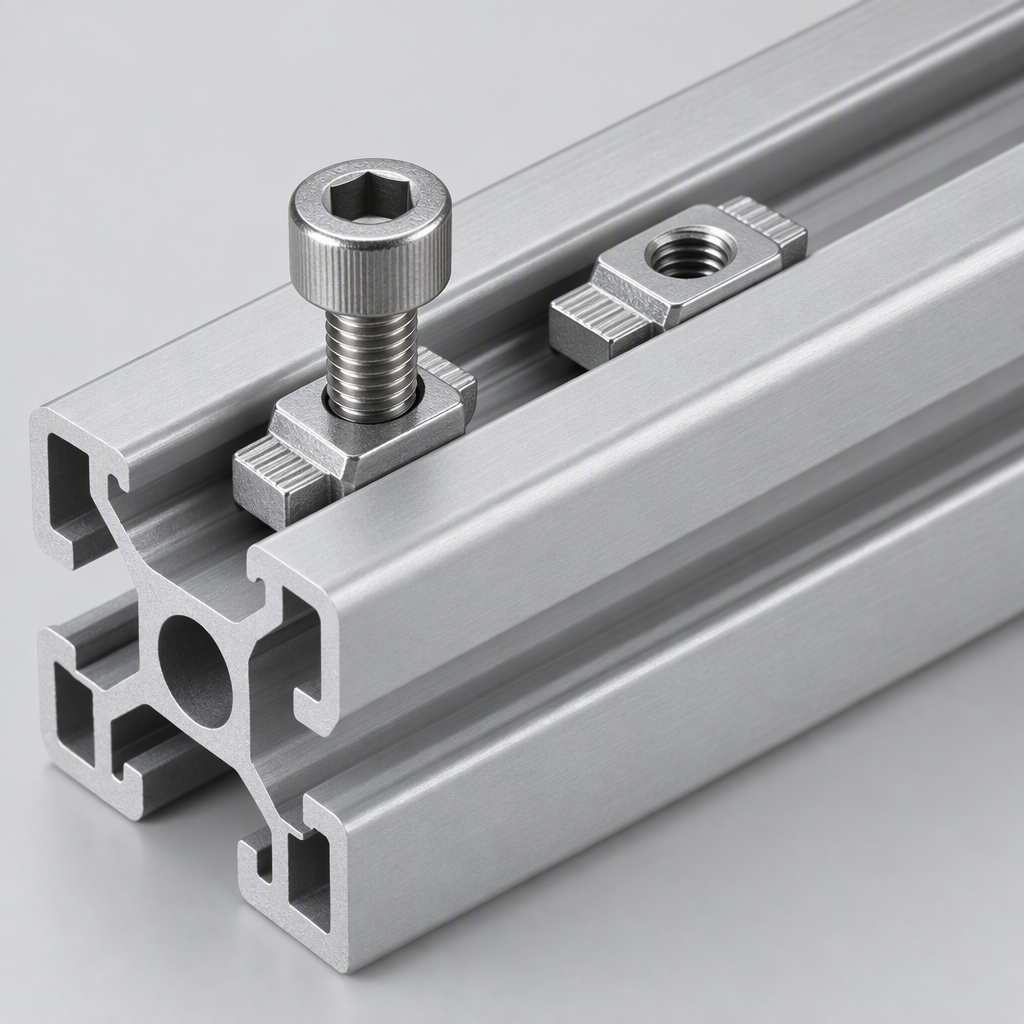
Slot geometry · fit and tolerance T-Slot Aluminium: The Slot Mouth Is the Interface Standard, Not the Series Name “40 series” is a family name, not a fit guarantee. Two suppliers can both sell a 40x40 section whose grooves will not accept the same nut. The dimension that decides compatibility is the slot mouth, and […]
Where Modular Aluminium Framing Works: A Load-Tier Map Instead of an Industry List
Applications · load tiers Where Modular Aluminium Framing Works: A Load-Tier Map Instead of an Industry List Most guides list industries. That is the wrong axis, because one industry contains both a 3 kg display stand and a 3 tonne gantry. The section you need is set by load, span and environment — not by […]
Modular Aluminium Components: Where the System Saves Money and Where It Costs You
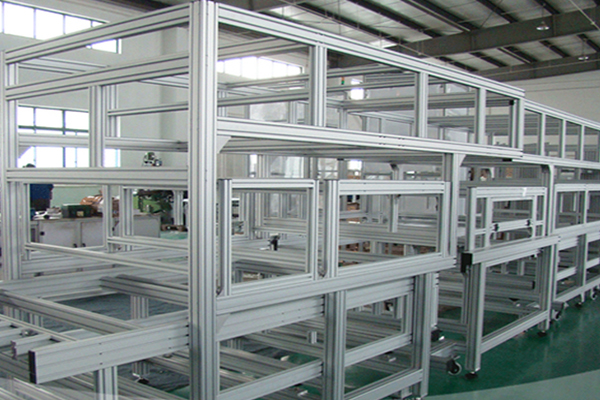
Modular systems · cost structure Modular Aluminium Components: Where the System Saves Money and Where It Costs You Modular T-slot framing is sold as a way to cut build time. That is true, but it is only half the ledger. The other half sits in the interface parts — the connectors, nuts and brackets that […]
Aluminium Profiles for Automation Equipment Frames: Design From the Assembly Floor
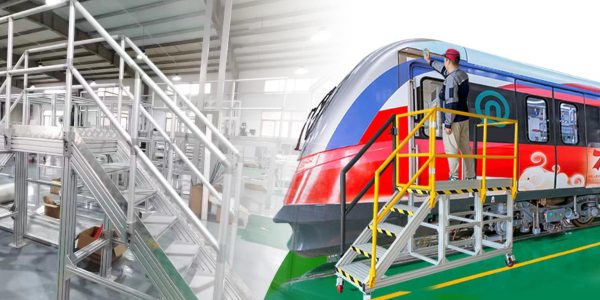
Automation frames · assembly and squaring Aluminium Profiles for Automation Equipment Frames: Design From the Assembly Floor A modular frame is not built on the drawing. It is built on the floor, by two people, with a hex key and a tape measure — and that is where frames are lost. Here is the error […]
Aluminium Profile Sizes 20 × 20 to 100 × 100: What Fails First
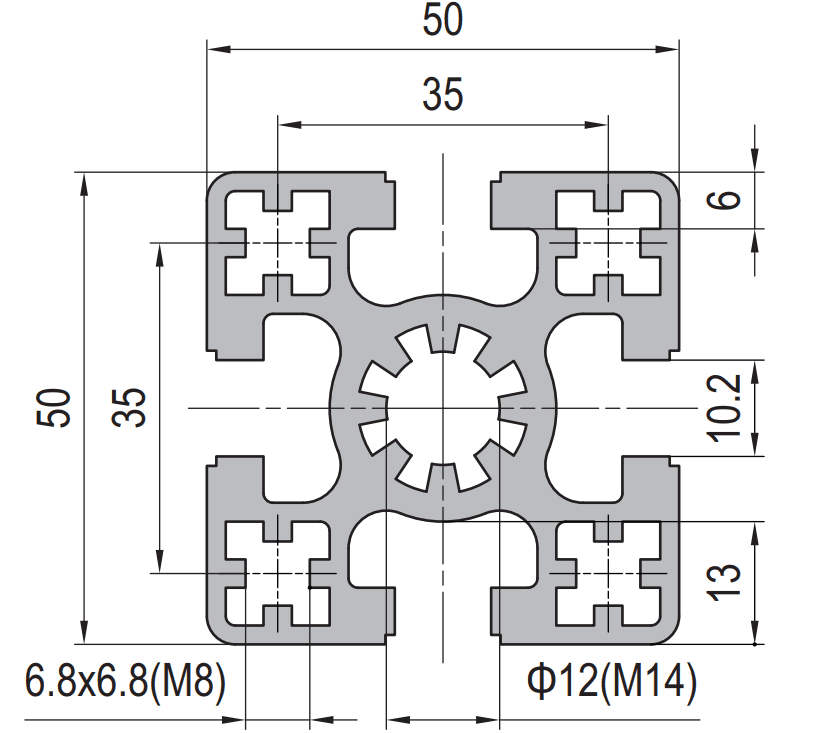
Profile sizes · what fails first Aluminium Profile Sizes 20 × 20 to 100 × 100: What Fails First The number in the name is not the stiffness. A 50 × 50 and a 60 × 60 standard section are 4 per cent apart in second moment of area and 39 per cent apart in […]
Why T-Slot Aluminium Profiles Are Used in Automation and When They Are Not
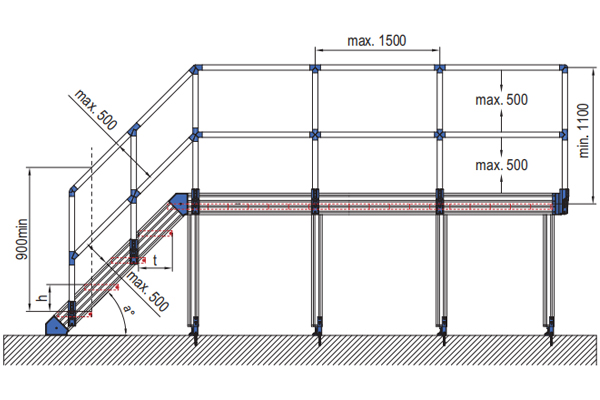
Automation framing · material choice Why T-Slot Aluminium Profiles Are Used in Automation and When They Are Not The usual answer is that aluminium is lighter and just as stiff. That is half right, and the half that is wrong is the half that decides projects. Aluminium and steel have almost identical stiffness per kilogram, […]
How to Choose an Aluminium Extrusion Profile: The Three Decisions That Bind
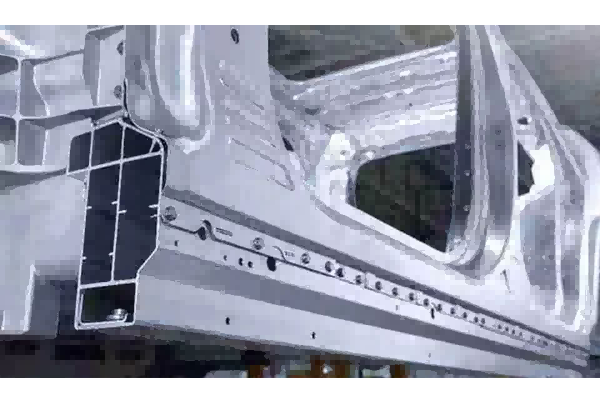
Profile selection · decision order How to Choose an Aluminium Extrusion Profile: The Three Decisions That Bind Most selection guides are nine steps in the wrong order. Nine questions look like nine decisions, and they are not: span, load position and deflection budget are the only inputs, and the section, the slot, the alloy, the […]
ESD Anti-Static Workbench Grounding: The Four Joints That Break the Path
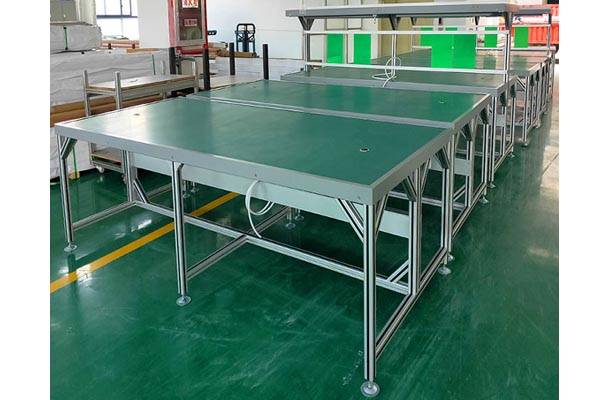
ESD workbenches · grounding continuity ESD Anti-Static Workbench Grounding: The Four Joints That Break the Path Almost every ESD bench that fails an audit fails in the same way. The worksurface reads a comfortable 107 ohms, the wrist strap passes, the footwear passes — and the overhead light arm, the pegboard and the tool rail […]
Precision Cutting and Tapping of Aluminium Profiles: The Tolerance That Actually Matters
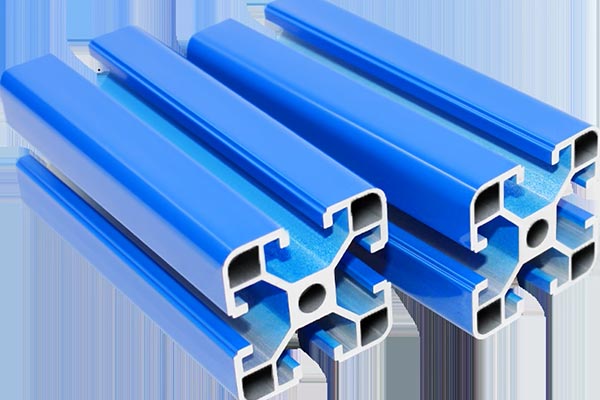
Cutting, tapping and machining Precision Cutting and Tapping of Aluminium Profiles: The Tolerance That Actually Matters Most drawings ask for ±0.1 mm because it sounds precise. On a frame, the number that decides whether the kit assembles is usually not the cut length at all — it is the squareness of the end face, and […]
How Strong Is an Aluminium Profile? It Depends on How You Fix It
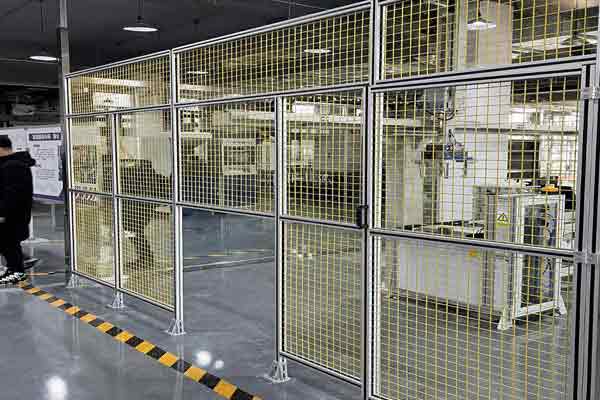
Strength and support conditions How Strong Is an Aluminium Profile? It Depends on How You Fix It Ask a supplier for a load rating and you will get a number that quietly assumes a support condition nobody mentioned. The same 40 × 40 section carries 6.6 kg as a cantilever and 206 kg between two […]
6061-T5 vs 6063-T5: What the Temper Label Really Decides
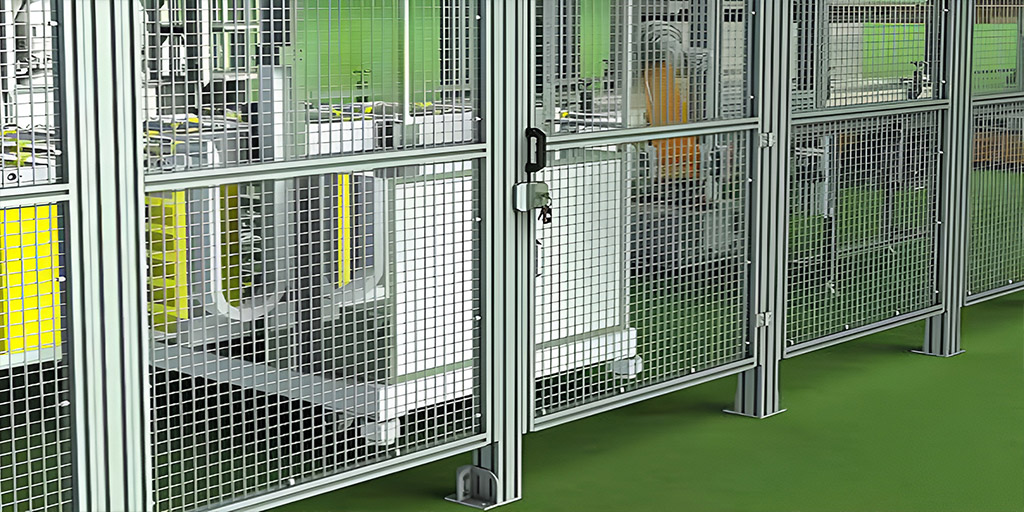
Alloy and temper · what changes 6061-T5 vs 6063-T5: What the Temper Label Really Decides Two things need separating here. One is the alloy, which changes how the profile extrudes, machines and anodises. The other is the temper, which changes the yield point. Neither of them changes stiffness by a single per cent — and […]
