Who Owns the Extrusion Die After Tooling Is Paid
The buyer who pays the tooling fee still carries the risk if ownership, exclusive use and return terms are not written — payment alone does not always transfer title. Three handling models are common: customer-owned exclusive, mill-owned amortised, and credit-against-volume. Pick one before tool steel is ordered.
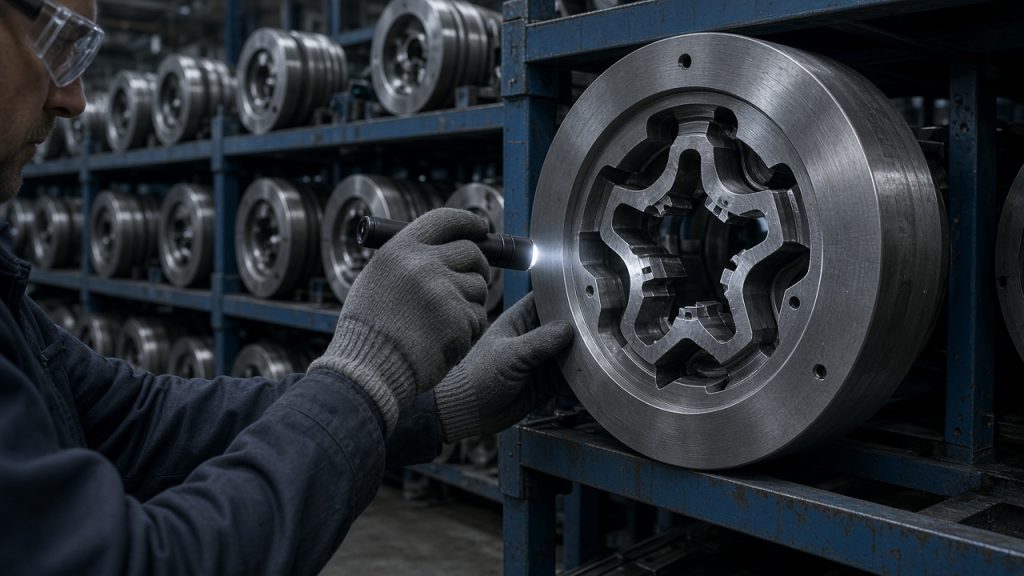
Short answer
Who owns the extrusion die after tooling is paid is a contract fact, not a courtesy. If the PO and tooling agreement say the customer owns the die on payment (or on sample approval), title sits with the buyer even while the tool is stored at the mill; exclusive use, free storage while the programme is active, and a release path to another factory should be named. If the mill keeps title and only amortises the fee into the metre price, the buyer may never own the tool and cannot move it later. A third model credits part of the die against later volume but still needs written ownership language. Breakage before the agreed life (tonnes or metres) is normally the mill’s repair cost; after that life, replacement is re-quoted. Commercial terms stay T/T 30% deposit + 70% before shipment or L/C at sight, on FOB, CIF, DAP or DDP from Shanghai or Ningbo, with metal held to EN 755-9, anodising to EN ISO 7599 and product reference GB/T 6892 where applicable.
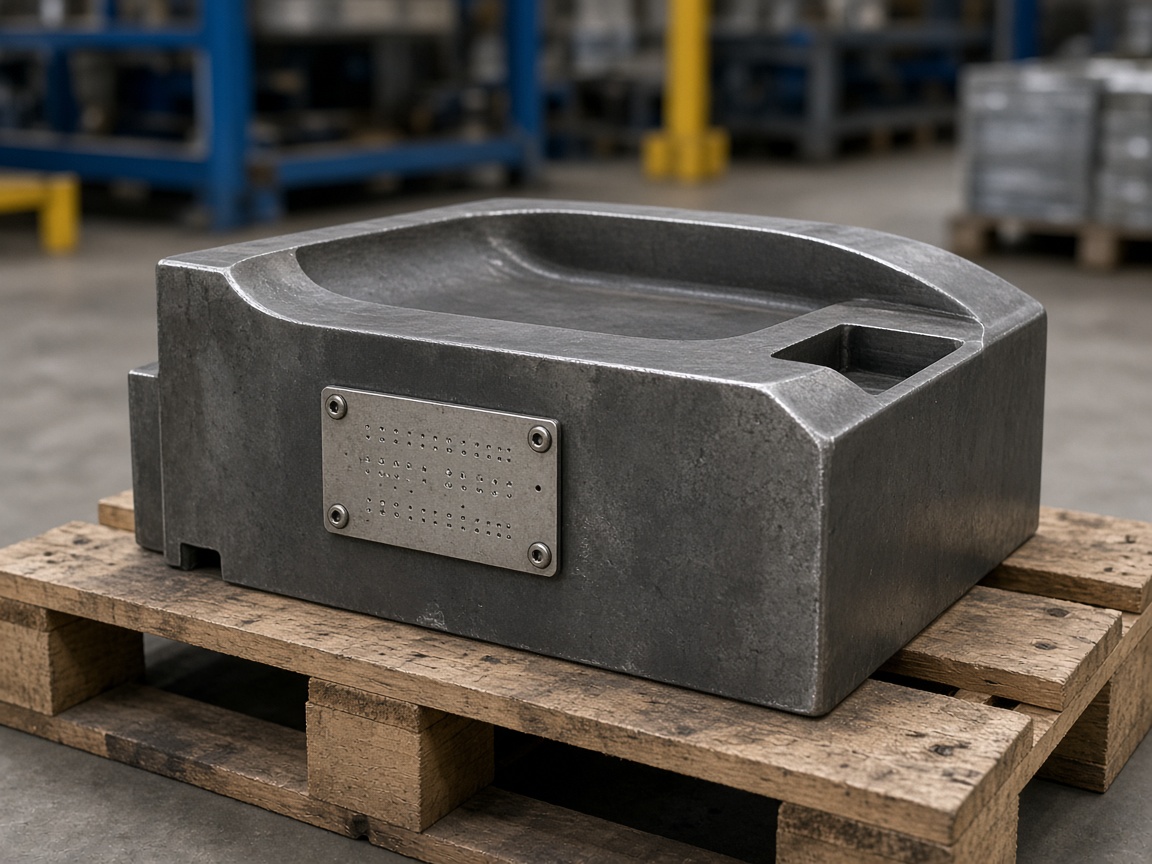
Who owns the die after the tooling is paid
Ownership follows the written agreement: paying the tooling invoice transfers title only when the contract says it does; otherwise some mills retain the die as plant property despite reimbursement.
GrownParts’ default commercial intent for a customer-paid custom die is customer ownership with exclusive use for that buyer’s parts, storage at the plant while the programme is active, and no reuse for another customer. Put that in the tooling annex before steel is cut. Cover the physical die, correction history, and whether drawings/CAD for the tool itself are included. Payment of the die line typically rides the same T/T 30/70 structure as the first metal order, or a separate tooling invoice cleared before try-out. For how the fee later spreads into unit rate see how die cost amortises per meter; for the metre floors that follow ownership see minimum order with a new die.
| Model | Who holds title | Exclusive use | Move later | Typical fit |
|---|---|---|---|---|
| Customer-owned | Buyer on payment / approval | Yes | Yes, by release clause | OEM custom sections |
| Mill-owned | Mill | Often yes in practice | Usually no | Amortised / short trials |
| Credit vs volume | Must be stated | Must be stated | Only if titled to buyer | Repeat releases |
| Shared tool | Split / unclear | Weak | Hard | Avoid for proprietary IP |
| Library T-slot die | Mill | Multi-buyer | N/A | Catalogue 150 m orders |
Can i get the die moved to another supplier later
Yes when the contract grants customer title and a release procedure; no when the mill retained ownership or when the die is a shared library tool.
A release clause should name notice period, packing standard, freight payer, and the state of the die (serviceable, with correction record). Expect the receiving plant to re-try the tool; dies are press-specific enough that a transfer is not plug-and-play. Export of tooling may need customs paperwork and is separate from profile Incoterms (FOB / CIF / DAP / DDP on metal). If you only paid an amortised adder and never took title, there is nothing to move — you fund a new die at the next mill. Die making for a replacement still adds 7–12 days before first bars — see die making adds 7–12 days.
What happens if the die breaks during production
Repair or replacement before the agreed die life is normally the mill’s cost; after that life, or after misuse outside agreed alloy and process, the buyer funds a new tool or major rebuild.
Define useful life in tonnes extruded or equivalent metres for the section class. Record corrections and repair history against the die ID. A cracked bridge on a hollow die mid-run stops the press; the commercial question is whether life was consumed. Do not accept open-ended “we will compensate everything” language — accept a clear split: mill pays premature failure inside life; buyer pays end-of-life replacement; both parties photograph and tag the failed tool. Quality of metal shipped before the break still follows EN 755-9 (extruded tolerances), EN ISO 7599 (anodising) and GB/T 6892 where cited on the PO.
Where the risk actually sits
The commercial risk sits with whoever lacks written title, exclusive-use and breakage rules — usually the buyer who assumed payment equalled ownership.
Three buyer-side exposures dominate: (1) silent mill-owned terms in general conditions of sale; (2) no release path when dual-sourcing later; (3) no die-life clause when a hollow tool fails early. Fix them in the tooling annex before the deposit clears. Keep die ID, drawing revision and ownership statement on the same page as payment terms (T/T 30/70 or L/C at sight) and Incoterms. Catalogue library dies are mill property by nature; custom tools should not inherit that default by accident. Self-check the clause set against who owns the die before you sign.
| Risk | Who feels it | Contract fix | Evidence to keep | When it bites |
|---|---|---|---|---|
| No title clause | Buyer | Ownership on payment | Signed annex | Dual-source attempt |
| No exclusive use | Buyer IP | Named exclusive run | Die log | Competitor parts |
| No release path | Buyer | Notice + freight + state | Release form | Supplier change |
| No die life | Both | Tonnes / metres life | Repair log | Mid-run crack |
| Amortised only | Buyer | Take title or accept lock-in | Quote model | Cannot move tool |
RFQ checklist — die ownership
- Ownership sentence — customer owns on payment / on sample approval.
- Scope — physical die, corrections, tool drawings yes/no.
- Exclusive use — no third-party production from this die.
- Storage — free while programme active; idle-fee after N months.
- Release — notice, packing, freight, receiving try-out.
- Die life — tonnes or metres; who pays repair vs replace.
- Payment — T/T 30/70 or L/C; die line vs metal line.
- Quality refs — EN 755-9, EN ISO 7599, GB/T 6892 as applicable.
Do not clear the tooling deposit until the ownership sentence is on paper. Steel without title is a hostage, not an asset.
Four ownership mistakes
Related on this site
- how die cost amortises per meter — fee into unit rate
- minimum order with a new die — 150 m existing vs 500 m new
- die making adds 7–12 days — before first bars
- custom aluminium extrusion process — drawing to production stages
Terms used in this article
- Tooling annex
- Contract schedule that states die ownership, exclusive use, storage, release and life.
- Customer-owned die
- Title with the buyer after the agreed payment or approval event; mill holds as bailee.
- Mill-owned / amortised
- Mill keeps title; buyer pays via metre adder or non-refundable fee without transfer.
- Die life
- Agreed tonnes or metres before replacement cost shifts to the buyer.
- Release
- Documented hand-over of a titled die to the buyer or a nominated factory.
Questions buyers ask
What if the goods arrive out of tolerance?
Claim against the PO quality references — typically EN 755-9 for extruded dimensions, EN ISO 7599 for anodising and GB/T 6892 where cited. Photograph, quarantine and notify within the claim window on the contract. Die ownership does not erase dimensional responsibility for shipped metal.
Who owns the tooling?
Whoever the tooling annex names. Default intent for a customer-paid custom die is buyer ownership with exclusive use and a release path. Mill-owned amortised tools and library T-slot dies stay with the mill. Get the sentence in writing before the deposit clears.
What is the claim window?
Follow the window stated on the order confirmation for visible packing damage, dimensional non-conformance and finish defects. Keep lot tags and the approved sample revision so claims map to one die and one drawing state. Late claims without retained samples are hard to prove.
Can I audit the factory?
Yes by arrangement. An audit can confirm die tagging, exclusive-use logs, calibration and process control for EN 755-9 / EN ISO 7599 work. Bring the tooling annex and ask to see your die ID on the rack.
Lock die ownership before the tooling deposit
Send your section drawing and ask for a tooling annex that states ownership on payment, exclusive use, die life and release terms alongside the T/T or L/C schedule.
Request a tooling ownership annexRelated reading
Twelve more engineering notes from this blog, picked for this article — plus every category below.
 Engineering DesignT-Slot Cross-Brand Compatibility: Bosch, Item and Generic
 Engineering DesignESD Anti-Static Workbench Grounding: The Four Joints That Break the Path
 Engineering DesignAluminium Profile Max Span: Deflection Table by Section
 Engineering Design4080 vs 4545 Aluminium Profile: Which for Your Frame
 Engineering DesignAluminium Extrusion Tolerances: What to Write, and How to Inspect
 Engineering DesignModular Aluminium Components: Where the System Saves Money and Where It Costs You
 Engineering DesignAluminium Extrusion Lead Time: New Die vs Existing Die
 Engineering Design6061-T5 vs 6063-T5: What the Temper Label Really Decides
 ApplicationsAluminium Profiles Across Industries: What Actually Changes From One Sector to the Next
 Materials and EngineeringAnodised vs Powder Coated Aluminium Profiles: A Specification Guide for European Buyers
 ApplicationsDesigning Machine Guards and Safety Fences in Aluminium Profile: An ISO 14120 Guide
 Quality and InspectionEuropean Anodised Aluminium Specification: What Should a Purchase Order Contain?
