Aluminium Extrusion Lead Time
Door-to-door for a China T-slot order is typically 30-40 days (30–40) with a new die and anodising, or 12–20 days on an existing die in mill finish, plus about 18 days at sea from Shanghai or Ningbo. The calendar is production stages first, ocean second.
Short answer
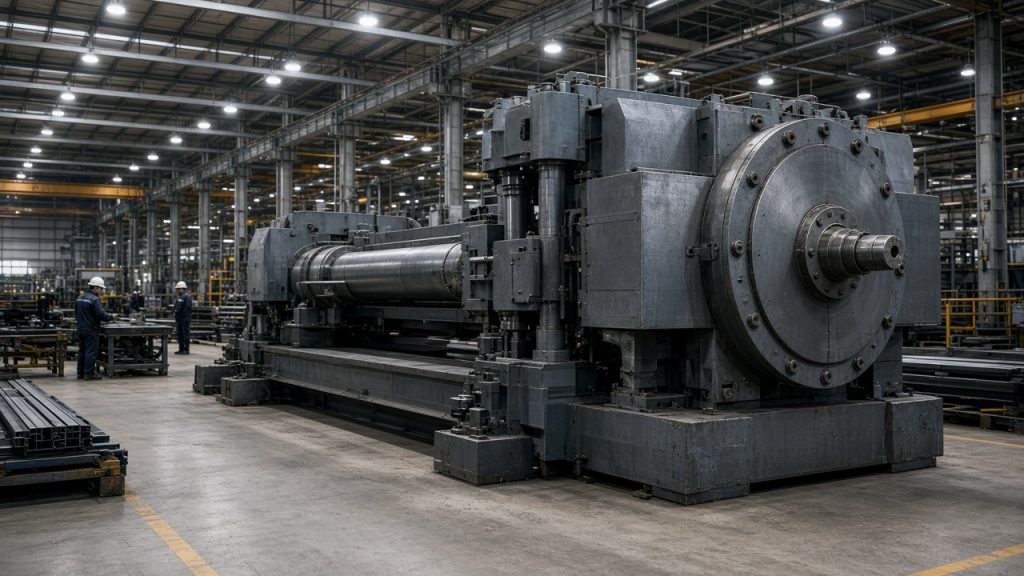
Lead time splits into five stages: quotation and PO lock, die making when the tool is new (7–12 days), extrusion on the press, anodising or other finish, then packing and sailing. The bottleneck on a first order is almost always the die; on a repeat anodised order it is often the colour-batch slot; on mill-finish repeats it is press queue. Capacity context is about 600 t per month of extrusion with in-house anodising. Packing is an ISPM 15 timber cradle with IPPC mark, or a plywood case for cut lengths under 3 m. Add ~18 days sea after the goods leave Shanghai or Ningbo unless you air-freight samples.
How fast can you ship 100 m of 2020 for an urgent project
Urgent 100 m of 2020 off an existing die in mill finish can leave in about 12–16 days; the same metres with silver anodising usually need 18–25 days; a new die pushes the first bar into the 30–40 day band before sea.
Quantity inside a few tonnes does not change the die clock. 100 m, 500 m, 1 tonne (~2 000 m of 2020 at 0.50 kg/m) and 2 tonnes share the same tooling path; what changes is press hours and whether the lot fills an anodising rack efficiently. For a true rush, mill finish on an existing die is the lever that removes both tooling and bath time. Air freight after production is for samples and short bars, not for a full tonne of 6 m stock. Confirm the die number on the RFQ so the planner does not book a new-tool slot by mistake.
How long does it take to get a quotation
A complete RFQ — section or DXF, alloy, finish, length, quantity, Incoterm and port — returns a quotation in one to two working days.
Missing die status or finish is what stretches quotes into a week, because the planner cannot choose between the 12–20 day and 30–40 day calendars. Metal is indexed to the billet band on the quote date; validity is typically 14 days. Parallel questions on how die cost amortises per meter and minimum order with a new die should sit on the same enquiry so price and calendar are issued together.
How long does a custom profile take from drawing to sample
From approved drawing to first sample bar is typically 7–12 days for die making plus a short press and finish trial — about two to three weeks before you hold metal, then production follows the new-die calendar.
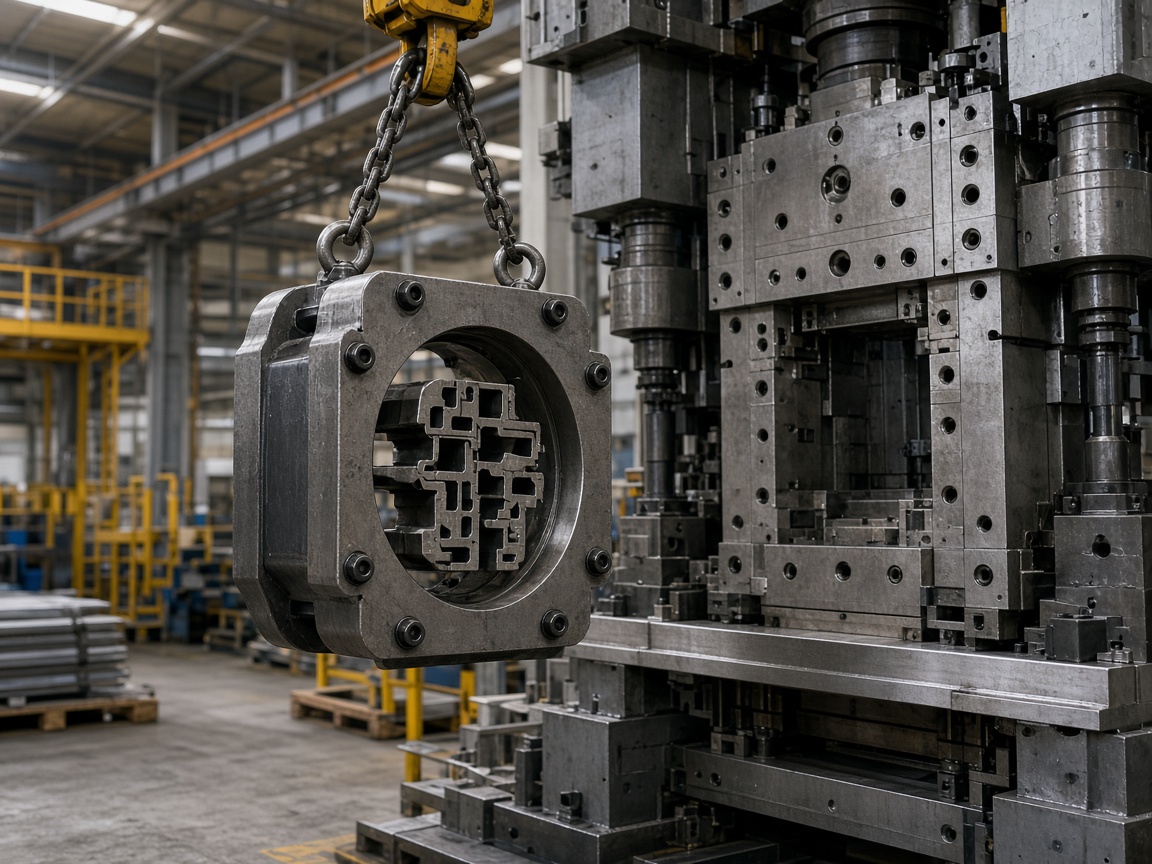
The drawing must freeze wall, slot and CCD before steel is cut; late tweaks reset the die clock. Sample length is usually a few metres for fit and anodising colour check. Tooling title is covered under who owns the die; the same page decides whether a later supplier can reuse the tool. Die making is the bottleneck on this path — not the press itself.
What is the fastest delivery for to (by size)
Fastest production delivery to a named overseas port is existing-die mill finish in 12–20 days plus ~18 days sea; anodised existing-die work lands closer to 18–28 days production plus sea; new-die anodised work sits at 30–40 days plus sea.
The table collapses destination asks (US, Germany, and others) onto one production grid: ocean is the same ~18-day adder on common lanes once the container sails from Shanghai or Ningbo. Section changes packing density and 40HQ fill, not the die clock.
| Section | Stock lengths | Packing | Qty per 40HQ | Lead time |
|---|---|---|---|---|
| 100×100 | 6.02 m stock bars (5.8 / 6.0 m on request) | ISPM 15 timber cradle, IPPC mark | ~1,200 m | 12–20 d mill / 18–28 d anodised existing die; +18 d sea |
| 160×80 | 6.02 m stock bars (5.8 / 6.0 m on request) | ISPM 15 timber cradle, IPPC mark | ~1,200 m | 12–20 d mill / 18–28 d anodised existing die; +18 d sea |
| 20×20 | 6.02 m stock bars (5.8 / 6.0 m on request) | ISPM 15 timber cradle, IPPC mark | ~14,000 m | 12–20 d mill / 18–28 d anodised existing die; +18 d sea |
| 30×30 | 6.02 m stock bars (5.8 / 6.0 m on request) | ISPM 15 timber cradle, IPPC mark | ~14,000 m | 12–20 d mill / 18–28 d anodised existing die; +18 d sea |
| 40×40 | 6.02 m stock bars (5.8 / 6.0 m on request) | ISPM 15 timber cradle, IPPC mark | ~7,000 m | 12–20 d mill / 18–28 d anodised existing die; +18 d sea |
| 40×80 | 6.02 m stock bars (5.8 / 6.0 m on request) | ISPM 15 timber cradle, IPPC mark | ~4,500 m | 12–20 d mill / 18–28 d anodised existing die; +18 d sea |
| 45×45 | 6.02 m stock bars (5.8 / 6.0 m on request) | ISPM 15 timber cradle, IPPC mark | ~7,000 m | 12–20 d mill / 18–28 d anodised existing die; +18 d sea |
| 45×90 | 6.02 m stock bars (5.8 / 6.0 m on request) | ISPM 15 timber cradle, IPPC mark | ~2,800 m | 12–20 d mill / 18–28 d anodised existing die; +18 d sea |
| 50×50 | 6.02 m stock bars (5.8 / 6.0 m on request) | ISPM 15 timber cradle, IPPC mark | ~4,500 m | 12–20 d mill / 18–28 d anodised existing die; +18 d sea |
| 80×80 | 6.02 m stock bars (5.8 / 6.0 m on request) | ISPM 15 timber cradle, IPPC mark | ~1,800 m | 12–20 d mill / 18–28 d anodised existing die; +18 d sea |
| 90×90 | 6.02 m stock bars (5.8 / 6.0 m on request) | ISPM 15 timber cradle, IPPC mark | ~1,800 m | 12–20 d mill / 18–28 d anodised existing die; +18 d sea |
What is the sample lead time for (by size)
Sample lead time is 5–10 days cut from existing-die stock when metal is on the rack, or 14–25 days when a short press and anodising trial are required; new-die samples follow the 7–12 day tooling gate first.
Samples under 3 m ship in plywood cases; longer bars use the same ISPM 15 cradle logic as production. Air freight after the sample is ready typically adds three to seven days door-to-door depending on the airport pair.
| Section | Stock lengths | Packing | Qty per 40HQ | Lead time |
|---|---|---|---|---|
| 100×100 | 6.02 m stock bars (5.8 / 6.0 m on request) | ISPM 15 timber cradle, IPPC mark | ~1,200 m | 5–10 d from rack; 14–25 d short press + anodise; +air or +18 d sea |
| 160×80 | 6.02 m stock bars (5.8 / 6.0 m on request) | ISPM 15 timber cradle, IPPC mark | ~1,200 m | 5–10 d from rack; 14–25 d short press + anodise; +air or +18 d sea |
| 20×20 | 6.02 m stock bars (5.8 / 6.0 m on request) | ISPM 15 timber cradle, IPPC mark | ~14,000 m | 5–10 d from rack; 14–25 d short press + anodise; +air or +18 d sea |
| 30×30 | 6.02 m stock bars (5.8 / 6.0 m on request) | ISPM 15 timber cradle, IPPC mark | ~14,000 m | 5–10 d from rack; 14–25 d short press + anodise; +air or +18 d sea |
| 40×40 | 6.02 m stock bars (5.8 / 6.0 m on request) | ISPM 15 timber cradle, IPPC mark | ~7,000 m | 5–10 d from rack; 14–25 d short press + anodise; +air or +18 d sea |
| 40×80 | 6.02 m stock bars (5.8 / 6.0 m on request) | ISPM 15 timber cradle, IPPC mark | ~4,500 m | 5–10 d from rack; 14–25 d short press + anodise; +air or +18 d sea |
| 45×45 | 6.02 m stock bars (5.8 / 6.0 m on request) | ISPM 15 timber cradle, IPPC mark | ~7,000 m | 5–10 d from rack; 14–25 d short press + anodise; +air or +18 d sea |
| 45×90 | 6.02 m stock bars (5.8 / 6.0 m on request) | ISPM 15 timber cradle, IPPC mark | ~2,800 m | 5–10 d from rack; 14–25 d short press + anodise; +air or +18 d sea |
| 50×50 | 6.02 m stock bars (5.8 / 6.0 m on request) | ISPM 15 timber cradle, IPPC mark | ~4,500 m | 5–10 d from rack; 14–25 d short press + anodise; +air or +18 d sea |
| 80×80 | 6.02 m stock bars (5.8 / 6.0 m on request) | ISPM 15 timber cradle, IPPC mark | ~1,800 m | 5–10 d from rack; 14–25 d short press + anodise; +air or +18 d sea |
| 90×90 | 6.02 m stock bars (5.8 / 6.0 m on request) | ISPM 15 timber cradle, IPPC mark | ~1,800 m | 5–10 d from rack; 14–25 d short press + anodise; +air or +18 d sea |
Do you keep in stock for immediate dispatch (by size)
Common 20×20, 30×30, 40×40 and 45×45 silver-anodised bars are held as rotating stock for short dispatch; heavy 80×80, 90×90, 100×100 and 160×80 are usually press-to-order.
“Immediate” here means pick, pack and document within a few days when the SKU is on the rack — not same-day container sailing. Stock depths move with season; always confirm metres available before promising a customer’s install date. Non-stock sections fall back to the existing-die or new-die calendars above.
| Section | Stock lengths | Packing | Qty per 40HQ | Lead time |
|---|---|---|---|---|
| 100×100 | 6.02 m stock bars (5.8 / 6.0 m on request) | ISPM 15 timber cradle, IPPC mark | ~1,200 m | Press-to-order; use existing-die calendar |
| 160×80 | 6.02 m stock bars (5.8 / 6.0 m on request) | ISPM 15 timber cradle, IPPC mark | ~1,200 m | Press-to-order; use existing-die calendar |
| 20×20 | 6.02 m stock bars (5.8 / 6.0 m on request) | ISPM 15 timber cradle, IPPC mark | ~14,000 m | Rotating stock; pick/pack in 2–5 days when on rack |
| 30×30 | 6.02 m stock bars (5.8 / 6.0 m on request) | ISPM 15 timber cradle, IPPC mark | ~14,000 m | Rotating stock; pick/pack in 2–5 days when on rack |
| 40×40 | 6.02 m stock bars (5.8 / 6.0 m on request) | ISPM 15 timber cradle, IPPC mark | ~7,000 m | Rotating stock; pick/pack in 2–5 days when on rack |
| 40×80 | 6.02 m stock bars (5.8 / 6.0 m on request) | ISPM 15 timber cradle, IPPC mark | ~4,500 m | Rotating stock; pick/pack in 2–5 days when on rack |
| 45×45 | 6.02 m stock bars (5.8 / 6.0 m on request) | ISPM 15 timber cradle, IPPC mark | ~7,000 m | Rotating stock; pick/pack in 2–5 days when on rack |
| 45×90 | 6.02 m stock bars (5.8 / 6.0 m on request) | ISPM 15 timber cradle, IPPC mark | ~2,800 m | Press-to-order; use existing-die calendar |
| 50×50 | 6.02 m stock bars (5.8 / 6.0 m on request) | ISPM 15 timber cradle, IPPC mark | ~4,500 m | Rotating stock; pick/pack in 2–5 days when on rack |
| 80×80 | 6.02 m stock bars (5.8 / 6.0 m on request) | ISPM 15 timber cradle, IPPC mark | ~1,800 m | Press-to-order; use existing-die calendar |
| 90×90 | 6.02 m stock bars (5.8 / 6.0 m on request) | ISPM 15 timber cradle, IPPC mark | ~1,800 m | Press-to-order; use existing-die calendar |
What is the lead time for on an existing die (by size)
On an existing die, expect 12–20 days for mill finish and about 18–28 days when silver anodising is included, before the ~18-day sea adder.
Section mass changes press hours slightly but does not reopen tooling. Black anodising or a special RAL powder coat can add a bath or cure queue beyond the silver band. The five-stage split for planning is: (1) PO and deposit 1–2 days, (2) die skip = 0 days, (3) extrusion 5–10 days, (4) anodising 5–10 days or 0 if mill, (5) pack and load 2–3 days, then sea.
| Section | Stock lengths | Packing | Qty per 40HQ | Lead time |
|---|---|---|---|---|
| 100×100 | 6.02 m stock bars (5.8 / 6.0 m on request) | ISPM 15 timber cradle, IPPC mark | ~1,200 m | 12–20 d mill; 18–28 d silver anodised; +18 d sea |
| 160×80 | 6.02 m stock bars (5.8 / 6.0 m on request) | ISPM 15 timber cradle, IPPC mark | ~1,200 m | 12–20 d mill; 18–28 d silver anodised; +18 d sea |
| 20×20 | 6.02 m stock bars (5.8 / 6.0 m on request) | ISPM 15 timber cradle, IPPC mark | ~14,000 m | 12–20 d mill; 18–28 d silver anodised; +18 d sea |
| 30×30 | 6.02 m stock bars (5.8 / 6.0 m on request) | ISPM 15 timber cradle, IPPC mark | ~14,000 m | 12–20 d mill; 18–28 d silver anodised; +18 d sea |
| 40×40 | 6.02 m stock bars (5.8 / 6.0 m on request) | ISPM 15 timber cradle, IPPC mark | ~7,000 m | 12–20 d mill; 18–28 d silver anodised; +18 d sea |
| 40×80 | 6.02 m stock bars (5.8 / 6.0 m on request) | ISPM 15 timber cradle, IPPC mark | ~4,500 m | 12–20 d mill; 18–28 d silver anodised; +18 d sea |
| 45×45 | 6.02 m stock bars (5.8 / 6.0 m on request) | ISPM 15 timber cradle, IPPC mark | ~7,000 m | 12–20 d mill; 18–28 d silver anodised; +18 d sea |
| 45×90 | 6.02 m stock bars (5.8 / 6.0 m on request) | ISPM 15 timber cradle, IPPC mark | ~2,800 m | 12–20 d mill; 18–28 d silver anodised; +18 d sea |
| 50×50 | 6.02 m stock bars (5.8 / 6.0 m on request) | ISPM 15 timber cradle, IPPC mark | ~4,500 m | 12–20 d mill; 18–28 d silver anodised; +18 d sea |
| 80×80 | 6.02 m stock bars (5.8 / 6.0 m on request) | ISPM 15 timber cradle, IPPC mark | ~1,800 m | 12–20 d mill; 18–28 d silver anodised; +18 d sea |
| 90×90 | 6.02 m stock bars (5.8 / 6.0 m on request) | ISPM 15 timber cradle, IPPC mark | ~1,800 m | 12–20 d mill; 18–28 d silver anodised; +18 d sea |
What is the lead time for repeat orders of (by variant)
Repeat orders on a proven die and finish compress toward the bottom of the existing-die band; quantity changes press hours and freight mode more than the start date.
Die making does not recur, which is why die making adds 7–12 days only on the first tool path. Large repeats that fill a 40HQ often clear documents faster because packing is a single FCL pattern.
| Section | Stock lengths | Packing | Qty per 40HQ | Lead time |
|---|---|---|---|---|
| Repeat 100 m | 6.02 m stock bars (5.8 / 6.0 m on request) | Plywood case if cut <3 m; else ISPM 15 cradle | LCL / share container | 12–18 d mill; 18–25 d anodised; +18 d sea |
| Repeat 500 m | 6.02 m stock bars (5.8 / 6.0 m on request) | ISPM 15 timber cradle, IPPC mark | LCL or part 40HQ | 12–18 d mill; 18–25 d anodised; +18 d sea |
| Repeat 1 tonne | 6.02 m stock bars (5.8 / 6.0 m on request) | ISPM 15 timber cradle, IPPC mark | Part / full 40HQ by section | 14–20 d mill; 18–28 d anodised; +18 d sea |
| Repeat 2 tonnes | 6.02 m stock bars (5.8 / 6.0 m on request) | ISPM 15 timber cradle, IPPC mark | Often FCL | 14–20 d mill; 18–28 d anodised; +18 d sea |
| Repeat 5 tonnes | 6.02 m stock bars (5.8 / 6.0 m on request) | ISPM 15 timber cradle, IPPC mark | 1×40HQ class | 16–22 d incl. schedule buffer; +18 d sea |
| Call-off contract | Agreed lengths | ISPM 15 timber cradle, IPPC mark | Per release | Held press/anodise slots; confirm each release week |
RFQ checklist — lead time
- Die status — existing die number or new tool.
- Finish — mill, silver, black, or powder coat.
- Quantity and lengths — metres or tonnes; stock or cut list.
- Incoterm and port — FOB Shanghai / Ningbo, CIF, DAP or DDP.
- Need-by date — install or kit date at destination, not only FOB week.
Ask whether the quote calendar already includes the ~18-day sea adder. Factory weeks and door-to-door weeks are different numbers.
Four ways a lead-time promise breaks
Related on this site
- how die cost amortises per meter — cost side of the same order
- minimum order with a new die — 150 m vs 500 m gates
- die making adds 7–12 days — tooling on the critical path
- who owns the die — reuse rights for repeat orders
Terms used in this article
- Existing die
- A tool already cut for the section; production skips the 7–12 day die gate.
- New die
- First tool for a section; bottleneck stage before the press.
- Mill finish
- As-extruded surface with no anodising; shortest finishing path.
- ISPM 15 cradle
- Heat-treated timber packing with IPPC mark for export.
- 40HQ
- 40-foot high-cube container; fill limited by weight or volume of 6 m bars.
Questions buyers ask
Can you ship to a named port?
Yes. Production ships FOB Shanghai or Ningbo; CIF, DAP and DDP are available to named ports and places. Sea transit is typically about 18 days on common Asia–US and Asia–Europe lanes, added after the production calendar below.
Who handles customs clearance?
Under FOB and CIF the buyer or their broker clears at destination. Under DAP the seller delivers ready for unloading and the buyer clears. Under DDP the seller arranges clearance and duty. State the Incoterm on the PO so the document set matches.
What if the shipment is delayed?
We flag press or anodising slips as soon as the schedule moves, with a revised ship week. Ocean delay after departure is on the carrier schedule; CIF insurance covers defined marine risks. Critical projects should leave buffer beyond the 18-day sea adder.
Do you consolidate small orders?
Yes when several line items share a sailing and Incoterm. Consolidation reduces LCL cost but may wait for the next shared cut-off. Urgent single lines can ship alone as LCL or air for samples.
Send die status, finish and need-by date
Tell us existing vs new die, mill vs anodised, metres and the destination port. We return a production week plus the ~18-day sea adder so you can plan door-to-door.
Request a lead-time sheetRelated reading
Twelve more engineering notes from this blog, picked for this article — plus every category below.
 Quality and InspectionSampling and First Article Approval for Aluminium Extrusion
 Quality and InspectionGlobal Sourcing Excellence: Multi-Category OEM and ODM Manufacturing and Supply Chain Integration
 ApplicationsAluminium Workbench Fit-Out: When the Accessories and the Joints Compete for the Same Slot
 Engineering DesignHeavy-Duty T-Slot Hinges and Sliding Door Buffers: Sizing Them with Numbers
 Applications40×40 Aluminium Profile: Where It Works, Where It Fails, and Why
 Engineering DesignWhat Is a 4080 Aluminium Profile? (Weight, Slot and Load)
 Engineering DesignHow to Choose an Aluminium Extrusion Profile: The Three Decisions That Bind
- ApplicationsAluminium Profile Shelving: It Buckles and Tips Before It Bends
 ApplicationsAluminium Profiles in Solar Mounting: Wind Uplift, Corrosion and a 25-Year Life
 ApplicationsAluminium Profile for LED Strips: A Heat Sink First, a Housing Second
 Quality and InspectionAnodising vs Powder Coating: Thickness, Colour, Salt Spray
 ApplicationsESD-Safe Aluminum Profile Workbenches: Why Anodising Alone Fails the Audit
