Anodising and Powder Coating: Thickness, Colour and Salt Spray
For outdoor T-slot workbenches choose sealed anodising at 20–25 µm or exterior polyester powder at ≥60 µm; decorative 10 µm indoor anodising is the wrong finish for weather, and colour breadth belongs to powder, not to the dye tank.
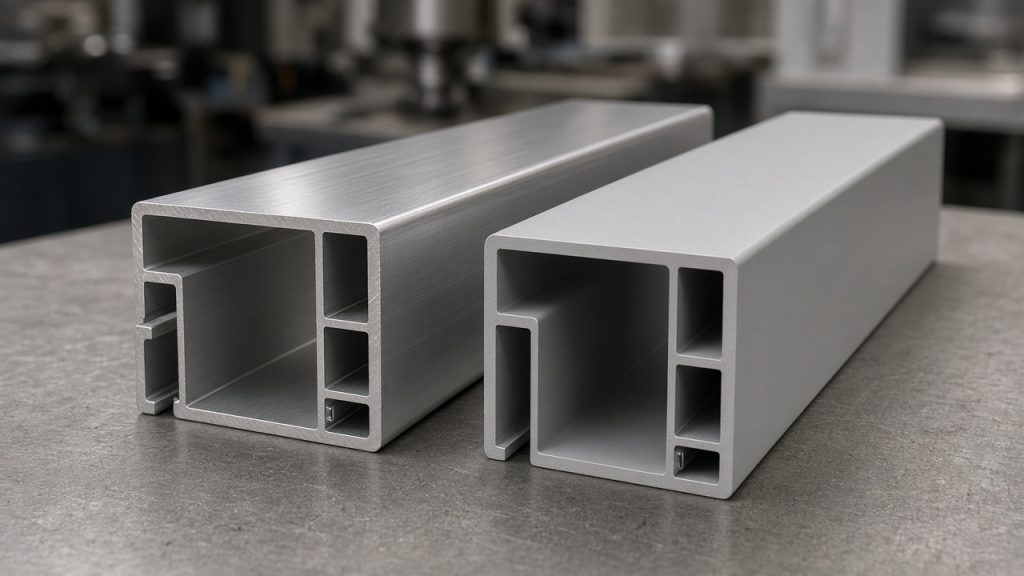
Short answer
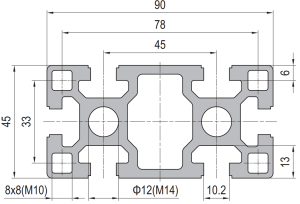
Anodising grows an oxide that cannot peel and keeps dimensional build small, which is why it is the default on precision T-slot. Powder coating lays a thicker organic film that covers colour brands, hides minor extrusion marks and takes impact better, at the cost of build-up on slots and edges. Outdoors, sealed architectural anodising at about 20–25 µm or a QUALICOAT-class exterior polyester at minimum 60 µm both work when pretreatment and sealing are real; salt-spray hours only count with a named class and a scribe criterion. One anodising production run is one dye colour per rack set. Pantone and RAL matches are a powder job. Mill-to-silver-anodised adder in 2026 FOB China is roughly USD 0.35–0.55 per kilogram, which is why the metre delta scales with section mass — from about USD 0.20–0.30/m on 20×20 to several dollars per metre on 80×80 and above. Reference section: 45×90 six-slot 6063-T5 at 4.10 kg/m, I ≈ 68 cm⁴, under EN 755-9 extrusion tolerances and EN ISO 7599 for the anodic film.
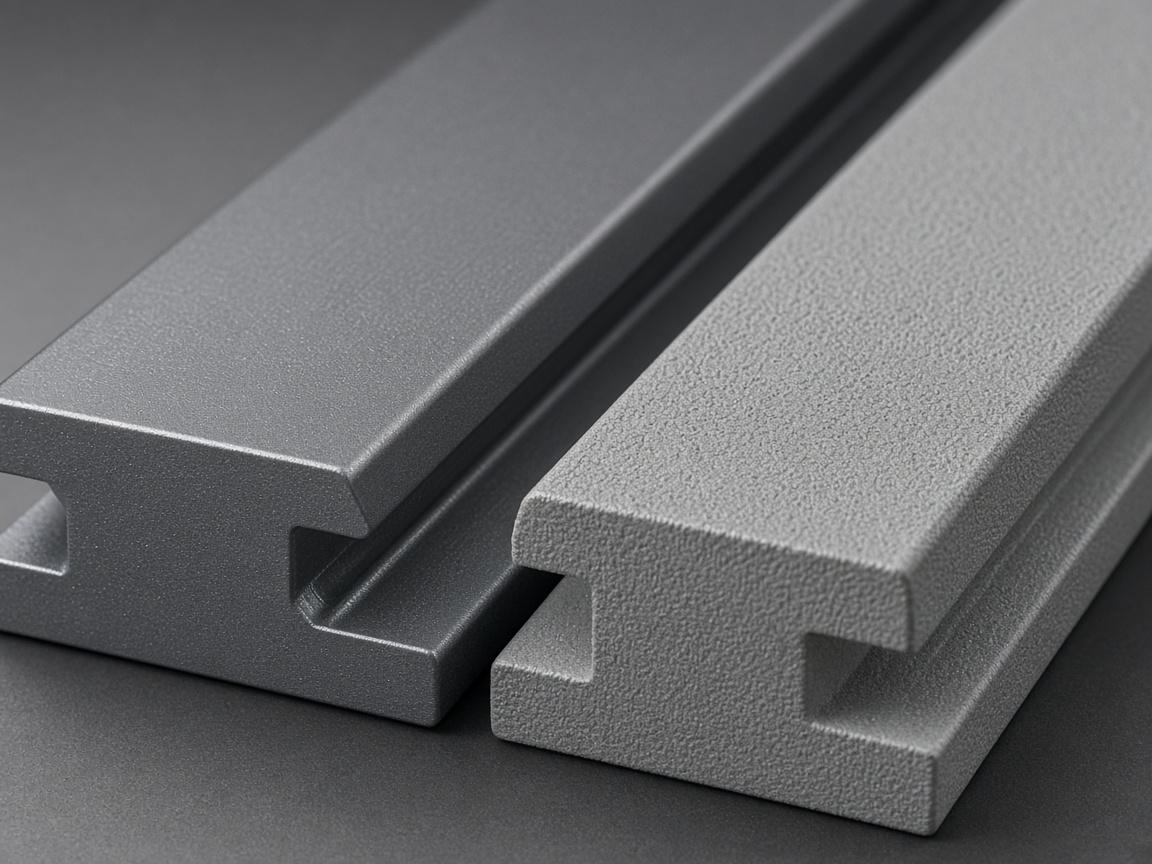
What finish for a workbench used outdoors
Specify sealed anodising at 20–25 µm for a metallic look that will not chip, or exterior polyester powder at ≥60 µm when brand colour and impact cover matter more than micron build.
Mill finish outdoors is a maintenance plan, not a finish. Indoor clear anodising at 10–12 µm is under-specified for rain and UV. Coastal or poolside exposure needs the AA25 class of thinking: thicker sealed film or a proven outdoor powder system with documented salt-spray performance. Pretreatment (clean, etch, deoxidise for anodising; chromate-free conversion or equivalent for powder) decides life more than brochure microns. Mask core holes and critical slot faces if powder build would bind T-nuts.
| Exposure | Anodising target | Powder target | Avoid | Workbench note |
|---|---|---|---|---|
| Covered shop, dry | 10–15 µm sealed | Optional | Nothing critical | Silver anodise default |
| Outdoor inland | 20 µm sealed | ≥60 µm polyester | Mill finish | Either route OK |
| Coastal / salt air | 25 µm sealed | Exterior class + salt-spray proof | Indoor dye only | Ask for hours + scribe |
| High UV, colour brand | Limited dye stability | UV-stable polyester / fluoropolymer | Cheap epoxy powder | Powder wins colour |
| Impact / trolley abuse | Hard, thin; shows dents in metal | Thick film absorbs chips better until metal shows | Thin powder <40 µm | Powder for colour covers |
| Tight slot hardware | Minimal build | Mask slots / ream after | Unmasked powder in mouth | Anodise easier for fit |
Anodised vs powder coated for a workbench which lasts longer
Neither “lasts longer” in the abstract: sealed thick anodising outlasts thin powder that chips to bare metal, while a sound exterior powder system outlasts under-specified decorative anodising in colour-critical outdoor use.
Anodic film is part of the aluminium, so a scratch does not lift a coating edge. Hardcoat (Type III) raises wear resistance further and moves dimensions more. Powder’s advantage is film thickness and colour stability under UV when the resin is outdoor-rated; its failure mode is chip-then-undercut. For a bolted T-slot bench that is repositioned often, anodising usually ages more gracefully on edges and slot lips. For a branded outdoor station in a corporate colour, powder is the durable colour carrier. Demand the test method (ISO 9227 / ASTM B117), hours and acceptance, not a marketing “salt spray resistant” line.
| Factor | Anodised | Powder coated | Longer-life pick |
|---|---|---|---|
| Typical thickness | 10–25 µm (Type II) | 60–120 µm | Depends on class |
| Chip / peel | Cannot peel | Can chip to substrate | Anodise on edges |
| Abrasion | Very hard oxide | Softer, more impact-forgiving | Hardcoat vs thick powder |
| UV / colour | Metallic stable; dyes vary | Outdoor resins hold colour | Powder for brand colour |
| Heat | Ceramic-like oxide | Resin limits ~200 °C | Anodise near heat |
| Repair | Re-anodise part | Touch-up possible | Powder easier field fix |
What surface finishes are available for a custom profile
Custom extruded profiles ship mill finish, clear or coloured anodised, or powder coated; brushing, polishing and bead-blast are pretreatments that change how those finishes look, not separate corrosion systems.
Mill finish is the as-extruded metal after ageing — fine indoors when appearance is secondary. Clear (silver) anodising is the industrial default for T-slot. Black anodising uses dye in the porous film before sealing. Other anodising colours exist but the palette is narrower and alloy-sensitive (6063 behaves more predictably than some 6xxx variants). Powder opens RAL and many Pantone targets with gloss, matt and texture options. Electrophoresis and wood-grain sublimation appear on architectural custom work more than on machine framing. Always state masking, significant surfaces and whether slots must remain hardware-fit after coating. Extrusion itself stays under EN 755-9; anodising under EN ISO 7599; composition references GB/T 6892 for Chinese mill certificates.
What anodising colours can you match
Clear and black are production standards; bronze, champagne, blue, red and gold families are matchable within dye limits, but anodising is not a Pantone printing process.
The anodic layer is translucent. Colour is dye or electrolytic colouring in the pores, then seal. Batch-to-batch shade moves with alloy, temper, film thickness and bath age, so “match this phone photo” fails. Send a physical chip or a prior lot sample, freeze thickness (e.g. 15 µm average), and approve a sealed first article. True white and bright brand primaries are poor anodising targets — route those to powder. Hardcoat darkens and dulls colour further. For OEM programmes, lock one alloy (typically 6063-T5), one thickness and one dye recipe on the PO.
How many colours can you anodise in one production run
One colour per anodising load: racks share the same dye bath, so a second colour is a second run with its own setup.
Clear anodising can share a clear line; dyed colours cannot share a bath without contamination. Practical factories batch by colour and thickness. Mixing silver and black on one rack is not a cost-saving idea — it doubles handling. If a frame needs two colours, plan separate profiles or powder the accent parts. Small sample lots still pay the bath change; that is why colour proliferation hits unit cost faster than metre count. Lead time grows with each extra colour queue; die making adds 7–12 days only when the section itself is new, not when you only change dye.
Can you match a pantone colour in powder coating
Yes for most opaque Pantone and RAL targets in powder; no for expecting the same match from anodising.
Powder suppliers formulate or select a stock RAL that sits inside a ΔE agreement, then spray and cure a panel for sign-off under agreed light. Metallic and fluorescent Pantones are harder and need explicit process notes. Film thickness (target ≥60 µm on significant faces for exterior class work) and gloss must be on the same approval. Mask threads, bearing seats and slot mouths before coat. Recoats and touch-ups will not always hit the same ΔE as the first pass — freeze the recipe and the applicator. Minimum order with a new die is a metal question; colour MOQ is a powder-stock question and should be quoted as its own line.
What is the price difference between mill finish and anodised (by size)
In 2026 FOB China planning bands, silver anodising adds roughly USD 0.35–0.55 per kilogram over mill, so the metre adder tracks section mass from about USD 0.20/m on 20×20 to several USD/m on large squares.
Option A is mill finish; Option B is silver anodised 6063-T5 off an existing die at mid volume. Black dye, hardcoat and rush slots sit above Option B. Powder is usually a separate line and often lands above silver anodise for the same metres when colour matching and masking are included. How die cost amortises per meter still dominates custom sections; finish is the second lever. Who owns the die does not change the finish chemistry, only who pays tooling once.
| Criterion (section) | Option A — mill (USD/m) | Option B — silver anodised (USD/m) | Verdict |
|---|---|---|---|
| 100×100 (100100) | USD 26.20–34.70/m | USD 30.87–40.82/m | Anodise adder ~USD 4.5–6.1/m (2026 FOB) |
| 160×80 (16080) | USD 24.50–32.40/m | USD 28.81–38.10/m | Anodise adder ~USD 4.3–5.7/m (2026 FOB) |
| 20×20 (2020) | USD 1.20–1.90/m | USD 1.40–2.20/m | Anodise adder ~USD 0.20–0.30/m (2026 FOB) |
| 30×30 (3030) | USD 2.40–3.10/m | USD 2.80–3.60/m | Anodise adder ~USD 0.35–0.50/m (2026 FOB) |
| 40×40 (4040) | USD 3.70–4.80/m | USD 4.34–5.58/m | Anodise adder ~USD 0.55–0.80/m (2026 FOB) |
| 40×80 (4080) | USD 7.15–9.20/m | USD 8.40–10.80/m | Anodise adder ~USD 1.10–1.60/m (2026 FOB) |
| 45×45 (4545) | USD 4.75–6.15/m | USD 5.60–7.20/m | Anodise adder ~USD 0.75–1.05/m (2026 FOB) |
| 45×90 (4590) | USD 9.75–12.55/m | USD 11.48–14.76/m | Anodise adder ~USD 1.50–2.20/m (2026 FOB) |
| 50×50 (5050) | USD 6.20–8.00/m | USD 7.28–9.36/m | Anodise adder ~USD 0.95–1.40/m (2026 FOB) |
| 80×80 (8080) | USD 14.30–18.40/m | USD 16.80–21.60/m | Anodise adder ~USD 2.20–3.20/m (2026 FOB) |
| 90×90 (9090) | USD 19.05–24.50/m | USD 22.40–28.80/m | Anodise adder ~USD 3.00–4.30/m (2026 FOB) |
RFQ checklist — finish
- Service environment — indoor, outdoor inland, coastal; cleaning chemicals.
- Finish route — mill, clear/black anodise (µm), or powder (RAL/Pantone, gloss).
- Standards — EN ISO 7599 for anodising; name salt-spray method and hours if required.
- Masking — slots, core holes, machined datums.
- Colour count — one anodise colour per run; list powder colours separately.
- Quantity and die — metres plus existing vs new tool.
Approve a sealed colour chip and a coated slot sample before the production PO. Microns on paper without a fit check still bind hardware.
Four finish mistakes on T-slot
Related on this site
- how die cost amortises per meter — finish sits on top of the metal metre
- minimum order with a new die — colour samples vs production MOQ
- die making adds 7–12 days — finish queue after extrusion
- who owns the die — custom section before finish talk
Terms used in this article
- Anodising
- Electrochemical growth of aluminium oxide on the surface; sealed after optional dyeing.
- Type II / Type III
- Sulphuric decorative anodising versus harder, thicker hardcoat anodising.
- Powder coating
- Electrostatic powder applied and heat-cured into an organic film.
- Sealing
- Closing anodic pores after dyeing; poor seal ruins outdoor life even at high microns.
- QUALICOAT class
- Powder coating quality classes that set minimum film and weathering expectations.
Questions buyers ask
Which is cheaper at volume?
Mill finish is cheapest. Silver anodising adds about USD 0.35–0.55/kg in 2026 FOB China bands, so light sections stay cheap per metre and heavy sections show a larger adder. Powder with a custom Pantone and masking often exceeds silver anodise at the same volume. Hardcoat and multi-colour anodise runs cost more than clear.
Which is stiffer?
Neither finish changes section stiffness in any useful way. A 45×90 at 4.10 kg/m and I ≈ 68 cm⁴ is as stiff mill or anodised; powder’s 60–120 µm film does not act as structure. Choose the section for I, then the finish for environment and colour.
Which lasts longer outdoors?
Sealed 20–25 µm anodising or exterior polyester powder ≥60 µm both last outdoors when specified and tested. Thin indoor anodise and interior epoxy powder fail early. Coastal projects need documented salt-spray class, not a generic claim.
Can I mix the two?
Yes: anodised structural rails with powder-coated panels or accent parts is a normal OEM split. Do not anodise and powder the same significant face unless the process route is engineered (e.g. anodic pretreatment under powder). Keep slot fit rules on each part.
Send environment, colour target and a slot sample requirement
Tell us indoor vs outdoor, anodise microns or powder RAL/Pantone, masking needs and metres. We quote mill vs anodised USD/m by section and confirm slot fit after finish.
Request a quoteRelated reading
Twelve more engineering notes from this blog, picked for this article — plus every category below.
 Quality and InspectionSampling and First Article Approval for Aluminium Extrusion
 Quality and InspectionAluminium Profile Finishes: Choose by Failure Mode, Not by Process Name
 ApplicationsCleanroom and Medical Framing: There Is No Medical-Grade Aluminium Extrusion
 Materials and Engineering6063-T5 Aluminium Profile: What the Designation Actually Guarantees
 Engineering DesignAluminium Profile Anchor Pins: A Preloaded Joint, Not a Pin
 Materials and EngineeringAluminium Corrosion: Why a Salt Spray Number Is a Ranking, Not a Life
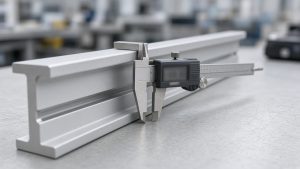 Engineering DesignWhat EN 755-9 Allows: Aluminium Extrusion Tolerances
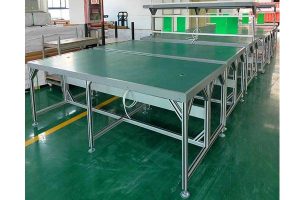 Engineering DesignESD Anti-Static Workbench Grounding: The Four Joints That Break the Path
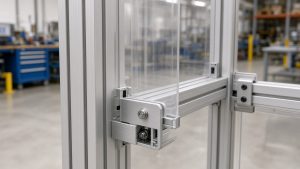 ApplicationsHow to Fix Panels, Guards and Accessories to Aluminium Profiles
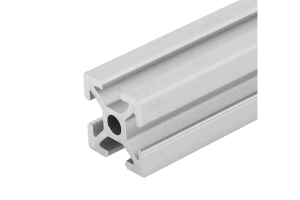 Engineering DesignWhat Is a 2020 Aluminium Profile? (Weight, Slot and Load)
 Materials and EngineeringAluminium Extrusion Section Design: What Each Feature on the Drawing Costs You
 ApplicationsWhy T-Slot Aluminium Profiles Are Used in Automation and When They Are Not
