4080 vs 4545 Aluminium Profile: Which for Your Frame
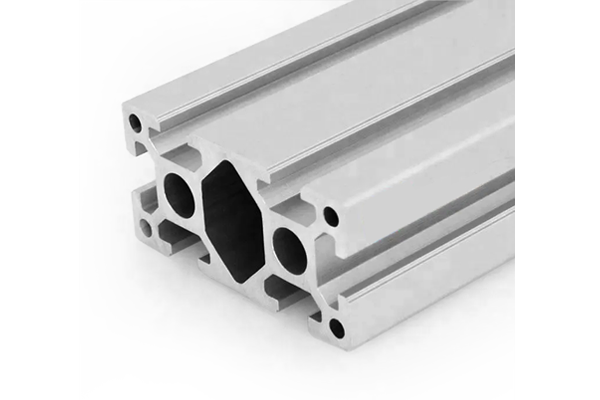
Engineering Design · 4080 vs 4545, square vs rectangle, series 4080 vs 4545 Aluminium Profile Choose 4080 when the load is directional and you stay in 40-series hardware; move to 4545 when you need equal stiffness on both axes in a 45-series square. Deflection still governs — 4080 runs 1.30–3.60 kg/m, 4545 runs 1.15–3.30 kg/m. […]
4040 vs 4080 Aluminium Profile: Which for Your Frame
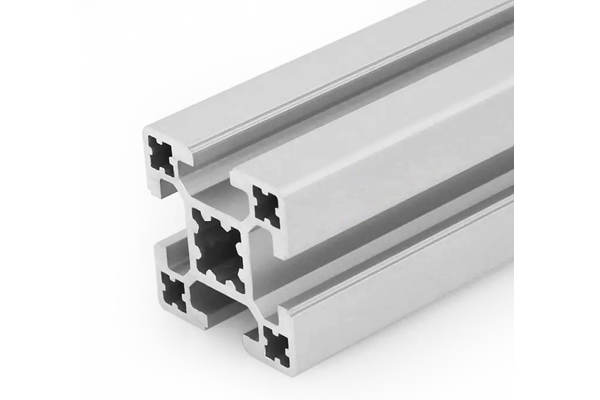
Engineering Design · 4040 vs 4080, orientation, long rails 4040 vs 4080 Aluminium Profile Choose 4040 when the frame is light and short; move to 4080 the moment span or load starts to govern. The switch is driven by deflection, not strength — 4040 runs 1.05–2.35 kg/m, 4080 runs 1.30–3.60 kg/m. Decide on Strong-axis I […]
3030 vs 4040 Aluminium Profile: Which for Your Frame
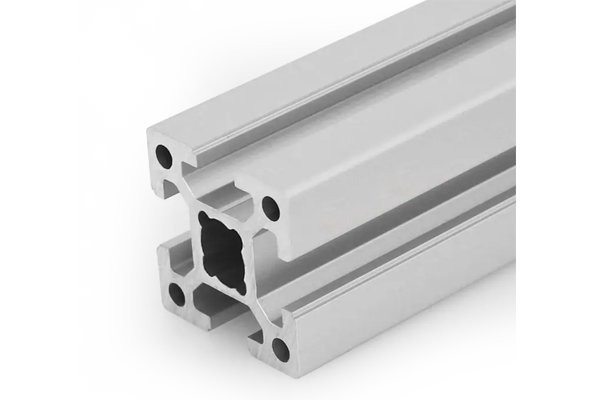
Engineering Design · 3030 vs 4040, stiffness jump, industrial frames 3030 vs 4040 Aluminium Profile Choose 3030 when the frame is light and short; move to 4040 the moment span or load starts to govern. The switch is driven by deflection, not strength — 3030 runs 0.62–1.15 kg/m, 4040 runs 1.05–2.35 kg/m. Decide on Ix […]
2020 vs 3030 Aluminium Profile: Which for Your Frame
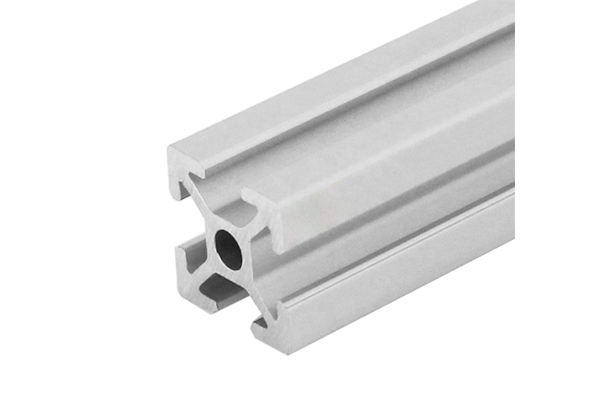
Engineering Design · 2020 vs 3030, deflection, frame size 2020 vs 3030 Aluminium Profile Choose 2020 when the frame is light and short; move to 3030 the moment span or load starts to govern. The switch is driven by deflection, not strength — 2020 runs 0.38–0.62 kg/m, 3030 runs 0.62–1.15 kg/m. Decide on Span, payload, […]
What Is a 4080 Aluminium Profile? (Weight, Slot and Load)
Engineering Design · 40×80 section, kg/m, slot What Is a 4080 Aluminium Profile? A 4080 aluminium profile is a 40 × 80 mm T-slot section. In the grownparts range it runs 1.30–3.60 kg/m depending on wall thickness, with slot variants across the range (table below). Envelope 40 × 80 mm Mass band 1.30–3.60 kg/m Reference […]
What Is a 4040 Aluminium Profile? (Weight, Slot and Load)
Engineering Design · 40×40 section, kg/m, slot What Is a 4040 Aluminium Profile? A 4040 aluminium profile is a 40 × 40 mm T-slot section. In the grownparts range it runs 1.05–2.35 kg/m depending on wall thickness, with slot variants across the range (table below). Envelope 40 × 40 mm Mass band 1.05–2.35 kg/m Reference […]
What Is a 3030 Aluminium Profile? (Weight, Slot and Load)
Engineering Design · 30×30 section, kg/m, slot What Is a 3030 Aluminium Profile? A 3030 aluminium profile is a 30 × 30 mm T-slot section. In the grownparts range it runs 0.62–1.15 kg/m depending on wall thickness, with slot variants across the range (table below). Envelope 30 × 30 mm Mass band 0.62–1.15 kg/m Reference […]
What Is a 2020 Aluminium Profile? (Weight, Slot and Load)
Engineering Design · 20×20 section, kg/m, slot What Is a 2020 Aluminium Profile? A 2020 aluminium profile is a 20 × 20 mm T-slot section. In the grownparts range it runs 0.38–0.62 kg/m depending on wall thickness, with slot variants across the range (table below). Envelope 20 × 20 mm Mass band 0.38–0.62 kg/m Reference […]
Aluminium Profile Weight per Meter Chart (20–60 Series)
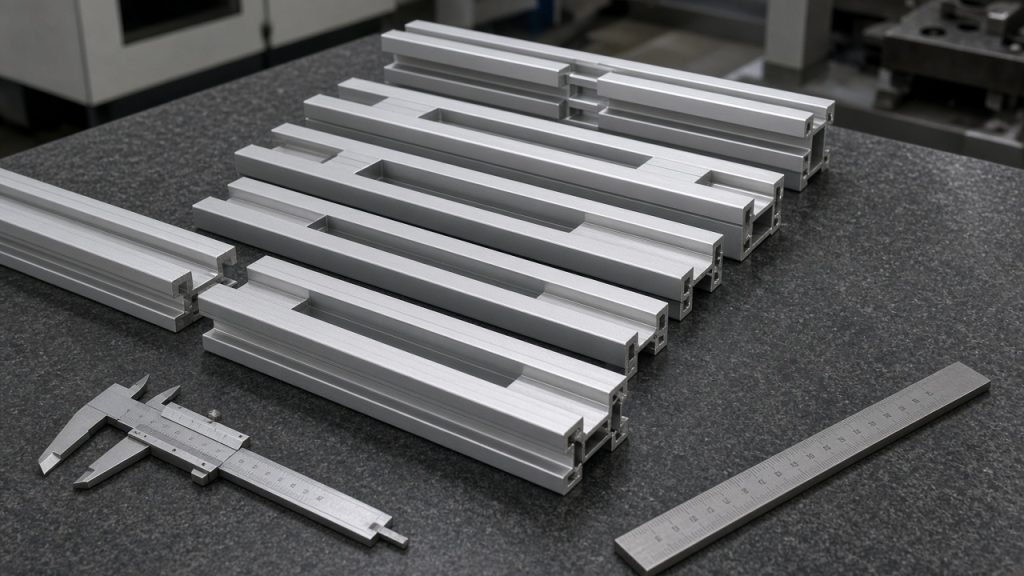
Engineering · kg/m, Ix, EN 755-9 Aluminium Profile Weight per Meter Chart (20–60 Series) A typical 45×90 six-slot 6063-T5 rail weighs 4.10 kg/m with I ≈ 68 cm⁰ about its strong axis; wall and straightness follow EN 755-9 (wall ±0.15 mm class on common light sections, straightness 1.5 mm/m, twist 2°). Use kg/m for mass […]
Aluminium Profile Basics: What the Series Numbers and Slot Codes Mean
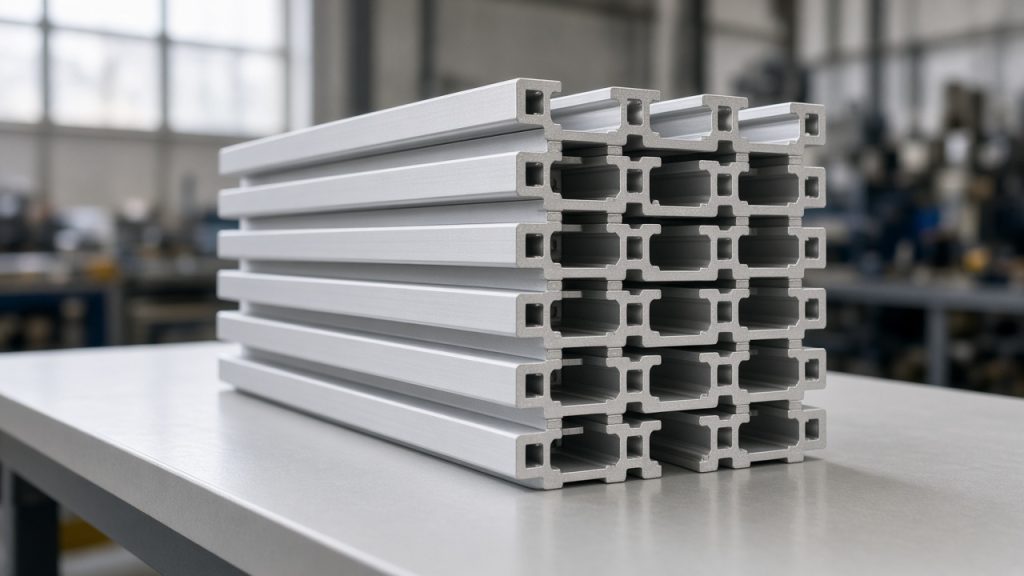
Engineering Design · series, slot codes, naming Aluminium Profile Basics: What the Series Numbers and Slot Codes Mean A code such as 4040 means a 40 × 40 mm envelope; 2020 is 20 × 20 mm and 4590 is 45 × 90 mm. The series digit locks the slot family that your nuts and brackets […]
Aluminium vs Steel, Extruded vs Cast: What Actually Changes
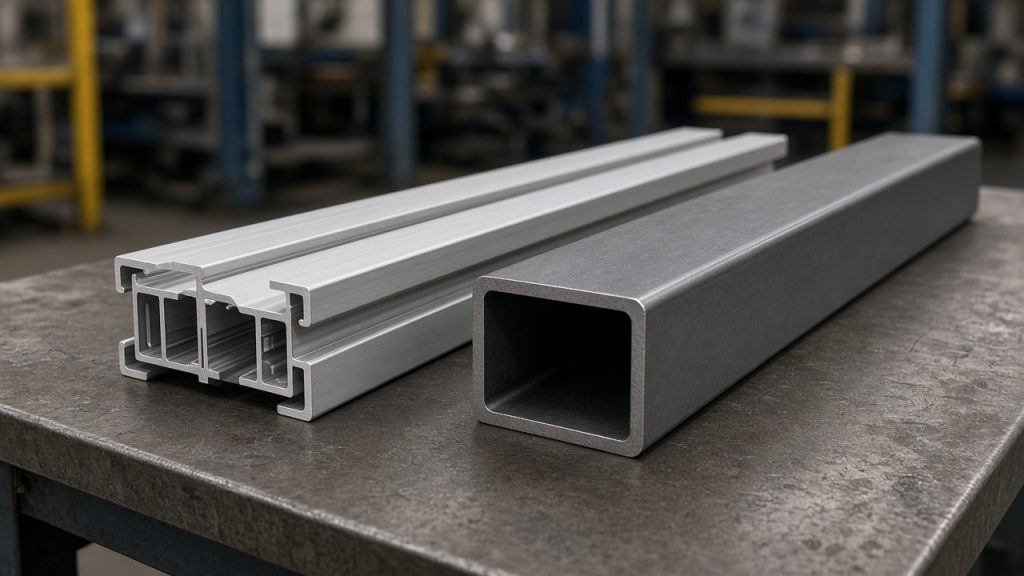
Materials · section size, slot type, frame metal Aluminium vs Steel, Extruded vs Cast: What Actually Changes For a reconfigurable workbench or machine frame, extruded 6063-T5 T-slot beats welded steel on change cost and weight, and cast iron is the wrong comparison: a 40×40 at about 1.55 kg/m and I ≈ 9.7 cm⁴ already carries […]
6063 vs 6061 vs 6082 and T5 vs T6: What Changes in Practice
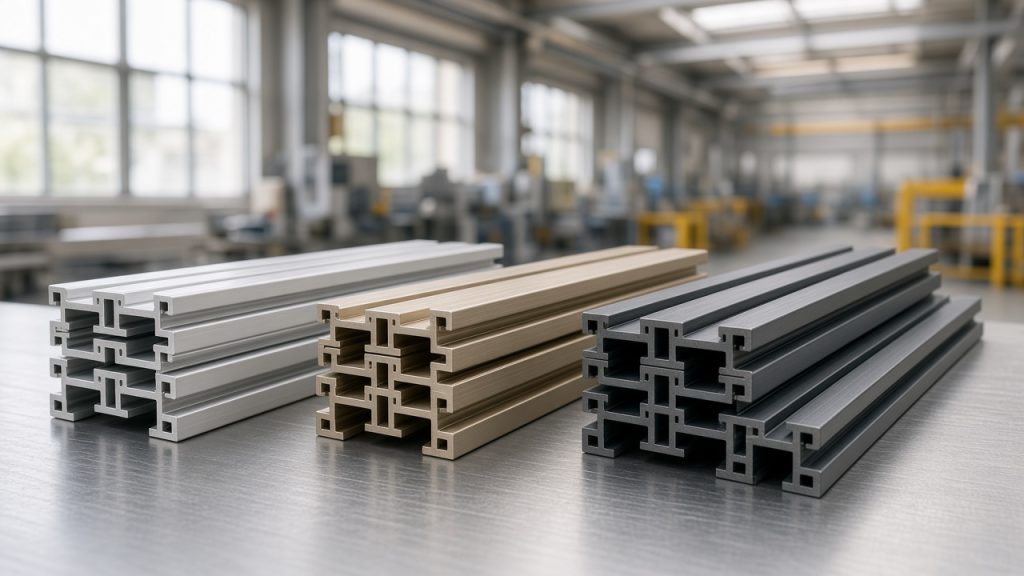
Materials · alloy, temper, substitution 6063 vs 6061 vs 6082 and T5 vs T6: What Changes in Practice For catalogue T-slot such as 2020–4040, specify 6063-T5 when finish and slot geometry matter; move to 6061-T6 or 6082-T6 only when the drawing demands higher yield for structural or heavily machined parts. Stiffness barely changes — E […]
Extruded vs Cast Aluminium: Stronger in One Direction, Not in All of Them
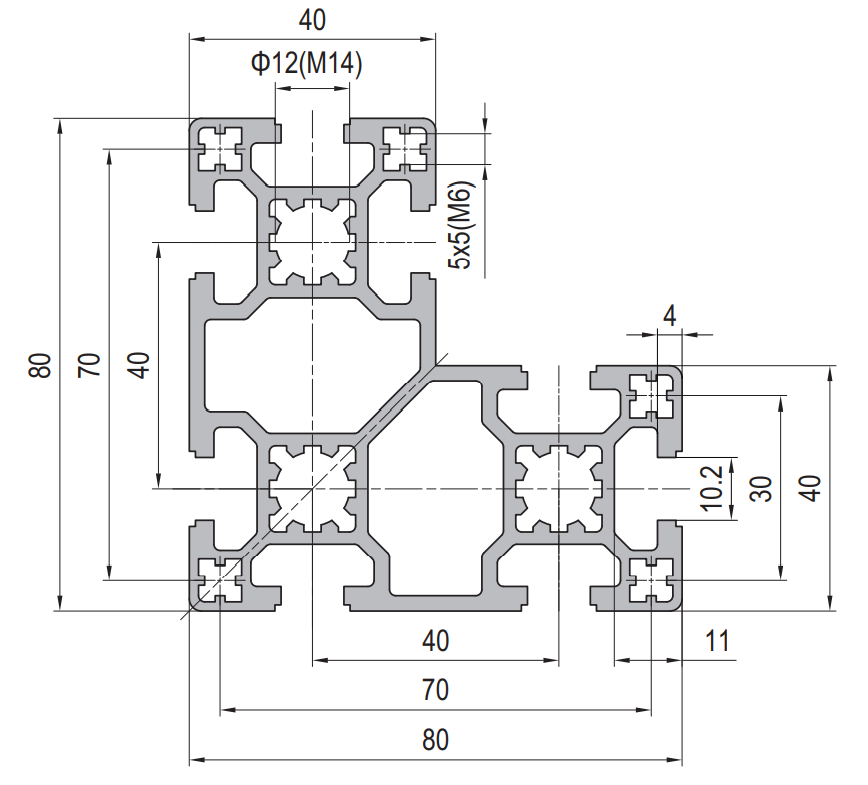
Process choice · grain flow, porosity, fatigue Extruded vs Cast Aluminium: Stronger in One Direction, Not in All of Them The claim that extruded aluminium is stronger than cast is true, and it is true under conditions that a specification usually leaves out. The two processes produce different grain structures, different defect populations and different […]
Aluminium Corrosion: Why a Salt Spray Number Is a Ranking, Not a Life
Durability · corrosion, chloride, testing Aluminium Corrosion: Why a Salt Spray Number Is a Ranking, Not a Life Aluminium does not rust, and that comfortable fact has done more damage to specifications than almost any other. It corrodes by different mechanisms, in different places, and the test that everyone quotes is not a prediction of […]
Recycled Aluminium Profiles: A Number You Have to Be Able to Evidence
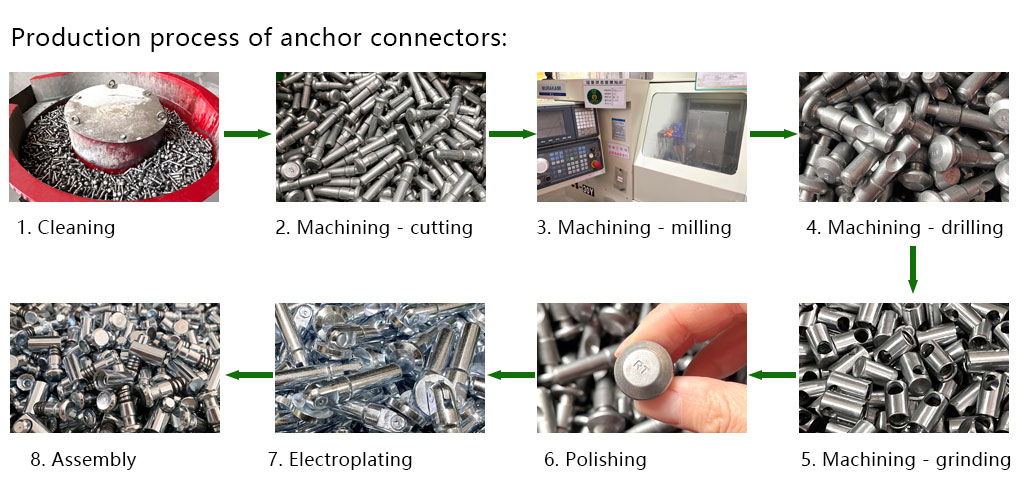
Sustainability · CBAM, scrap, evidence Recycled Aluminium Profiles: A Number You Have to Be Able to Evidence Aluminium is the most recycled metal in common industrial use, and almost every catalogue now claims a green profile. The useful question is not whether the claim is true but whether it can be evidenced, to whom, and […]
Industrial Aluminium Extrusion: Five Advantages and the Conditions Attached to Each
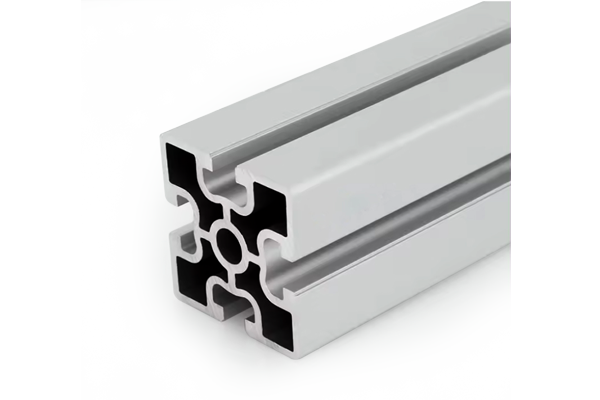
Material choice · an honest ledger Industrial Aluminium Extrusion: Five Advantages and the Conditions Attached to Each The standard list of extrusion benefits is accurate the way a headline is accurate. Every advantage is real, and every one carries a condition. The conditions are what decide whether the material is right for a particular job. […]
Aluminium Profiles Across Industries: What Actually Changes From One Sector to the Next
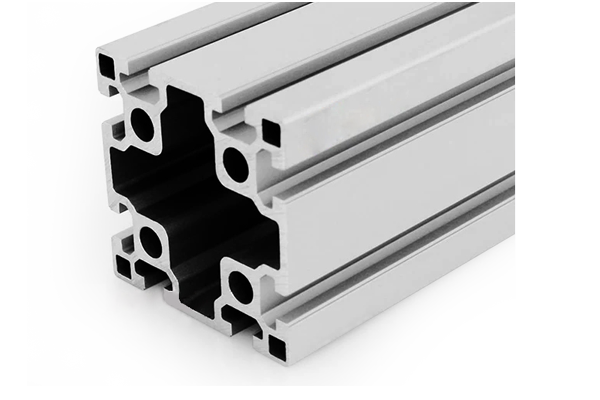
Applications · a constraint map Aluminium Profiles Across Industries: What Actually Changes From One Sector to the Next “Aluminium is light, corrosion resistant and recyclable” is true and almost useless for specification. What changes between industries is which requirement dominates, and that changes what you have to ask for, test, and pay for. Common myth […]
Aluminium Profiles in Solar Mounting: Wind Uplift, Corrosion and a 25-Year Life
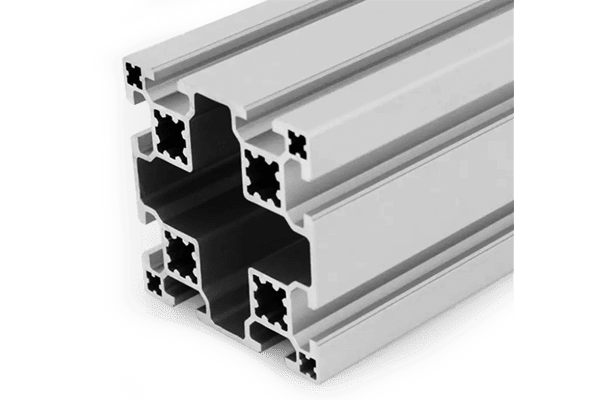
Solar mounting · 25-year duty Aluminium Profiles in Solar Mounting: Wind Uplift, Corrosion and a 25-Year Life A solar mounting structure is asked to survive a quarter of a century outdoors with essentially no maintenance. That single fact changes every decision in the specification, and it rules out several choices that would be perfectly reasonable […]
Aluminium Profile for LED Strips: A Heat Sink First, a Housing Second
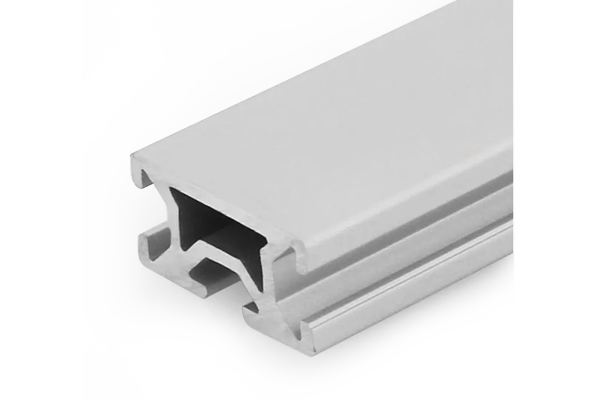
LED extrusion · thermal design Aluminium Profile for LED Strips: A Heat Sink First, a Housing Second Most descriptions of LED aluminium profiles list the housing functions: protection, appearance, diffuser mounting. Those are real but secondary. The section’s first job is to move heat out of the LED junction, because junction temperature is what decides […]
Aluminium Extrusion Section Design: What Each Feature on the Drawing Costs You
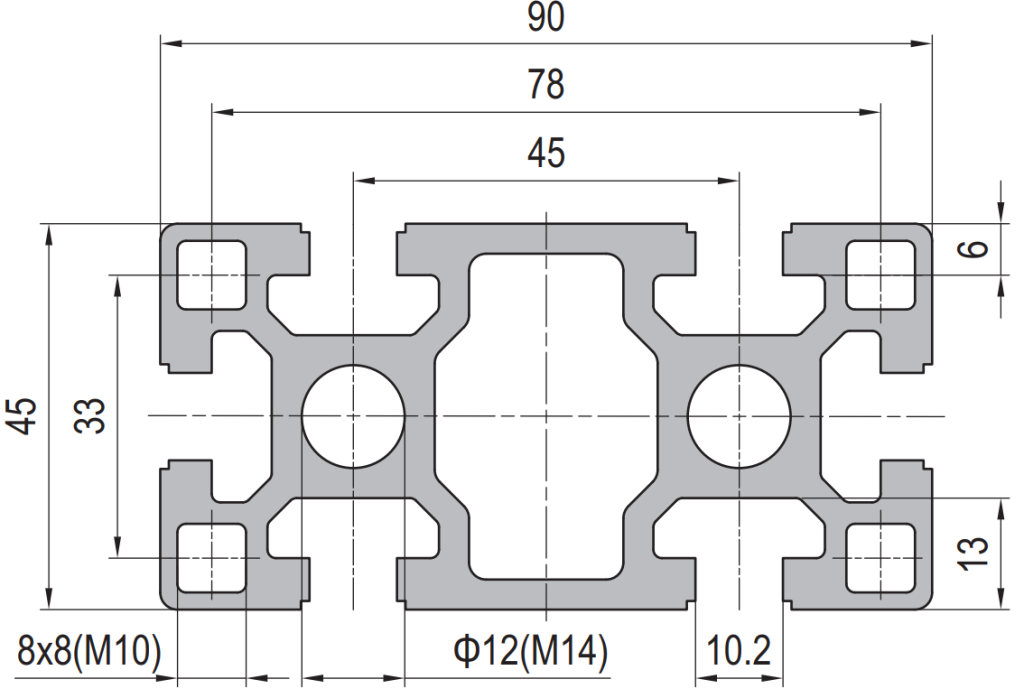
Extrusion design · cost drivers Aluminium Extrusion Section Design: What Each Feature on the Drawing Costs You Extrusion is sold as near-unlimited shape freedom. It is closer to a menu: every hollow, every thin wall, every tightened tolerance and every visible face has a price, and most of it is paid per metre for the […]
Aluminium Profiles in Industry and Construction: One Material, Two Acceptance Logics
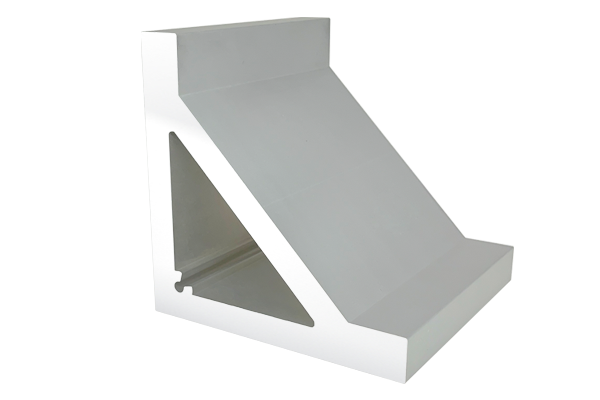
Applications · acceptance logic Aluminium Profiles in Industry and Construction: One Material, Two Acceptance Logics The same 40x40 section can be a machine base or a curtain wall transom. What changes is not the extrusion but what the inspector checks, what the drawing has to prove, and which failure is considered unacceptable. Sectors Industrial / […]
Aluminium Profile Sizes 20 × 20 to 100 × 100: What Fails First
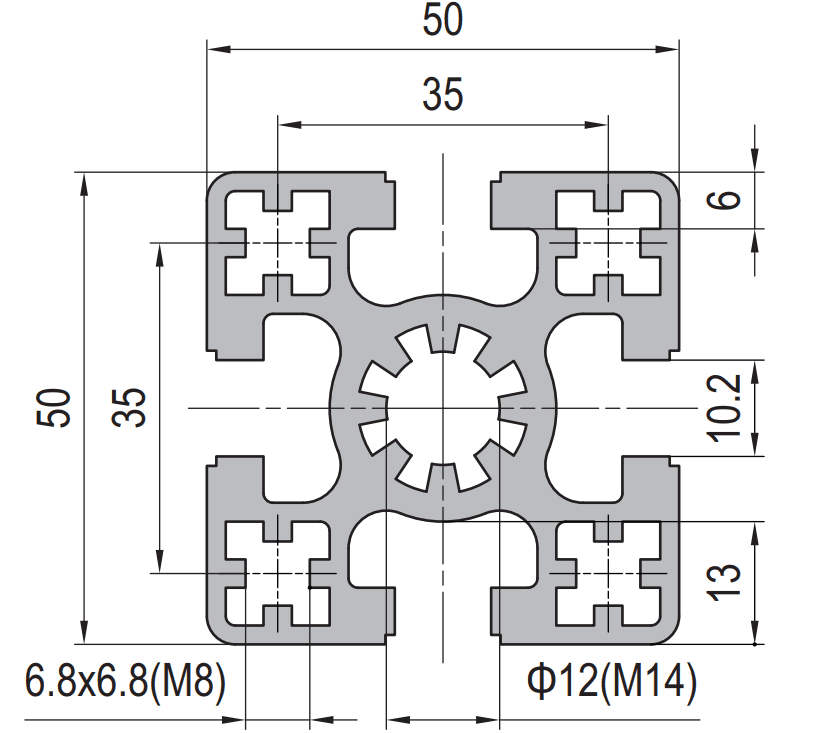
Profile sizes · what fails first Aluminium Profile Sizes 20 × 20 to 100 × 100: What Fails First The number in the name is not the stiffness. A 50 × 50 and a 60 × 60 standard section are 4 per cent apart in second moment of area and 39 per cent apart in […]
6063-T5 Aluminium Profile: What the Designation Actually Guarantees
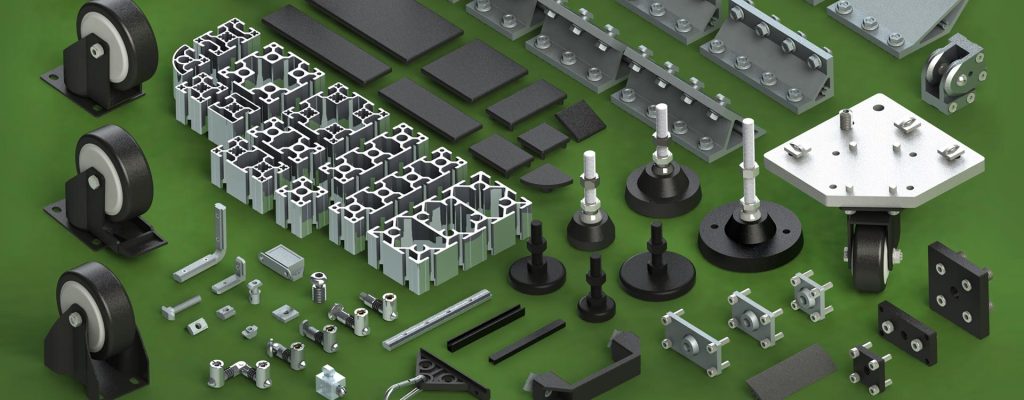
Material audit 6063-T5 Aluminium Profile: What the Designation Actually Guarantees The designation on a drawing looks like a guarantee. It is closer to a route description: it says how the profile was cooled and aged, and nothing about whether the delivered metal meets the numbers you designed to. Here is what each part of the […]
6061-T5 vs 6063-T5: What the Temper Label Really Decides
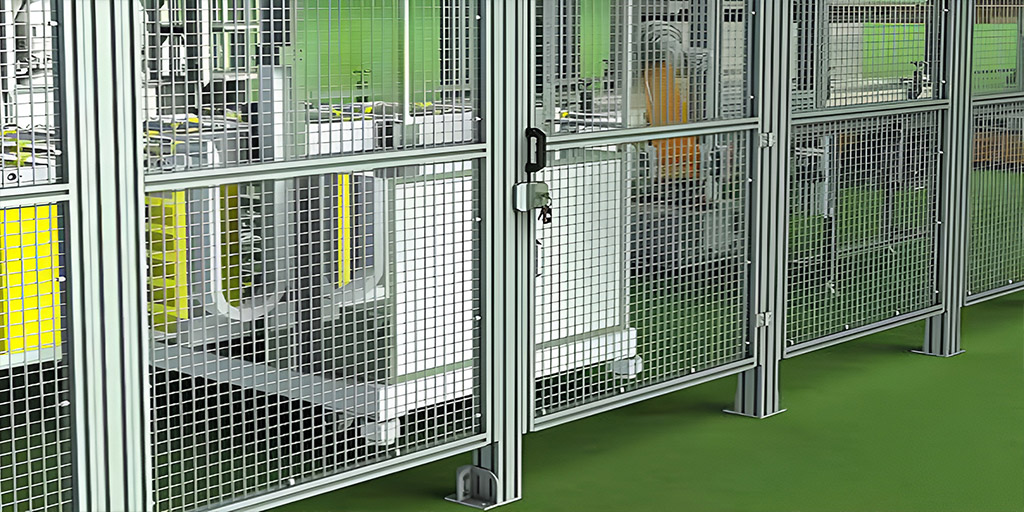
Alloy and temper · what changes 6061-T5 vs 6063-T5: What the Temper Label Really Decides Two things need separating here. One is the alloy, which changes how the profile extrudes, machines and anodises. The other is the temper, which changes the yield point. Neither of them changes stiffness by a single per cent — and […]
3030 vs 4040 Aluminium Profile: A Decision With Numbers
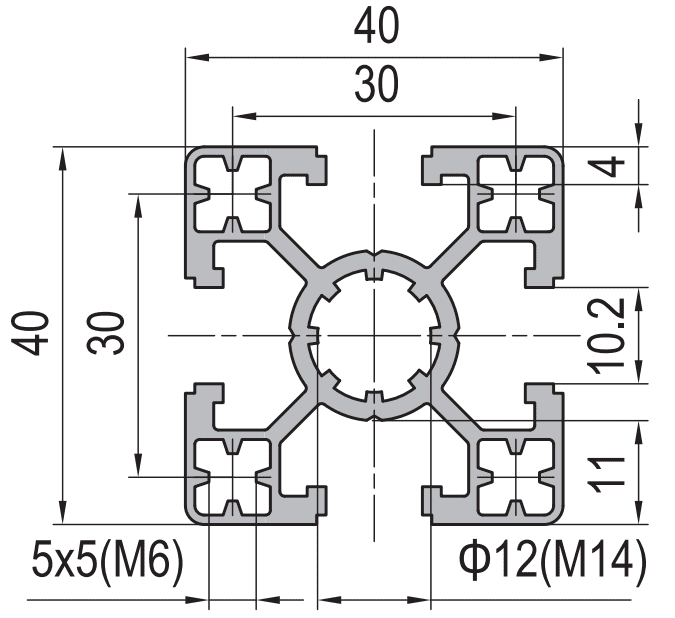
Section comparison · 30 against 40 3030 vs 4040 Aluminium Profile: A Decision With Numbers The usual answer is that a 4040 is “more than twice as strong”. It is 2.6 times as stiff, 1.35 times as heavy, and it buys bending stiffness at roughly half the cost per unit. It also commits you to […]
Aluminium Profile Standard Sizes: How the Series Matrix Actually Works
Standard sizes · series matrix Aluminium Profile Standard Sizes: How the Series Matrix Actually Works A 4040 is not one product. The 30 series and the 40 series share the same slot on most European grids. And “standard size” is not a specification. Here is the full T-slot series matrix — slot mouth, channel, centre […]
How to Choose the Right T-Slot Aluminium Profile Size
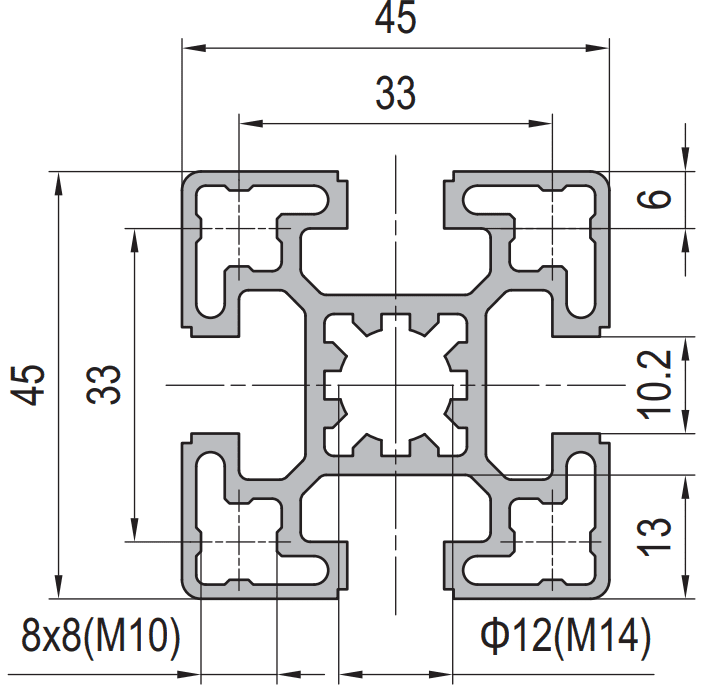
Frame geometry How to Choose the Right T-Slot Aluminium Profile Size The section is the last decision, not the first. Here is why supports and bracing buy more stiffness per kilogram than any upgrade — and the number that explains why a diagonal works. 10 min readSupport placementBracingWorked comparison Quick answer Fix the geometry and […]
How to Choose the Right Aluminium Profile Size for Industrial Frames
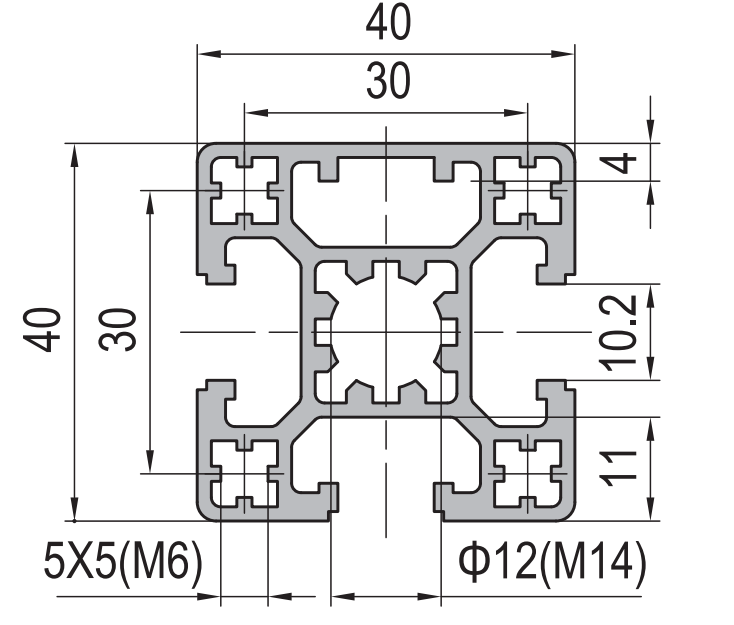
Size selection How to Choose the Right Aluminium Profile Size for Industrial Frames Size is the last lever, not the first. Here is the five-step calculation that turns a load, a span and a deflection budget into one section number — plus the span at which strength stops governing and stiffness takes over. 12 min […]
Aluminium Profile Sizes: The Four Slot Dimensions That Decide Compatibility
Slot geometry Aluminium Profile Sizes: The Four Slot Dimensions That Decide Compatibility A profile’s name tells you the envelope. It tells you nothing about whether your nuts and brackets will fit. Here are the four dimensions to measure, how to measure them, and how to match hardware without guessing. 10 min readSlot measurementNut matchingCross-series Quick […]
4040 T-Slot Aluminium Profile for Machine Frames: Choose It by Deflection
Profile selection 4040 T-Slot Aluminium Profile for Machine Frames: Choose It by Deflection Strength almost never decides a 4040 frame. Deflection does. Here is the section property that governs it, the load cases that matter, and the unit mistake that makes published load tables wrong by a factor of ten. 13 min readDeflection tables6063-T5 · […]
T-Slot Aluminum Profile Connectors: What Each Type Is Actually Good At
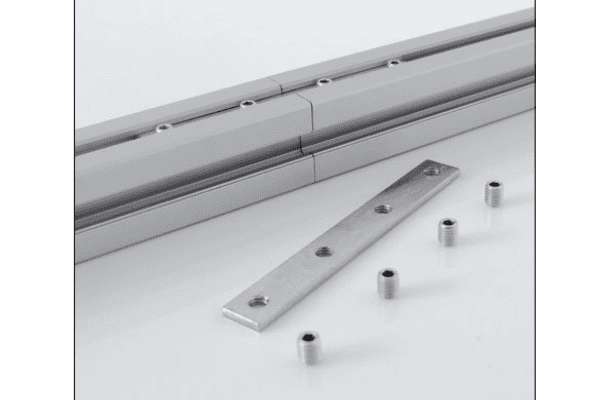
Connector selection T-Slot Aluminum Profile Connectors: What Each Type Is Actually Good At Six connector families, ranked by the load they really carry, with the machining each one demands and a joint-by-joint selection for two real frames. Most guides list the types; this one tells you which one wins where. 12 min readCapacity rankingMachining matrix40 […]
Aluminum Corner Brackets for T-Slot Frames: How to Choose by Load Path, Not by Looks
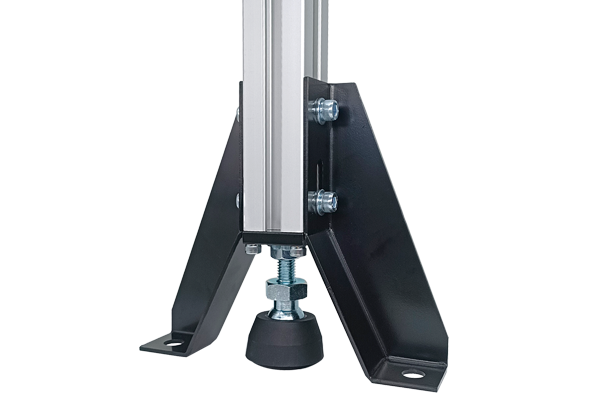
Structural connections Aluminum Corner Brackets for T-Slot Frames: How to Choose by Load Path, Not by Looks Most bracket guides tell you to “match the bracket to the profile”. That advice is true and useless. This one shows you what the bracket is actually doing inside a joint, which part of the connection fails first, […]
Anodised vs Powder Coated Aluminium Profiles: A Specification Guide for European Buyers
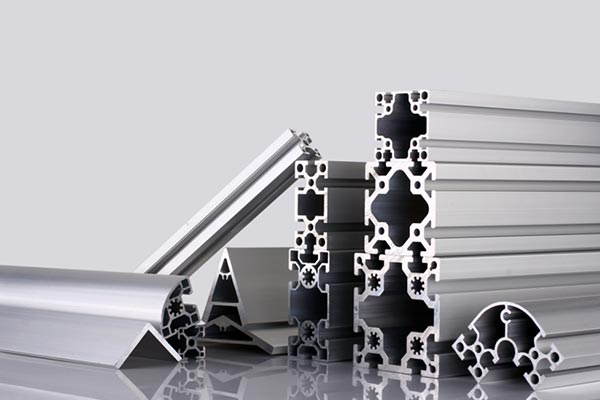
The question is rarely which finish is better and almost always which will pass incoming inspection. Film thickness, salt spray, colour tolerance and the standards a European buyer can actually inspect against.
Metric vs Imperial T-Slot Profiles: How to Test Compatibility Before You Order
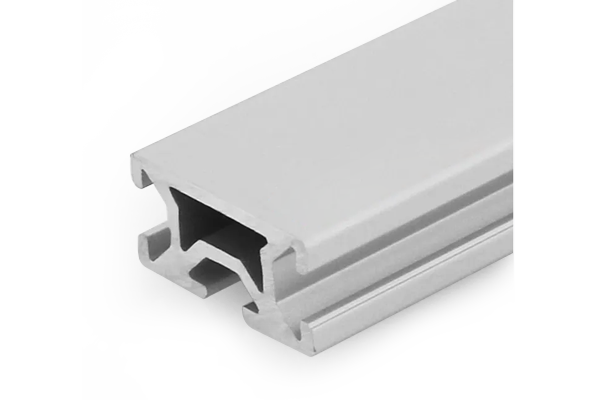
Two 40 mm profiles can look identical and still refuse to share a fastener. The four dimensions that decide compatibility, the pitch error arithmetic, and how to write the requirement into a purchase order.
Aluminum Extrusion Tolerances: How to Write a Specification Your QC Team Can Actually Inspect
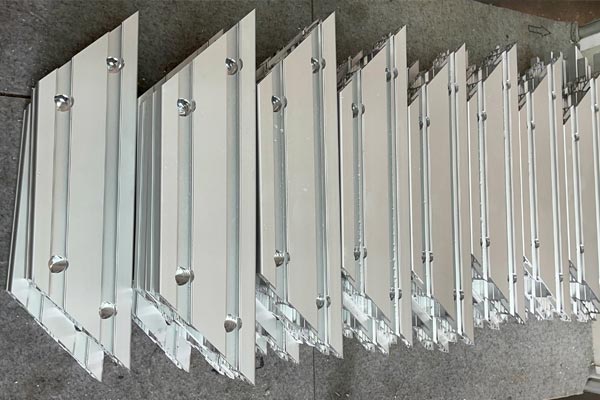
Specifying a tolerance is the easy half. The hard half is measuring it honestly on a six-metre profile in a workshop at nine in the morning. Measurement methods, temperature error, and what to do when the goods are marginal.
Aluminum vs Steel Machine Frames: Choose by Deflection, Not by Strength
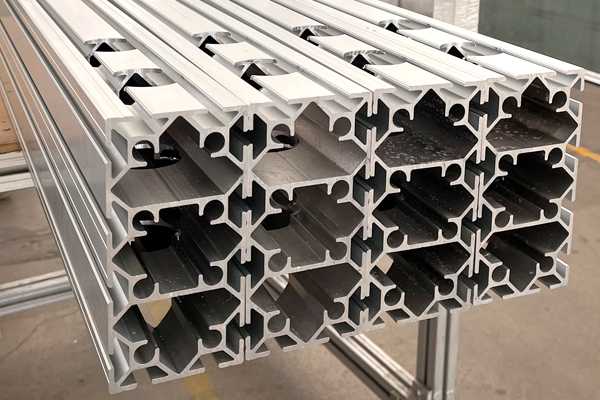
Every aluminium-versus-steel comparison starts with strength, and every one of them answers the wrong question. A machine frame fails by moving too much, not by yielding. Here is the stiffness arithmetic, with worked numbers you can check.
Industrial Aluminum Profiles: Alloys, Tempers and How to Select Them
A practical engineering guide to the aluminium alloys behind industrial profiles — what actually changes strength, corrosion resistance, cost and lead time, and how to pick a grade you will not regret.
