What Is a 3030 Aluminium Profile?
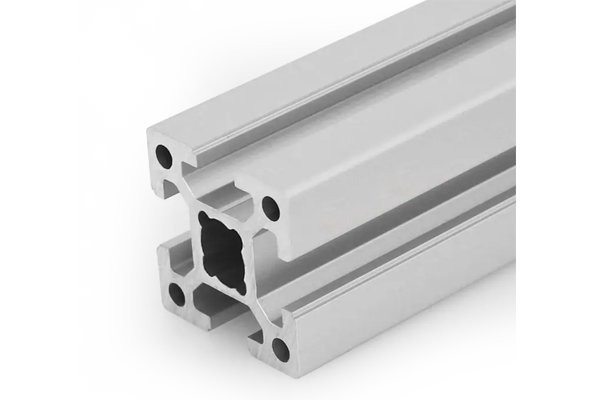
A 3030 aluminium profile is a 30 × 30 mm T-slot section. In the grownparts range it runs 0.62–1.15 kg/m depending on wall thickness, with slot variants across the range (table below).
Short answer
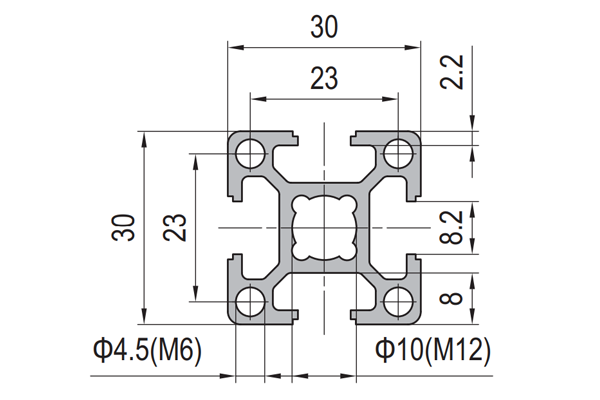
3030 names the 30 × 30 mm square envelope. On this site it ships at 0.62–1.15 kg/m by wall class, with slot variants built around an 8.2 mm groove and 6 mm mouth (M6; some faces M8) on a 30 mm module. Tolerances: EN 755-9 / GB/T 6892, wall ±0.15 mm; 6 m stock cut to drawing to ±0.5 mm. Made to order; trial lengths available. Mill finish typically 2 to 3 weeks, about a week longer for anodising. Reference price (2026): $1.60–$2.55 per metre. Compare mass and Ix on weight per metre; read the slot callout on T-slot dimensions.
What the numbers mean
“3030” means 30 mm by 30 mm outside — a PG30 / 30-series module size, not a universal slot cavity shared by every brand.
Grownparts 3030 variants use an 8.2 mm groove with a 6 mm mouth: four-slot squares on a 30 mm pitch for M6, and two-groove layouts on flat faces that can take M8 where the cavity allows. The same 30 × 30 outline from another factory can differ in mouth, groove depth and core hole, so a “30-series nut” label is not enough — match the measured slot. Series connectors and bolt centres follow the 30 mm module; mixing with 40-series faces needs adaptors. Details: slot dimensions.
Specification table (by wall thickness)
Six in-range 3030 products collapse into three wall rows; do not RFQ from the envelope alone.
| Variant | Weight (kg/m) | Slot | Wall | Ix (cm⁰) | Typical use |
|---|---|---|---|---|---|
| Light wall | 0.62–0.80 | 8.2 mm groove, 6 mm mouth; M6 | Light | per die drawing | Portable frames, light posts |
| Standard wall | 0.80–1.00 | 8.2 mm groove, 6 mm mouth; 30 mm pitch; M6 | Standard | per die drawing | Guards, enclosures, benches |
| Heavy wall | 1.00–1.15 | 8.2 mm groove; M6/M8 face variants | Heavy | per die drawing | Stiffer uprights, secondary columns |
Family mass band: 0.62–1.15 kg/m. Mid-wall site reference near 1.00 kg/m sits with Ix on the order of a few cm⁰ — confirm on the die drawing and the kg/m chart.
What it is typically used for
3030 is the compact workhorse of the 30 mm module: light enough to handle, stiff enough for many guards and small frames.
Typical roles: guard frames and small enclosures, secondary framing and panel edges, workbenches and assembly stations on moderate spans, conveyor guarding, laboratory and test rigs, and cleanroom equipment frames that stay reconfigurable. Live catalogue: 30 series aluminium profiles.
Where the limits are
Past roughly 0.8–1.2 m under useful load, a lone 3030 stops being the economical primary rail.
Use it as posts and short rails; for long industrial bays, vibrating machine bases, conveyor main rails or CNC gantry beams, step to 4040 or 4080 and check span and load. A diagonal brace or closed panel often buys more stiffness than upgrading every 3030 member.
Supply facts: 6 m stock, cut to drawing to ±0.5 mm; wall ±0.15 mm (EN 755-9 / GB/T 6892); made to order, trial lengths available; mill 2 to 3 weeks, ~+1 week anodising; reference price $1.60–$2.55 (2026).
RFQ checklist — 3030
- Wall class — inside 0.62–1.15 kg/m.
- Slot / hardware — 8.2 mm groove, 6 mm mouth, M6 or M8 faces.
- Cut list — ±0.5 mm from 6 m stock.
- Finish — mill or anodised.
- Trial vs production — trial lengths or production metres.
Send wall class, slot variant and cut list for a quote on the matching 3030 die.
Related on this site
- Aluminium profile weight per metre — how this section compares across the range
- T-slot dimensions — what the slot number means
- Maximum span and load — the load limit in numbers
- 30 series aluminium profiles — products in this series
Terms used in this article
- 3030
- Nominal 30 × 30 mm T-slot envelope in the 30 / PG30 module.
- kg/m
- Mass per metre; here 0.62–1.15 by wall class.
- 8.2 mm groove
- Inner groove width on grownparts 3030 variants; mouth typically 6 mm.
- EN 755-9
- Tolerance base for wall ±0.15 mm on this section.
- Ix
- Second moment of area from the die drawing, used for deflection.
Questions buyers ask
Should I use 3030 or a deeper section for a workbench?
3030 works for light benches and short top rails when spans stay under about 0.8–1.0 m. For industrial tops near 1 m under ~50 kg, prefer 4040 or twin rails — see max span.
Should I use 3030 or a deeper section for a machine frame?
3030 is fine for compact machine perimeters and secondary members. For vibrating bases or long horizontals past about 1.2 m, step to 4040 or a 4080 beam on the strong axis.
Should I use 3030 or a deeper section for a robot cell fence?
Yes for many cell fences and guard posts in the 30 series module. If bays are wide, doors are heavy, or cable trays hang from the rail, move the primary posts/rails to 4040.
Should I use 3030 or a deeper section for a conveyor frame?
Use 3030 for light side frames and guards. Main conveyor rails that carry rollers or belts usually want 4040 or 4080 so deflection does not fight tracking.
Should I use 3030 or a deeper section for a cleanroom equipment frame?
3030 is a common choice for cleanroom cabinets and equipment frames that stay hand-movable. Tall walls or heavy filter plenums may need 4040 for racking stiffness.
Should I use 3030 or a deeper section for a machine guard?
Yes — 3030 is widely used for guard frames, enclosures and panel edges with 8 mm-class hardware. Full machine bases still belong on deeper sections.
Should I use 3030 or a deeper section for a CNC router gantry?
Not as the gantry beam. Use 4080 (or deeper) oriented for bending stiffness. 3030 can serve as light Z-axis covers or accessory rails on the same machine.
Should I use 3030 or a deeper section for a test rig?
3030 is a strong default for laboratory and production test rigs that are rebuilt between projects. Add 4040 when actuators or long spans demand flatter rails.
Open the 30 series range or send a 3030 cut list
Choose the wall and slot variant in the 30 series category, or send lengths and finish for a quote against 0.62–1.15 kg/m.
Request a quoteRelated reading
Twelve more engineering notes from this blog, picked for this article — plus every category below.
 Engineering DesignAluminium Profile Anchor Pins: A Preloaded Joint, Not a Pin
 Materials and EngineeringRecycled Aluminium Profiles: A Number You Have to Be Able to Evidence
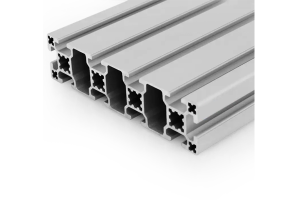 ApplicationsAluminium Conveyor Frames: Why Belt Tracking Is a Geometry Problem
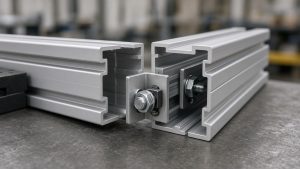 Engineering DesignHow to Join Aluminium Profiles: Joints, Brackets and Torque
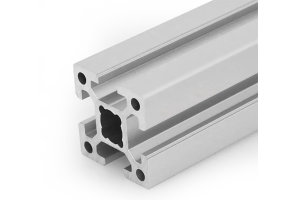 Engineering Design3030 vs 4040 Aluminium Profile: Which for Your Frame
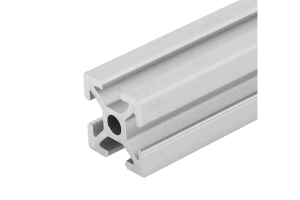 Engineering Design2020 vs 3030 Aluminium Profile: Which for Your Frame
 Engineering DesignAluminium Extrusion Capacity: What a Factory Can Actually Deliver
 ApplicationsWhere Modular Aluminium Framing Works: A Load-Tier Map Instead of an Industry List
 Quality and InspectionT-Slot Aluminium Profiles for Industrial Frames and Automation: A Specification Playbook
 Quality and InspectionEuropean Anodised Aluminium Specification: What Should a Purchase Order Contain?
 Sourcing and ProcurementAluminium Profile Quote: What Changes the Number by Quantity
 ApplicationsAluminium Profile Fish Tank Frames: Glass Load, Salt Water, and the Alloy Question
