Quick answer
The nine lines that make a profile repeatable
Alloy and temper — 6063-T5 for extrudability and finish, 6061-T6 when strength matters more than surface.
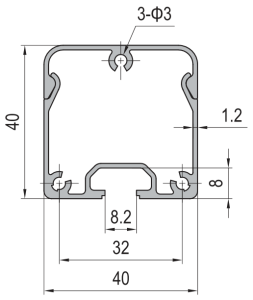
Envelope and slot — 40 × 40 mm, four slots, 8 mm slot mouth, 30 mm pitch, plus the centre bore if you intend to through-bolt or route cable.
Wall and weight per metre — the fastest incoming check there is. If the weight is 8% light, the wall is thin.
Dimensional standard — name EN 755-9 and the wall tolerance, typically ±0.15 mm. “Commercial tolerance” means whatever the mill felt like.
Straightness and twist — per metre and over the full bar length. A 6 m bar can pass a per-metre check and still be unusable at the ends.
Cut and machining tolerance — ±0.5 mm on cut length, ±0.2 mm on hole position. These are different processes and need separate figures.
Finish — mill Ra 1.6 or anodised 10–20 µm, with the colour and gloss stated if it is decorative.
Certification — ISO 9001:2015, EN 755-9, RoHS and REACH, with a mill certificate per lot.
Packing and identification — lengths banded by size, cut parts bagged by assembly, each bundle marked with the part number and lot.
Why it matters
What goes wrong when the specification is a profile name
“4040 T-slot profile, 6 metre lengths” is a description, not a specification. It is also what most purchase orders say, which is why the same part number arrives in different forms from different suppliers and why a frame that was square last quarter is not square this quarter.
Four variables hide behind the name, and each one changes something the assembler will notice.
| Variable | What it changes | How it shows up on the shop floor |
|---|---|---|
| Wall thickness | Stiffness, and therefore deflection under load | A rail that sags more than the last batch, or a bracket bolt that bottoms out in a thinner slot |
| Slot tolerance | Whether a standard T-nut seats squarely | Nuts that need driving in with a mallet, or that rattle and never develop preload |
| Straightness | Whether a long rail is straight or bowed | A 6 m bar that closes to a 3 mm gap when two lengths are butted end to end |
| Cut tolerance | Whether a frame closes without forcing | Corner joints that need a clamp to pull together, which then loads the panels |
The cheapest specification improvement available
Add the weight per metre to the order. It costs nothing, it is checkable in ten seconds with a scale, and it catches the single most consequential variable — a thin-wall batch sold at standard-wall price. A 40 × 40 mm standard section runs at about 1.70 kg per metre; a light wall at 1.30 and a heavy wall at 2.35. If your “standard” order arrives at 1.45 kg/m, you have been sold a light wall with a standard label.
The hidden variable
Tolerance standards, and why “commercial” is not one
Aluminium extrusion tolerances are published in national and international standards, and the differences between them are large enough to break an assembly. The two you will meet most often in Chinese supply are EN 755-9 and GB/T 6892, which are broadly comparable, and a third category that appears on quotations as “commercial tolerance” and means nothing specific.
The working standard for structural framing profiles. Wall held to ±0.15 mm, with dimensional tolerances referenced to the section drawing. Everything in our 40-series range is supplied to this basis.
The default when nothing is stated. Perfectly legal, entirely unsuitable for framing: a 0.4 mm wall variation changes how a T-nut seats and how much preload the joint can hold.
If a quotation does not name a standard, the tolerance is undefined. Ask for it in writing before the order is placed, not after the first frame fails to close.
Straightness: the tolerance that bites at the ends
Straightness is normally quoted as a deviation per metre, typically 0.5 mm per metre for a good framing profile. That sounds tight until you apply it to a 6 metre bar: 0.5 mm per metre permits 3 mm of bow along the full length, and the bow is not usually distributed evenly — it concentrates near the ends.
This is why a straightness figure must be given per metre and over the total length, as two numbers. A supplier who quotes only the per-metre figure is telling you half the story, and it is the half that does not affect the cut part you will actually assemble.
Twist is a separate property and is often omitted entirely. A profile can be perfectly straight and still be twisted by a degree or two over six metres, which shows up as a bracket that will not sit flat on the face. If your frame has panels on more than one face, ask for the twist figure as well.
Automation-specific
What automation frames need that machine frames do not
An automation cell enclosure looks like a machine frame and is specified very differently. Four requirements come up again and again.
| Requirement | Why | What to specify |
|---|---|---|
| Repeatability across builds | Cells are replicated, so cell number ten must match cell number one | Fixed section, fixed wall, fixed cut tolerance, and a sample retained as the reference for every subsequent order |
| Cable and hose routing | Services have to reach moving axes without chafing | The centre bore. A 40-series section with a Ø12 mm bore tapped M14 lets you run cable inside the frame or through-bolt the joint |
| Cleanability | Coolant, swarf and washdown collect in open slots | Slot cover profile on exposed faces, and a finish that tolerates the cleaning chemicals in use |
| ESD where electronics are handled | Static discharge damages assemblies | Conductive finish or a documented surface resistance, plus a bonded earth path through the frame |
The centre bore is the most under-used feature on a framing profile
Most buyers specify the slot and ignore the bore. It is the difference between a frame that carries cables inside it and a frame with cable trunking bolted to the outside. It also gives you a through-bolt path for joints where a T-nut is not strong enough — the bolt passes right through the section rather than loading the slot lip.
Incoming inspection
Six checks on the first delivery
Profile is bought by the tonne and inspected by nobody, which is exactly why the first delivery deserves an hour of attention. These six checks catch almost everything that will cause a problem downstream.
Template
The specification block to paste into an RFQ
Copy this into the enquiry and fill in the blanks. Every line is verifiable, which is what makes it useful — a supplier can only quote against it by confirming each figure.
Two extra clauses worth adding on a first order: a first-article inspection report against the section drawing, and a retained reference sample held by both parties. Together they cost nothing and they remove the entire class of problem where the second delivery is “the same part” from a different die.
The sections this template is written for are on the aluminium sections page, with the framing range under 40 series aluminium profiles and the standard section itself at 4040 4-slot strut profile. For the supplier-audit side of the same problem, our article on auditing an aluminium profile supplier covers what to look for in the plant.
Frequently asked questions
What is a T-slot aluminium profile used for?
Building modular frames and structures without welding: machine frames, automation and robot cell enclosures, workbenches, machine guarding, conveyor frames, cabinets and display structures. The slot runs along each face and carries a nut, so connectors, panels, feet and accessories can be fixed anywhere along the profile without drilling.
What alloy and temper should I specify for framing profiles?
6063-T5 is the standard choice. It extrudes into complex slot geometry cleanly, takes a good anodised finish and has enough strength for framing. 6061-T6 is stronger and used where the section carries a real structural load, but it is harder to extrude into fine slot detail and the finish is less consistent. For most industrial frames 6063-T5 is the right answer.
What tolerance should I put on an aluminium profile order?
Name the standard and the wall tolerance: EN 755-9 with a wall tolerance of ±0.15 mm. Avoid “commercial tolerance”, which typically permits ±0.3 to ±0.5 mm on wall and is enough to change how a T-nut seats. Also state straightness per metre and over the full length, and quote cut tolerance separately from machining tolerance.
How do I check incoming aluminium profile quickly?
Weigh one length against the specified weight per metre, measure the slot mouth at three points, check the envelope at both ends, roll the bar on a flat surface to find twist, butt two cut lengths together to test straightness, and assemble one corner with production hardware. That takes about an hour and catches nearly everything that would cause a problem at assembly.
Why does the same 4040 profile weigh different amounts from different suppliers?
Because “4040” only fixes the envelope. Wall thickness is a separate variable, and light, standard and heavy walls in the same envelope run from about 1.30 to 2.35 kg per metre. A supplier selling a light wall under a standard description is selling you roughly 25% less material and correspondingly less stiffness. Always quote weight per metre.
Do aluminium profiles need a certification for industrial use?
For most industrial framing, ISO 9001:2015 at the plant plus a mill certificate per lot is what buyers ask for. Structural or safety-related applications may also require compliance with a specific standard such as EN 755-9 for the profile itself, and RoHS and REACH declarations for the material content. Ask for the certificate with the shipment, not on request afterwards.
Send us the section drawing and the tolerances
We extrude 40-series sections to EN 755-9 with wall held to ±0.15 mm, cut and machine to ±0.2 mm on hole position, and supply the mill certificate with each lot.
Related reading
Twelve more engineering notes from this blog, picked for this article — plus every category below.
 Engineering DesignWho Owns the Extrusion Die After Tooling Is Paid?
 Engineering DesignHow to Choose the Right T-Slot Aluminium Profile for Your Project
 Sourcing and ProcurementAluminium Extrusion Price per kg in 2026 (China FOB)
 Quality and InspectionHow to Choose (and Audit) an Aluminium Extrusion Supplier
 Sourcing and ProcurementAluminium Profile Price Breaks: How Volume Changes the Unit Price
 Engineering DesignAluminium Extrusion Price per Meter: How the Number Is Built
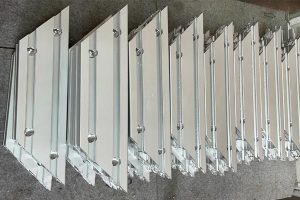 Engineering DesignAluminium Extrusion Tolerances: What to Write, and How to Inspect
 Quality and InspectionGlobal Sourcing Excellence: Multi-Category OEM and ODM Manufacturing and Supply Chain Integration
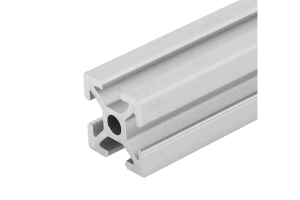 Engineering DesignWhat Is a 2020 Aluminium Profile? (Weight, Slot and Load)
 ApplicationsAluminium Pergola Profiles: A Beam Problem With a Water Problem
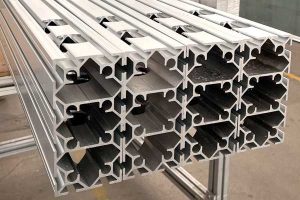 Engineering DesignAluminum vs Steel Machine Frames: Choose by Deflection, Not by Strength
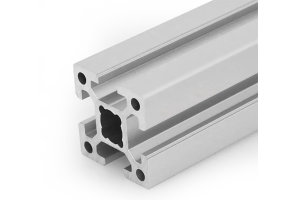 Engineering DesignWhat Is a 3030 Aluminium Profile? (Weight, Slot and Load)
