How to Choose (and Audit) an Aluminium Extrusion Supplier
Choose the supplier by the decision rule first: lock the series from load, unsupported span or slot/hardware — then audit whether the seller can extrude, finish and certify that series at your volume. A 2020 quote without a load and span statement is not a selection.
Short answer
Pick the profile family by the governing constraint — load, unsupported span, or slot compatibility — then choose a supplier who can prove presses, die control, alloy verification and finishing for that family. For 2020, treat it as a light/short member only (fixtures, braces, short guards); reject it as the sole perimeter of a loaded industrial bench or long fence bay. Prefer a factory you can audit over a trading desk that cannot show billet heat numbers or a live spectrometer reading. Hold extrusion to EN 755-9 (wall ±0.15 mm, straightness 1.5 mm/m, twist 2°) and fabricated features to cut length ±0.5 mm, hole position ±0.2 mm, end square within 0.3 mm. Ask for a mill test certificate tied to the lot before the first container, not after a claim.

Which supplier should i choose for 2020 extrusion
Choose a 2020 supplier only after you confirm 2020 is the right series for the load and span — then pick the factory that already runs that die, can anodise in-house if needed, and will state EN 755-9 plus fabrication tolerances on the quote.
2020 mass sits near 0.5 kg/m with I around 0.7 cm⁰. At metre-class spans under useful live load it deflects many times more than 4040; catalogue L/1000 allowable loads at 1 m fall to a few kilograms. Use 2020 for light fixtures, sensor mounts, short braces and panel ribs. For workbenches, conveyor sides, robot-cell fences and machine frames, step to 3030 or 4040 unless every primary rail stays short and the top is self-stiffening. The supplier choice then follows the same checklist for every 2020 variant query (colour, cut length, finish, MOQ): existing die, finish route, tolerance stack, and whether they will refuse an unsafe span rather than take the order.
| Check | Pass for 2020 PO | Reject / escalate |
|---|---|---|
| Application fit | Short light members only | Sole bench / long fence perimeter |
| Die status | Existing 2020 die in library | “We can tool anything” with no lead time |
| Extrusion tol. | EN 755-9 on quote | “Standard” with no numbers |
| Fabrication | ±0.5 / ±0.2 / 0.3 mm stated | Cut in market, no square control |
| Alloy proof | Lot MTC + OES/XRF path | Brochure alloy only |
| Finish | In-house or named line | Unknown subcontract, no thickness |
| Slot hardware | Mouth and nut family declared | “Compatible” without dimensions |
| Capacity cue | Press list + open slots for your tonnage | Unlimited claims, no schedule |
What is the risk of ordering from a trading company instead of a factory
The risk of ordering from a trading company is loss of process control: you pay a margin for a middleman who may not own the die, cannot change the press schedule, and cannot show billet-to-bar traceability when a lot fails.
Traders can be useful for mixed small lots and multi-mill shopping — they are a liability when you need a die revision, a colour batch match, a rework path or a witness of alloy chemistry. Price per metre in 2026 USD looks lower until a wrong temper or soft wall forces a container claim; then the trader’s leverage over the mill decides your recovery time. Die ownership is often unclear: if the trader paid the tool but registered it under the mill, a later switch of supplier can strand your geometry. Ask who cuts the PO to the press, who holds the die card, and who signs the MTC. If those three answers name three entities, you are buying coordination risk, not aluminium.
How do i verify the alloy grade before ordering
Verify alloy before ordering by requiring a heat/lot mill test certificate for the named grade and temper, plus proof that the factory can run OES or calibrated XRF on billet and finished bar — a catalogue line that says “6063-T5” is not verification.
On a sample or first article, ask for a live spectrometer reading against EN 573 / Aluminium Association limits for Si, Mg, Fe, Cu, Mn, Zn and Ti. Match the report heat number to the billet tag and to the bar label that will ship. For structural or safety-facing parts, refuse secondary billet of unknown chemistry unless every heat is tested. Temper is separate: hardness or tensile results must sit with the chemistry, because a correct alloy aged wrong is still a failed T5/T6. Put the alloy, temper and certificate type (for example EN 10204) on the PO so the pack cannot ship as “aluminium” without paper.
How do i tell a factory from a trading company
Tell a factory from a trading company by walking (or video-walking) the billet yard, die shop, press line, finish line and QC lab under the same legal entity that invoices you — a showroom and a glossy brochure do not count.
Check the registered business scope for manufacturing language and an industrial address, not only wholesale/import-export. Ask for the press tonnage list, billet diameters, die library size and whether anodising or powder is on the same site. Request a recent extrusion log and a calibration record for the spectrometer. Confirm the bank beneficiary on the proforma matches the registered manufacturer name. A trader who can arrange a tour of “our partner mill” is still a trader unless the contract and the MTC name that mill and assign die rights clearly. Neither model is immoral; only the mislabel is.
RFQ checklist — supplier audit
- Decision rule — load, span and slot that locked the series (2020 vs 3030/4040).
- Legal entity — name on PI, MTC and bank match; manufacturing scope.
- Assets — press list, die shop, finish line, QC lab on one site or named.
- Alloy path — OES/XRF + heat/lot MTC before shipment.
- Tolerances — EN 755-9 wall ±0.15 mm, straightness 1.5 mm/m, twist 2°.
- Fabrication — cut ±0.5 mm, holes ±0.2 mm, end square 0.3 mm.
- Die rights — who paid, who holds, who may transfer.
- Rework path — named owner when a lot fails chemistry or dimension.
Ask one question before deposit: who signs the mill test certificate for this lot. If the answer is vague, the alloy claim is marketing.
Four supplier mistakes
Related on this site
- how die cost amortises per meter — tool cost in the unit price
- minimum order with a new die — when a custom tool makes sense
- die making adds 7–12 days — calendar before first metal
- who owns the die — rights before you switch mills
Terms used in this article
- EN 755-9
- Extruded aluminium dimensional tolerances — wall, straightness and twist limits used on industrial quotes.
- OES / XRF
- Spectrometry methods that read alloy chemistry on billet or bar.
- Mill test certificate (MTC)
- Lot document tying chemistry and temper to a heat or cast number.
- Trading company
- Seller without presses under the invoicing entity; buys from mills.
- Die library
- Set of existing extrusion tools a factory can put on press without new tooling lead time.
Questions buyers ask
Which profile for a 2 m span?
At 2 m under useful load, skip lone 2020 and usually skip lone 3030. Use 4040 with a mid-post, twin rails, or a rectangular 4080/4590 on the strong axis, checked to L/500. State the kg and deflection limit on the RFQ so the supplier quotes I, not a guess.
Do I need a heavier wall?
Heavier wall helps local crushing and slot lip strength; bending stiffness is dominated by overall I and orientation. For long spans, upsize the section or add a post before paying for a thicker wall on the same envelope. Confirm wall against EN 755-9 ±0.15 mm on the drawing.
Which slot size should I pick?
Pick the slot that matches the hardware you will stock — commonly 6 mm on light 20-series, 8 mm on many 30/40 systems, 10 mm on heavier industrial series. Mixing mouths in one frame forces two nut families. Declare mouth width and tolerance, not only the envelope.
Can I mix series in one frame?
Yes for secondary members (braces, panel ribs) if adapters exist, but keep one slot family on faces that share T-nuts. Mixing 2020 primary rails with 4040 posts often creates the weak link at the light member. Prefer one series for the load path.
Send the series decision and audit questions
State load, span and slot that locked your series, plus whether you need alloy MTC, press list and die-rights wording. We return a quote with EN 755-9 and fabrication tolerances named.
Request a quoteRelated reading
Twelve more engineering notes from this blog, picked for this article — plus every category below.
 Sourcing and ProcurementFOB vs CIF vs DAP vs DDP: Aluminium Profile Landed Cost
 Sourcing and ProcurementDistributor Terms: Territory, Margin and Price Protection
 Engineering DesignHow to Request a Quote for Custom Aluminium Extrusion (RFQ Checklist)
 Sourcing and ProcurementPayment Terms for Aluminium Profile Orders (T/T, L/C and the Risk)
 Engineering DesignAluminium Extrusion Price per Meter: How the Number Is Built
 Quality and InspectionAluminium Extrusion Certificates and Standards Explained (EN 755, EN 12020, ISPM 15)
 Engineering Design30 Series T-Slot Profiles: The Middle That Has to Justify Itself
 Machine SafetyAluminium Profile Machine Guards: Size the Frame from the Energy, Not from the Mesh
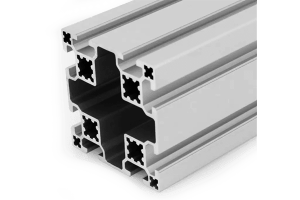 ApplicationsAluminium Profiles in Solar Mounting: Wind Uplift, Corrosion and a 25-Year Life
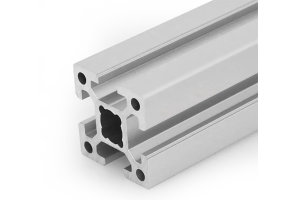 Engineering Design3030 vs 4040 Aluminium Profile: Which for Your Frame
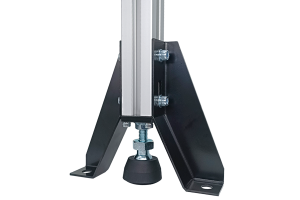 Engineering DesignAluminum Corner Brackets for T-Slot Frames: How to Choose by Load Path, Not by Looks
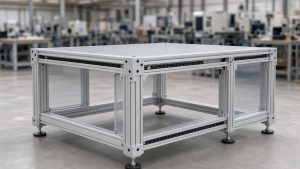 ApplicationsAluminium Profile Applications
