Aluminium Extrusion Capacity: What a Factory Can Actually Deliver
Door-to-door time is production stages first, then about 18 days sea freight from Shanghai or Ningbo — not a single “fast delivery” number. Capacity only matters when you can convert tonnes per month into open press slots, finish time and metres in a 40HQ.
Short answer
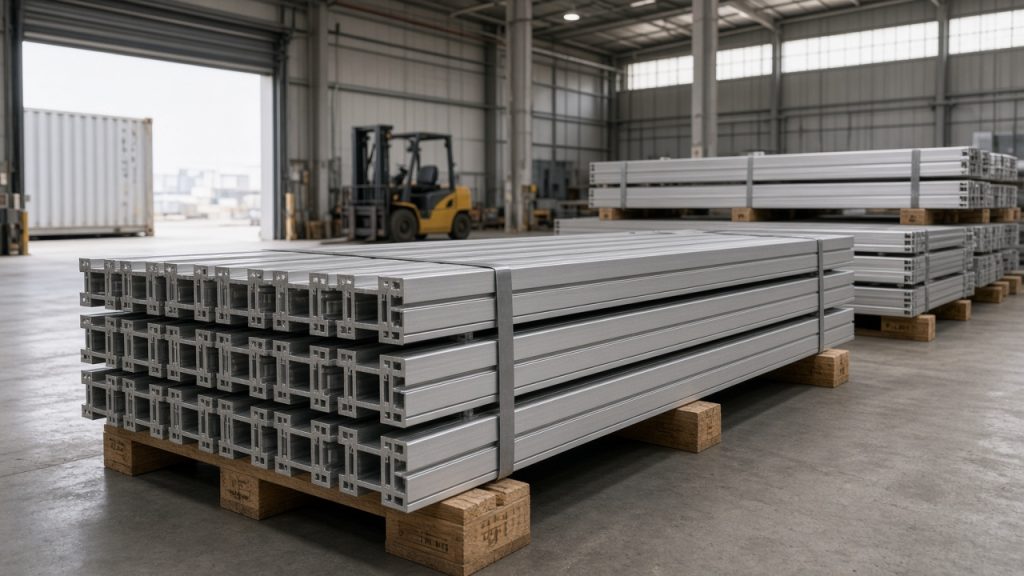
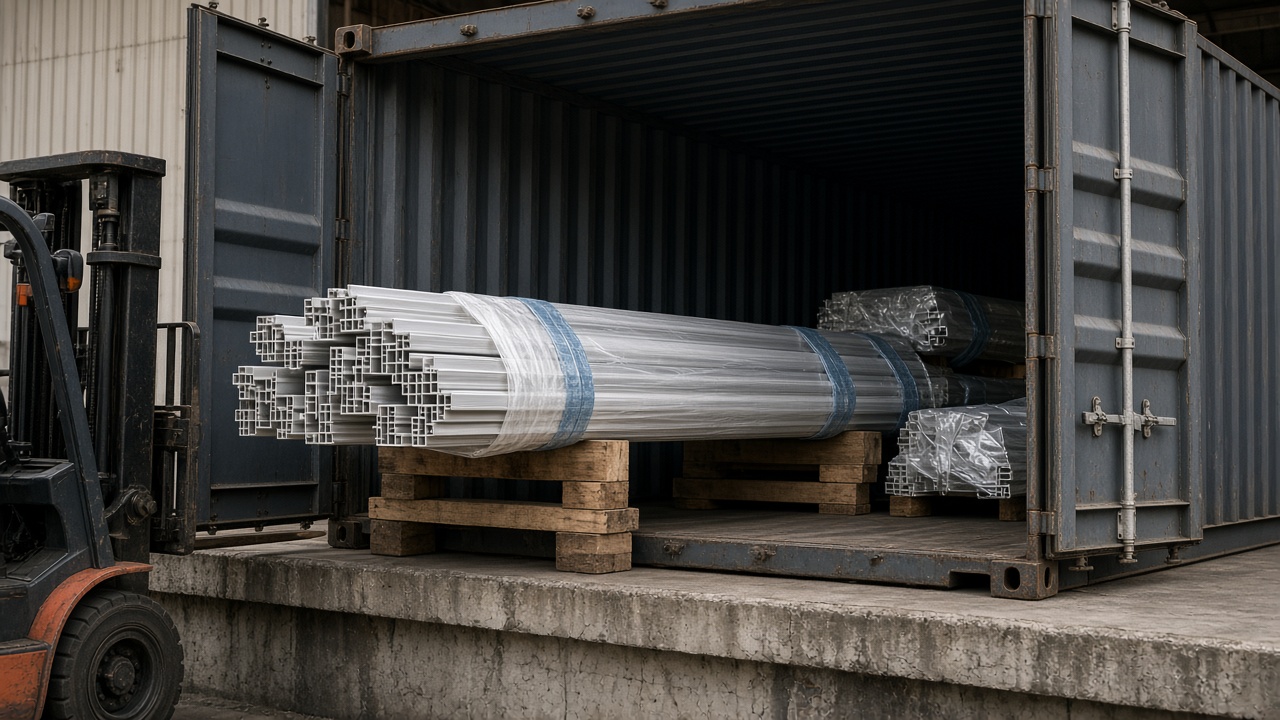
Plan door-to-door as factory calendar plus ocean: existing-die mill finish often 12–20 days, anodised existing-die about 18–28 days, new-die anodised work 30–40 days (die making adds 7–12 days), then add about 18 days sea freight from Shanghai or Ningbo. Planning capacity here is about 600 t per month extrusion with in-house anodising — enough for industrial T-slot programmes when finish colour and die status are booked early. Export packing is an ISPM 15 timber cradle with IPPC mark for long bars, or a plywood case for cut lengths under 3 m. Use the per-section table for stock lengths, packing, metres per 40HQ and lead-time band so freight and arrival are calculable before the PO.
How do i verify the extrusion capacity of a factory
Verify capacity by matching press list, billet supply, finish-line throughput and open schedule slots to your tonnage and colour — a wall poster that says “10,000 t/year” does not prove your 8 t anodised lot ships next month.
Ask for press tonnages and billet diameters, not only a headline monthly figure. Confirm whether anodising or powder sits on the same site and what bath/oven queue looks like in the peak month. Request a sample production calendar showing die changes and colour batches. Cross-check that the legal entity on the invoice owns or controls those assets. For a 600 t per month plant with in-house anodising, a distributor’s steady 10–30 t mixed T-slot programme is a scheduling problem, not a tonnage problem — the bottleneck is usually die changeovers and finish colour, not raw press metal. Walk or video the billet yard and run-out tables; empty claims rarely survive that.
| Evidence | What good looks like | Red flag |
|---|---|---|
| Press list | Tonnages + billet Ø named | “Many lines” only |
| Monthly capacity | Number + finish included or excluded | Annual claim / 12 with no finish note |
| Finish line | In-house anodising / named coater | Unknown subcontract SLA |
| Open slots | Week-by-week for your alloy/colour | “Always available” |
| Die library | Your sections already tooled | New die hidden until after deposit |
| Packing | ISPM 15 cradle / plywood <3 m stated | “Export standard” only |
| Ports | Shanghai / Ningbo FOB path | Port TBD after production |
Can you hold stock for a distributor
Yes — stock can be held for a distributor when the programme names SKUs, minimum cover, replenishment trigger and who pays for slow movers; open-ended “please keep some” is not a stock agreement.
Typical structure: freeze a short list of high-turn sections and finishes (for example clear-anodised 4040 and 4545 in 6.02 m), set a minimum on-hand metres, and release against call-offs or monthly forecasts. New-die custom sections stay make-to-order until history proves turn. Holding stock ties working capital and warehouse space, so expect a written forecast, a review cadence and rules for obsolete colour. Packing stays ISPM 15 cradles for long bars so call-off lots can roll straight into a 40HQ. Sea transit still adds about 18 days after sail from Shanghai or Ningbo — local distributor warehouses cover that gap, not the mill’s press.
What is your monthly capacity for extrusion (by size)
Monthly capacity is planned at plant level (~600 t with in-house anodising); what you can book by size is better read as stock length, packing, metres per 40HQ and lead-time band for each section — one table, not eleven paragraphs.
Light 20×20 / 30×30 stock fills a 40HQ with roughly 14,000 m; 40×40 / 45×45 land near 7,000 m; heavy 100×100 / 160×80 near 1,200 m. All figures assume efficient FCL loading of 6.02 m bars in ISPM 15 timber cradles with IPPC mark. Cut lengths under 3 m shift to plywood cases and change cube. Lead time bands below are existing-die mill / anodised; add 7–12 days when a new die is required, then about 18 days sea after sail.
| Section | Stock lengths | Packing | Qty per 40HQ | Lead time |
|---|---|---|---|---|
| 100×100 | 6.02 m stock (5.8 / 6.0 m on request) | ISPM 15 timber cradle, IPPC mark | ~1,200 m | 12–20 d mill / 18–28 d anodised existing die; +18 d sea |
| 160×80 | 6.02 m stock (5.8 / 6.0 m on request) | ISPM 15 timber cradle, IPPC mark | ~1,200 m | 12–20 d mill / 18–28 d anodised existing die; +18 d sea |
| 20×20 | 6.02 m stock (5.8 / 6.0 m on request) | ISPM 15 timber cradle, IPPC mark | ~14,000 m | 12–20 d mill / 18–28 d anodised existing die; +18 d sea |
| 30×30 | 6.02 m stock (5.8 / 6.0 m on request) | ISPM 15 timber cradle, IPPC mark | ~14,000 m | 12–20 d mill / 18–28 d anodised existing die; +18 d sea |
| 40×40 | 6.02 m stock (5.8 / 6.0 m on request) | ISPM 15 timber cradle, IPPC mark | ~7,000 m | 12–20 d mill / 18–28 d anodised existing die; +18 d sea |
| 40×80 | 6.02 m stock (5.8 / 6.0 m on request) | ISPM 15 timber cradle, IPPC mark | ~4,500 m | 12–20 d mill / 18–28 d anodised existing die; +18 d sea |
| 45×45 | 6.02 m stock (5.8 / 6.0 m on request) | ISPM 15 timber cradle, IPPC mark | ~7,000 m | 12–20 d mill / 18–28 d anodised existing die; +18 d sea |
| 45×90 | 6.02 m stock (5.8 / 6.0 m on request) | ISPM 15 timber cradle, IPPC mark | ~2,800 m | 12–20 d mill / 18–28 d anodised existing die; +18 d sea |
| 50×50 | 6.02 m stock (5.8 / 6.0 m on request) | ISPM 15 timber cradle, IPPC mark | ~4,500 m | 12–20 d mill / 18–28 d anodised existing die; +18 d sea |
| 80×80 | 6.02 m stock (5.8 / 6.0 m on request) | ISPM 15 timber cradle, IPPC mark | ~1,800 m | 12–20 d mill / 18–28 d anodised existing die; +18 d sea |
| 90×90 | 6.02 m stock (5.8 / 6.0 m on request) | ISPM 15 timber cradle, IPPC mark | ~1,800 m | 12–20 d mill / 18–28 d anodised existing die; +18 d sea |
The five stages from order to arrival
Door-to-door is five stages — die/tool gate, press, finish, pack/docs, ocean — and skipping any one of them is how “30 days” quotes miss the vessel.
Stage 1 is die status: existing die goes to press queue; a new die adds 7–12 days before metal exists. Stage 2 is extrusion and ageing to temper. Stage 3 is finish — mill ships faster; anodising or powder waits on colour batches inside the 600 t/month plant calendar. Stage 4 is packing and documents: ISPM 15 cradle or plywood case under 3 m, commercial invoice, packing list, bill of lading, certificate of origin and mill test certificate. Stage 5 is ocean — about 18 days sea freight from Shanghai or Ningbo on common lanes, then inland. Add the stages; do not average them into a slogan.
RFQ checklist — capacity and logistics
- Die status — existing vs new (7–12 days tooling if new).
- Finish — mill, anodise or powder; colour reference.
- Section list — sizes and metres; map to 40HQ fill.
- Packing — ISPM 15 cradle vs plywood case <3 m.
- Ports — Shanghai / Ningbo; Incoterms FOB/CIF/DAP/DDP.
- Stock hold — SKUs, cover and replenishment rules if distributor.
- Capacity proof — press list + open slots for your month.
- Sea adder — +18 days after sail in the calendar.
Ask one question before locking the ETA: is the die existing and is the finish colour already in the queue. Those two answers move the door-to-door date more than any tonnage claim.
Four capacity mistakes
Related on this site
- how die cost amortises per meter — tool cost inside the metre price
- minimum order with a new die — when tooling volume makes sense
- die making adds 7–12 days — stage 1 of the calendar
- who owns the die — rights when capacity moves mill
Terms used in this article
- 40HQ
- 40-foot high-cube container used for 6 m profile bars.
- ISPM 15
- Phytosanitary rule for solid-wood packing; IPPC mark on timber cradles.
- Door-to-door
- Factory production time plus ocean and inland to the buyer’s gate.
- Existing die
- Tool already in the library; skips the 7–12 day new-die gate.
- Stock hold
- Agreed inventory at the mill or hub for a distributor programme.
Questions buyers ask
Can you ship to a named port?
Yes — FOB Shanghai or Ningbo is the standard export path for 6 m T-slot bars; CIF, DAP or DDP to a named destination port can be quoted when the inland and duty terms are clear. State the port and Incoterm on the RFQ so freight and document sets match. Air remains for short samples, not full 6 m stock substitutes.
Who handles customs clearance?
Under FOB the buyer’s forwarder clears at destination; under DDP the seller arranges destination clearance as scoped in the contract. Either way the pack needs commercial invoice, packing list, bill of lading, certificate of origin and mill test certificate. ISPM 15 / IPPC marks travel on the timber cradle itself.
What if the shipment is delayed?
Separate factory delay from vessel delay. Factory delay is die, press or finish queue — ask for the stage that slipped. Vessel delay is ocean schedule after cargo is ready; the ~18-day sea adder is typical, not a guarantee. Build buffer into distributor stock cover rather than promising a single calendar day on the PO.
Do you consolidate small orders?
Small cut-length lots can consolidate into plywood cases; long-bar LCL is possible but often uneconomic versus waiting for a fuller FCL of 6 m stock. Distributors usually plan call-offs against held stock or a monthly mixed container. State whether you need a dedicated 40HQ or will accept consolidation on the RFQ.
Send the section list and target arrival window
List sizes, metres, die status (existing/new), finish and destination port. We return a stage calendar with 40HQ fill, ISPM 15 packing and the +18 day sea adder before you book the vessel.
Request a quoteRelated reading
Twelve more engineering notes from this blog, picked for this article — plus every category below.
 ApplicationsAluminium Profiles for Automation Equipment Frames: Design From the Assembly Floor
 Engineering DesignAluminium Extrusion Price per Meter: How the Number Is Built
 Engineering DesignAluminium Profile Weight per Meter Chart (20–60 Series)
 Engineering DesignCustom Aluminium Extrusion: From Drawing to Production
 Quality and InspectionSampling and First Article Approval for Aluminium Extrusion
 Engineering DesignHow to Choose the Right T-Slot Aluminium Profile for Your Project
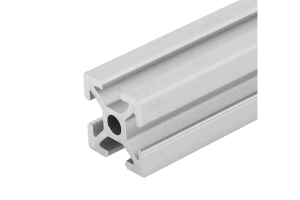 Engineering DesignWhat Is a 2020 Aluminium Profile? (Weight, Slot and Load)
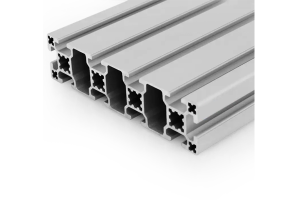 ApplicationsAluminium Conveyor Frames: Why Belt Tracking Is a Geometry Problem
 Materials and EngineeringAluminium Corrosion: Why a Salt Spray Number Is a Ranking, Not a Life
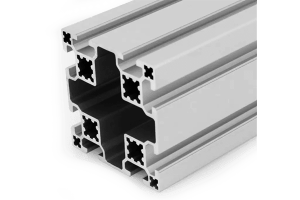 ApplicationsAluminium Profiles in Solar Mounting: Wind Uplift, Corrosion and a 25-Year Life
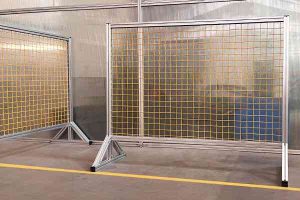 ApplicationsDesigning Machine Guards and Safety Fences in Aluminium Profile: An ISO 14120 Guide
 Materials and EngineeringIndustrial Aluminum Profiles: Alloys, Tempers and How to Select Them
