Aluminium vs Steel, Extruded vs Cast: What Actually Changes
For a reconfigurable workbench or machine frame, extruded 6063-T5 T-slot beats welded steel on change cost and weight, and cast iron is the wrong comparison: a 40×40 at about 1.55 kg/m and I ≈ 9.7 cm⁴ already carries most bench loads that a 30×30 at ~1.0 kg/m and I ≈ 2.85 cm⁴ will not.
Short answer
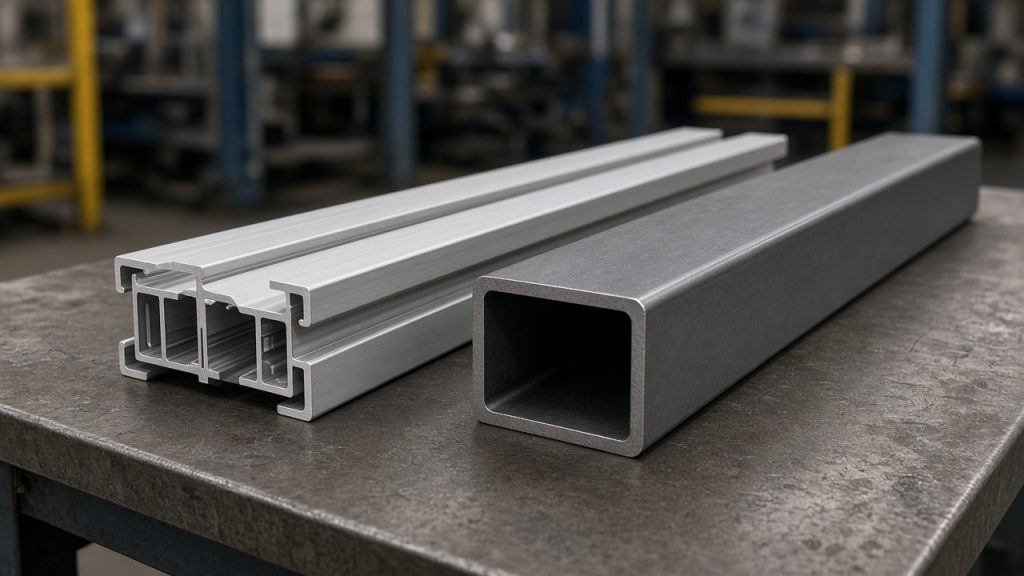
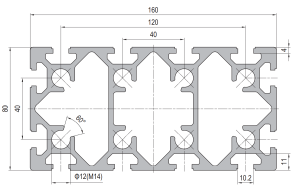
Pick the section and the process for the job, not a material slogan. A workbench that must take fixtures, grow later and stay square without a welding crew belongs on extruded T-slot aluminium. A permanent, high-mass static base that will never be cut apart can stay welded steel. Cast sections belong in vibration-damped machine bodies, not in modular benches. Within aluminium, size and wall decide stiffness long before alloy talk: moving from 30×30 (~1.0 kg/m, I ≈ 2.85 cm⁴) to 40×40 (~1.55 kg/m, I ≈ 9.7 cm⁴) multiplies bending resistance by roughly three, and the 45×90 six-slot 6063-T5 reference at 4.10 kg/m with I ≈ 68 cm⁴ is in a different class again. Extrusion tolerances sit under EN 755-9; anodising under EN ISO 7599; Chinese chemical composition under GB/T 6892. V-slot is for wheel motion, not for a static bench frame.
What is the difference between 3030 and 4040
4040 is the default machine-frame square; 3030 is the lighter step below it, and the stiffness gap is far larger than the mass gap.
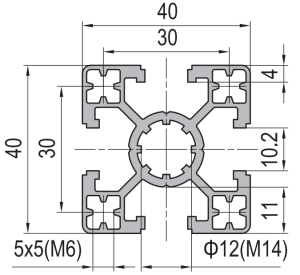
Both are 6063-T5 T-slot envelopes. A typical mid-wall 3030 sits near 1.0 kg/m with I about 2.85 cm⁴; a mid-wall 4040 sits near 1.55 kg/m with I about 9.7 cm⁴. Mass rises about 55%; second moment rises about 3.4×. Deflection under the same mid-span load therefore drops by that factor, which is why a 1 m cross-rail that feels soft in 3030 often settles in 4040 without changing the layout. Slot series also jump: many 3030 lines use an 8 mm mouth with M5/M6 hardware; many 4040 industrial lines use a 10 mm mouth with M6/M8. A 4080 rectangle (~3.0 kg/m) is the next step when you need span in one axis without growing the other. Catalogue values vary by wall and series, so quote the drawing, not the nickname.
| Question buyers ask | 3030 mid-wall | 4040 mid-wall | 4080 mid-wall | What changes |
|---|---|---|---|---|
| What is the difference between 3030 and 4040 | ~1.0 kg/m; I ≈ 2.85 cm⁴ | ~1.55 kg/m; I ≈ 9.7 cm⁴ | ~3.0 kg/m; directional I | Stiffness scales faster than mass |
| What is the difference between 3030 and 4080 | Square, short spans | — | 40×80 span member | Orient the 80 mm against the load |
| What is the difference between 4040 and 3030 | Light benches, guards | Machine frames, benches with vise | — | 4040 is the usual upgrade path |
| What is the difference between 4040 and 4080 | — | Isotropic square | Strong axis for long rails | Same series hardware if slot matches |
| Typical slot / fasteners | Often 8 mm; M5–M6 | Often 10 mm; M6–M8 | Matches parent series | Hardware is not automatic |
| When to stay / step up | Light fixtures, short legs | Most OEM benches | Long tops, bases | Span and deflection first |
T-slot vs v-slot which is better for a workbench
T-slot is better for a workbench; V-slot belongs on light-to-medium moving axes, not on the static top and legs.
A workbench needs mounting faces for vises, stops, shelves, power rails and panels on every side. T-slot mouths and the matching T-nut ecosystem are built for that. V-slot adds angled running faces for V-wheels; those faces are wear surfaces, and the accessory set is motion-first. Putting V-slot under a static bench wastes that geometry and usually narrows the bracket choice. Hybrid frames are normal: T-slot for the bench carcass, V-slot only where a gantry or carriage must roll. If positioning load or accuracy exceeds what a wheel-on-extrusion system can hold, use a separate linear rail on a T-slot frame instead of hoping the V-groove will behave like a machine guide.
| Criterion | T-slot | V-slot | Workbench verdict |
|---|---|---|---|
| Primary job | Structural fastening | Wheel track + frame | T-slot |
| Accessory breadth | Nuts, brackets, panels, hinges | Wheels, plates, eccentrics | T-slot |
| Static load distribution | Wide T-nut seat | Narrower contact under wheels | T-slot |
| Integrated linear motion | Needs separate guide | Built-in for light duty | V-slot only if axis moves |
| Maintenance | Fastener torque | Wheels, preload, groove wear | T-slot simpler |
| Hybrid use | Carcass | Moving rail | Common OEM pattern |
Is extruded aluminium better than welded steel for a workbench
Extruded aluminium is better when the bench must be reconfigured, relocated or assembled without weld labour; welded steel wins only when absolute mass and permanent joints are the point.
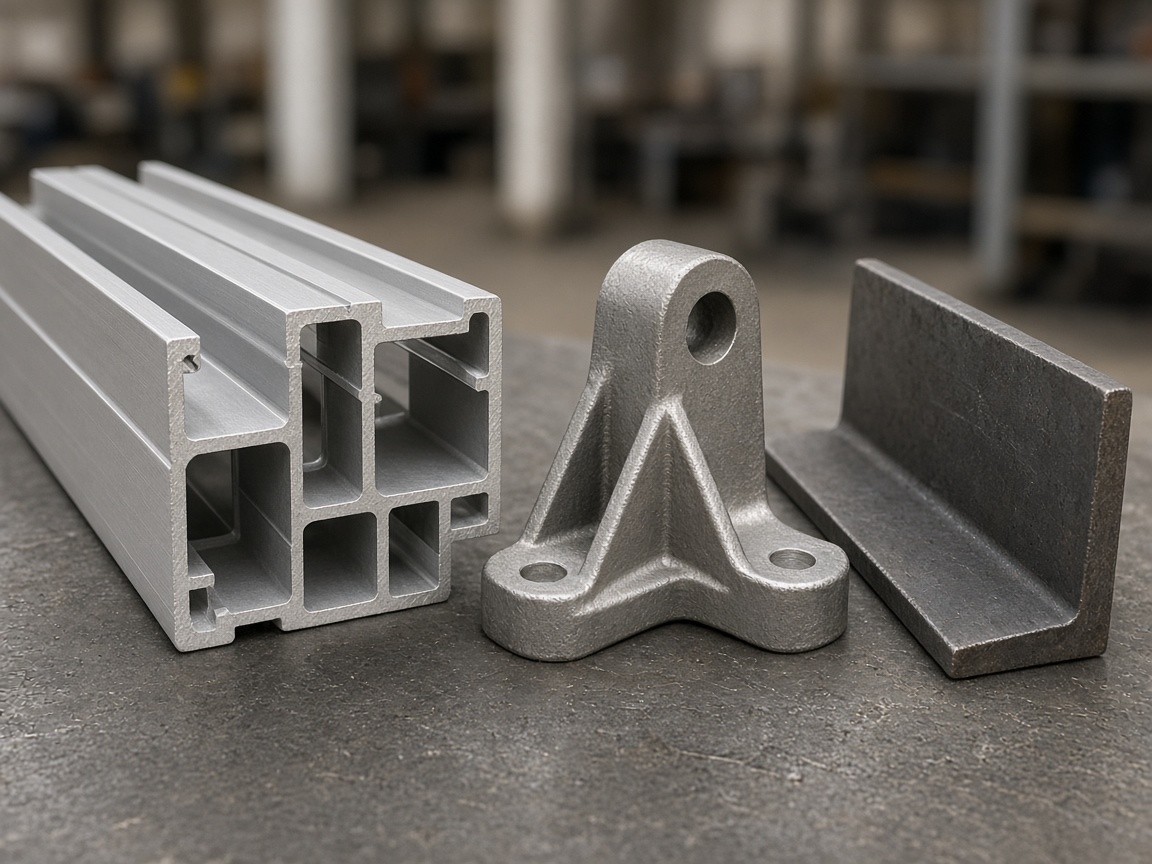
Aluminium density is about one-third of steel’s (~2.70 vs ~7.85 g/cm³), and a finished anodised T-slot metre already includes corrosion protection that bare steel still has to buy as paint or galvanising. Assembly uses hand tools; joints can be opened; scrap from a layout change is mostly reusable bar. Welded steel starts cheaper per kilogram and can feel “dead” under hammering, but every change means cut, weld, grind and recoat, and heat input pulls frames out of square. Cast iron is not the third workbench option: it damps well in machine beds and tombstones, and it is the wrong process and cost structure for a modular bench. Compare total installed cost at the first rebuild, not billet price alone. How die cost amortises per meter and minimum order with a new die sit beside the metal choice when the section is custom.
| Criterion | Extruded Al T-slot | Welded steel | Cast iron / cast Al | Workbench pick |
|---|---|---|---|---|
| First-build labour | Bolted, low skill | Weld + finish | Pattern + machine | Extruded Al |
| Change / reuse | High | Low | Near zero | Extruded Al |
| Mass for same outline | ~1/3 of steel | Heavy | Heaviest | Al if moveable |
| Damping | Low | Low–medium | High (cast iron) | Cast only if vibration-critical bed |
| Corrosion as shipped | Anodise common | Needs coating | Needs coating / paint | Extruded Al |
| When steel still wins | — | Permanent high-mass base, no redesign | — | Welded steel then |
What is the difference between 2020 and a heavier wall version
Same 20×20 envelope, more metal in the walls and webs: mass and I rise together, and the light version is not a drop-in for a loaded rail.
A common light 2020 sits near 0.45–0.50 kg/m with I around 0.7 cm⁴. A heavier-wall 2020 of the same outline can sit 20–40% heavier with a matching rise in I and section modulus. The slot mouth may stay nominally the same while lip thickness and groove depth change, which alters how a T-nut seats under load. Buyers who match only the 20×20 label and then wonder why deflection differs have compared envelopes, not sections. Call the wall on the RFQ, or send the DXF. Die making adds 7–12 days if the heavy variant needs a new tool rather than an existing cavity.
| Feature | Light 2020 | Heavier-wall 2020 | Buyer check |
|---|---|---|---|
| Mass | ~0.45–0.50 kg/m | ~0.60–0.70 kg/m class | Ask kg/m on the quote |
| I (order of magnitude) | ~0.7 cm⁴ | Higher with wall | Use catalogue I, not guess |
| Envelope | 20×20 mm | 20×20 mm | Does not prove interchange |
| Slot / lip | Thinner lip risk | More pull-through reserve | Fit the actual nut |
| Use | Guards, light frames | Short loaded members | Span still limited vs 3030/4040 |
| Price effect (2026) | Lower USD/m | Scales with kg × USD/kg | Compare USD/kg too |
What is the difference between light wall and standard wall 2020
“Light” and “standard” are supplier labels for wall class inside the same 2020 name; treat them as two products until the drawing matches.
Standard-wall 2020 is the catalogue default most accessory kits assume. Light-wall 2020 cuts metal to hit a price or weight target and is fine for covers, light stands and short uprights that never see a vise. Mixing light rails with standard brackets is usually fine mechanically if the slot geometry matches; mixing light rails into a span that was calculated on standard-wall I is not. On RFQs write “light” or “standard” beside 2020, state the kg/m, and require EN 755-9 dimensional tolerances so wall scatter does not eat the design margin. Who owns the die matters if you freeze a light-wall custom cavity for a private label.
| Label | Intent | Risk if misread | RFQ line |
|---|---|---|---|
| Light wall 2020 | Minimise mass / cost | Soft span, thin lip | kg/m + wall callout |
| Standard wall 2020 | Default accessory match | Over-spec on tiny frames | Series + slot width |
| Heavy / reinforced 2020 | Max I in small envelope | Wrong die assumed stock | Existing vs new die |
| Same CAD outline | Looks identical | False interchange | Section drawing, not STL alone |
| Finish | Mill or anodised | Friction / fit shift in slots | Finish on same line as wall |
| Tolerance | EN 755-9 | Wall at low end of band | Cite standard on PO |
Can a 2020 frame be welded instead of bolted
It can be welded in a workshop sense, but it stops being a T-slot system the moment you do: you lose modularity, risk heat distortion, and usually spend more than buying the next size up.
6063 extrusions are weldable with the right filler and prep, yet T5 temper softens in the heat-affected zone, so local strength and straightness move. Slots fill with spatter; anodising burns back from the weld; panels and T-nuts no longer slide past the joint. Bolted 2020 exists so frames assemble square without a welder and come apart for shipping. If the design needs permanent stiffness that bolts will not give, the correct step is a larger section, internal anchors, gussets or a welded steel sub-base — not a welded 2020 lattice pretending to stay modular. For OEM buyers, state “bolted only” on the drawing package so a fabricator does not “improve” the frame in the wrong process.
| Approach | What you gain | What you lose | Verdict for 2020 |
|---|---|---|---|
| Bolted T-nuts / brackets | Reconfigure, no HAZ | Joint compliance | Default |
| Internal anchors | Clean look, good clamp | Needs matching core hole | Preferred upgrade |
| Weld 2020 corners | Permanent joint | Temper, square, finish, reuse | Avoid for modular frames |
| Step to 3030/4040 bolted | Real stiffness | Slightly more kg/m | Usually cheaper than weld rework |
| Welded steel base + Al top | Mass where needed | Two processes | Valid hybrid |
| Cast joint blocks | Damping / shape freedom | Tooling, no slot continuity | Special machines only |
RFQ checklist — material and section choice
- Section code and wall class — 2020/3030/4040/4080 plus light or standard, with kg/m.
- Slot series — mouth width and fastener sizes that must fit existing hardware.
- Load and span — so I can be checked, not assumed from the envelope.
- Process limit — bolted only, or hybrid with a steel base.
- Finish and standard — mill or anodised; EN 755-9 / EN ISO 7599 / GB/T 6892 as applicable.
- Die status — existing cavity or new tool, with ownership stated.
Send the span, the payload and the hardware you must reuse. The section choice then becomes a calculation, not a catalogue guess.
Four ways this comparison goes wrong
Related on this site
- how die cost amortises per meter — tooling share inside the metre price
- minimum order with a new die — 150 m existing vs 500 m new
- die making adds 7–12 days — calendar next to the section choice
- who owns the die — custom wall variants and tooling rights
Terms used in this article
- Second moment of area (I)
- Geometric stiffness of the cross-section against bending; rises much faster than mass when the envelope grows.
- T-slot
- Extruded channel shaped to capture T-nuts for modular fastening.
- V-slot
- Profile with angled faces intended to guide compatible V-wheels for light-to-medium linear motion.
- Light / standard wall
- Supplier wall-thickness classes inside the same nominal envelope (e.g. 2020).
- HAZ
- Heat-affected zone beside a weld where temper and strength drop in heat-treated aluminium.
Questions buyers ask
What is the difference between pg40 and 40 series generic profile
“PG40” usually means a branded 40 mm series with a declared slot and accessory set; “40 series generic” only promises a 40 mm envelope. Match slot mouth, core hole and lip to the hardware drawing. Envelope, weight and price per metre do not prove interchange. Ask for a dimensioned section with tolerances under EN 755-9 before substituting.
Which is cheaper at volume?
At volume, extruded aluminium T-slot usually wins the installed cost once labour, finish and the first layout change are counted. Welded steel can win on raw kilograms for a never-touched base. Cast parts are tooling-heavy and rarely cheaper for benches. Compare 2026 USD per assembled frame at your call-off quantity, not billet alone.
Which is stiffer?
For the same outline, steel’s higher modulus (~210 GPa vs ~69 GPa) deflects less, but a larger aluminium section closes the gap quickly: 4040 at I ≈ 9.7 cm⁴ already out-stiffens 3030 by ~3×, and a 45×90 at I ≈ 68 cm⁴ is in another band. Joints and bracing often dominate before the metal does.
Which lasts longer outdoors?
Anodised or powder-coated aluminium lasts longer outdoors than bare or thinly painted steel of equal maintenance. Specify sealed anodising (EN ISO 7599) or exterior polyester powder, and avoid mill-finish steel unprotected. Cast iron outdoors still needs a coating system.
Can I mix the two?
Yes as a hybrid: welded steel base or mass block with an extruded aluminium top and accessory rails is a common OEM pattern. Mixing T-slot and V-slot on one carcass is fine if each profile does its job. Mixing light-wall and standard-wall of the same name without checking I is not.
Send span, payload and the section you are comparing
Give us the envelope codes, wall class, slot hardware to reuse and whether the frame must stay bolted. We return a section recommendation with kg/m and I against EN 755-9 before you freeze the BOM.
Request a quoteRelated reading
Twelve more engineering notes from this blog, picked for this article — plus every category below.
 Engineering DesignWho Owns the Extrusion Die After Tooling Is Paid?
 Engineering DesignSlot Dimensions Explained: 6 mm, 8 mm and 10 mm T-Slots
 ApplicationsAluminium Greenhouse Profiles: A Snow Load Problem With a Condensation Problem
 Engineering DesignAluminium Extrusion Tolerances: What to Write, and How to Inspect
 Engineering Design4040 T-Slot Aluminium Profile for Machine Frames: Choose It by Deflection
 Engineering DesignESD Anti-Static Workbench Grounding: The Four Joints That Break the Path
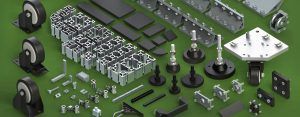 Engineering DesignAluminium Profile Sizes: The Four Slot Dimensions That Decide Compatibility
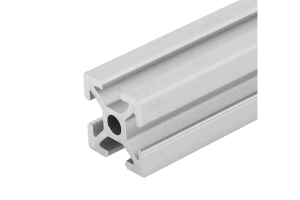 Engineering DesignWhat Is a 2020 Aluminium Profile? (Weight, Slot and Load)
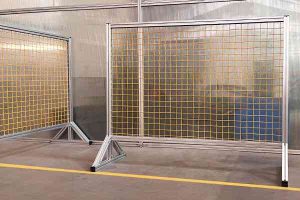 ApplicationsDesigning Machine Guards and Safety Fences in Aluminium Profile: An ISO 14120 Guide
 Quality and InspectionAluminium Extrusion Claims: What the Contract Must Say
 Sourcing and ProcurementAluminium Profile MOQ: 150 m Existing Die, 500 m New
 Sourcing and ProcurementFOB vs CIF vs DAP vs DDP: Aluminium Profile Landed Cost
