3030 vs 4040 Aluminium Profile: A Decision With Numbers
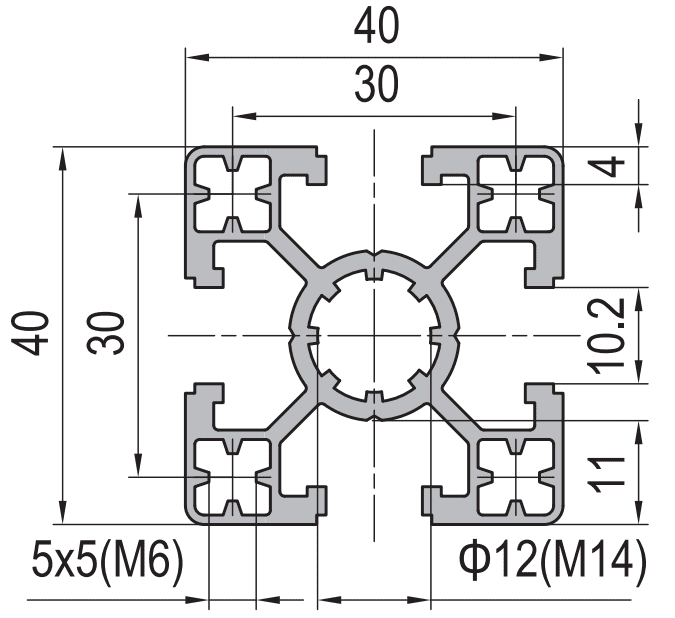
Section comparison · 30 against 40 3030 vs 4040 Aluminium Profile: A Decision With Numbers The usual answer is that a 4040 is “more than twice as strong”. It is 2.6 times as stiff, 1.35 times as heavy, and it buys bending stiffness at roughly half the cost per unit. It also commits you to […]
Aluminium Extrusion Tolerances: What to Write, and How to Inspect
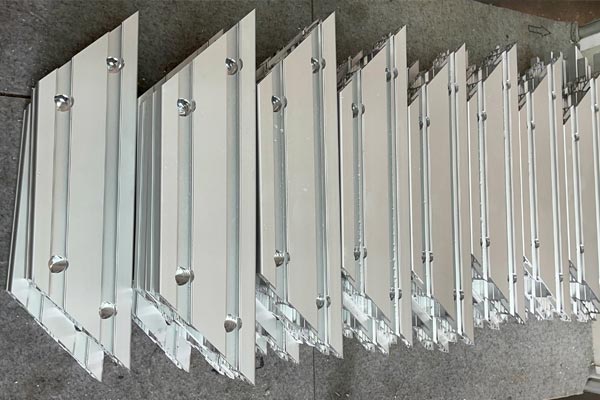
Metrology · incoming inspection Aluminium Extrusion Tolerances: What to Write, and How to Inspect Most tolerance articles tell you that a bigger profile has a bigger tolerance and that you should not ask for more accuracy than you need. None of them give you the numbers. Here are the EN 755-9 tables you actually inspect […]
Standard vs Custom Aluminium Extrusion: The Break-Even Calculation
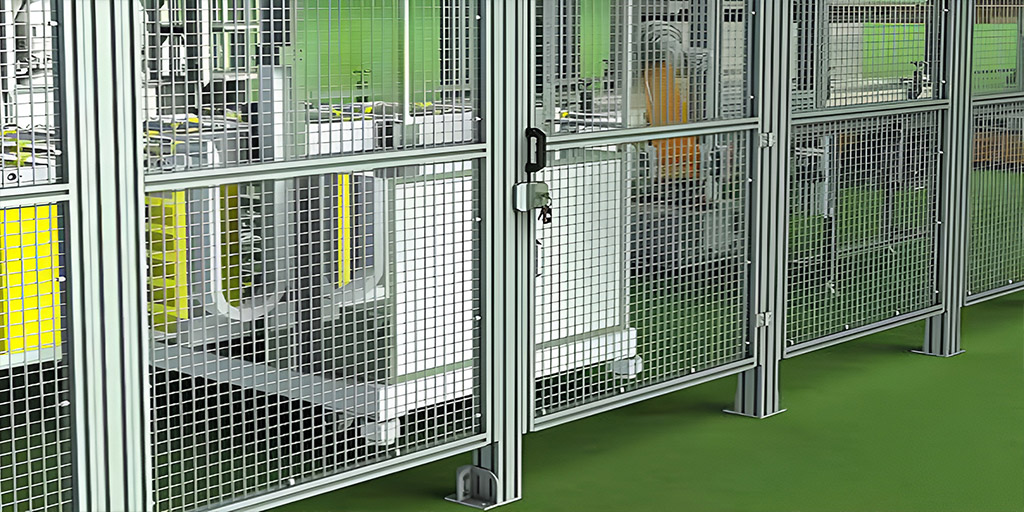
Sourcing economics · tooling Standard vs Custom Aluminium Extrusion: The Break-Even Calculation Every guide says a custom die costs $1,500 to $5,000 and a standard profile ships in 48 hours. None of them tell you the volume at which the die pays for itself — and that number is the only one that decides the […]
Aluminium Profile Standard Sizes: How the Series Matrix Actually Works
Standard sizes · series matrix Aluminium Profile Standard Sizes: How the Series Matrix Actually Works A 4040 is not one product. The 30 series and the 40 series share the same slot on most European grids. And “standard size” is not a specification. Here is the full T-slot series matrix — slot mouth, channel, centre […]
How to Choose the Right T-Slot Aluminium Profile Size
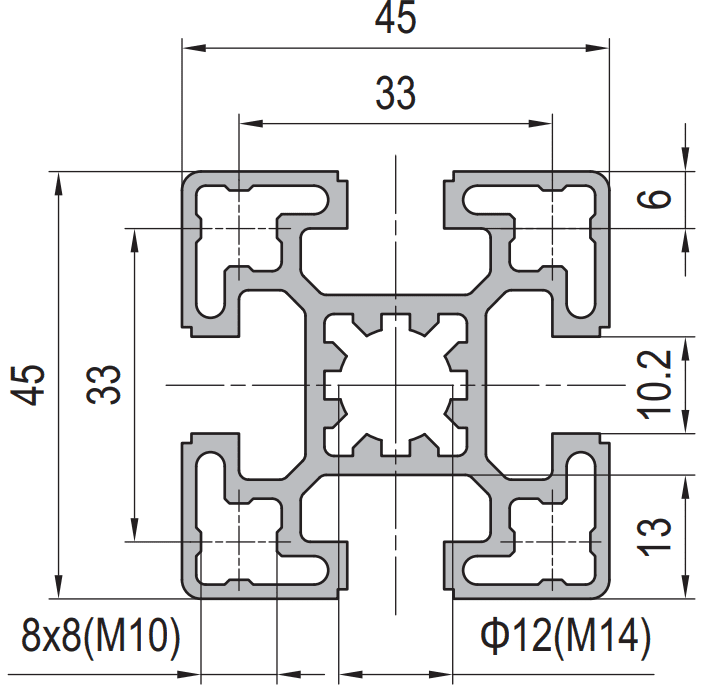
Frame geometry How to Choose the Right T-Slot Aluminium Profile Size The section is the last decision, not the first. Here is why supports and bracing buy more stiffness per kilogram than any upgrade — and the number that explains why a diagonal works. 10 min readSupport placementBracingWorked comparison Quick answer Fix the geometry and […]
How to Choose the Right 4040 T-Slot Aluminium Profile for Industrial Applications
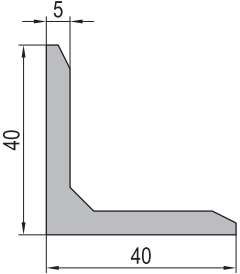
4040 selection How to Choose the Right 4040 T-Slot Aluminium Profile for Industrial Applications 40 × 40 mm is the default section in industrial framing. The useful question is not whether it is strong enough — it is what stepping up or down a series actually buys you, and what it costs across the whole […]
How to Choose the Right T-Slot Aluminium Profile for Your Project
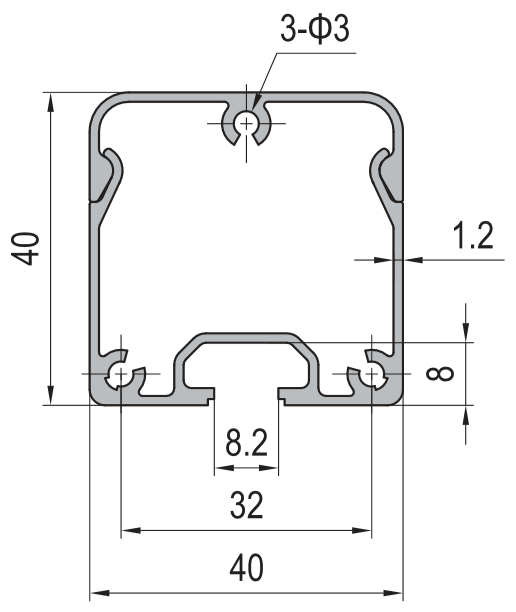
Project planning How to Choose the Right T-Slot Aluminium Profile for Your Project The right section for a one-off frame is rarely the right section for a hundred. Here is how the decision changes with project type and quantity — and the four points at which a project quietly loses money. 11 min readPrototype vs […]
How to Choose the Right Aluminium Profile Size for Industrial Frames
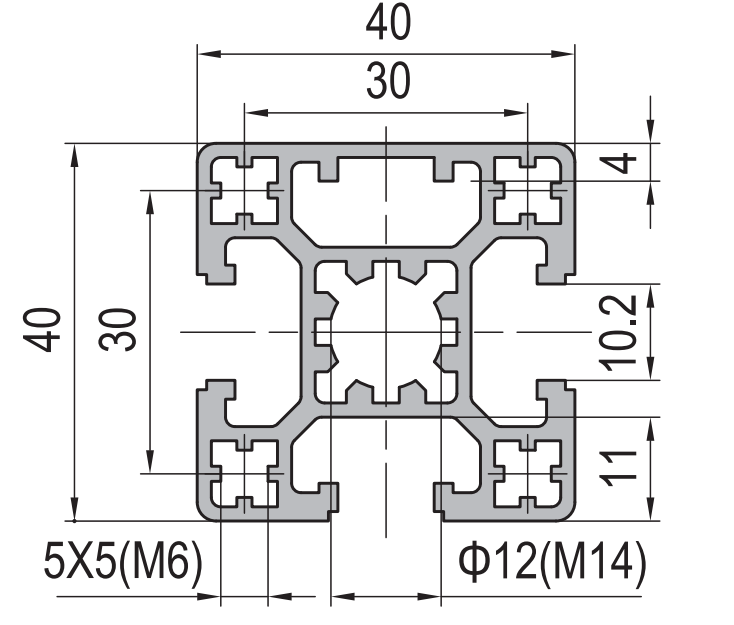
Size selection How to Choose the Right Aluminium Profile Size for Industrial Frames Size is the last lever, not the first. Here is the five-step calculation that turns a load, a span and a deflection budget into one section number — plus the span at which strength stops governing and stiffness takes over. 12 min […]
Aluminium Profile Sizes: The Four Slot Dimensions That Decide Compatibility
Slot geometry Aluminium Profile Sizes: The Four Slot Dimensions That Decide Compatibility A profile’s name tells you the envelope. It tells you nothing about whether your nuts and brackets will fit. Here are the four dimensions to measure, how to measure them, and how to match hardware without guessing. 10 min readSlot measurementNut matchingCross-series Quick […]
40×40 Aluminium Profile: Where It Works, Where It Fails, and Why

Applications and limits 40×40 Aluminium Profile: Where It Works, Where It Fails, and Why The default section in aluminium framing, judged application by application. Nine uses with the span and load each one actually sees, the three failure modes that catch people out, and why a deeper section beats a thicker wall. 11 min readApplication […]
4040 T-Slot Aluminium Profile for Machine Frames: Choose It by Deflection
Profile selection 4040 T-Slot Aluminium Profile for Machine Frames: Choose It by Deflection Strength almost never decides a 4040 frame. Deflection does. Here is the section property that governs it, the load cases that matter, and the unit mistake that makes published load tables wrong by a factor of ten. 13 min readDeflection tables6063-T5 · […]
Heavy-Duty T-Slot Hinges and Sliding Door Buffers: Sizing Them with Numbers
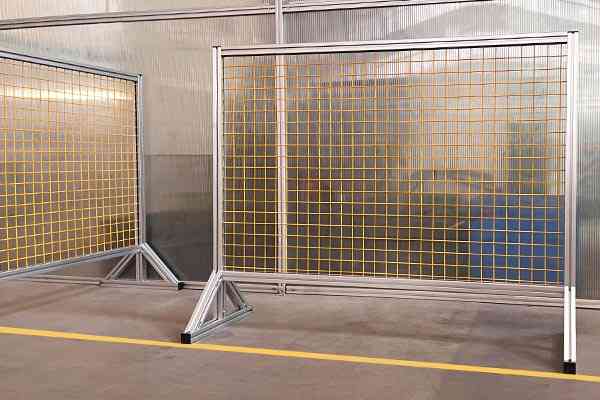
Guard hardware engineering Heavy-Duty T-Slot Hinges and Sliding Door Buffers: Sizing Them with Numbers A door that sags and a door that slams are both sizing errors, not quality problems. Here is the hinge moment calculation and the buffer energy calculation that stop both, using hardware that fits 40-series aluminium profiles. 10 min readHinge momentBuffer […]
T-Slot Aluminum Profile Connectors: What Each Type Is Actually Good At
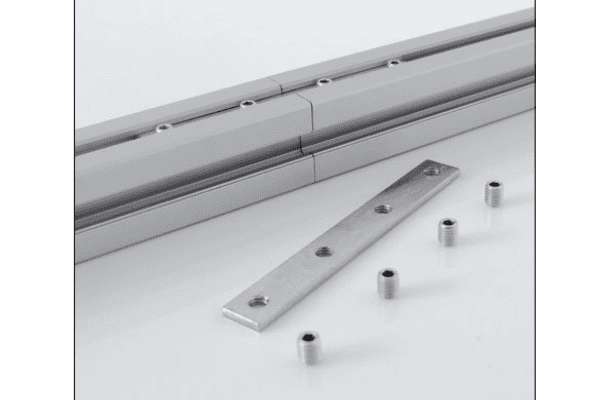
Connector selection T-Slot Aluminum Profile Connectors: What Each Type Is Actually Good At Six connector families, ranked by the load they really carry, with the machining each one demands and a joint-by-joint selection for two real frames. Most guides list the types; this one tells you which one wins where. 12 min readCapacity rankingMachining matrix40 […]
Aluminum Corner Brackets for T-Slot Frames: How to Choose by Load Path, Not by Looks
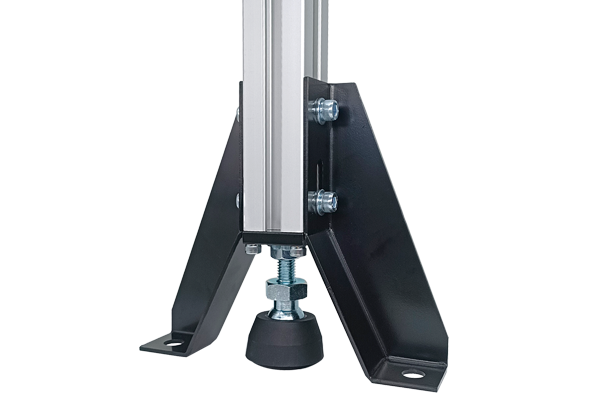
Structural connections Aluminum Corner Brackets for T-Slot Frames: How to Choose by Load Path, Not by Looks Most bracket guides tell you to “match the bracket to the profile”. That advice is true and useless. This one shows you what the bracket is actually doing inside a joint, which part of the connection fails first, […]
Metric vs Imperial T-Slot Profiles: How to Test Compatibility Before You Order
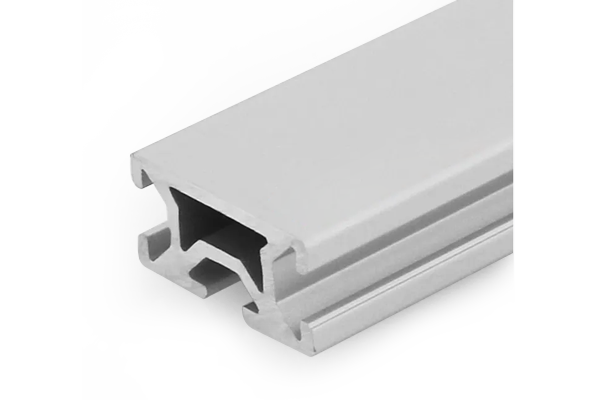
Two 40 mm profiles can look identical and still refuse to share a fastener. The four dimensions that decide compatibility, the pitch error arithmetic, and how to write the requirement into a purchase order.
Aluminum vs Steel Machine Frames: Choose by Deflection, Not by Strength
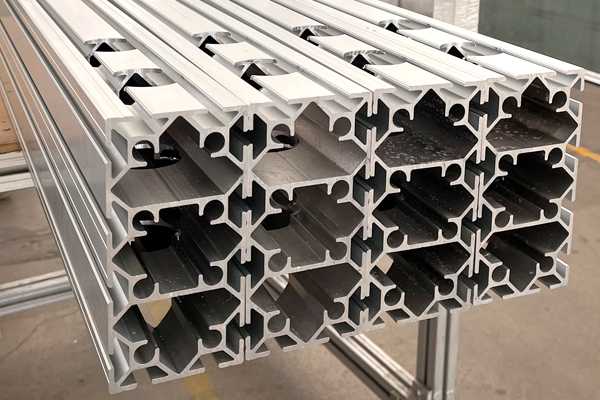
Every aluminium-versus-steel comparison starts with strength, and every one of them answers the wrong question. A machine frame fails by moving too much, not by yielding. Here is the stiffness arithmetic, with worked numbers you can check.
