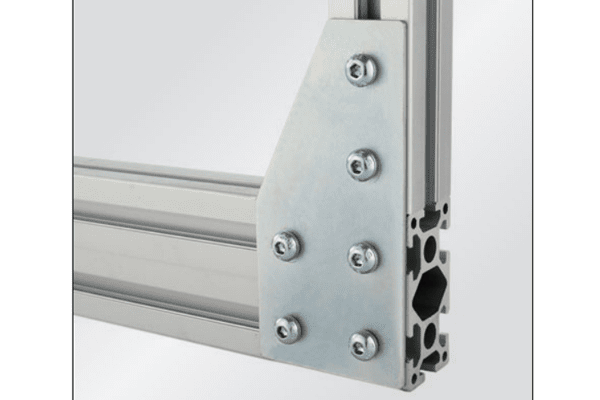
Joining Plate PG40-4080
Transition joining plate that joins a 40 mm member to an 80 mm member at 90°, letting a frame mix a light rail with a heavy leg or spine.
| Material | Die-cast aluminium ADC12 or machined 6063-T5 |
|---|---|
| Alloy Grade | ADC12 die-cast or 6063-T5 |
| Temper | custom |
| Section Size | 40 mm member to 80 mm member |
| Slot | 8 mm slot; 3 + 3 M8 T-nuts |
| Length | Plate 120 x 120 x 40 mm |
| Tolerance | ±0.25 mm on bolt slot positions |
| Surface | Anodised or powder coated |
| MOQ | 300 |
| Lead Time | 20-30 days after deposit |
| Loading Port | Shanghai / Ningbo |
| Supply Ability | 60,000 pcs per month |
| Payment Terms | T/T 30% deposit + 70% before shipment | L/C at sight |
| Trade Terms | FOB | CIF | EXW |
| Certifications | ISO 9001:2015 | ISO 14001 | RoHS | REACH |
Joining plates · Mixed sections
This plate joins a 40 mm member to an 80 mm member at 90°. It exists because good frames are not built from one profile size: the legs and the main spine carry the load and are heavy, while the rails, dividers and panel supports carry almost nothing and are light. Using 80 series everywhere wastes material and weight; using 40 series everywhere makes the frame flexible. The transition plate lets the two coexist.
The engineering question with a mixed-section joint is alignment. A 40 mm member and an 80 mm member have different widths, so the joint is asymmetric and the plate has to decide where the light member sits relative to the heavy one — flush with one face, or centred. That choice affects both the appearance of the frame and how the load travels through the joint.
Where a mixed-section frame is the right design
The alignment decision
| Alignment | Effect | Used when |
|---|---|---|
| Flush with the outer face | Light member sits flush with one side of the heavy member | Panels or cladding run on that face |
| Centred on the heavy member | Light member is centred, leaving an equal step each side | Symmetrical appearance required |
| Offset to the slot | Light member aligned so its slot lines up with a slot on the heavy member | Cable or a long accessory runs across the joint |
| Stepped | Light member set back deliberately | Panels of different thickness on each face |
- The plate carries the offset as a moment. Because the joint is asymmetric, the load path through it is not straight. A plate that suits a flush alignment may not suit a centred one, because the bolt positions change relative to the load line.
- Two plates are still the rule. As with any structural corner, a plate on each visible face gives the stiffness. On a mixed-section corner the second plate is often more important, because the offset makes the joint less naturally stiff.
- The slots must line up if the joint carries cable. Where a cable runs through the joint, the plate has to be positioned so the slot of the light member meets the slot of the heavy member. That is a drawing decision, not a site decision.
Why the 80 mm leg is worth its weight
An 80 × 80 profile has roughly eight times the second moment of area of a 40 × 40, so for the same span it deflects about an eighth as much. That is why a heavy leg or spine in 80 series transforms the stiffness of a frame at a fraction of the weight that an all-80 frame would cost.
The trade is that the 80 mm member is heavier and its slot is further from the member face, so accessories on it need a longer bolt. The transition plate is what makes the mix practical, and the frame ends up both stiffer and lighter than an all-40 design — which is why the arrangement is standard on machine frames.
Practical point: decide the alignment at the drawing stage and put it on the drawing. A mixed-section joint that is aligned differently at different corners of the same frame looks like a mistake and often is one — it usually means a panel will not sit flat.
Frequently asked questions
Can the plate join 40 × 40 to 40 × 80?
Yes, provided the 40 × 80 member is being used as the heavy member. Confirm the section orientation on the drawing, because a 40 × 80 can present either a 40 mm or an 80 mm face to the joint.
Where should the light member be aligned?
It depends on the panels. Flush with the face that carries the cladding is the usual answer; centred is used where the frame is seen from both sides and symmetry matters.
Do I need two plates at a mixed-section corner?
Yes, and often more than at a same-section corner, because the offset makes the joint less naturally stiff.
Will the plate fit a 40 × 80 leg and a 40 × 40 rail?
Yes. That is the most common use of this plate — a 40 × 80 leg carrying 40 × 40 rails.
Can the plate be made in a custom offset?
Yes. The bolt positions can be set to whatever alignment the frame needs, quoted from the drawing.
Send the two sections and the alignment you want
Tell us the two profiles and how the light member should sit against the heavy one. We will confirm the plate, the bolt pattern and the alignment, and return FOB pricing within one working day.
Request a QuoteRelated Products
 Joining Plate PG40-8080
Heavy joining plate for two 80 mm profiles at 90°, a structural corner joint…
 Joining Plate PG45-4545
Joining plate for two 45 × 45 mm profiles at 90°, sized to the…
 Butt Connector
Connector that joins two profiles end to end in a straight line, transmitting bending…
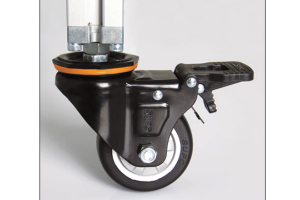 Aluminium Profile Castors
Castors for aluminium profile frames in seven configurations — plate fixed, swivel, braked and…
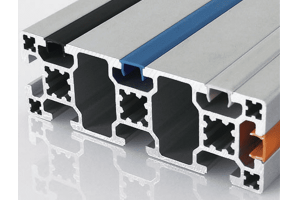 T-Slot Cover Profile
Snap-in T-slot cover strip that closes the open slot on aluminium framing profiles, giving…
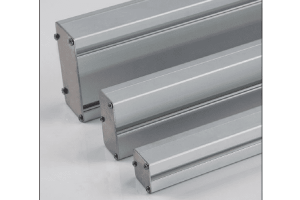 Aluminium Conduit End Cap
Snap-fit or screw-fixed end caps for aluminium conduit profiles from 40x40 to 80x200 mm,…
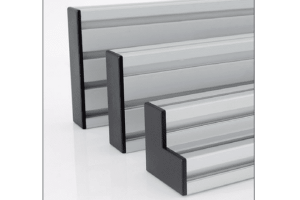 Aluminium Profile End Cap
Push-fit end caps for T-slot framing profiles from 15 to 60 series, sized to…
 T-Slot Reducing Profile
Reducing insert that narrows a wide T-slot to accept standard nuts and accessories from…
