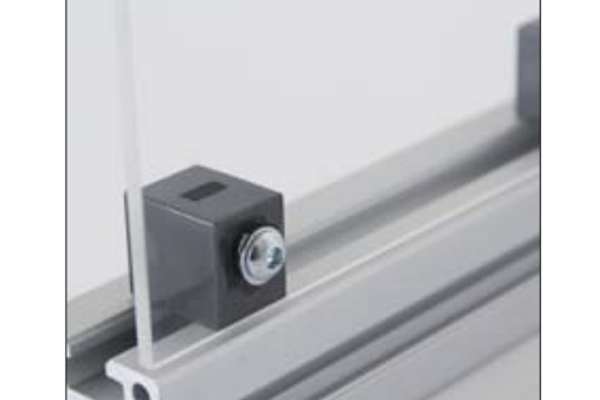
Panel Mounting Block
Block that seats in the profile slot and clamps a panel edge, holding a sheet or board in place without drilling either the profile or the panel.
| Material | PA6 nylon, aluminium 6063 or zinc-plated steel |
|---|---|
| Alloy Grade | 6063-T5 on aluminium blocks |
| Temper | custom |
| Section Size | Fits 6, 8 and 10 mm slot profiles |
| Slot | Panel thickness 1.5-12 mm; clamp screw M5-M8 |
| Length | Block 20-35 mm; throat depth 3-15 mm |
| Tolerance | ±0.2 mm on throat depth |
| Surface | Moulded, anodised or zinc plated |
| MOQ | 500 |
| Lead Time | 15-25 days after deposit |
| Loading Port | Shanghai / Ningbo |
| Supply Ability | 400,000 pcs per month |
| Payment Terms | T/T 30% deposit + 70% before shipment | L/C at sight |
| Trade Terms | FOB | CIF | EXW |
| Certifications | ISO 9001:2015 | RoHS | REACH |
Panel installation · Edge clamping
A panel mounting block seats in the T-slot of a profile and clamps the edge of a panel against the profile face. The panel is held by friction between the block and the profile, so neither the profile nor the panel has to be drilled. The block can be slid along the slot to any position, which is what makes a profile frame practical for panels that are fitted after the frame is built.
The block is a point support rather than a continuous one. That is its strength and its limit: it is fast, adjustable and non-destructive, but it holds the panel at discrete points, so the panel has to be stiff enough not to bow between them. For a rigid panel that is ideal; for a thin flexible sheet the mounting strip or a closer block spacing is the answer.
Why clamp instead of drill
- The panel is not damaged. A clamped panel can be removed and re-used. A drilled panel has holes that will not line up on the next build.
- The profile is not damaged. No holes in the profile means the member can be re-used, and the slot stays intact along its whole length.
- The position is adjustable. The block slides in the slot, so a panel can be positioned and re-positioned without new holes.
- Thickness is accommodated. A block with a deep throat takes a range of panel thicknesses, so the same part holds a 3 mm acrylic sheet and a 10 mm composite board.
The block, the panel and the bow
A clamped panel is held at the blocks and free between them. Under a load — a wind load on an outdoor panel, a hand pushed against a guard, the weight of a shelf board — the panel bows between the supports. The amount of bow depends on the panel stiffness and the distance between blocks.
The design rule is to space the blocks so the panel bow stays within what the application allows. A stiff 10 mm composite board can go half a metre between blocks; a 3 mm acrylic sheet needs them much closer, or a continuous strip instead. Where the panel has to be flush and flat, a mounting strip gives continuous support and removes the bow altogether.
| Panel | Thickness | Block spacing guide | Note |
|---|---|---|---|
| Composite board | 8-12 mm | Up to 600 mm | Stiff; wide spacing works |
| Aluminium sheet | 2-3 mm | 300-400 mm | Add a stiffener for larger spans |
| Acrylic / polycarbonate | 4-6 mm | 300-400 mm | Bows readily; keep spacing short |
| HPL / laminate | 6-10 mm | 400-500 mm | Moderate stiffness |
| Mesh / perforated | Any | 200-300 mm | Low stiffness; close spacing |
Practical point: for a large panel, use blocks at the corners and at the mid-points of the long edges. The mid-edge blocks are what stop the panel bowing away from the frame, and they are usually the ones left out of a first build — which is why the panel rattles.
Frequently asked questions
How many blocks does a panel need?
Two per edge is the minimum, and more on the long edges of a large panel. The spacing is set by the panel stiffness and the load on it; a stiff board can go further between blocks than a thin sheet.
Will the blocks hold a panel without it bowing?
They hold it securely but they are point supports, so a flexible panel bows between them. Where the panel has to stay flat, use a mounting strip for continuous support.
Can the blocks be fitted after the frame is built?
Yes. They slot in from the end of the profile or through a slot opening, and they can be positioned anywhere along the slot.
Do the blocks damage the panel?
No. The clamp face is flat and the panel is held by friction. Where the panel is soft or the finish matters, a block with a protective pad is used.
Are the blocks available for outdoor use?
Yes, with a gasketed version for a weather-tight panel joint and stainless fixings for corrosion resistance.
Send the panel thickness and the span
Tell us the panel material, thickness and the distance between supports. We will recommend the block, the spacing and the clamping, and return FOB pricing within one working day.
Request a QuoteRelated Products
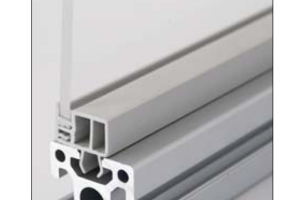 Panel Mounting Strip
Continuous strip that runs the length of a profile and holds a panel along…
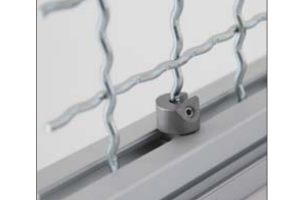 Panel Mounting Nut Block
Block that seats in the profile slot and provides a captive threaded hole at…
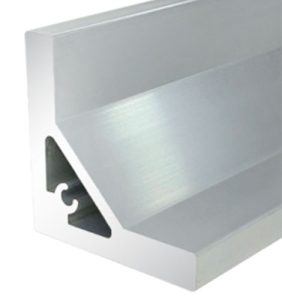 Aluminium Angle Profile 35 x 35 x 4 mm Panel Edge Trim for Guarding
35 x 35 x 4 mm aluminium angle profile with an inner corner slot,…
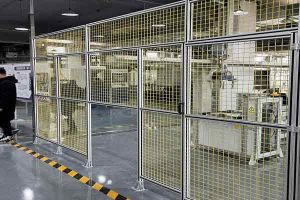 Aluminium Profile Sliding Door 40 Series 8 mm Slot for Machine Enclosures
Sliding door leaves framed in 40 series aluminium profile for machine enclosures. Top hung…
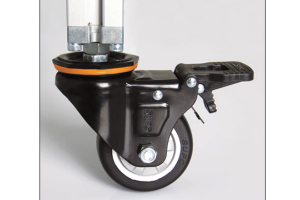 Aluminium Profile Castors
Castors for aluminium profile frames in seven configurations — plate fixed, swivel, braked and…
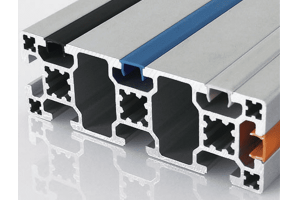 T-Slot Cover Profile
Snap-in T-slot cover strip that closes the open slot on aluminium framing profiles, giving…
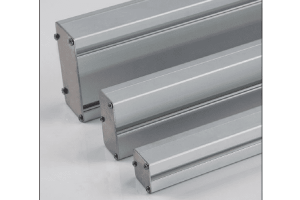 Aluminium Conduit End Cap
Snap-fit or screw-fixed end caps for aluminium conduit profiles from 40x40 to 80x200 mm,…
 Aluminium Profile End Cap
Push-fit end caps for T-slot framing profiles from 15 to 60 series, sized to…
