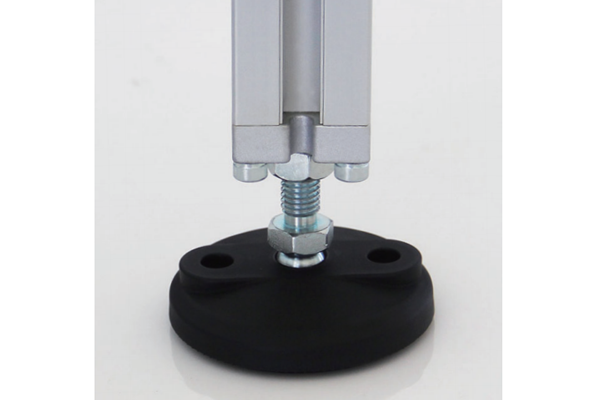
Swivel Foot with Mounting Holes
Levelling foot with a drilled base pad so the frame can be anchored to the floor after levelling, resisting vibration, sliding and tipping loads.
| Material | Steel base with nylon insert, or stainless steel; zinc-plated stem |
|---|---|
| Alloy Grade | Not applicable |
| Temper | custom |
| Section Size | Fits profile ends with M10-M20 thread insert |
| Slot | M10 / M12 / M16 / M20 stem; 2-4 drilled or slotted holes |
| Length | Stem 50-100 mm; overall height 70-175 mm |
| Tolerance | ±0.3 mm on hole positions |
| Surface | Zinc plated; stainless option |
| MOQ | 200 |
| Lead Time | 15-25 days after deposit |
| Loading Port | Shanghai / Ningbo |
| Supply Ability | 120,000 pcs per month |
| Payment Terms | T/T 30% deposit + 70% before shipment | L/C at sight |
| Trade Terms | FOB | CIF | EXW |
| Certifications | ISO 9001:2015 | ISO 14001 | RoHS | REACH |
Levelling feet · Floor anchoring
A swivel foot with mounting holes is a levelling foot whose base pad carries two or four drilled holes. The frame is levelled first, then the pad is bolted down through those holes, so the foot does both jobs in one operation: it takes out the floor unevenness and it anchors the frame so it cannot move.
This is the foot specified wherever a frame has to stay put. A machine tool that generates vibration, a press, a conveyor transfer, a frame in a seismic zone or a frame that a vehicle can nudge all need to be anchored, not just levelled. Levelling alone leaves the frame resting on friction, and friction is not a restraint.
Levelling and anchoring are two different requirements
A standard levelling foot does one thing: it lets the height of each corner be set independently so the frame sits level. The frame is then held in place by its own weight and by friction between the pad and the floor. On a static bench that is enough. On anything that vibrates, slides or has to resist a lateral push, it is not.
Bolting the pad to the floor changes the load path completely. Instead of friction resisting a sideways push, the bolts resist it in shear, and the frame is restrained against sliding and against tipping. On a tall machine frame this is the difference between a stable installation and one that walks across the floor over a shift.
- Vibration. A machine that produces vibration will migrate on a floor unless it is anchored. Bolting the pads stops it, and it also removes the slow loosening of the levelling adjustment that vibration causes.
- Overturning. A tall frame with a heavy component at the top has a tipping moment. Anchoring the pads converts that into a tension load in the bolts on the loaded side, which the frame and the floor can take.
- Positional accuracy. A frame that carries a transfer point or mates with another machine has to stay in position to a millimetre. Anchoring holds it there; levelling alone does not.
- Safety and compliance. Many machinery safety standards require equipment that can move or tip to be secured to the floor. An anchored foot is the simplest way to satisfy that.
| Stem | Pad Ø | Fixing holes | Anchor bolt | Static load |
|---|---|---|---|---|
| M10 × 50 mm | 50 mm | 2 × Ø9 mm | M8 | 600 kg |
| M12 × 60 mm | 60 mm | 4 × Ø11 mm | M10 | 1,000 kg |
| M16 × 80 mm | 80 mm | 4 × Ø13 mm | M12 | 2,000 kg |
| M20 × 100 mm | 100 mm | 4 × Ø15 mm | M12 / M14 | 3,500 kg |
Getting the installation sequence right
Choosing the anchor bolt and the floor
The foot is supplied with drilled holes; the anchor bolt is chosen for the floor. A cast concrete slab takes a mechanical expansion anchor or a chemical anchor. A raised floor or a timber deck needs a through-bolt and a load-spreading plate underneath. A floor with a screed over insulation needs a longer anchor that reaches the structural slab.
Tell us the floor build-up and we will specify the anchor type and the bolt length with the foot. Getting this wrong is the most common reason an anchored frame comes loose: the anchor is the right size but reaches only into the screed, not into the slab that is doing the holding.
Practical point: if the frame has to be moved for maintenance, specify a foot with slotted rather than plain holes. The bolts are then slackened and the frame slides out without the anchors being removed.
Frequently asked questions
Can the foot be bolted down and still adjusted?
Only if the holes are slotted, or if the adjustment is made before the bolts are tightened. On a plain-hole foot, level the frame first and anchor second.
What anchor bolts should I use?
It depends on the floor. Cast slab takes a mechanical or chemical anchor; a raised or timber floor needs a through-bolt with a spreader plate. Send the floor build-up and we will specify.
Does anchoring affect the load rating?
It improves the resistance to lateral and tipping loads, but the vertical compression rating of the foot is unchanged. Keep the three-foot derating for vertical load.
Is a drilled pad weaker than a plain pad?
No, provided the holes are outside the high-stress zone under the stem. The pad diameters we supply for drilled feet are sized so the holes do not reduce the load capacity.
Can the foot be supplied with a stainless pad?
Yes, for wash-down and outdoor installations, with stainless anchor bolts to match so the installation does not develop a galvanic corrosion problem.
Send the floor build-up and the frame weight
Tell us the frame weight, the floor construction and whether the frame has to be movable for maintenance. We will return the foot, the anchor bolt type and FOB pricing within one working day.
Request a QuoteRelated Products
 Nylon Pivot Foot
Levelling foot with a moulded PA6 nylon pivot joint and base, selected for vibration…
 Metal Pivot Foot
Heavy-duty levelling foot with a steel or stainless pivot joint and base, for frames…
 Cup Pivot Foot
Levelling foot moulded as a shallow cup that the profile end seats into, giving…
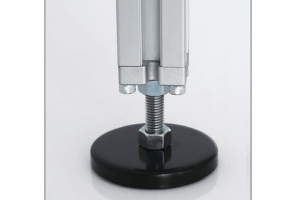 Fixed Foot with Profile Base
Non-adjustable foot that bolts to the profile end at a fixed height, giving higher…
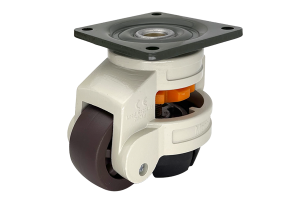 Levelling Castor
Combined castor and levelling foot: move the frame on the wheel, then wind the…
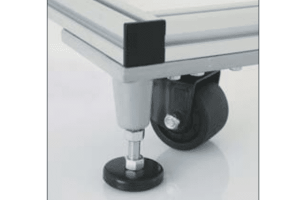 Foot and Castor Components
Spare and replacement components for foot and castor installations — pads, stems, locking nuts,…
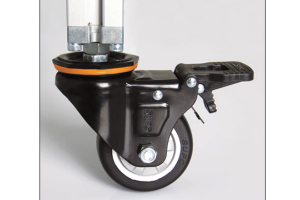 Aluminium Profile Castors
Castors for aluminium profile frames in seven configurations — plate fixed, swivel, braked and…
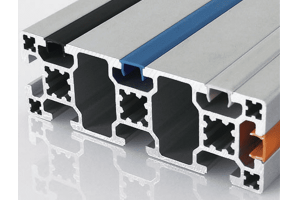 T-Slot Cover Profile
Snap-in T-slot cover strip that closes the open slot on aluminium framing profiles, giving…
