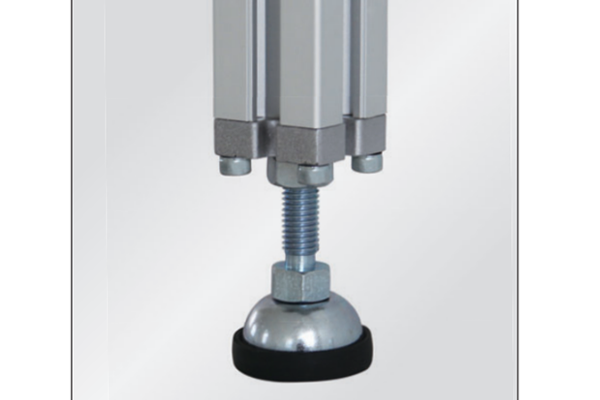
Cup Pivot Foot
Levelling foot moulded as a shallow cup that the profile end seats into, giving a wider bearing footprint and concealing the raw profile end without a separate end cap.
| Material | PA6 nylon; zinc-plated or stainless steel option |
|---|---|
| Alloy Grade | Not applicable |
| Temper | custom |
| Section Size | 20x20 to 60x60 mm profile sections |
| Slot | M8 / M10 / M12 / M16 stem thread |
| Length | Cup height 12-20 mm; overall height 45-110 mm |
| Tolerance | ±0.3 mm on cup inside dimension |
| Surface | Moulded nylon; zinc plated or stainless option |
| MOQ | 500 |
| Lead Time | 15-25 days after deposit |
| Loading Port | Shanghai / Ningbo |
| Supply Ability | 200,000 pcs per month |
| Payment Terms | T/T 30% deposit + 70% before shipment | L/C at sight |
| Trade Terms | FOB | CIF | EXW |
| Certifications | ISO 9001:2015 | RoHS | REACH |
Levelling feet · Cup base
A cup pivot foot is moulded as a shallow cup rather than a flat pad. The end of the profile leg seats inside that cup, so the cup both locates the leg and spreads its load over a larger area than the profile section alone would.
Two benefits come from the shape. The bearing footprint on the floor is wider than the profile end, which lowers the pressure on the floor and makes the frame harder to tip. And the profile end is enclosed by the cup wall, so the raw cut face and the section are hidden — useful on a frame whose legs are visible at eye level, or on a frame that has to present a clean, closed appearance at floor level.
The cup does three things a flat pad cannot
- Locates the leg The cup wall captures the profile end, so the leg cannot slide across the pad while the foot is being adjusted. On a frame being assembled that removes a step: the foot stays where it is put.
- Spreads the load The bearing diameter is the outside of the cup, not the profile section. A 40 mm profile in an 80 mm cup doubles the bearing diameter and cuts the floor pressure to about a quarter.
- Conceals the end The cup wall covers the cut face of the profile. On a display or retail frame, or on any frame where the leg ends at floor level and is visible, that removes the need for a separate end cap.
Cup diameter and profile section
| Profile section | Cup inside | Cup outside | Pad height | Load |
|---|---|---|---|---|
| 20 × 20 mm | 21 mm | 40 mm | 12 mm | 500 kg |
| 30 × 30 mm | 31 mm | 50 mm | 14 mm | 700 kg |
| 40 × 40 mm | 41 mm | 60 mm | 16 mm | 1,000 kg |
| 45 × 45 mm | 46 mm | 70 mm | 18 mm | 1,200 kg |
| 60 × 60 mm | 61 mm | 80 mm | 20 mm | 1,600 kg |
Where the cup shape helps most
Practical point: a cup foot replaces the end cap as well as the levelling foot. If the leg already has an end cap specified, tell us — with a cup foot the cap is not needed and comes off the bill of materials.
Joint, stem and the floor
The joint is normally a ball or a shallow pivot so the cup can sit flat on an uneven floor; without it, a wide cup on an angled leg contacts on one edge and loses the bearing benefit the shape was chosen for. The stem is a standard M8 to M16 thread that screws into a thread insert in the profile end, and the cup is usually supplied in PA6 nylon for the same floor-protection reasons as any other nylon-based foot.
Where the frame is heavy or the floor is rough, a metal cup is available. It is heavier and more expensive, but it will not deform under a point load and it survives a floor that would cut into a polymer base.
Frequently asked questions
Does the cup fit any 40 mm profile?
It fits any profile whose outside section is 40 × 40 mm. The cup is moulded to the outside dimension, so a profile with a different wall thickness still fits, as long as the outside is the same.
Do I still need an end cap?
No. The cup wall encloses the profile end, so the cap is not needed on a leg that ends in a cup foot.
Will the cup hold water?
A cup foot is a shallow dish, so on an outdoor or wash-down frame specify the drained version, which has a small relief in the cup floor so water does not stand in it.
Is a cup foot more stable than a flat pad?
Yes, on the same floor. The wider bearing diameter raises the tipping resistance and lowers the floor pressure, which is why it is used on frames with a high centre of gravity.
Can the cup be supplied in metal?
Yes, for heavy frames and rough floors, in zinc-plated or stainless steel.
Send the profile section and the frame height
Tell us the profile section, the frame height and the floor finish. We will return the cup size, stem length, bearing pressure and FOB pricing within one working day.
Request a QuoteRelated Products
 Fixed Foot with Profile Base
Non-adjustable foot that bolts to the profile end at a fixed height, giving higher…
 Levelling Castor
Combined castor and levelling foot: move the frame on the wheel, then wind the…
 Foot and Castor Components
Spare and replacement components for foot and castor installations — pads, stems, locking nuts,…
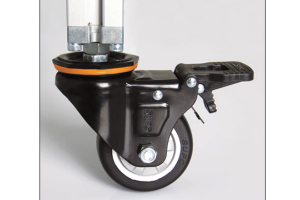 Aluminium Profile Castors
Castors for aluminium profile frames in seven configurations — plate fixed, swivel, braked and…
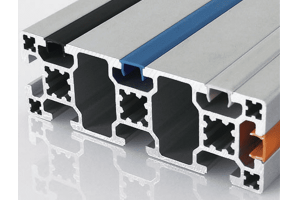 T-Slot Cover Profile
Snap-in T-slot cover strip that closes the open slot on aluminium framing profiles, giving…
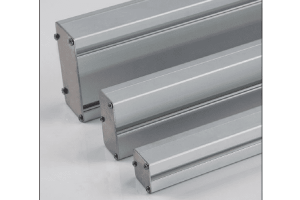 Aluminium Conduit End Cap
Snap-fit or screw-fixed end caps for aluminium conduit profiles from 40x40 to 80x200 mm,…
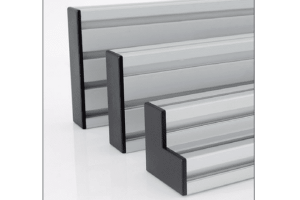 Aluminium Profile End Cap
Push-fit end caps for T-slot framing profiles from 15 to 60 series, sized to…
 T-Slot Reducing Profile
Reducing insert that narrows a wide T-slot to accept standard nuts and accessories from…
