50 x 50 mm Four Slot Aluminium Strut Profile Heavy Frame Cross Member
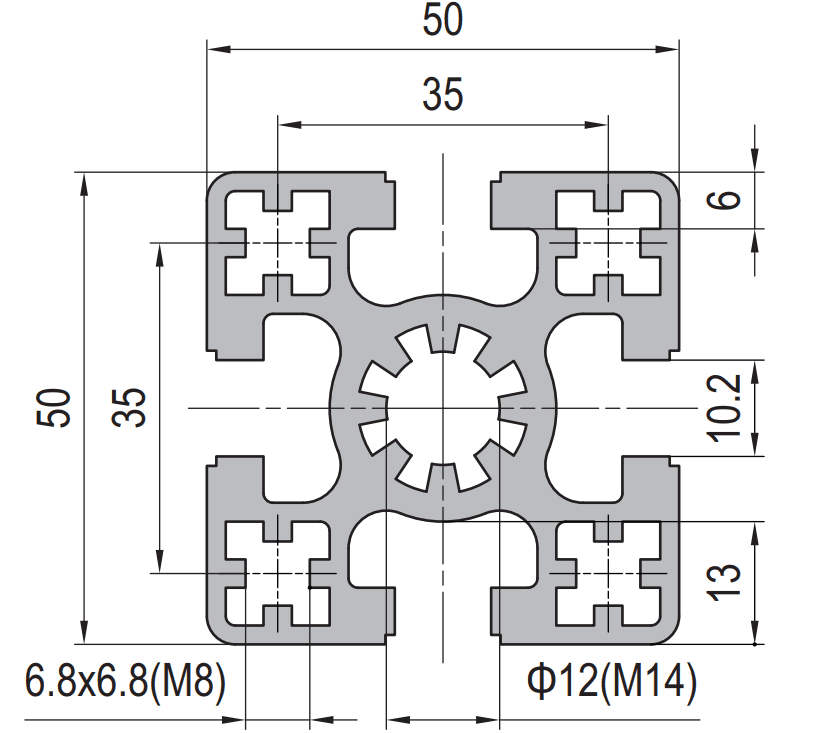
50 x 50 mm four slot T-slot strut aluminium profile in 6063-T5, about 3.1 kg/m and about 25 cm4. M8 slots on a 35 mm pitch and a 12 mm centre bore tapped M14 for an M12 through bolt.
| Material | Aluminium |
|---|---|
| Alloy Grade | 6063-T5 |
| Temper | T5 |
| Section Size | 50 x 50 mm |
| Slot | 6.8 x 6.8 mm groove, M8 slot nuts, 4 faces, 35 mm pitch |
| Length | 6 m stock, cut to drawing to plus or minus 0.5 mm |
| Tolerance | EN 755-9 / GB/T 6892, wall plus or minus 0.15 mm |
| Surface | Mill finish / clear anodised / black anodised |
| MOQ | 350 m |
| Lead Time | Typically 20 to 30 days after deposit for mill finish |
| Loading Port | Shanghai, Ningbo, Qingdao |
| Supply Ability | Extrusion, cutting, machining and anodising in house |
| Payment Terms | T/T 30 per cent deposit, balance against copy of bill of lading; L/C at sight for larger orders |
| Trade Terms | FOB, CIF, CFR, EXW |
| Certifications | ISO 9001:2015, EN 755-9, RoHS and REACH declarations |
01What is the 50 x 50 mm four slot profile?
Where does 50 series sit in the range?
Between the 45 series and the 60 series. At about 3.1 kg/m and about 25 cm4 it is a step up from a 45 x 45 section and a step down from a 60 x 60 section. It exists because some machines are laid out on a 50 mm module: the equipment footprint, the panel sizes or the guarding grid is already fixed at 50 mm and the frame has to match it.
Why is the slot pitch 35 mm and not 40 mm?
Because 35 mm is the module the 50 series is built on, and it does not divide into the 40 mm pitch of the 40 series or the 45 mm pitch of the 45 series. That is the single most important consequence of choosing this section: holes will not line up across series, and cross-series joints need an adapter plate or a slotted bracket.
What is the centre bore for?
It is 12 mm, tapped M14, and it runs the full length of the section. Tapped M14 it takes a heavy end fitting; used plain it lets an M12 bolt pass straight through the member from end to end, which is how you build a tie rod, a long through connection or a lifting point that does not depend on the slot lips.
02Section data
| Item | Value | Note |
|---|---|---|
| Envelope | 50 x 50 mm | square, sharp corners |
| Slots | 4 | 6.8 x 6.8 mm groove, one per face |
| Slot pitch | 35 mm | the 50 series module |
| Fastener | M8 | 50 series slot nuts |
| Centre bore | 12 mm, tapped M14 | takes an M12 through bolt |
| Wall | approx. 2.2 mm | nominal |
| Second moment of area | approx. 25 cm4 | as published |
| Weight | approx. 3.1 kg/m | a 6 m bar is about 18.6 kg |
| Alloy | 6063-T5 | EN AW-6063 |
| Standard | EN 755-9 / GB/T 6892 | wall tolerance +/-0.15 mm |
| Length | 6 m stock | cut to drawing to +/-0.5 mm |
Two numbers on that table decide most of the design: 35 mm pitch and M14 centre bore. The first tells you the section will not share hole patterns with the 40 or 45 series. The second tells you it can do through connections that slotted-only sections cannot.
03The 35 mm module: what it costs and what it buys
Every framing range is built on a slot pitch, and the pitch is what makes a frame go together without measuring. Put two members side by side in the same series and the slots line up, so a bracket drops in and the holes are already right.
The 50 series runs on 35 mm. The 40 series runs on 40 mm. The 45 series runs on 45 mm and 90 mm. None of those divide into each other, which means a 50 series member and a 40 series member cannot share a bracket without one of them having slotted holes.
That sounds like a disadvantage and it is, unless the frame is already on a 50 mm module. If the machine base, the guarding grid or the panel sizes are fixed at 50 mm, then a 40 or 45 series frame forces you to pack, shim and adapter-plate every single interface, and the 50 series removes all of that at once.
The honest test: look at what the frame has to meet. If it meets 50 mm equipment, buy the 50 series and accept that your accessory inventory is separate. If it meets other aluminium framing, buy the series that matches the rest of the build.
| Series | Slot pitch | Shares hole pattern with 50 series? |
|---|---|---|
| 30 series | 30 mm | no |
| 40 series | 40 mm | no |
| 45 series | 45 and 90 mm | no |
| 50 series | 35 mm | yes, by definition |
| 60 series | 48 mm | no |
In practice this table means one thing: decide the series for the whole frame before you design the joints. Mixing series is possible with adapter plates and slotted brackets, and it always costs more in parts and in fitting time than staying inside one series.
04Through connections: what the M14 centre bore is for
Through the centre bore
- A tie rod has to run the length of the member
- The end fitting is heavy and would work the slot lips
- You need a lifting point you can trust, not a slot nut
- The joint must be preloaded and stay preloaded
- The member is in tension, not bending
- You want one bolt to clamp a stack of members together
Into the slots
- The fixing is repositionable during build
- Loads are modest and carried in shear
- You are fitting brackets, panels and accessories
- The joint will be dismantled for shipping or service
- You want no machining: slide a nut in and tighten
- The member is a general frame member with no special duty
The through connection is the reason some buyers pick this section over a cheaper 45 series member of similar weight. It is a capability that is easy to overlook on a cut list and impossible to add later, because you cannot drill a true centre bore into a finished length and expect it to stay straight.
Specify it explicitly: plain bore for a through bolt, or tapped M14 and state the engagement length you need.
05Failure modes to design out
| What goes wrong | Why it happens | Design it out by |
|---|---|---|
| Bracket holes do not line up | a 40 or 45 series bracket was used on a 35 mm pitch section | state the series on the order and use 50 series brackets throughout |
| Through bolt bends the member | the bore was assumed concentric and the bolt was pulled up hard | check bore concentricity on the batch, and torque to the aluminium figure |
| M14 thread strips | the tapped engagement is short and the bolt was tightened to the steel figure | state the engagement length required and use a thread gauge on inspection |
| Frame racks during assembly | a 50 mm section is stiff enough that a twist built in at assembly stays in | assemble on a flat table and fit panels before moving the frame |
| Accessories arrive in the wrong series | the order said 50 x 50 and not 50 series | quote the accessory list as a kit in the same series as the section |
06What to check before you order
Procurement checklist for the 50 x 50 mm four slot section
- Confirm the series and the pitch: 50 series is 35 mm. Say it on the purchase order, not just the size.
- Confirm the centre bore requirement: plain for an M12 through bolt, or tapped M14 and to what depth.
- Confirm the accessory kit is 50 series: M8 slot nuts, brackets, cover strips and end caps.
- Confirm whether the frame meets other series, and if so, budget adapter plates now rather than on site.
- Confirm the cut list and the end preparation: square cut, tapped end, or drilled for a bracket.
- Confirm the finish: mill for clad frames, anodised where the frame is visible.
- Confirm the quantity in metres and the offcut allowance.
07Terms used on this page
- Series
- A family of sections sharing a slot mouth, a slot pitch and an accessory range. 50 series is separate from 40 and 45.
- Slot pitch
- The distance between slot centres. It sets the module that brackets and hole patterns are laid out on.
- Centre bore
- The round hole running down the middle of the section, here 12 mm and tapped M14.
- Through connection
- A single bolt or rod passing through the length of a member, clamping a stack together rather than relying on the slots.
- Engagement length
- How far a bolt screws into a thread. It sets how much torque the joint can take before it strips.
- Adapter plate
- A flat plate with two hole patterns used to join members from two different series.
08Questions buyers ask
Is 50 series compatible with 40 or 45 series?
Not on hole patterns. The pitch is 35 mm against 40 mm and 45 mm, so brackets do not interchange. Cross-series joints need an adapter plate or a bracket with slotted holes.
What is the weight per metre?
Approximately 3.1 kg/m, so a 6 m stock length is about 18.6 kg.
What is the second moment of area?
Approximately 25 cm4. That puts it above a 45 x 45 section and below a 60 x 60 section of the same family.
Can a bolt pass through the section?
Yes. The 12 mm centre bore takes an M12 bolt straight through, and it can be tapped M14 instead if you need a threaded end fitting.
When should I choose 50 series over 45 or 60?
When the equipment, the guarding or the panel grid is already on a 50 mm module. Otherwise pick the series that matches the rest of your framing.
Is it available anodised?
Yes. Clear and black anodised are standard, at 10 to 20 micron.
What we need to quote this section
- The section reference and the series, stated explicitly.
- The cut list with lengths and end preparation.
- The centre bore requirement: plain, or tapped M14 with the engagement length.
- Whether the frame joins another series, so adapter plates can be quoted.
- The accessory list as a 50 series kit.
- The finish and the quantity in metres.
Quotations are broken out into extrusion, cutting, end machining, finish and hardware, so you can see which step is driving the cost. Browse the full aluminium profile catalogue and the 50 series aluminium profiles range for related sections.
Building a frame on a 50 mm module?
Send the cut list, the centre bore requirement and the accessory list. We quote extrusion, machining, finish and the 50 series hardware as separate lines.
Request a quotationRelated Products
 60 x 60 mm Four Slot Aluminium Strut Profile Main Machine Frame Column
60 x 60 mm four-slot T-slot strut aluminium profile in 6063-T5, about 4.3 kg/m…
 Strut Aluminium Profile 60×60 mm Heavy Duty T-Slot Extrusion M16 Bore
60 x 60 mm heavy duty four-slot T-slot strut aluminium profile in 6063-T5 with…
 PG15 Strut Aluminium Profile 15×15 mm Light T-Slot Extrusion
PG15 15 x 15 mm single-slot T-slot strut aluminium profile in 6063-T5, about 0.48…
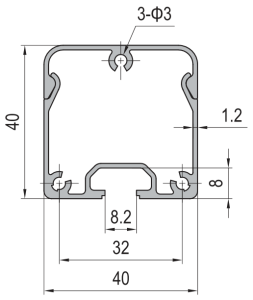 Aluminium Conduit Profile 40×40 mm Cable Duct T-Slot Enclosure
40 x 40 mm aluminium conduit profile in 6063-T5 with a 32 x 8.2…
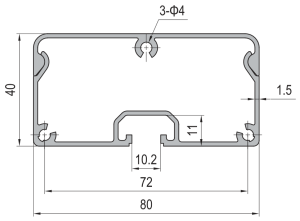 Aluminium Conduit Profile 40×80 mm Large Cable Duct Enclosure
40 x 80 mm aluminium conduit profile in 6063-T5 with a 66 x 11…
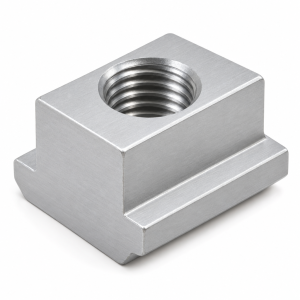 T-Slot Nut 50 Series M10 Hammer Nut for 50×50 Aluminium Extrusion
M10 hammer-head T-slot nut for the 10 mm groove of 50 x 50 mm…
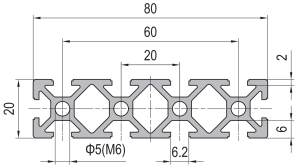 PG20 80×20 mm Ten Slot Aluminium Strut Profile Wide Flat Beam for Cable Tray and Panel Support
80 x 20 mm ten slot PG20 aluminium strut profile in 6063-T5 with a…
 PG20 40×40 mm Eight Slot Aluminium Strut Profile 20 mm Pitch T-Slot Extrusion for Dense Fixtures
40 x 40 mm eight slot PG20 aluminium strut profile in 6063-T5 with two…
