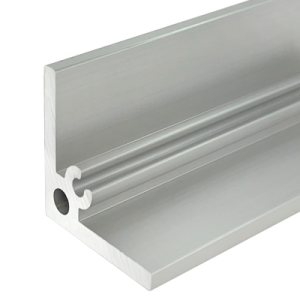
Aluminium Angle Profile 35x35x4 mm 6061 T6 Extruded Equal Angle
35 x 35 x 4 mm equal leg extruded aluminium angle in 6061-T6, about 0.71 kg/m, with an R3 internal radius and a 6 m standard length. The 35 mm leg matches European window, door and facade system dimensions, and is supplied against a die run.
| Material | Aluminium |
|---|---|
| Alloy Grade | 6061-T6 (6063-T5 on request) |
| Temper | T6 |
| Section Size | 35 x 35 x 4 mm |
| Slot | Not applicable, this is a solid equal leg angle with no slot |
| Length | 6 m stock, cut to drawing to +/-0.5 mm |
| Tolerance | EN 755-9 / GB/T 6892, wall +/-0.15 mm |
| Surface | Mill finish / clear anodised / colour matched anodising |
| MOQ | 1000 |
| Lead Time | 20-30 days after deposit for a die run |
| Loading Port | Shanghai / Ningbo |
| Supply Ability | 300 t per month of non-standard angle sections |
| Payment Terms | T/T 30% deposit + 70% before shipment | L/C at sight |
| Trade Terms | FOB | CIF | EXW |
| Certifications | ISO 9001:2015 | EN 755-9 | RoHS | REACH |
Non-standard angle · 35 mm leg
A 35 x 35 x 4 mm equal leg aluminium angle is an extruded L section with two 35 mm legs and a 4 mm wall, an R3 internal radius at the heel and a weight of about 0.71 kg/m in 6061-T6. It is supplied in 6 m standard lengths and cut to order to EN 755-9 tolerances. The reason to buy this size rather than a 30 or a 40 is that 35 mm is a system dimension: European window, door and curtain wall ranges are built around a 35 mm leg, so a replacement section has to match the leg width, the internal radius and the screw centres of the original, not just be close enough to look right.
The catch is availability. 30 x 30 and 40 x 40 angles are extruded continuously and sit in stock at almost every mill, so they can be bought by the metre. 35 x 35 x 4 is not a Chinese stock size, so it is normally produced against a die run and priced from roughly one tonne upwards. That changes the buying decision: for a three-metre repair the honest answer is to take a stock size and modify the joint, and for a few hundred metres of product the die run is the cheapest route to a correct fit.
Where the 35 mm module comes from
Window, door and facade ranges are not designed section by section; they are designed as a module, and the module sets the leg width of everything inside it. A 35 mm leg turns up again and again in European ranges because it leaves room for a glazing rebate, a gasket groove and a screw line inside a typical sash depth without making the frame look heavy. Once a system is built that way, every accessory in it — the pressure plate, the corner cleat, the threshold, the closing strip — is dimensioned to sit against a 35 mm leg.
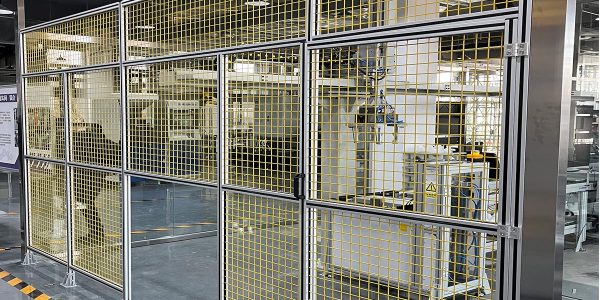
That is what makes this angle a system part rather than a generic one. It is used three ways in practice, and all three depend on the leg width matching rather than on the strength of the section. It is a different animal from the general-purpose aluminium angle profiles bought by the metre, and it belongs with the window and door elements that surround it.
Why 35 is not a stock size in China
An extruder runs a die when there is enough tonnage to make the run worth setting up. The dies that stay in the press are the ones that sell by the tonne every month: 20 x 20, 25 x 25, 30 x 30, 40 x 40, 50 x 50. A 35 x 35 x 4 angle sits in a gap. It is too big to be a light trim section and too small to be a structural default, so no mill keeps it hot. When a customer asks for it, it is made the way any non-standard section is made — as a die run.
A die run is not expensive in itself; it is expensive in small quantity. The die is a one-off cost, the press has a minimum billet, and the finishing line has a minimum batch for anodising. Spread over a tonne the die cost is a few cents a metre; spread over fifty metres it dominates the price. That is the whole economics of this size, and it is why the same section can look cheap or absurd depending on the order.
| Section | Weight | Stock in China | Typical route | Best used for |
|---|---|---|---|---|
| 30 x 30 x 3 | about 0.46 kg/m | Yes, hot die | By the metre | Generic light brackets |
| 30 x 30 x 4 | about 0.60 kg/m | Yes, hot die | By the metre | General brackets and trim |
| 35 x 35 x 4 | about 0.71 kg/m | No | Die run, from about 1 t | European system replacement |
| 40 x 40 x 4 | about 0.82 kg/m | Yes, hot die | By the metre | General structural angle |
| 40 x 40 x 5 | about 1.01 kg/m | Yes, hot die | By the metre | Heavier structural angle |
The buying rule is short. If the joint can be redesigned, buy a stock 30 series or 40 series size and change the joint. If it cannot be redesigned — because it is a replacement on an existing assembly, or because the drawing says 35 — then the die run is the only correct answer, and the cost is a function of quantity rather than of the section.
Ordering the original size, or substituting 30 or 40
Substituting a nearby size looks like a saving and is usually a hidden cost. The problems do not appear at the bench; they appear at the joint, and they appear one at a time, which makes them expensive to chase.
Work through the list before deciding. If more than one of these applies, the substitution will cost more than the die run.
- Screw centres: an existing hole pattern is set by the original leg. A 30 mm leg moves the screw line 5 mm inboard, which either misses the substrate or puts the screw into a chamber with nothing behind it.
- Gasket and glazing grooves: where the angle backs a gasket or a glazing bead, the leg depth sets the compression, and a gasket that is under- or over-compressed leaks.
- Fit in a chamber: a 40 mm leg will not enter a 35 mm chamber, and a 30 mm leg rattles, which leaves the hardware screws as the only thing locating it. Forcing a 40 into a 35 opening pre-loads the assembly, so the frame distorts and the glazing cracks at the first thermal cycle.
- Visible joint lines and certification: a substituted width shows as a step at every junction, and where the system carries a test certificate, changing a member size invalidates it.
Specifying a 35 x 35 x 4 order
- Send the original section drawing if you have it The leg width alone is not enough. We need the internal radius, the leg thickness and any asymmetry, because a 35 x 35 that is R3 and 4 mm thick is not the same section as a 35 x 35 that is R5 and 3 mm thick. A trace of the old section on paper is enough to start.
- State the alloy and the temper 6061-T6 for a reinforcing member or anything drilled as a bracket; 6063-T5 where the angle is visible and has to anodise cleanly. The two are not interchangeable on a visible facade detail.
- Give the cut list, not a total length We cut to plus or minus 0.5 mm and deburr. On a repair job the cut list matters more than the tonnage, because the pieces are the deliverable. Say also which faces are seen, because a die line is invisible on a hidden reinforcement and obvious on a visible trim.
- Fix the finish before the die run Anodising is a batch process. If the order is part anodised and part mill, split the quantities at the enquiry stage, because a small anodising batch added later costs far more than one included in the run. Colour-matched and brushed finishes are handled as anodised aluminium profiles, and any mitring, notching or drilling is done on CNC machining centres before the finish is applied.
6061-T6 or 6063-T5 on this section
The same die can be run in either alloy and the choice is decided by what the angle does. 6061-T6 has a yield strength of roughly 240 MPa against roughly 110 to 150 MPa for 6063-T5, so as a reinforcement inside a window profile or as a drilled bracket it is the correct alloy and it holds a thread and a bearing load noticeably better. Where the angle is a structural member of the assembly, specify 6061-T6.
6063-T5 is the alloy for anything seen. It extrudes with a cleaner surface, anodises to a brighter and more consistent colour with less risk of streaking, and takes a tight bend without tearing where 6061-T6 will crack. On a facade trim or a visible guard edge the appearance usually outranks the strength, so 6063-T5 is the right answer even though it is the weaker alloy.
Frequently asked questions
Why is 35 x 35 x 4 not available from stock?
Because no mill keeps it hot. The sizes that stay in the press are the ones that sell by the tonne every month, and 35 mm sits between the light trim sizes and the structural defaults. We make it as a die run, normally from about one tonne, and the die cost then spreads across the run.
Can I substitute a 30 x 30 or a 40 x 40 instead?
Sometimes, but check the joint first. Screw centres, gasket compression, fit inside a chamber, visible joint lines and any system certificate are all set by the leg width. If two or more of those matter, the die run is cheaper than the rework.
What is the difference between R3 and a sharp internal corner?
A sharp internal corner is a stress raiser, is not practically extrudable and looks hard on a visible edge. R3 is the radius this section is normally drawn with, and it is what a mating European system will expect to sit against.
How much does 35 x 35 x 4 weigh per metre?
About 0.71 kg/m in 6061-T6, from a section area of roughly 2.64 cm2. A 6 m length is about 4.3 kg, which is still light enough to handle and cut by hand on site.
Can you supply it cut, mitred, drilled and anodised?
Yes. We cut to plus or minus 0.5 mm, mitre and notch on CNC centres, drill and countersink to drawing, and supply mill finish, clear anodised or a colour match. Send DWG, DXF, STEP or PDF and we quote from the drawing.
Send the original section drawing, not only the leg size
Tell us the leg width, the internal radius, the leg thickness and the alloy you need, and if you have the original section drawing or a paper trace, send that too. We will confirm whether a stock 30 or 40 size can be substituted or whether the die run is the right route, and quote the extrusion, the cutting, the machining and the finish with FOB pricing. Where the part is a replacement on an existing assembly, we quote from the drawing so the fit is right the first time.
Request a QuoteRelated Products
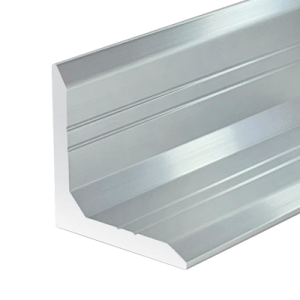 Aluminium Angle Profile 40x40x5 mm 6061 T6 Extruded Structural Angle
40 x 40 x 5 mm equal leg extruded structural aluminium angle in 6061-T6,…
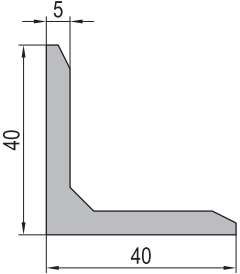 Aluminium Angle Profile 40 x 40 x 5 mm Solid Equal Leg Corner Section
Equal leg 40 x 40 x 5 mm extruded aluminium angle at about 1.01…
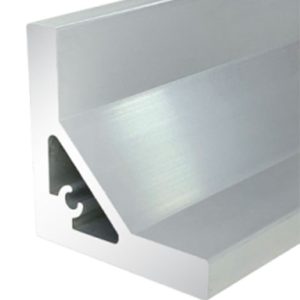 Aluminium Angle Profiles Equal Leg Corner Sections 20 to 100 mm
Equal leg aluminium angle profiles from 20 x 20 mm to 100 x 100…
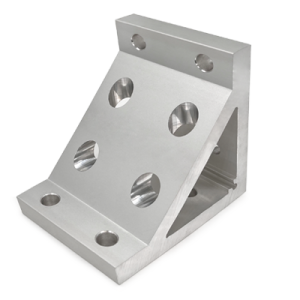 Aluminium Angle Profile Bracket 100 x 100 x 15 mm Heavy Duty Corner
100 x 100 x 15 mm heavy duty aluminium angle bracket with round fixing…
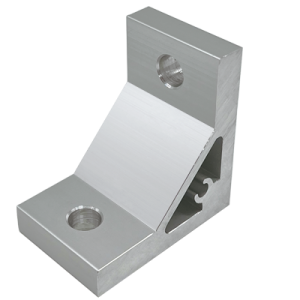 Aluminium Angle Profile Bracket 50 x 50 x 9 mm Medium Duty Corner
50 x 50 x 9 mm medium duty aluminium angle bracket with equal legs…
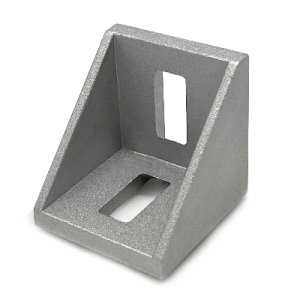 Die Cast Bracket for 20 to 50 mm Series Aluminium Profiles Corner
Die cast zinc alloy corner bracket for 20, 30, 40, 45 and 50 series…
 Extruded Aluminium Angle Profile 20 to 100 mm 6061 T6 Equal Leg
Extruded aluminium equal leg angle from 20 x 20 x 3 mm to 100…
 Aluminium Angle Extrusion 40x40x5 mm for Frame Assembly and Bracing
40 x 40 x 5 mm aluminium angle extrusion in 6061-T6 for frame assembly…
