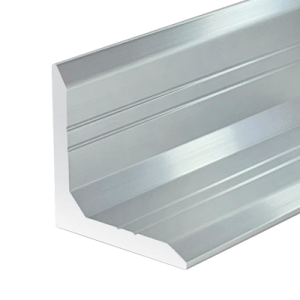
Aluminium Angle Profile 40x40x5 mm 6061 T6 Extruded Structural Angle
40 x 40 x 5 mm equal leg extruded structural aluminium angle in 6061-T6, about 1.01 kg/m, with an R3.5 internal radius and a 6 m standard length. Drilled and slotted to drawing for bolting to 40 series profiles with M8 T-slot nuts.
| Material | Aluminium |
|---|---|
| Alloy Grade | 6061-T6 (6063-T5 on request) |
| Temper | T6 |
| Section Size | 40 x 40 x 5 mm |
| Slot | Not applicable, solid angle; drilled or slotted for M8 T-slot nut fixings |
| Length | 6 m stock, cut to drawing to +/-0.5 mm |
| Tolerance | EN 755-9 / GB/T 6892, wall +/-0.15 mm |
| Surface | Mill finish / clear anodised / black anodised |
| MOQ | 1500 |
| Lead Time | 18-28 days after deposit, longer when drilling and slotting to drawing |
| Loading Port | Shanghai / Ningbo |
| Supply Ability | 500 t per month of structural angle sections |
| Payment Terms | T/T 30% deposit + 70% before shipment | L/C at sight |
| Trade Terms | FOB | CIF | EXW |
| Certifications | ISO 9001:2015 | EN 755-9 | RoHS | REACH |
Structural angle · 40 x 40 x 5
A 40 x 40 x 5 mm equal leg aluminium angle is an extruded L section with two 40 mm legs and a 5 mm wall, an R3.5 internal radius at the heel and a weight of about 1.01 kg/m in 6061-T6. It is supplied in 6 m standard lengths, cut, drilled, slotted and machined to drawing. The 5 mm wall is what separates it from a 4 mm angle: it is about 22 % heavier and roughly 70 % stiffer in bending, and it is the size to use where the angle is a structural member rather than a trim — equipment base reinforcement, gussets at a frame corner, beam seats and column feet.
In a 40-series frame it is almost always fixed with T-slot nuts rather than with threads in the angle. An M8 T-slot nut sits in the profile’s 8 mm slot and an M8 bolt passes through a plain 9 mm hole in the angle, so no thread is cut in the aluminium at all. The three decisions that matter are the hole position relative to the slot, whether the hole is round or slotted, and the bolt length — get those right and the joint is rigid and adjustable, get them wrong and the bolt bottoms in the slot or the angle sits off the face.
Where a 40 x 40 x 5 angle earns its extra weight
The step from a 4 mm wall to a 5 mm wall is a 25 % increase in thickness and about 22 % in weight, but the second moment of area rises by roughly 70 %, because stiffness in bending scales with the cube of the thickness. On a bracket that spans a change of plane, that is the difference between a part that deflects visibly under load and one that stays put, and it is the reason this size exists alongside the lighter 40 x 40 x 4.
It is bought for four jobs in practice, and on all four the angle is loaded across the heel rather than along either leg.
Bolting it to a 40 series profile with T-slot nuts
The standard connection between this angle and a 40 series extrusion is an M8 T-slot nut in the profile slot and an M8 bolt through the angle. The nut is captive in the slot and can be slid to any position, so the joint is adjustable after assembly, and no thread is cut into the aluminium angle at all. That last point is the whole reason the connection is made this way rather than with a tapped hole in the angle. The nuts are standard T-slot fastening elements for the 40 series and for the wider strut profile range, so no special part is needed.
The hole in the angle is a plain 9 mm through-hole for an M8 bolt. The hole has to be in the leg that lies against the profile face, and its position along the leg decides how the angle sits relative to the slot. The slot mouth is 8 mm wide on an 8 mm slot, so the bolt needs about 6 mm of clearance from the profile face to the centre of the T-nut body; with a 5 mm angle leg and a washer, that fixes the bolt length rather than leaving it to choice.
| Bolt | Hole in the angle | T-nut | Bolt length | Notes |
|---|---|---|---|---|
| M8 x 16 | 9 mm through-hole | M8 standard T-nut | 16 mm | Thin nut, no washer; marginal on a 5 mm leg |
| M8 x 20 | 9 mm through-hole | M8 standard T-nut | 20 mm | Correct with one plain washer |
| M8 x 25 | 9 mm through-hole | M8 standard T-nut | 25 mm | Correct with washer and a second angle leg |
| M8 x 30 | 9 mm through-hole | M8 deep T-nut | 30 mm | For a deep slot nut or a spacer |
| M8 x 20 | 9 x 11 mm slotted hole | M8 standard T-nut | 20 mm | Allows 2 mm of adjustment on site |
A bolt that is too long bottoms in the slot before the joint is tight, which feels like a stripped thread but is not; a bolt that is too short engages only the first few threads of the T-nut and pulls out under load. Measure from the underside of the bolt head to the bottom of the slot and take the bolt length from that, not from the thickness of the angle alone. Where two angle legs are bolted back to back through the same nut, add their thicknesses before choosing the length.
Why not just tap a thread into the angle
It is tempting, because a tapped hole removes the nut and looks cleaner. It also removes the strength of the joint. Thread strength depends on how many full threads engage, and the accepted minimum for a steel screw in aluminium is about one times the bolt diameter, with one and a half to two times the diameter being where the bolt itself becomes the weak part. A 5 mm wall does not reach that on any thread that matters.
The arithmetic is short. An M6 coarse thread has a 1.0 mm pitch, so a 5 mm leg gives about five turns, of which roughly four are full threads after the chamfer — about 0.67 times the diameter, well under the one-times rule. An M5 at 0.8 mm pitch gives about six turns and about five full threads, which is close to one times the diameter but only for a small bolt. So the only thread that is defensible in a 5 mm wall is an M5, and an M5 carries a fraction of the load of the M8 T-nut connection it replaced.
The rule for this section: put the thread in a steel T-slot nut in the profile, never in the 5 mm angle wall. If a thread in the angle is unavoidable — for example a blind fixing where no nut can be reached — use a rivet nut, which adds 6 to 10 mm of steel thread, rather than tapping the aluminium directly.
Round holes or slotted holes
A round hole locates the joint and a slotted hole lets it move. The choice is decided by whether the assembly has to be aligned on site or only bolted together. Both are produced on CNC machining centres from the hole pattern in your drawing.
- Round holes are the default where the frame is jig-built and the position is fixed by the cut lengths. Drill 9 mm for M8, deburr both faces, and keep the hole at least one diameter from any edge so the leg does not tear out.
- Slotted holes are used where a panel, a rail or a foot has to be aligned after the frame is up. A 9 x 11 mm slot gives about 2 mm of movement in one direction, which is normally enough to take out the tolerance stack of a large frame.
- Slots across the leg are better than along it where the movement needed is perpendicular to the profile face, because the bolt then stays in the same slot position and the T-nut does not have to move.
- Oversize holes are not a substitute for a slot. A 12 mm hole for an M8 bolt gives 4 mm of movement but also 4 mm of slack in every direction, so the joint can shift under vibration even when it is tight.
6061-T6 or 6063-T5
This section is supplied in 6061-T6 as standard, because a structural angle is bought for its strength: 6061-T6 yields at roughly 240 MPa against roughly 110 to 150 MPa for 6063-T5, and it resists bolt bearing and local dishing far better. Where the angle is a load path, or where it is drilled and used as a cleat, 6061-T6 is the correct alloy. 6063-T5 is offered where the part is visible and has to anodise cleanly, but on a 40 x 40 x 5 structural member the appearance argument is rarely the deciding one.
Frequently asked questions
What size hole should I drill in the angle for an M8 T-slot nut?
A 9 mm plain through-hole for a round hole, or a 9 x 11 mm slot where the joint has to be aligned on site. Keep the hole at least 9 mm from any edge, and deburr both faces so the bolt head seats flat against the leg.
Why should I not tap the angle instead of using a T-slot nut?
Because a 5 mm wall gives only about four full M6 threads, roughly 0.67 times the diameter, which is below the one-times-diameter engagement normally required for a steel screw in aluminium. Use a T-slot nut in the profile, or a rivet nut if the thread really has to be in the angle.
How do I choose the bolt length?
Measure from the underside of the bolt head to the bottom of the profile slot and take the bolt length from that figure, allowing for the washer and for any second angle leg in the joint. A bolt that bottoms in the slot will not tighten the joint.
How much does 40 x 40 x 5 weigh per metre, and how does it compare with 40 x 40 x 4?
About 1.01 kg/m in 6061-T6, against about 0.83 kg/m for the 4 mm wall. The 5 mm wall is about 22 % heavier and roughly 70 % stiffer in bending, which is why it is the structural option.
Can you supply it cut, drilled and slotted to a drawing?
Yes. We cut to plus or minus 0.5 mm, drill and slot on CNC centres to the hole pattern in your drawing, deburr, and supply mill finish or anodised. Send DWG, DXF, STEP or PDF and we quote from the drawing.
Send the hole pattern with the section size
Tell us the section, the alloy, the finish and the hole pattern, and whether the holes are round or slotted. We will confirm the bolt length against the profile slot depth, machine the angle on CNC centres and supply it deburred and bagged with the matching T-slot nuts so the frame goes together on site without rework. Quotation covers extrusion, cutting, drilling, slotting and finish with FOB pricing.
Request a QuoteRelated Products
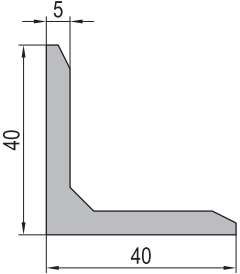 Aluminium Angle Profile 40 x 40 x 5 mm Solid Equal Leg Corner Section
Equal leg 40 x 40 x 5 mm extruded aluminium angle at about 1.01…
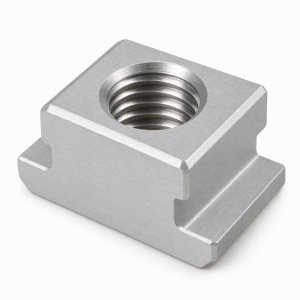 T-Slot Nut 40 Series M8 Hammer Nut for 40×40 Aluminium Extrusion
M8 hammer-head T-slot nut for the 8 mm groove of 40 x 40 mm…
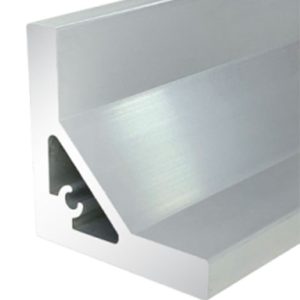 Aluminium Angle Profiles Equal Leg Corner Sections 20 to 100 mm
Equal leg aluminium angle profiles from 20 x 20 mm to 100 x 100…
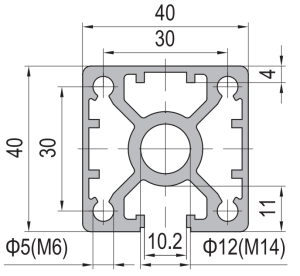 PG40 40 x 40 mm Single Slot Aluminium Strut Profile Guide Rail Base
40 x 40 mm single-slot aluminium strut profile with one 10.2 mm groove on…
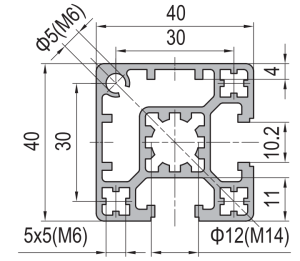 PG40 40 x 40 mm Two Slot Type A Aluminium Strut Profile Guide Rail
40 x 40 mm Type A two slot asymmetric PG40 aluminium strut profile in…
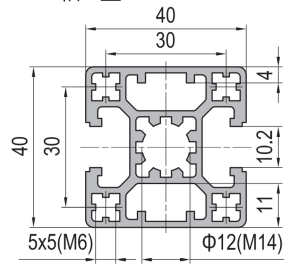 PG40 40 x 40 mm Two Slot Type B Aluminium Strut Profile Opposite Rail
40 x 40 mm Type B two-slot aluminium strut profile with two 10.2 mm…
 PG40 40 x 40 mm Four Slot Heavy Aluminium Strut Profile Standard Frame
40 x 40 mm heavy-wall four-slot aluminium strut profile with 10.2 mm grooves, 8…
 PG40 40×40 mm Four Slot Light Wall Aluminium Strut Profile Cost Optimised T-Slot Extrusion
40 x 40 mm four slot light wall PG40 aluminium strut profile in 6063-T5…
