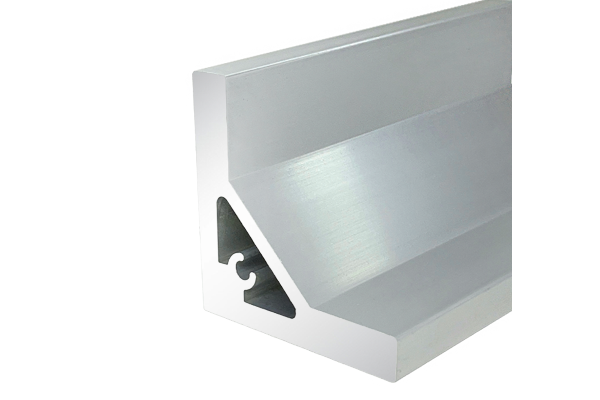
Custom Aluminium Extrusion Profile 20 to 100 mm, 6063-T5
Aluminium extrusion profiles supplied to Canada in 6063-T5 and 6061-T6, mill or anodised, with inch conversion, HS 7604 classification support and mill certificate 3.1.
| Material | Aluminium |
|---|---|
| Alloy Grade | 6063-T5 |
| Temper | T5 |
| Section Size | Equal leg angle and strut profiles, 20 mm and up |
| Slot | 20 to 50 series strut slots; solid sections have no slot |
| Length | Saw cut to length; 6 m standard for a 40HQ container, +/-0.5 mm |
| Tolerance | EN 755-9, wall +/-0.15 mm |
| Surface | Mill finish / clear anodised / black anodised |
| MOQ | Made to order; container loads from one section |
| Lead Time | 3 to 4 weeks to a Canadian port plus inland delivery |
| Loading Port | Shenzhen, Shanghai, Ningbo |
| Supply Ability | In-house extrusion, saw cutting, anodising and export packing |
| Payment Terms | T/T 30 per cent deposit, balance against copy of bill of lading; L/C at sight on request |
| Trade Terms | FOB, CIF, CFR, DDP on request |
| Certifications | Mill certificate to EN 10204 3.1, RoHS and REACH declarations, anodising film report |
01Buying aluminium extrusion from China for a Canadian project
Canadian buyers use both spellings, *aluminum* and *aluminium*, and they order in a mix of millimetres and inches. That sounds small but it changes the whole quotation: a Canadian fabricator will ask for a 2 inch x 2 inch x 1/4 inch angle and expect it to match a 50.8 x 50.8 x 6.35 mm section, not a nominal 50 x 50 x 6 mm. The table below converts the common asks so the first quotation is the right one.
The other two things that decide whether an order to Canada goes smoothly are customs classification and the anti-dumping position on Chinese aluminium extrusion. Both are covered further down, with the declaration points your broker will ask for.
Do you ship aluminium extrusion to Canada?
Yes. We supply 6063-T5 and 6061-T6 profiles to Canadian buyers, mill or anodised, mostly in 6 m lengths in a 40HQ container, from Shenzhen or Shanghai. Standard lead time is three to four weeks to a Canadian port, plus inland.
Which spelling and units should the drawing use?
Either spelling is understood. The units matter more: send the drawing in millimetres or in inches, and say which. A drawing that says *2 inch angle* without a tolerance will be quoted as the nearest metric section, which is usually what the buyer wants, but it should be confirmed on the order.
02Millimetre to inch conversion for the common sections
The conversion below uses 1 inch = 25.4 mm exactly. Nominal sizes traded in Canada are not always exact conversions, so the table shows the nominal imperial call-out, the exact millimetre equivalent, and the metric section we would quote.
| Imperial call-out | Exact mm | Metric section quoted | Weight imperial | Weight metric |
|---|---|---|---|---|
| 3/4 in x 3/4 in x 1/8 in | 19.1 x 19.1 x 3.2 mm | 20 x 20 x 3 mm | approx. 0.20 lb/ft | 0.30 kg/m |
| 1 in x 1 in x 1/8 in | 25.4 x 25.4 x 3.2 mm | 25 x 25 x 3 mm | approx. 0.27 lb/ft | 0.40 kg/m |
| 1-1/4 in x 1-1/4 in x 3/16 in | 31.8 x 31.8 x 4.8 mm | 30 x 30 x 4 mm | approx. 0.40 lb/ft | 0.60 kg/m |
| 1-1/2 in x 1-1/2 in x 3/16 in | 38.1 x 38.1 x 4.8 mm | 40 x 40 x 5 mm | approx. 0.68 lb/ft | 1.01 kg/m |
| 2 in x 2 in x 1/4 in | 50.8 x 50.8 x 6.35 mm | 50 x 50 x 6 mm | approx. 0.94 lb/ft | 1.40 kg/m |
| 4 in x 4 in x 5/8 in | 101.6 x 101.6 x 15.9 mm | 100 x 100 x 15 mm | approx. 3.45 lb/ft | 5.13 kg/m |
To convert any weight on this site: kg/m x 0.672 = lb/ft. To convert a length: mm x 0.03937 = inch.
03HS classification and the AD/CVD position
Aluminium extruded profiles ship to Canada under HS heading 7604. The first question your broker asks is whether the profile is hollow or not, because that splits the heading straight away.
| HS code | Covers | Our typical product | Note |
|---|---|---|---|
| 7604.21 | Aluminium alloyed, hollow profiles | T-slot strut with a closed bore | hollow means a closed void along the length |
| 7604.29 | Aluminium alloyed, other than hollow | solid angle, flat bar, T-slot with open slots | solid angle sits here |
| 7604.10 | Aluminium not alloyed | rarely used, 1050 or 1100 sections | our sections are alloyed |
| 7608.10 / 7608.20 | Aluminium tubes and pipes | round tube, pipe | tube is a separate heading from profile |
Note that a T-slot strut profile is not hollow in the customs sense if the slot is open to the outside along its full length, because there is no closed void. A closed hollow tube or a two-slot closed section is hollow. Getting this wrong moves the duty rate and, more importantly, changes the declaration under the trade measures on Chinese aluminium extrusion.
Declaration points your broker will ask for
- Country of cast: where the aluminium billet was cast, not where it was extruded.
- Country of extrusion: where the profile was pushed through the die.
- Alloy and temper: for example 6063-T5, with the chemical analysis.
- Hollow or not hollow: a plain statement, and a cross-section drawing.
- Net weight and value per line, split by section.
- Mill certificate: EN 10204 3.1, showing heat number and chemistry.
Trade measures on aluminium extrusion change. Confirm the current rate with your broker before the order is placed, and keep the country-of-cast and country-of-extrusion statements accurate. We supply both on the mill certificate, and we do not re-route material to change the origin.
04Certification: what a profile is and what it is not
A frequent misunderstanding: CSA and cUL marks apply to an electrical product, not to the aluminium it is built from. Our extrusion is a raw material. It is not certified as an electrical component, and it does not need to be, any more than the steel in a machine frame does.
| Document | Applies to | Do we supply it | What it covers |
|---|---|---|---|
| Mill certificate 3.1 | the aluminium | yes, on request | chemistry, temper, mechanical properties |
| RoHS / REACH declaration | the aluminium and coating | yes | restricted substances in the material and finish |
| Dimensional report | the batch | yes | section, wall, straightness, cut length |
| CSA / cUL | an electrical product | no | the finished product, certified by its maker |
| Anodising film report | the finish | yes, on request | coating thickness in micron |
If the profile is anodised, the film thickness report is the document a Canadian buyer usually wants, because anodising is what carries the corrosion warranty. We report it in micron and in mil (1 mil = 25.4 micron).
05Loading and shipping to Canada
Aluminium extrusion is bulky and light, so you pay for volume, not weight. A 40HQ container takes 6 m lengths well and is the default for a Canadian order.
| Item | Figure | Note |
|---|---|---|
| Container | 40HQ | about 12.0 m internal length |
| Length packed | 6.0 m bundled | fits two runs lengthwise |
| Bundle cross-section | about 300 x 300 mm | stacked on timber |
| Typical payload | 18 to 22 tonnes | volume-limited, not weight-limited |
| Packing | interleaved, strapped, timber pallet | no bare bundles for sea freight |
| Port of loading | Shenzhen, Shanghai, Ningbo | choice affects sailing schedule |
| Transit to Vancouver | about 18 to 22 days | west coast, then rail |
| Transit to Toronto | about 28 to 34 days | via Vancouver or Montreal |
| Trade terms | FOB, CIF, CFR, DDP on request | DDP needs a Canadian broker |
For the west coast, Vancouver is the natural entry and then rail inland. For central and eastern Canada, Montreal or Prince Rupert via rail is often faster than an all-water route. Ask for both routings before you book; the difference on a full container can be a week or more.
06Mill or anodised for a Canadian climate
Choose mill finish
- The profile is hidden inside a machine or a structure
- The part is welded or machined after delivery
- Cost is the deciding factor
- The environment is indoor and dry
- The buyer will paint the finished assembly
Choose anodised
- The profile is visible and becomes the finished surface
- The application is outdoor or coastal, with road salt or sea air
- Colour consistency across the assembly matters
- The part must resist handling scratches in transit
- The buyer wants a maintenance-free surface
For outdoor Canadian work, 15 micron clear anodising is the usual minimum and 20 micron is better on a coastal job. For inland indoor frames, 10 micron is plenty. Black anodising is popular for machine guards and is supplied at the same film thickness.
07What to check before you order for Canada
Procurement checklist for a Canadian order
- Confirm the units: millimetres or inches, and the tolerance.
- Confirm the alloy and temper: 6063-T5 or 6061-T6.
- Confirm hollow or not hollow for the HS declaration.
- Confirm the country of cast and country of extrusion.
- Confirm the mill certificate and the film thickness report.
- Confirm the packing for sea freight: interleaved, strapped, timber.
- Confirm the trade term: FOB, CIF, CFR or DDP.
- Confirm the routing: Vancouver or Montreal, and inland delivery.
08Questions Canadian buyers ask
Do you supply aluminium extrusion to Canada?
Yes, in 6063-T5 and 6061-T6, mill or anodised, mostly in 6 m lengths in a 40HQ container from Shenzhen or Shanghai.
What HS code do your profiles ship under?
HS 7604.21 for hollow alloyed profiles and 7604.29 for solid alloyed profiles. A solid angle is 7604.29; a closed hollow section is 7604.21.
Do you handle anti-dumping and countervailing declarations?
We supply the country of cast, the country of extrusion, the alloy and the mill certificate. Your broker files the declaration; we do not re-route material to change the origin.
Is your extrusion CSA or cUL certified?
No. CSA and cUL apply to finished electrical products, not to the aluminium raw material. We supply the mill certificate and the anodising film report instead.
Can you supply inch sizes?
Yes. We quote the nearest metric section to an imperial call-out and state the exact conversion on the drawing. See the conversion table above.
How long does shipping take?
About 18 to 22 days to Vancouver and 28 to 34 days to Toronto, plus inland delivery.
What we need to quote a Canadian order
- The section drawing, in mm or inch, with the tolerance.
- The alloy and temper: 6063-T5 or 6061-T6.
- The length and cut, usually 6 m for container loading.
- The finish: mill or anodised, with the micron.
- The quantity in metres or pieces, and the destination port.
- The trade term: FOB, CIF, CFR or DDP.
- The documents you need: mill cert, film report, RoHS declaration.
Send those seven items and the quotation comes back with the material, cutting, finishing, packing and freight broken out separately. Browse the full aluminium profile catalogue and the aluminium sections range.
Sourcing aluminium extrusion for a Canadian project?
Send the section, the units, the finish and the destination port. We quote the material, cutting, anodising, packing and freight as separate lines.
Request a quotationRelated Products
 Aluminium Extrusion for Sale 20 to 100 mm Stock Lengths Cut to Size 6063 T5
Aluminium extrusion for sale in three routes: stock lengths, cut to size or a…
 Aluminium Extruders 600 to 4000 Ton Press Capacity 40 to 160 mm Profile
Aluminium extrusion capacity across 600 to 4000 tonne presses, covering profiles up to about…
 Aluminium Extrusion Manufacturing Factory: 20 to 100 mm Profiles
Aluminium extrusion profiles for Gujarat, India, in 6063-T5 and 6061-T6, with anodising film selected…
 Aluminium Extrusion Manufacturers: 30 to 60 Series, 8 mm Slot
Aluminium extrusion profiles for Delhi NCR, India, in 6063-T5. Strut sections from 30 to…
 Aluminium Extrusion Profile Supply: 15 to 45 Series Kits, 8 mm Slot
Aluminium extrusion profile supply for Ahmedabad in 6063-T5: electrical cabinet frames with a designed…
 Aluminium Extrusion Profiles 20 to 45 Series for OEM, up to 100 mm
Aluminium extrusion profiles for Tamil Nadu in 6063-T5, with full batch traceability from heat…
 Aluminium Extrusion Manufacturer: 45 to 120 mm, 6063-T5
Aluminium extrusion for Chennai in 6063-T5, section supply with port logistics support through Chennai…
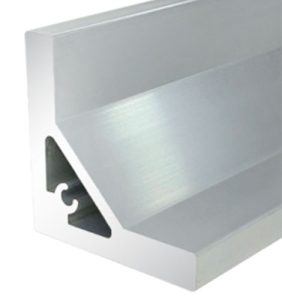 Aluminium Angle Profile 35 x 35 x 4 mm Panel Edge Trim for Guarding
35 x 35 x 4 mm aluminium angle profile with an inner corner slot,…
