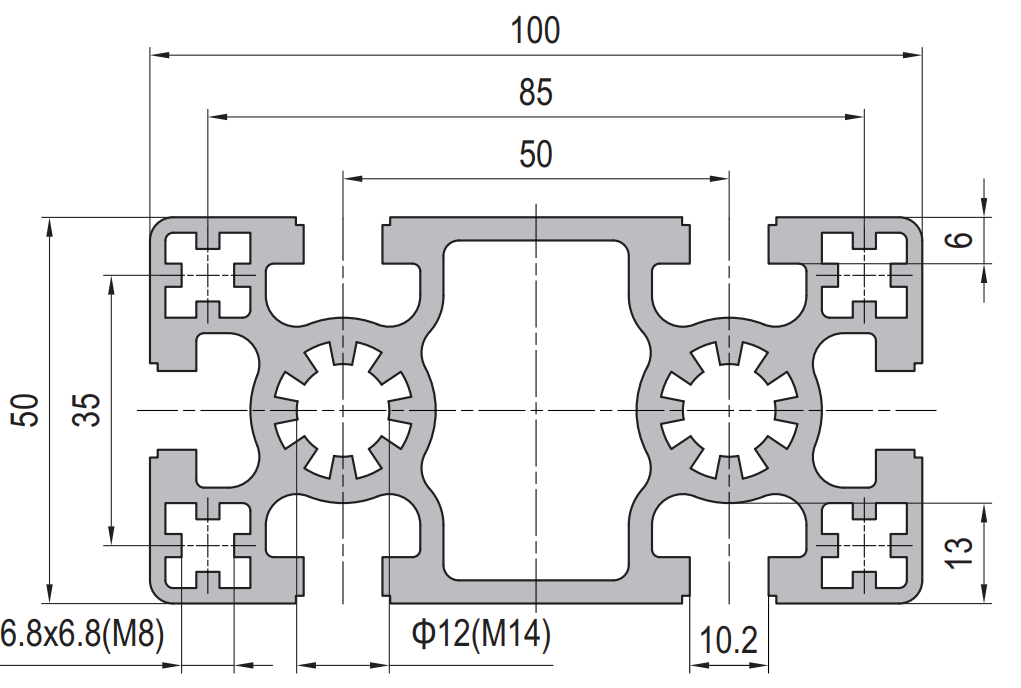
Aluminium Extrusion Profile Supply: 15 to 45 Series Kits, 8 mm Slot
Aluminium extrusion profile supply for Ahmedabad in 6063-T5: electrical cabinet frames with a designed earth path, solar mounting rails, and frame kits cut to a cut list with connectors and fasteners.
| Material | Aluminium |
|---|---|
| Alloy Grade | 6063-T5 |
| Temper | T5 |
| Section Size | 15 to 45 series strut profiles |
| Slot | 6.2 mm (15 and 20 series), 8.2 mm (30 and 40 series), 10.2 mm (45 series) |
| Length | Saw cut to length, +/-0.5 mm, square or mitred |
| Tolerance | EN 755-9, wall +/-0.15 mm |
| Surface | Mill finish / clear anodised / black anodised / powder coated |
| MOQ | Made to order; frame kits from a repeat quantity |
| Lead Time | 3 to 4 weeks to a Gujarat port plus inland haulage and clearance |
| Loading Port | Shenzhen, Shanghai, Ningbo |
| Supply Ability | In-house extrusion, saw cutting, anodising, kitting and export packing |
| Payment Terms | T/T 30 per cent deposit, balance against copy of bill of lading; L/C at sight on request |
| Trade Terms | FOB, CIF, CFR, DDP on request |
| Certifications | Mill certificate to EN 10204 3.1, RoHS and REACH declarations, anodising film report |
01Extrusion profiles for Ahmedabad industry
Ahmedabad sits in the middle of the Gujarat industrial corridor, and two product families dominate the aluminium extrusion demand there: electrical enclosures and switchgear frames, and solar mounting structures. Both are exported and both have an engineering question that a generic profile quotation ignores.
For an electrical frame it is the earth path. For a solar structure it is wind load and the aluminium-to-steel joint. This page covers both, then the case for buying a frame kit rather than loose profiles.
Does an anodised aluminium frame conduct to earth?
No, not through the anodised face. Aluminium oxide is a good insulator, and a 10 to 20 micron anodised film will not pass a bonding continuity test. The frame is still a perfectly good earth conductor underneath the film. The fix is to mask a small bonding pad before anodising, or to grind a patch back to bare metal at assembly and protect it with a corrosion inhibiting compound.
Can I bolt an aluminium solar rail directly to a galvanised steel purlin?
You can, but you must manage the bimetallic couple. Aluminium is anodic to galvanised steel, so in the presence of moisture and road salt the aluminium is the part that corrodes. Use a stainless bolt with a plastic or neoprene isolator washer, or an aluminium-to-aluminium adapter, and never let bare aluminium sit wet against bare steel.
02Series, slot and bolt for Ahmedabad panel work
| Series | Slot | Bolts | Typical use | Panel weight it suits |
|---|---|---|---|---|
| 15 series | 6.2 mm | M5, M6 | small terminal boxes, DIN rail frames | light |
| 20 series | 6.2 mm | M5, M6 | control cabinets, instrument frames | up to 50 kg |
| 30 series | 8.2 mm | M6, M8 | distribution panels, medium racks | up to about 120 kg |
| 40 series | 8.2 mm | M6, M8 | large panels, inverter and VFD enclosures | up to about 250 kg |
| 45 series | 10.2 mm | M10 and up | heavy switchgear, busbar supports | 300 kg and up |
For an electrical frame the section choice is usually set by the panel weight and the door, not by the fault current. The frame holds the enclosure together; the earth path is a separate design decision, covered next.
03Earth continuity on an anodised frame
Panel builders get caught by this every year. The frame is mechanically perfect, the bonding test fails, and the cause is a 15 micron oxide film that everyone forgot.
| Method | How it works | When to use | Note |
|---|---|---|---|
| Masked bonding pad | the anodiser masks a small area before the film | series production, repeatable | best method, plan it before anodising |
| Ground back at assembly | grind a patch to bare metal and protect it | one-off and retrofit | must be treated against corrosion afterwards |
| Dedicated earth bolt | a bolt through the frame to a star washer | any frame, no masking needed | the star washer bites through the film |
| Serrated washer through the film | washer teeth pierce the oxide | light duty bonding | test it; not all films pierce cleanly |
| Bare mill finish frame | no film, conducts everywhere | indoor, dry, painted after | the frame then needs painting for corrosion |
Plan the earth path before anodising. Masking a pad costs almost nothing at that stage and cannot be undone later. If the frames are already anodised, a dedicated earth bolt with a serrated washer is the practical fix.
04Solar mounting: wind load and the bimetallic joint
A solar mounting rail is a structural element, and it is loaded by wind, not by weight. Two checks matter before the section is chosen.
- Wind load: the design wind pressure acts on the panel area and is carried into the rail as a bending moment between fixings. The rail span between supports, not the panel size, sets the section. A longer span needs a deeper rail.
- Uplift: a corner panel can be in suction, which reverses the load on the fixing. A clamp that only resists downward load is not enough.
- Bimetallic couple: an aluminium rail on a galvanised or painted steel purlin is a couple of two different metals. Isolate it.
- Thermal movement: an aluminium rail expands about twice as much as a steel structure per degree, so long runs need slotted fixings.
| Rail section | Typical support span | Suits | Note |
|---|---|---|---|
| 40 x 40 mm strut | up to about 1.0 m | small arrays, lightweight panels | check the uplift clamp |
| 50 x 50 mm strut | up to about 1.5 m | rooftop arrays | common choice |
| 50 x 100 mm strut | up to about 2.5 m | ground mount and large spans | deeper rail, lower deflection |
| 100 x 100 mm strut | 3 m and up | utility scale, heavy snow | end fixings become the limit |
The figures above are indicative and are set by the local wind speed, the terrain category and the panel area. A mounting designer should confirm the rail for the actual site; what we supply is the section and a straightness that holds the span.
05Frame kits: profiles, connectors and a cut list
Ahmedabad fabricators often buy the same ten sections over and over for panel and rack frames. A frame kit turns that into one line on the purchase order: the profiles cut to the cut list, the connectors bagged by frame, and the fasteners counted.
| In a frame kit | What is included | Why it helps |
|---|---|---|
| Profiles | cut to the cut list, ends deburred | no cutting, no scrap |
| Connectors | corner brackets, T-nuts, gussets | no separate sourcing |
| Fasteners | bolts and washers counted per frame | no shortfall on site |
| Documentation | assembly drawing and a parts list | one frame, one bag |
| Packing | one carton or bundle per frame | faster kitting on the line |
A kit is worth it once a fabricator builds the same frame more than about twenty times. Below that, the kit preparation cost is not recovered, and loose profiles are the better buy.
06Section choice, panel versus solar
Electrical panel frame
- The load is static panel weight
- Earthing continuity has to be designed in
- The frame is indoors, in a control room or a substation
- The finish is chosen for appearance and insulation
- Series and slot follow the bolt and the panel size
Solar mounting structure
- The load is wind, including uplift
- The joint is to a different metal, usually steel
- The structure is outdoors, wet and often coastal
- The finish is chosen for weathering and UV
- Span between supports sets the section depth
07Failure modes on Ahmedabad electrical and solar work
| What goes wrong | Why it happens | Design it out by |
|---|---|---|
| Bonding continuity test fails | anodised film insulates the whole frame | mask a bonding pad, or use a dedicated earth bolt with a star washer |
| Solar rail corrodes at the purlin | aluminium in contact with galvanised steel, wet | isolate with a washer, or use an aluminium adapter |
| Panel door will not close square | frame cut error accumulated around the loop | hold the cut to +/-0.5 mm and check the diagonal |
| Rail deflects under wind load | span chosen on panel size, not on the section | shorten the support span or deepen the section |
| Long rail buckles in the heat | thermal movement restrained by rigid fixings | use slotted fixings on long runs |
| Frame arrives scuffed and stained | bare bundles in sea freight | specify interleaving and strapping on anodised work |
08What to check before you order for Ahmedabad
Procurement checklist for an Ahmedabad order
- Confirm the series and section for the panel or rail.
- Confirm the slot width and therefore the bolt size.
- Confirm the earth path: bonding pad masked, or a dedicated earth bolt.
- Confirm the finish and the anodising film in micron.
- Confirm the cut list, and whether you want a frame kit.
- Confirm the wind load basis for a solar rail, from the mounting designer.
- Confirm the port or inland route, and the trade term.
- Confirm the documents: mill certificate, dimensional report, film report.
09Questions Ahmedabad buyers ask
Do you supply aluminium extrusion to Ahmedabad?
Yes, in 6063-T5 and 6061-T6, to Ahmedabad and the surrounding industrial belt, through Mundra or Pipavav.
How do I bond an anodised frame to earth?
Mask a bonding pad before anodising, or grind a patch back to bare metal and protect it. A dedicated earth bolt with a serrated washer also works.
What slot and bolt does each series take?
15 and 20 series use a 6.2 mm slot with M5 and M6; 30 and 40 series use 8.2 mm with M6 and M8; 45 series uses 10.2 mm with M10 and up.
Can I fix aluminium solar rail to a steel purlin?
Yes, but isolate the joint. Use a stainless bolt with an isolating washer and never leave bare aluminium wet against bare steel.
Do you supply complete frame kits?
Yes: profiles cut to the cut list, connectors and fasteners bagged per frame, with an assembly drawing.
What is the lead time to Ahmedabad?
About three to four weeks to a Gujarat port, plus inland haulage and clearance.
What we need to quote an Ahmedabad order
- The section list, series and alloy.
- The slot and bolt sizes.
- The earth path if the frame is electrical.
- The finish and the anodising film in micron.
- The cut list, and whether a frame kit is wanted.
- The wind load basis if the part is a solar rail.
- The quantity, the port and the trade term.
Send those seven items and the quotation comes back with the material, cutting, anodising, connectors, packing and freight broken out separately. Browse the full aluminium profile catalogue and the connecting elements range.
Building panel frames or solar rails in Ahmedabad?
Send the section list, the earth path and the cut list. We will quote material, cutting, anodising and connectors as separate lines, or as a frame kit.
Request a quotationRelated Products
 Aluminium Extrusion Profiles 20 to 45 Series for OEM, up to 100 mm
Aluminium extrusion profiles for Tamil Nadu in 6063-T5, with full batch traceability from heat…
 Aluminium Extrusion Manufacturer: 45 to 120 mm, 6063-T5
Aluminium extrusion for Chennai in 6063-T5, section supply with port logistics support through Chennai…
 Aluminium Angle Profile 35 x 35 x 4 mm Panel Edge Trim for Guarding
35 x 35 x 4 mm aluminium angle profile with an inner corner slot,…
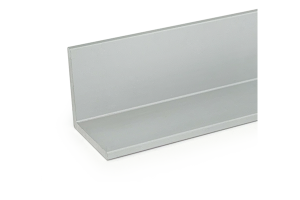 L Aluminium Angle 30 x 30 x 4 mm for Washdown Equipment Frames
30 x 30 x 4 mm L aluminium angle for washdown equipment frames. 6061-T6,…
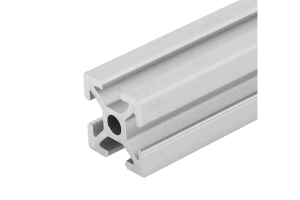 Aluminium 2020 Extrusion 20 x 20 mm for 3D Printer Frames
20 x 20 mm four slot aluminium 2020 extrusion for 3D printer and desktop…
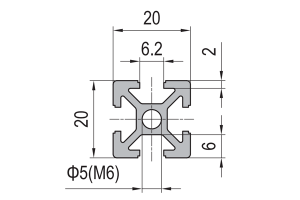 Aluminium 2020 Profile 20 x 20 mm for Laboratory Instrument Stands
20 x 20 mm aluminium 2020 profile for laboratory instrument stands. 0.62 kg/m, 6.2…
20 x 20 Aluminium Extrusion 6.2 mm Slot Stock Lengths and MOQ
20 x 20 mm aluminium extrusion with a 6.2 mm slot, supplied in 6…
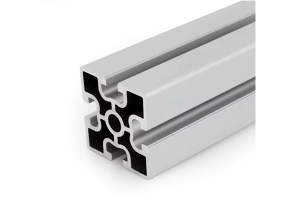 Aluminium 60 x 60 mm Four Slot Extrusion for Robot Cell Gantries
60 x 60 mm four slot aluminium extrusion for robot cell gantry columns and…
