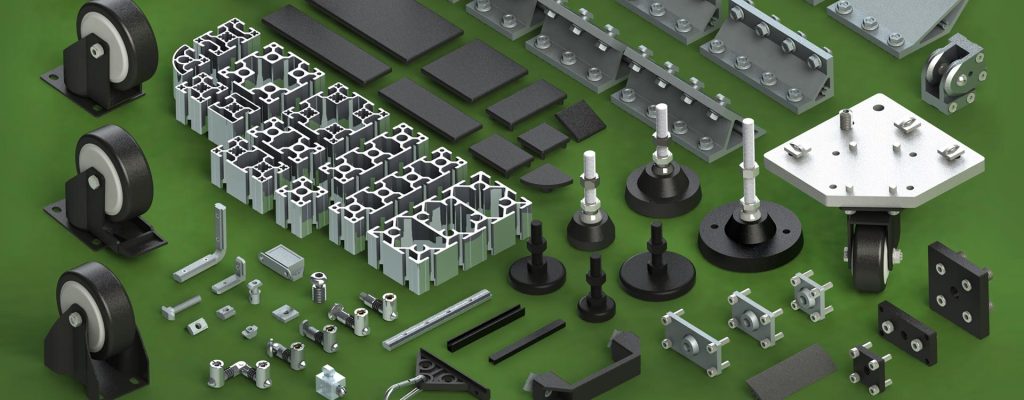
Aluminium Extrusion for Sale 20 to 100 mm Stock Lengths Cut to Size 6063 T5
Aluminium extrusion for sale in three routes: stock lengths, cut to size or a new die. 6063-T5 and 6061-T6, mill or anodised, with the price breaks and tooling cost laid out before you order.
| Material | Aluminium |
|---|---|
| Alloy Grade | 6063-T5 |
| Temper | T5 |
| Section Size | Catalogue sections from 20 mm; new die sections to drawing |
| Slot | 20 to 50 series strut slots; solid sections have no slot |
| Length | Saw cut to length; 6 m standard, +/-0.5 mm, square or mitred |
| Tolerance | EN 755-9, wall +/-0.15 mm; cut length +/-0.5 mm |
| Surface | Mill finish / clear anodised / black anodised / powder coated |
| MOQ | One stock length for catalogue sections; break-even tonnage for a new die |
| Lead Time | Stock cuts in 1 to 2 weeks; a new die adds 2 to 4 weeks |
| Loading Port | Shenzhen, Shanghai, Ningbo, Qingdao |
| Supply Ability | In-house extrusion, saw cutting, drilling, anodising and export packing |
| Payment Terms | T/T 30 per cent deposit, balance against copy of bill of lading; L/C at sight on request |
| Trade Terms | EXW, FOB, CIF, CFR, DDP on request |
| Certifications | Mill certificate to EN 10204 3.1, RoHS and REACH declarations |
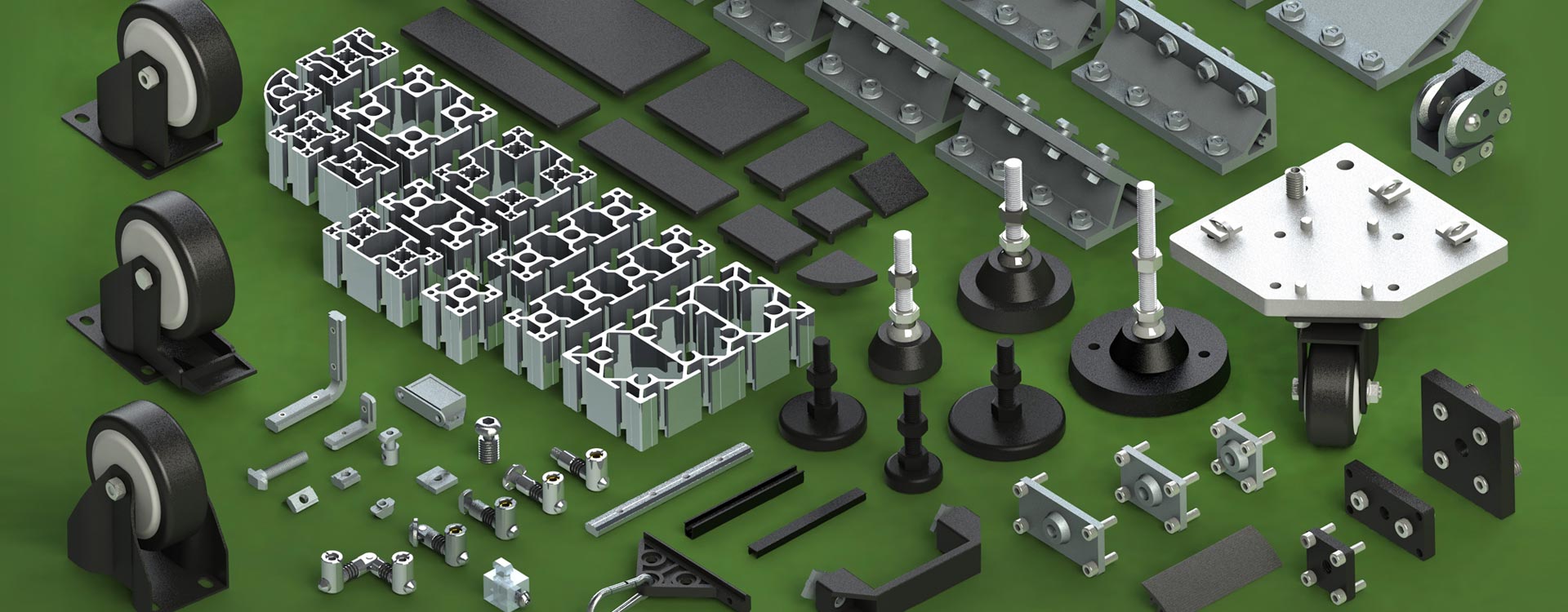
01Three ways to buy aluminium extrusion
“Extrusion for sale” covers three very different transactions, and buyers who do not know which one they are in get a price that looks wrong. The three routes are stock length, cut to size and new die.
- Stock length: a catalogue section, sold by the metre, cut to the transport length. No tooling, shortest lead time, highest unit price per metre.
- Cut to size: a catalogue section, cut and possibly drilled to your list. No tooling, a little longer lead time, cutting charged per piece.
- New die: a section that does not exist yet, made against your drawing. Tooling charged up front, the lowest unit price at volume, the longest lead time.
What is the cheapest way to buy a small quantity?
Stock length. Below roughly 500 m of a section, a new die never pays back, so buy a catalogue section and cut it yourself or have it cut. A new die only makes sense once the volume is high enough to amortise the tooling.
When does a new die pay back?
When the saving per metre times the metres exceeds the die cost. On a typical aluminium die the saving is a few tenths of a dollar per metre, so the break-even usually lands somewhere between 1 and 3 tonnes of the section. Below that, buy stock or cut to size.
02The cost structure of each route
Every quotation for extrusion is the same five components in different proportions. Seeing them separated is what lets you compare two suppliers honestly.
| Cost component | Stock length | Cut to size | New die |
|---|---|---|---|
| Metal (billet) | charged | charged | charged |
| Extrusion conversion | charged | charged | charged |
| Die / tooling | none, shared | none, shared | charged as a one-off |
| Cutting | none or minimal | charged per cut | charged per cut |
| Surface finish | if anodised | if anodised | if anodised |
| Packing | charged | charged | charged |
| Relative unit price at low volume | highest | mid | highest (tooling) |
| Relative unit price at high volume | high | mid | lowest |
The metal and the conversion are the same in all three routes. What changes is who pays for the die — the supplier, spread across everyone who buys the section, or you, spread across your own order.
03Die cost and how it amortises
A new die is priced per die, not per metre. The table below gives the range we quote, with the caveat that a die is quoted against a finished drawing, so the exact figure comes back with the quotation.
| Die type | Section | Indicative die cost | Break-even volume | Lead time |
|---|---|---|---|---|
| Solid flat die | angle, flat bar, simple T | from a few hundred USD | roughly 1 to 2 t | 2 to 3 weeks |
| Semi-hollow die | open slot strut, semi-closed | a few hundred to about a thousand USD | roughly 2 to 3 t | 2 to 4 weeks |
| Hollow / porthole die | closed two-slot, tube | about a thousand USD and up | roughly 3 to 5 t | 3 to 5 weeks |
| Large hollow die | over about 150 mm circumscribed | quoted per drawing | per project | 4 to 6 weeks |
The break-even column is indicative and moves with the section and the alloy. The rule is simple: if you expect to buy less than the break-even tonnage over the life of the product, take a catalogue section or a cut-to-size order. If you expect more, the die belongs in your project and the unit price falls from the first metre.
Who owns the die
- Buyer-owned: you pay for the die and it is kept for you, not run for others. Ask for this in writing if the section is a protected design.
- Supplier-owned, you pay: the die is charged to you but stays in our die bank. Cheaper, but the same section could be sold to another buyer.
- Shared catalogue die: no charge to you, and the section is in the catalogue for anyone. The cheapest option, and only suitable for standard sections.
04Price breaks: by metre, by tonne and by container
Extrusion is priced by the metre at low volume and by the tonne at high volume, because the metal is the dominant cost once the tooling is paid off.
| Order size | Basis | What moves the price | Typical saving vs 1 length |
|---|---|---|---|
| 1 to 50 m | per metre | cutting and packing dominate | baseline |
| 50 to 500 m | per metre | cutting spread over more pieces | 5 to 10 per cent |
| 500 m to 1 t | per metre or per kg | conversion spread | 10 to 15 per cent |
| 1 to 5 t | per tonne | metal priced at LME plus a premium | 15 to 20 per cent |
| Full container | per tonne | freight and packing optimised | 20 to 30 per cent |
At the tonne band the price is quoted as LME aluminium plus a conversion premium, which means the price moves with the metal market between quotation and order. Ask for the quotation to state the LME reference date and how long the price is held.
05Freight and packing: why 6 m costs more
Extrusion is long, light and easy to bend, so it is volume-limited in transit. A 6 m length does not fit a standard 20 ft container and has to go in a 40 ft, which is why short cuts can be cheaper to ship than long ones even though they cost more to cut.
| Packing option | Length | Suits | Cost effect |
|---|---|---|---|
| Loose bundle | up to 6 m | 40 ft container, local delivery | lowest |
| Timber pallet | up to 6 m | sea freight, forklift handling | adds a little |
| Plywood case | any | mixed lengths, high value, anodised | adds the most |
| Cut to 2 to 3 m | 2 to 3 m | 20 ft container, courier, air | cheaper freight |
| Interleaved with paper | up to 6 m | anodised, scratch-sensitive | small add |
Packaging is not optional on anodised work. Sea freight bundles rub, and an anodised surface rubs through to a white mark. Interleaving and strapping cost a little and save the whole order.
06Payment terms and trade terms
Choose FOB (recommended for a first order)
- You control the forwarder and the freight rate
- You can inspect before the container sails
- You have a broker and prefer to file your own customs entry
- The destination charges are predictable to you
- You want the lowest landed cost you can negotiate
Choose CIF or DDP
- You want one invoice and no shipping admin
- The destination charges are unclear to you
- You are buying a sample or a trial order
- You would rather not appoint a broker
- You accept a slightly higher landed cost for the simplicity
| Term | Who books freight | Who insures | Duty and clearance | Suits |
|---|---|---|---|---|
| EXW | buyer | buyer | buyer | buyer with a Chinese forwarder |
| FOB | buyer | buyer | buyer | experienced importers |
| CIF | supplier | supplier | buyer | first orders, simple |
| CFR | supplier | buyer | buyer | buyer with own insurance |
| DDP | supplier | supplier | supplier | sample and trial orders |
On payment, our standard is 30 per cent deposit by T/T with the balance against a copy of the bill of lading. For a first order of any size, an L/C at sight is available and is a reasonable request: it protects both sides while the relationship is new.
07Failure modes in the buying process
| What goes wrong | Why it happens | Design it out by |
|---|---|---|
| Quoted price is not the landed price | FOB quoted, but the buyer assumed CIF | state the trade term on the enquiry and on the order |
| New die never pays back | volume below the break-even tonnage | buy stock or cut to size until the volume justifies a die |
| Anodised parts arrive scuffed | bare bundles in sea freight | specify interleaving and strapping on anodised work |
| Price moves between quote and order | tonne pricing tied to LME | agree the LME reference date and how long the price holds |
| Cut lengths do not fit the frame | cut tolerance not agreed, or cut list not checked | agree +/-0.5 mm and send the cut list with the order |
| Sample does not match production | sample hand-finished, production made on the die | ask for the sample to come from the production die |
08What to check before you order
Procurement checklist for buying extrusion
- Confirm which route you are buying: stock, cut to size or new die.
- Confirm the section, alloy and temper.
- Confirm the cut list and the cut tolerance.
- Confirm the finish and the micron if anodised.
- Confirm the packing for your transport mode.
- Confirm the trade term and the port.
- Confirm the LME reference date if the price is per tonne.
- Confirm the payment terms and the deposit.
09Questions buyers ask
What is the minimum order for extrusion?
For a catalogue section, one stock length. For a new die, the practical minimum is the break-even tonnage, usually 1 to 3 tonnes depending on the section.
How much does a new die cost?
From a few hundred USD for a solid flat die, to about a thousand USD and up for a hollow die. A die is quoted against a finished drawing.
Can you cut to my list?
Yes. Send the cut list and we cut on a CNC saw to ±0.5 mm, square or mitred.
Do you sell by the metre or by the tonne?
By the metre at low volume and by the tonne at high volume, where the price is tied to the LME reference.
What trade terms do you offer?
EXW, FOB, CIF, CFR and DDP on request. FOB is standard for experienced importers.
Can I get a sample before ordering?
Yes. For a catalogue section the sample comes from stock; for a new die, from the production die so it matches the run.
What we need to quote extrusion for sale
- Which route: stock length, cut to size or new die.
- The section: catalogue reference, or a drawing for a new die.
- The alloy and temper.
- The cut list and the cut tolerance.
- The finish: mill, anodised or powder coated.
- The quantity, and whether you want a price per metre and per tonne.
- The trade term and port, and any packing requirement.
Send those seven items and the quotation comes back with the metal, conversion, tooling, cutting, finish, packing and freight broken out separately. Browse the full aluminium profile catalogue and the strut profiles range.
Comparing extrusion prices from two suppliers?
Send the section, the quantity and the trade term. We quote the metal, conversion, tooling, cutting, finish, packing and freight as separate lines.
Request a quotationRelated Products
 Aluminium Extruders 600 to 4000 Ton Press Capacity 40 to 160 mm Profile
Aluminium extrusion capacity across 600 to 4000 tonne presses, covering profiles up to about…
 Aluminium Extrusion Manufacturing Factory: 20 to 100 mm Profiles
Aluminium extrusion profiles for Gujarat, India, in 6063-T5 and 6061-T6, with anodising film selected…
 Aluminium Extrusion Manufacturers: 30 to 60 Series, 8 mm Slot
Aluminium extrusion profiles for Delhi NCR, India, in 6063-T5. Strut sections from 30 to…
 Aluminium Extrusion Profile Supply: 15 to 45 Series Kits, 8 mm Slot
Aluminium extrusion profile supply for Ahmedabad in 6063-T5: electrical cabinet frames with a designed…
 Aluminium Extrusion Profiles 20 to 45 Series for OEM, up to 100 mm
Aluminium extrusion profiles for Tamil Nadu in 6063-T5, with full batch traceability from heat…
 Aluminium Extrusion Manufacturer: 45 to 120 mm, 6063-T5
Aluminium extrusion for Chennai in 6063-T5, section supply with port logistics support through Chennai…
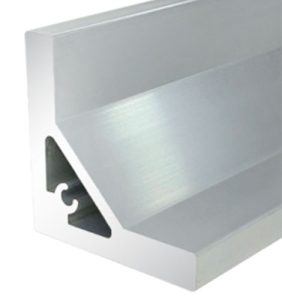 Aluminium Angle Profile 35 x 35 x 4 mm Panel Edge Trim for Guarding
35 x 35 x 4 mm aluminium angle profile with an inner corner slot,…
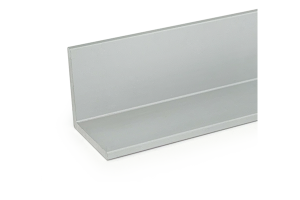 L Aluminium Angle 30 x 30 x 4 mm for Washdown Equipment Frames
30 x 30 x 4 mm L aluminium angle for washdown equipment frames. 6061-T6,…
