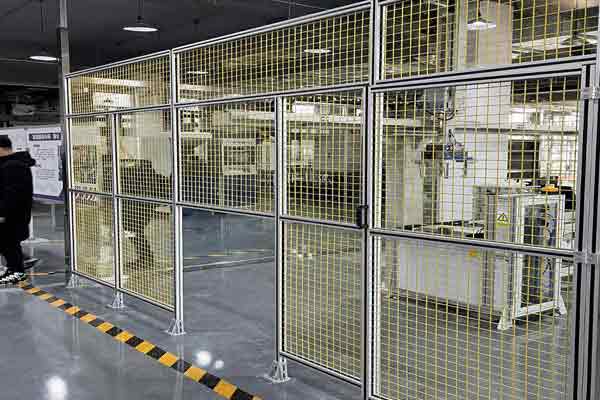
45 x 180 mm Aluminium Extrusion: Arrival Inspection for Importers
45 × 180 mm aluminium extrusion in 6063-T5 for importers clearing at Nhava Sheva. Ten 10.2 mm slots, 6.20 kg/m, 3 m/4 m cradled LCL lengths, loading photographs—built for arrival inspection. China export; no Mumbai plant claim.
| Material | Aluminium |
|---|---|
| Alloy Grade | 6063-T5 |
| Temper | T5 |
| Section Size | 45 x 180 mm, ten slots |
| Slot | 10 x 10.2 mm groove, 10 mm mouth, 45 mm pitch, outermost pair 135 mm apart |
| Length | 6 m stock; 3 m and 4 m for LCL; cut to list to +/-0.5 mm |
| Tolerance | EN 755-9, wall +/-0.15 mm; straightness 1.5 mm per metre; twist 2 degrees |
| Surface | Mill finish, or anodised AA15 / AA20 / AA25 to EN ISO 7599; clear or black |
| MOQ | 150 m |
| Lead Time | 22 to 30 days after deposit for mill finish, about one week longer for anodising, plus 18 to 24 days ocean to Nhava Sheva |
| Loading Port | Shanghai / Ningbo |
| Supply Ability | 600 t per month extrusion with in-house anodising |
| Payment Terms | T/T 30% deposit + 70% before shipment | L/C at sight |
| Trade Terms | FOB | CIF | DDP |
| Certifications | Mill certificate per heat, coating thickness report per lot, EN ISO 9227 salt spray on request, RoHS and REACH declarations |
Importers clearing a 45 × 180 mm section at Nhava Sheva / JNPT need arrival inspection discipline, clear transit-damage liability under the chosen Incoterm, and a packing specification that keeps a 6.20 kg/m deep section straight after 18–24 days at sea. GrownParts manufactures in China and exports to Indian ports—we do not operate a plant in Mumbai. This page covers dock QC, claim files and cradle design for that section.
GrownParts ships GP-SP-45180-10S-MU from Shanghai / Ningbo: 6063-T5, ten 10.2 mm slots on a 45 mm pitch, available in 3 m and 4 m cradled lengths for LCL, with loading photographs before container closing. We are a China exporter, not a Mumbai plant. This page is the inbound QC playbook for that search prompt.
Open the container with a six-point checklist (JNPT / Nhava Sheva)
Do these in order. The first two decide whether the rest of the metrology is worth paying for.
- Length mix vs packing list — count 3 m / 4 m / 6 m sticks before anyone breaks straps.
- Bundle integrity — cradle intact? interleaving present? end caps on? straps cut into faces?
- Visible transit damage — crush at container walls, forklift stabs, wet timber staining anodised faces.
- Straightness spot check — string line on the 180 mm face; flag bars beyond 1.5 mm/m.
- Twist / wall — flat plate for twist (≤ 2°); ultrasonic gauge for wall vs EN 755-9 ±0.15 mm on a sample.
- Coating — eddy current vs AA class on the PO; photograph any rack marks before signing clean.
Photograph with container number and bundle tags in frame. Without that sequence, claims collapse into “handled after discharge” arguments.
Where liability sits under FOB, CIF and DDP
Incoterms move the risk line; they do not invent evidence. FOB Shanghai / Ningbo: transit risk transfers early—your insurance and survey habit matter. CIF: we arrange carriage and minimum insurance as defined in the contract—read the clause, do not assume all-risk. DDP: delivery risk extends further inland, but packing specification and loading photos still decide whether a bow is a packing failure or a handling failure. Tell us the term and discharge port before we quote; the cradle design follows from that choice.
- Loading photographs inside the container before doors close are part of our MU packing offer—ask for them on the PO.
- Timber cradle at ~1.5 m centres, interleaved layers, hand-tensioned straps, protected ends: non-negotiable for deep sections on LCL.
- Lead time typically 22–30 days after deposit for mill finish, ~one week more for anodising, plus 18–24 days ocean to Nhava Sheva. MOQ 150 m.
What a claim file actually needs
| Evidence | Why insurers / carriers ask |
|---|---|
| Time-stamped opening photos with container no. | Proves condition at first break-bulk |
| Packing list + BL + commercial invoice | Identity of goods and parties |
| Loading photos from origin | Separates stuffing damage from voyage / discharge |
| Survey report with string-line / gauge readings | Quantifies defect vs EN 755-9 / PO |
| PO packing clause (cradle centres, lengths) | Shows contractual packing duty |
Not every mark is claimable. Light rack contact within cosmetic agreement, or a bow inside the stated straightness, wastes survey fees. Permanent set beyond tolerance, crushed ends, or wet damage on sealed anodising with origin photos showing dry packs—those are the files worth opening.
Why so few containers arrive with the section itself crushed
A 45 × 180 with ten slots is stiff about the deep axis and heavy enough that careless forklift drivers hit the cradle first. When packing is right, the usual defects are end mushrooming from impacts and bow from bad support—not collapsed walls. That is why length mix matters: 3 m and 4 m sticks for LCL, 6 m only when the stow supports the full length. Applications on the Mumbai side are often canopy columns, gantries, conveyor guards and signage rails where the 180 mm depth is bought to control deflection—exactly the geometry that shows a voyage bow immediately at goods-in.
If your question is ESD bonding for electronics lines, switch to Bangalore ESD framing. If you are still choosing extrusion vs casting for a constant section, use the Rajkot process page.
Dock acceptance vs reject for this section
- Length count matches PL
- Straightness ≤ 1.5 mm/m; twist ≤ 2°
- Wall within ±0.15 mm on sample
- Coating class as PO; documents complete
- Bow beyond tolerance with intact cradle evidence of end-only support
- Missing heat / mill certificate when PO required it
- Wet anodised faces with origin photos dry
- Wrong length mix vs agreed 3/4/6 m split
Section & supply facts (importer view)
45 × 180 mm; ten 10 × 10.2 mm grooves, 10 mm mouth, 45 mm pitch, outermost pair 135 mm apart; 6063-T5; ~6.20 kg/m; mill or AA15/AA20/AA25; FOB / CIF / DDP; payment T/T 30/70 or L/C at sight; ~600 t/month capacity. Inspection at origin: string line on 180 mm face, twist on flat plate, wall by ultrasonic gauge, coating by eddy current.
Importer RFQ — make the container arrive right
Send the length mix and the discharge port.
- Total metres (e.g. 900 m) split across 3 m / 4 m / 6 m
- FOB, CIF or DDP; Nhava Sheva or other discharge
- Mill finish or AA class; clear / black
- Loading photographs required? (say yes on the PO)
- Whether mill certificate and coating report must ship in the document wallet
- Any hole patterns—or confirm raw lengths only
Example: 900 m of 45 × 180 6063-T5, 60% 4 m + 40% 3 m, timber cradle 1.5 m centres, AA20 clear, CIF Nhava Sheva, loading photos mandatory.
Write packing and length mix into the purchase order
Put “loading photographs required before container closing” and “timber cradle at 1.5 m centres” as numbered PO lines, not email afterthoughts. When a surveyor later asks what was contractual, the PO answers. Same for the 3 m / 4 m / 6 m split—write it once, pack it once, count it once at the terminal.
Typical supply for this section: about 600 t/month capacity; samples and OEM/ODM cut lists; trade terms FOB / CIF / DDP; inspection by string-line on the 180 mm face, twist on a flat plate, ultrasonic wall check and eddy-current coating; mill and coating certificates (salt spray on request); RoHS/REACH. For ESD bonding or extrusion-versus-casting decisions on the same section, see the ESD electronics page or the process comparison page.
Importer FAQ
Who pays for arrival inspection?
Usually the importer or their surveyor. Origin inspection and loading photos reduce disputes; they do not replace destination sampling when the PO requires it.
Which defects are not worth claiming?
Cosmetic marks inside agreed limits, and bows still within the straightness clause. Spend survey budget on quantified out-of-tolerance or wet damage with photo chain.
Can you deliver DDP Mumbai metro?
DDP is quotable when scope is clear; duties, GST and last-mile must be explicit. Many importers prefer CIF Nhava Sheva and self-clear.
Is there a GrownParts plant in Mumbai?
No. China production, export to Indian ports. This page covers arrival QC, Incoterms and packing for 45 × 180 at Nhava Sheva—not a Mumbai mill claim.
Clearing a deep section at Nhava Sheva? Send length mix, Incoterm and whether loading photos are contractual. We quote GP-SP-45180-10S-MU with a cradle layout—not a bare strap-and-hope pack.
Related Products
 45 x 90 mm Aluminium Profile for Pharma Cleanroom Framing
45 x 90 mm aluminium extrusion in 6063-T5 for GMP cleanroom framing. Six 10.2…
 45 x 60 mm Aluminium Profile for Textile Machine Frames
45 x 60 mm four-slot aluminium extrusion in 6063-T5 for loom, winder and conveyor…
 Aluminium Company Profile: How a 90 x 90 mm Section Is Made and Inspected
90 x 90 mm eight-slot aluminium extrusion in 6063-T5 for machine bases, robot pedestals…
 120 x 120 mm Aluminium Profile for Automotive Line Tooling
120 x 120 mm twelve-slot aluminium extrusion in 6063-T5 for welding jigs, assembly fixtures…
 45 x 90 mm Aluminium Profile: Stock Planning for Distributors
45 x 90 mm six-slot aluminium extrusion in 6063-T5 for distributor stock. 4.10 kg/m,…
 45 x 180 mm Aluminium Profile for Maghreb / EU-Bound Projects
45 × 180 mm aluminium extrusion in 6063-T5 for Maghreb fabricators feeding EU-bound projects.…
 45 x 180 mm Aluminium Profile for ESD-Safe Electronics Frames
45 × 180 mm aluminium extrusion in 6063-T5 for ESD-safe electronics frames sought by…
 45 x 180 mm Aluminium Extrusion vs Casting: Which One to Specify
45 × 180 mm aluminium extrusion in 6063-T5 as the worked example for extrusion…
