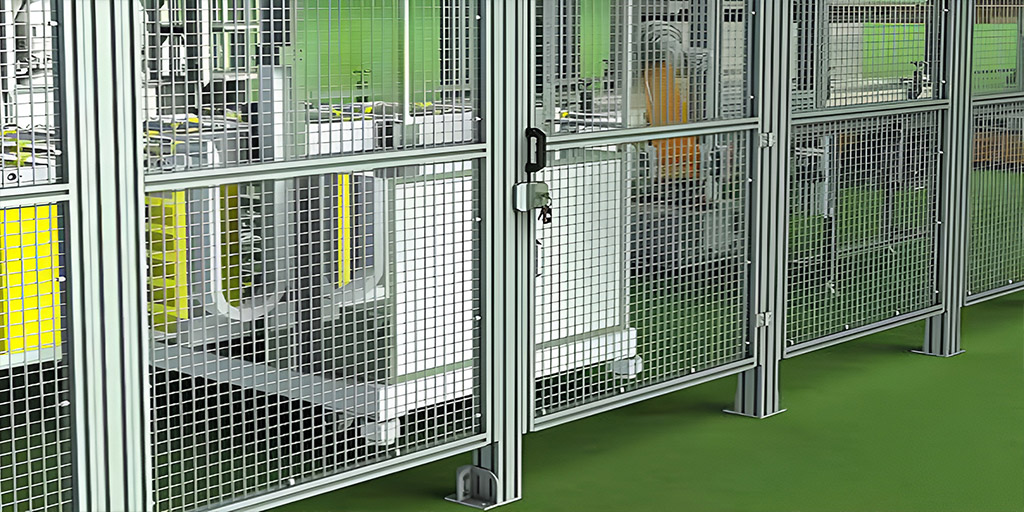
45 x 180 mm Aluminium Extrusion vs Casting: Which One to Specify
45 × 180 mm aluminium extrusion in 6063-T5 as the worked example for extrusion vs casting decisions. Ten 10.2 mm slots, 6.20 kg/m, die typically 1,500–4,000 USD in 7–12 days—China supply; not a local mill claim.
| Material | Aluminium |
|---|---|
| Alloy Grade | 6063-T5 |
| Temper | T5 |
| Section Size | 45 x 180 mm, ten slots |
| Slot | 10 x 10.2 mm groove, 10 mm mouth, 45 mm pitch, outermost pair 135 mm apart |
| Length | 6 m stock; cut to list to +/-0.5 mm |
| Tolerance | EN 755-9, wall +/-0.15 mm; straightness 1.5 mm per metre; twist 2 degrees |
| Surface | Mill finish, or anodised AA15 / AA20 to EN ISO 7599; clear or black |
| MOQ | 150 m, or one trial length off an existing die |
| Lead Time | 7 to 12 days for a new die, 5 to 8 days for the run, plus machining |
| Loading Port | Shanghai / Ningbo |
| Supply Ability | 600 t per month extrusion with in-house die shop and machining |
| Payment Terms | T/T 30% deposit + 70% before shipment | L/C at sight |
| Trade Terms | FOB | CIF | EXW |
| Certifications | Mill certificate per heat, coating report per lot, first article inspection report, RoHS and REACH declarations |
Process engineers and buyers mid-decision—keep a part as die-cast aluminium or move it to a constant-section extrusion—need tooling numbers, break-even logic and a worked example. The physical product on this page is the 45 × 180 mm ten-slot 6063-T5 section (GP-SP-45180-10S-RJ). GrownParts manufactures in China and exports from Shanghai or Ningbo; we do not operate a mill in Rajkot.
We extrude in China (Shanghai / Ningbo loading), cut dies in-house, and machine. Die cost for a comparable industrial section is typically in the 1,500–4,000 USD band with 7–12 days die lead time—orders of magnitude below many casting tools. Use this page when the question is process selection; use sibling pages when the question is ESD, EU docs, wind, or dock QC.
Decision rule: does the cross-section change along the length?
If the part is a prism—same envelope from end to end, features added by machining—extrusion is the default. Beams, rails, guides, conveyor side plates, frame posts, heat-sink bases with a uniform fin logic: these map cleanly onto a 45 × 180 (or a dedicated die). If the part needs local thickness changes, integral bosses in mid-span, undercuts that cannot be pulled through a die, or sealed internal cavities, stay with casting or switch to fabrication. The argument is geometric before it is commercial.
Tooling cost and calendar: extrusion die vs casting die
| Extrusion die (industrial) | Die-casting tool (typical) | |
|---|---|---|
| Tooling cost band | 1,500–4,000 USD (section-dependent) | Often 15,000 USD and up |
| Tool lead time | 7–12 days, reworkable | Many weeks; major changes = new tool |
| Piece process | Extrude → cut → CNC features | Cast → trim → CNC functional faces |
| MOQ mindset | 150 m or trial length off existing die | Shot-based; scrap and runner economics |
| Design change | Often die rework | Frequently new cavity / insert set |
Send the current fully machined casting cost with the drawing. The comparison only works when both sides include machining—extrusion usually needs more of it than a near-net casting. First-article on a CMM for machined features is part of our RJ inspection path.
Volume break-even—and when casting still wins
At low and medium volumes, die cost dominates: extrusion wins early. At very high volumes with a true near-net shape and minimal CNC, casting can undercut extrusion piece price even after tool amortisation. Plot your annual metres (or pieces × cut length) against: die amortisation + extrusion + finish + CNC time. If more than ~30–40% of the casting mass is machined away today, extrusion + CNC is usually cheaper and more stable dimensionally for prismatic parts.
- Keep casting when geometry is non-prismatic or when casting already finishes critical faces as-cast within tolerance.
- Move to extrusion when the section is constant, slots/T-nuts replace drilled patterns, or you need 8–12% elongation ductility that ADC12 does not give.
- Hybrid is common: extrude the rail (45 × 180 class), cast or machine the end brackets.
6063-T5 vs ADC12 — properties that change the design
6063-T5 on this section: ductile, weldable/joinable with care, anodises cleanly, ~6.20 kg/m for 45 × 180 with ten slots, about 400 cm⁴ strong-axis stiffness. ADC12 (and similar casting alloys): higher as-cast strength in some tempers, brittle relative to 6063, poorer anodising cosmetics, excellent for complex bosses. Elongation on 6063-T5 in the 8–12% class means crash and overload behaviour differs—do not copy a casting rib pattern one-for-one without checking local buckling of thin extrusion walls.
Worked example: specifying the 45 × 180 ten-slot
Envelope 45 × 180 mm; grooves ~10 × 10.2 mm, 10 mm mouth, 45 mm pitch, outermost pair 135 mm apart; EN 755-9 wall ±0.15 mm; straightness 1.5 mm/m; twist 2°; cut ±0.5 mm; mill or AA15/AA20; FOB/CIF/EXW; lead time 7–12 days new die + 5–8 days run plus machining. Applications that fit: constant-section beams, rails, guides, conveyor side plates, heat-sink bases, frame members previously cast only because “we have a casting vendor.”
Cross-links when the decision is already “extrude” but the buyer intent differs: importer arrival QC for India inbound lots; EU document pack when the rail feeds an EN 1090 job.
Acceptance when a casting becomes an extrusion
- CMM on functional faces vs renamed datum scheme
- Wall and straightness on raw bar before CNC
- Slot gauge clearance for specified T-nuts
- Anodising sample approved if cosmetic
- Copied cast fillets that cannot be extruded
- Ignored machining time → false piece-price win
- Brittle ADC12 crash behaviour assumed for ductile 6063
- Die ordered before annual volume and face map are frozen
RFQ for a process decision (not a catalogue click)
Send the drawing and the annual volume—with the current machined casting cost.
- 2D/3D of the current part; highlight faces that seal or bear
- Annual volume and batch size
- Fully machined casting cost per piece today
- Whether 45 × 180 stock works or a new die is required
- Finish: mill vs anodise; any cosmetic faces
- Target Incoterm and whether a trial length is enough to decide
After you choose extrusion: next documents
When the conversion is approved, the next documents are a die drawing, a machining allowance map, and a first-article plan. Local mill presence is not claimed—capability and decision criteria are. If the converted rail later ships into EU work or Indian ports, see the Maghreb / EU document page or the Mumbai inspection page for packing and certificates.
Typical process supply: die cost in the 1,500–4,000 USD class; die lead time 7–12 days; production run 5–8 days plus machining; MOQ 150 m or trial length; FAI on CMM; timber cradles for raw lengths, plywood case for machined parts; about 600 t/month with in-house die shop and machining.
Process FAQ
At what volume does casting become cheaper?
When geometry is near-net, CNC is minimal, and annual shots amortise a large tool. Run the numbers with machining included; do not compare raw casting to finished extrusion.
Can every cast rail become a 45 × 180?
No. Only constant sections. Local bosses need brackets or a different process.
How fast can we trial?
Existing-die trial lengths are fastest. New die 7–12 days then a short run; machining adds calendar depending on feature count.
Is there a GrownParts extrusion plant in Rajkot?
No. Production remains China-based export supply. This page is a process comparison (extrusion vs casting) using the 45 × 180 section as the worked example—not a claim of a Rajkot mill.
Choosing extrusion vs casting for a prismatic part? Attach the drawing, volume and machined casting cost. We say whether 45 × 180 (or a new die) clears the geometry, what the die costs, and where break-even sits—before you retire a casting tool.
Related Products
 30 x 120 mm Aluminium Profile for Heavy Equipment Frames
30 x 120 mm ten-slot aluminium extrusion in 6063-T5 for construction equipment guards, platform…
 90 x 90 mm Aluminium Profile Supply: Stock Planning and Lead Time
90 x 90 mm eight-slot aluminium extrusion in 6063-T5 for multi-site supply across Maharashtra.…
 50 x 50 mm Aluminium Profile for Precision and Aerospace Fixtures
50 x 50 mm four-slot aluminium extrusion in 6063-T5 for inspection and assembly fixtures.…
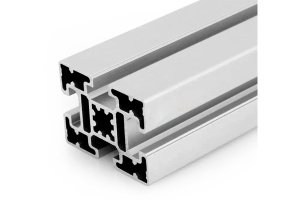 45 x 60 mm Aluminium Profile Solutions for Windows and Facades
45 x 60 mm four-slot aluminium extrusion in 6063-T5 for shopfront, screen and facade…
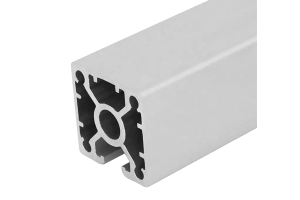 40 x 40 mm Light Aluminium Profile for Mining Equipment
40 x 40 mm four-slot aluminium extrusion in 6063-T5 from 1.30 kg/m, for guards…
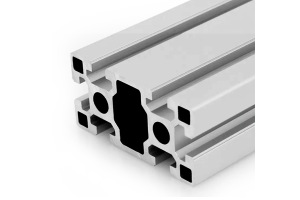 Custom 45 x 90 mm Aluminium Extrusion: Dies, Tooling and Lead Time
45 x 90 mm six-slot aluminium extrusion in 6063-T5 from a China plant. 4.10…
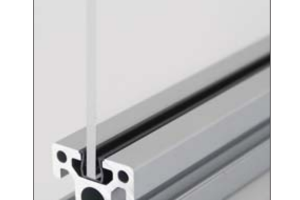 T-Slot Reducing Profile
Reducing insert that narrows a wide T-slot to accept standard nuts and accessories from…
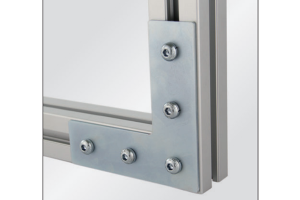 Joining Plate PG45-4545
Joining plate for two 45 × 45 mm profiles at 90°, sized to the…
