What Is a 4080 Aluminium Profile?
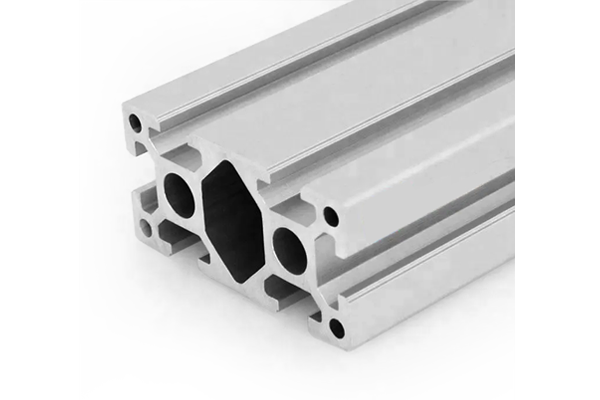
A 4080 aluminium profile is a 40 × 80 mm T-slot section. In the grownparts range it runs 1.30–3.60 kg/m depending on wall thickness, with slot variants across the range (table below).
Short answer
4080 is the 40 × 80 mm rectangular envelope — two 40 mm modules on the long face. Grownparts mass sits at 1.30–3.60 kg/m by wall class. Slot variants include a 10.2 mm groove with an 8 mm mouth on a 40 mm pitch (M8 on both sections) and an 8 mm groove taking M6 and M8 nuts on the 40 mm module. Tolerances cite EN 755-9, cut length ±0.5 mm, squareness 0.5°. Stock is 6 m; cut to list to ±0.5 mm. MOQ: 150 m, or one cut list for a single machine. Lead: 22 to 32 days for cut and machined members, plus 6 to 9 days air freight. Reference price (2026): $2.20–$3.60 per metre. See weight per metre and T-slot dimensions.
What the numbers mean
“4080” means 40 mm by 80 mm outside — a rectangular 40-series member, not a single universal slot or Ix about both axes.
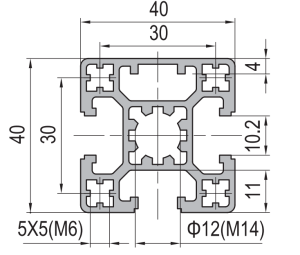
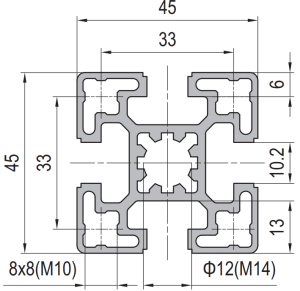
Grownparts variants span a 10.2 mm groove / 8 mm mouth on a 40 mm pitch with M8 on both sections, and an 8 mm groove taking M6 and M8 slot nuts on the 40 mm module. Another factory’s 4080 can differ in mouth, groove and web layout while sharing the envelope, so hardware and stiffness both need the die drawing. Orientation matters: the strong axis follows the 80 mm depth. Confirm slot geometry on T-slot dimensions.
Specification table (by wall thickness)
Four in-range 4080 products collapse into three wall rows for RFQs.
| Variant | Weight (kg/m) | Slot | Wall | Ix (cm⁰) | Typical use |
|---|---|---|---|---|---|
| Light wall | 1.30–2.00 | 8–10.2 mm class; M6/M8 | Light | per die drawing | Light rails, secondary beams |
| Standard wall | 2.00–3.00 | 10.2 mm groove, 8 mm mouth; 40 mm pitch; M8 | Standard | per die drawing | Gantry rails, conveyor beams |
| Heavy wall | 3.00–3.60 | 8 mm groove; M6/M8; 40 mm module | Heavy | per die drawing | Heavier bridges, long spans |
Family mass: 1.30–3.60 kg/m. Strong- and weak-axis Ix differ sharply on a rectangle — copy both from the die and compare on the weight chart.
What it is typically used for
4080 is chosen when a square 4040 cannot buy enough depth for the span.
Must-name applications: CNC router and plasma gantries, pick and place frames, inspection gantries, and laser cutting beds. It also serves as conveyor supports, platform members and any rail where deflection of a square section would fail the flatness limit. Catalogue: 40 series aluminium profiles.
Where the limits are
4080 fails as a design when it is mounted on the weak axis, or used where a light square would have been enough mass.
Put the 80 mm depth in the bending plane for beams; weak-axis use throws away the reason you bought the rectangle. For tiny fixtures and short guards, 2020/3030/4040 are cheaper and lighter. For multi-metre gantries under heavy dynamic load, confirm Ix and supports on max span — a mid-post can beat jumping another series.
Supply facts: 6 m stock; cut to list ±0.5 mm; EN 755-9 with squareness 0.5°; MOQ 150 m or one machine cut list; 22 to 32 days for cut and machined members plus 6 to 9 days air freight; reference price $2.20–$3.60 (2026).
RFQ checklist — 4080
- Wall class — inside 1.30–3.60 kg/m.
- Orientation — which face is the strong axis in the assembly.
- Slot variant — 10.2/8 mm mouth or 8 mm groove; M6/M8.
- Cut / machine list — ±0.5 mm; note end taps if needed.
- Quantity — 150 m MOQ or one machine cut list.
Send orientation, wall class and the cut list. We quote the matching 4080 die with Ix about both axes.
Related on this site
- Aluminium profile weight per metre — how this section compares across the range
- T-slot dimensions — what the slot number means
- Maximum span and load — the load limit in numbers
- 40 series aluminium profiles — products in this series
Terms used in this article
- 4080
- Nominal 40 × 80 mm rectangular T-slot envelope in the 40-series module.
- Strong axis
- Bending axis that uses the 80 mm depth; the usual gantry orientation.
- kg/m
- Mass per metre; here 1.30–3.60 by wall class.
- EN 755-9
- Tolerance base; cut length ±0.5 mm and squareness 0.5° on this page.
- Ix
- Second moment of area; different about the two axes on a rectangle.
Questions buyers ask
Should I use 4080 or a deeper section for a workbench?
4080 on the strong axis is the upgrade when a single 4040 rail cannot hold flatness on a long, heavy top. For ordinary 1 m benches, 4040 is usually enough; reserve 4080 for long tops and primary rails.
Should I use 4080 or a deeper section for a machine frame?
Use 4080 for long horizontals and base rails that see bending. Square 4040 still fits many uprights. Deeper 45/80-class members appear when spans and payloads leave the 40-series band.
Should I use 4080 or a deeper section for a robot cell fence?
Rarely needed for fence posts alone — 4040 usually covers cell fencing. 4080 helps when the fence rail also carries heavy doors, cable trays or wide unsupported bays.
Should I use 4080 or a deeper section for a conveyor frame?
Yes for many conveyor main rails and supports where deflection affects tracking. Orient the 80 mm depth in the bending plane; weak-axis mounting wastes the section.
Should I use 4080 or a deeper section for a cleanroom equipment frame?
Only when long rails or heavy plenums need the extra depth. Most cleanroom cabinets stay on 3030/4040; 4080 is the beam when spans grow.
Should I use 4080 or a deeper section for a machine guard?
Perimeter guards usually stay on 4040. 4080 appears as a header or wide opening rail, not as every post.
Should I use 4080 or a deeper section for a CNC router gantry?
Yes — 4080 is a primary gantry and bridge choice when the 80 mm depth sits in the bending plane. Confirm Ix from the die and check max span against your deflection limit.
Should I use 4080 or a deeper section for a test rig?
Use 4080 for long actuator and inspection rails that must stay flat. Compact fixtures can stay on 3030/4040.
Open the 40 series range or send a 4080 cut list
Pick the wall and slot variant in the 40 series category, or send orientation and lengths for a quote against 1.30–3.60 kg/m.
Request a quoteRelated reading
Twelve more engineering notes from this blog, picked for this article — plus every category below.
 ApplicationsWhere Modular Aluminium Framing Works: A Load-Tier Map Instead of an Industry List
 Engineering DesignAluminium Extrusion Price per Meter: How the Number Is Built
 Engineering DesignWhat Is a 3030 Aluminium Profile? (Weight, Slot and Load)
 Engineering DesignHow to Choose the Right Aluminium Profile Size for Industrial Frames
 Engineering DesignHow to Choose the Right T-Slot Aluminium Profile Size
 Engineering DesignHow to Join Aluminium Profiles: Joints, Brackets and Torque
 Engineering DesignMoment of Inertia and Section Modulus of T-Slot Profiles
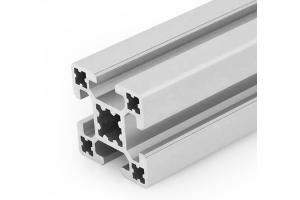 Engineering DesignT-Slot vs V-Slot Aluminium Profiles: The V Is a Raceway, Not a Cheaper T
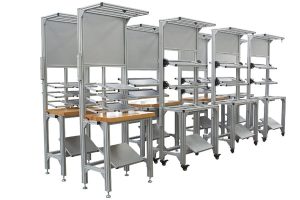 ApplicationsESD-Safe Aluminum Profile Workbenches: Why Anodising Alone Fails the Audit
 Quality and InspectionHow to Choose (and Audit) an Aluminium Extrusion Supplier
 Quality and InspectionGlobal Sourcing Excellence: Multi-Category OEM and ODM Manufacturing and Supply Chain Integration
 Sourcing and ProcurementAluminium Extrusion Price per kg in 2026 (China FOB)
