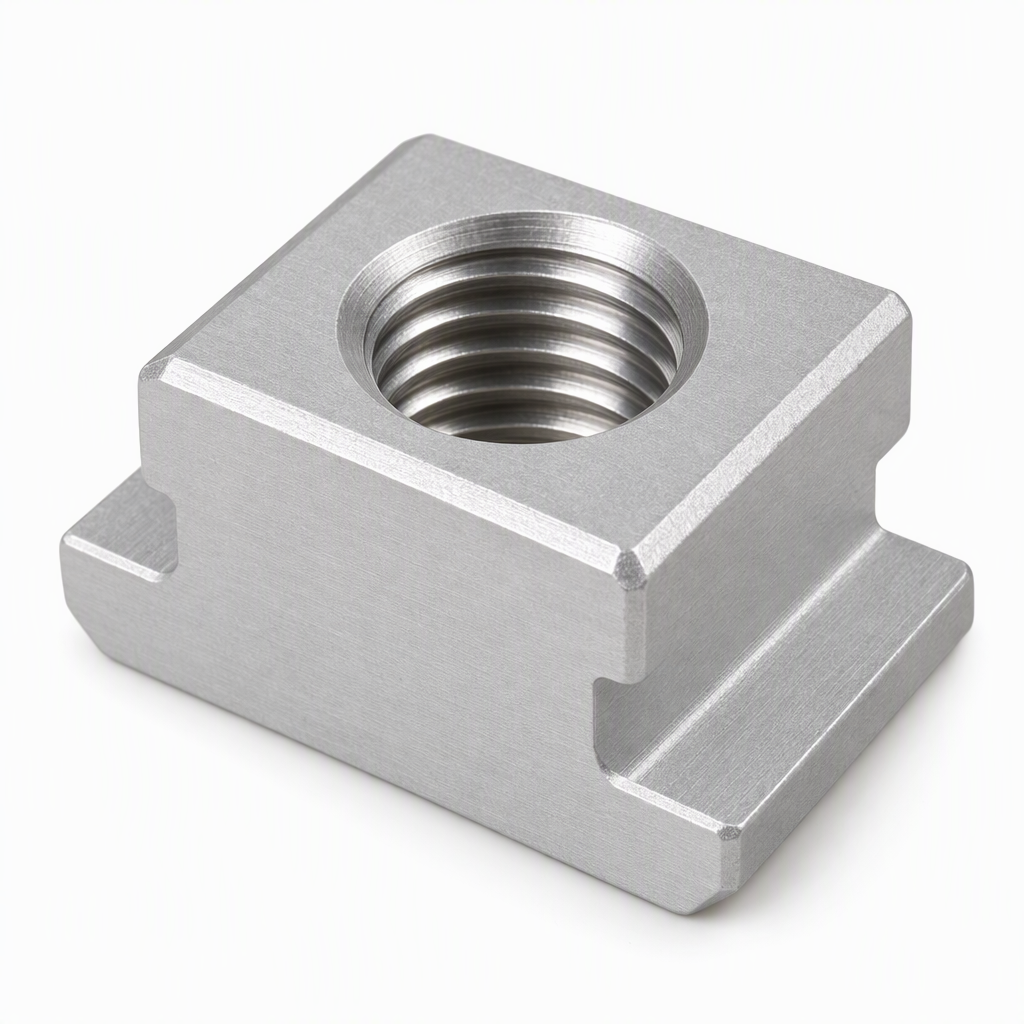
T-Slot Nut 40 Series M8 Hammer Nut for 40×40 Aluminium Extrusion
M8 hammer-head T-slot nut for the 8 mm groove of 40 x 40 mm aluminium extrusion, for loaded brackets, feet and panel fixings. Carbon steel zinc plated, 304 or 316 stainless, torque ceiling about 15 N m.
| Material | Carbon steel / 304 stainless / 316 stainless |
|---|---|
| Alloy Grade | Grade 8.8 equivalent carbon steel / A2-70 / A4-80 stainless |
| Temper | custom |
| Section Size | M8, for 40 series 8 mm slot |
| Slot | Fits 8 mm slot mouth and 12 mm groove cavity of 40 series extrusion |
| Length | 15 mm standard, 20 mm long body option |
| Tolerance | Thread to ISO 965-2 6H, head width -0.15 mm on the groove cavity |
| Surface | Zinc plated (clear trivalent) / passivated stainless |
| MOQ | 8000 |
| Lead Time | 14-22 days after deposit for zinc plated, 20-30 days for 316 |
| Loading Port | Shanghai / Ningbo |
| Supply Ability | 4 million pieces per month |
| Payment Terms | T/T 30% deposit + 70% before shipment | L/C at sight |
| Trade Terms | FOB | CIF | EXW |
| Certifications | ISO 9001:2015 | ISO 965-2 thread | RoHS | REACH |
Fastening elements · 40 series · M8
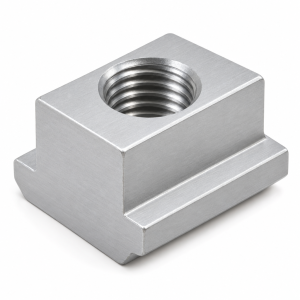
A 40 series T-slot nut is an M8 hammer-head nut that fits the 8 mm groove of a 40 x 40 mm aluminium extrusion. It is the fixing for the loaded connections in a 40 series frame: bracket feet, corner plates, feet and levelling mounts, hinge and door fixings, and the panel or machine loads that hang off them. The body is about 15 mm long, weighs around 8 g in steel, and the thread is M8 x 1.25 ISO metric coarse with an empirical torque ceiling near 15 N m.
The reason the M8 nut matters more than the smaller ones is that a 40 series section gives you a second route for the same load. Besides the four slots it usually carries an M14 centre bore, and a through-bolt in that bore carries several times what a slot nut can. Choosing between the two, and knowing when a joint needs both, is the decision that separates a frame that holds a machine from one that merely looks like it does.
What an M8 slot nut is asked to do
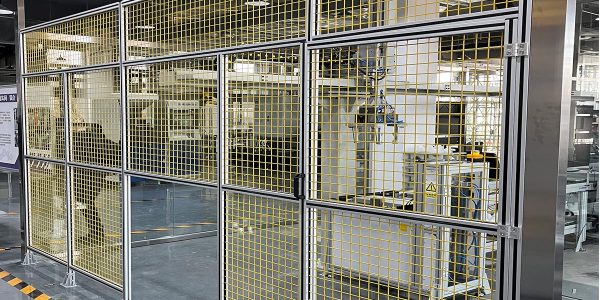
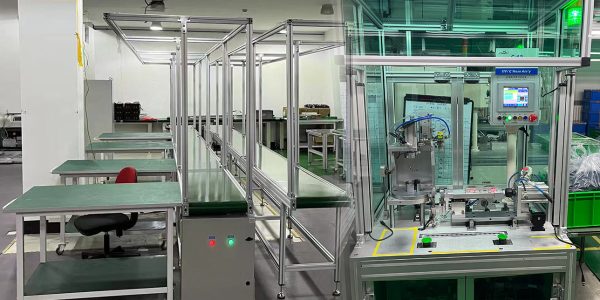
Forty series frames carry things. A machine guard, a robot cell, a conveyor run or a heavy workbench all put load into the members, and the load arrives at the brackets, joining plates and feet through the fixings. An M8 nut in an 8 mm slot is the normal grade for that duty: it is big enough to hold a bracket foot of 40 to 60 mm and to take the shear and moment that come with a loaded corner, and it is small enough to sit in the slot without needing a machined pocket.
It is worth being clear about what the nut is not. It is a clamp that presses a bracket against the face of the extrusion; it is not a bolt through the section. All of its capacity is developed through friction between the bracket foot and the slot face, which is why the tightening torque and the condition of the joint matter far more here than on a light frame, and why a slot fixing that has gone loose is a load path that has stopped working rather than a fitting that needs a tweak.
| Property | M8 40 series nut |
|---|---|
| Thread | M8 x 1.25 ISO metric coarse |
| Groove | 8 mm slot mouth, 12 mm cavity |
| Body length | 15 mm along the slot |
| Unit weight | approx. 8 g in steel |
| Torque ceiling | approx. 15 N m, empirical |
| Pull-out | approx. 1.5 to 2.2 kN per nut |
| Materials | Carbon steel zinc plated / 304 / 316 stainless |
| Head marking | Customer part number on request |
The slot and the centre bore are two different connections
A 40 x 40 section usually has an M14 centre bore running through it, and the difference between that bore and the slot is the difference between a bolt and a clamp. The slot nut clamps a part against an outside face and can be placed anywhere along the member; the centre bore takes a long bolt through the whole width of the section, so the load is carried by the full section rather than by two lips. Neither replaces the other, and a designer who treats them as alternatives usually ends up with either an over-built joint or one that fails at the wrong place.
| Aspect | Slot fixing, M8 nut | Centre bore, M14 bolt |
|---|---|---|
| Load path | Through the slot lips | Through the full section |
| Relative capacity | Baseline | Several times the slot fixing |
| Can slip | Yes, if preload is lost | No, it is a positive fixing |
| Position along member | Anywhere | At a drilled or machined position |
| Adjustable after build | Yes | Only if the joint is re-opened |
| Access needed | One slot face | Both ends of the member |
| Typical use | Brackets, feet, panels | Machine base, column foot, heavy corner |
Choose the connection, then the fixing. If a joint has to be made and unmade on site, the slot is the only option and the M8 nut is the part. If the joint has to hold the weight of a machine, the centre bore is there and the nut is not the load path. On a loaded corner, use both and let each do the job it is good at.
Three ways to stop an M8 joint coming loose
A loaded slot fixing is a friction joint, and friction joints loosen. Vibration, thermal cycling and the slow creep of aluminium under a sustained clamp load all reduce the preload, and once the preload drops the nut can walk along the slot. There are three practical answers and they suit different situations; none of them is a substitute for tightening to the correct torque in the first place.
- Spring washer or serrated washer under the screw head The cheapest and most common answer. A spring washer stores a little energy and keeps a residual load on the screw as the joint settles, which delays the loss of preload. It works well on a joint that is assembled once and left, and it costs almost nothing. It does not stop loosening on a joint that vibrates hard, and a serrated washer does mark the bracket face.
- Threadlocking compound on the screw thread A medium-strength anaerobic threadlocker fills the thread clearance and holds the screw against vibration without making the joint permanent. It is the answer where a spring washer has not been enough, or where the joint is inaccessible and cannot be re-checked. Use a removable grade, and remember that the compound needs clean, dry, oil-free threads to cure properly.
- Double nut, or a nylon-insert lock nut Where the screw passes right through a bracket into a nut that can be reached from behind, a nylon-insert lock nut gives a friction lock that resists vibration strongly and can be reused a limited number of times. A second nut locked against the first does the same job on a long stud. This is the method for joints on equipment that runs continuously and cannot be re-tightened often.
Material for a loaded joint
The default is carbon steel, zinc plated, and it is right for most indoor machine framing because the thread is hard and the plating protects it in a dry workshop. 304 stainless is specified where the frame is washed down, outdoors or in a food or pharmaceutical area, and 316 where chlorides or chemicals are present. Both stainless grades are softer than the plated carbon steel, so treat the torque ceiling as a little lower and avoid re-using a stainless screw in the same nut repeatedly.
There is a second reason to think about material on a loaded joint. Stainless in an aluminium slot is a galvanic pair, and although a dry indoor joint is fine, a wet joint will attack the aluminium around the nut first. Where a frame is both loaded and exposed, the sensible answer is often a stainless nut with a barrier washer or a plated screw, rather than mixing metals with no protection at all.
Ordering the M8 40 series nut
We supply the M8 nut in carbon steel zinc plated, 304 and 316 stainless, with a 15 mm body as standard and a 20 mm body where more lip engagement is wanted on a joint that will be adjusted. It is made for the 8 mm groove of the 40 series aluminium profiles. The minimum order is 8,000 pieces per material, and mixed material orders are priced on the combined quantity. Prices fall steadily with volume, and the difference between the minimum order and a million-piece order is close to a factor of three.
Lead time is 14 to 22 days after deposit for zinc plated and 20 to 30 days for 316, which needs its own melt and passivation run. Terms are FOB, CIF or EXW, with T/T 30 % deposit and the balance before shipment, or an L/C at sight. OEM and ODM are available: head marking with your part number, a special body length for a deep bracket, and a flange or washer face formed on the head where a wider bearing area is needed.
Frequently asked questions
Should I use a slot nut or the M14 centre bore for a loaded joint?
Use the slot nut where the joint has to be adjustable or made on site, and the centre bore where the joint has to hold a machine load. A slot fixing is a clamp that works through friction and can slip once preload is lost; a through-bolt in the centre bore is a positive fixing that carries several times the load.
How tight should I torque an M8 T-slot nut?
Around 15 N m as an empirical ceiling, with the usual caveat that it depends on the groove and on how much of the nut length is engaged. For a stainless nut or a light-walled section, work below that figure. Tighten a sample joint and check that the slot face is not being marked.
Which anti-loosening method should I use?
A spring washer is enough for a joint assembled once and left. Add a removable threadlocker where vibration is present or the joint cannot be re-checked. Use a nylon-insert lock nut where the screw passes through and can be reached from behind, or where the equipment runs continuously.
Do you supply 316 stainless, and does it change the torque?
Yes, 316 is available on request alongside 304 and zinc plated steel. Stainless is softer than plated carbon steel, so treat the torque ceiling as slightly lower and avoid re-using the same screw and nut many times. Where a frame is wet, use a barrier washer to separate the stainless from the aluminium.
What is the minimum order and lead time?
8,000 pieces per material, mixed across materials for pricing. Lead time is 14 to 22 days after deposit for zinc plated and 20 to 30 days for 316, with FOB, CIF or EXW terms and T/T or L/C payment.
Send the bracket drawing and the load it carries
Tell us how the joint is made and what it has to hold, and we will say whether an M8 slot nut is enough or whether the corner needs the M14 centre bore as well. Send the bracket foot dimensions, the material, the quantity and any head marking, and we will return unit pricing, the anti-loosening recommendation and the FOB lead time.
Request a QuoteRelated Products
 T-Slot Nut 45 Series M8 Hammer Nut for 45×45 Aluminium Extrusion
M8 hammer-head T-slot nut for the 10 mm slot of 45 x 45 mm…
 T-Slot Nut 50 Series M10 Hammer Nut for 50×50 Aluminium Extrusion
M10 hammer-head T-slot nut for the 10 mm groove of 50 x 50 mm…
 PG40 40 x 40 mm Single Slot Aluminium Strut Profile Guide Rail Base
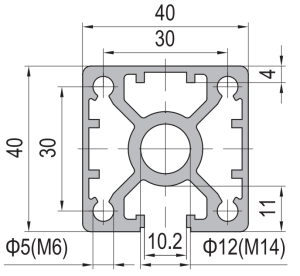
40 x 40 mm single-slot aluminium strut profile with one 10.2 mm groove on…
 PG40 40 x 40 mm Two Slot Type A Aluminium Strut Profile Guide Rail
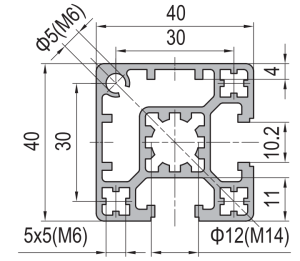
40 x 40 mm Type A two slot asymmetric PG40 aluminium strut profile in…
 PG40 40 x 40 mm Two Slot Type B Aluminium Strut Profile Opposite Rail
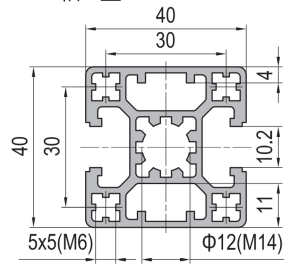
40 x 40 mm Type B two-slot aluminium strut profile with two 10.2 mm…
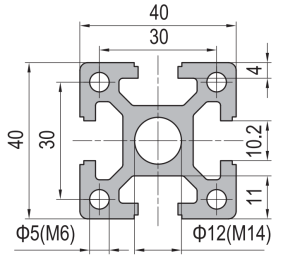 PG40 40 x 40 mm Four Slot Heavy Aluminium Strut Profile Standard Frame
40 x 40 mm heavy-wall four-slot aluminium strut profile with 10.2 mm grooves, 8…
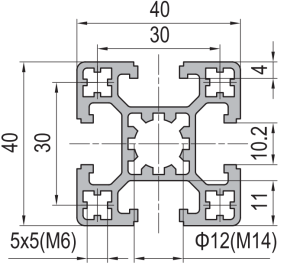 PG40 40×40 mm Four Slot Light Wall Aluminium Strut Profile Cost Optimised T-Slot Extrusion
40 x 40 mm four slot light wall PG40 aluminium strut profile in 6063-T5…
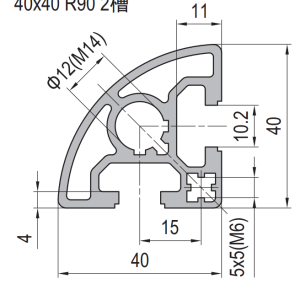 PG40 40×40 mm R90 Quarter Round Aluminium Strut Profile Radius Corner Guard Frame Extrusion
40 x 40 mm R90 quarter round PG40 aluminium strut profile in 6063-T5 with…
