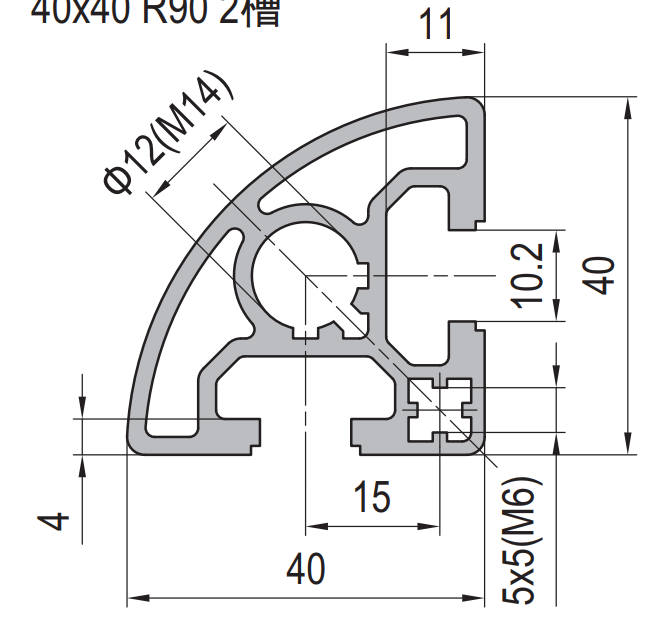
PG40 40×40 mm R90 Quarter Round Aluminium Strut Profile Radius Corner Guard Frame Extrusion
40 x 40 mm R90 quarter round PG40 aluminium strut profile in 6063-T5 with a radius outer corner and 10.2 mm grooves on a 30 mm pitch. For machine guard and perimeter fence frames.
| Material | Aluminium |
|---|---|
| Alloy Grade | 6063-T5 |
| Temper | T5 |
| Section Size | 40 x 40 mm quarter round |
| Slot | 10.2 mm groove, 8 mm mouth, 30 mm pitch, M8, one per flat face |
| Length | 6 m stock, cut to corner lengths to +/-0.5 mm |
| Tolerance | EN 755-9 / GB/T 6892, wall +/-0.15 mm |
| Surface | Mill finish / clear anodised / black anodised |
| MOQ | 300 |
| Lead Time | 18-28 days after deposit for mill finish |
| Loading Port | Shanghai / Ningbo |
| Supply Ability | 400 t per month |
| Payment Terms | T/T 30% deposit + 70% before shipment | L/C at sight |
| Trade Terms | FOB | CIF | EXW |
| Certifications | ISO 9001:2015 | EN 755-9 | RoHS | REACH |
Structural framing · PG40 radius corner
A 40 x 40 mm R90 quarter round strut profile is a 40 mm aluminium extrusion whose outer corner is a continuous radius rather than a sharp 90 degree angle. It is a corner member, not a beam: the flat, slotted faces run along the two members that meet at the corner and the arc forms the outside. The groove is 10.2 mm with an 8 mm mouth on a 30 mm pitch, so it takes 40-series M8 hardware, and the centre bore is Ø12 mm tapped M14. The corner features are 5 x 5 mm tapped M6 and the wall is 4 mm. We extrude it in 6063-T5 and supply it cut, drilled, tapped or machined.
The 40 mm envelope is the size most machine guards and perimeter fences are built from, and that is what makes the corner important here. A guard frame holds its corners out at the edge of the machine, at the height a person walks past and at the position a hand reaches when a door is opened. A sharp extruded edge in that position is an injury waiting to happen and a snag point for sleeves, gloves and cables, and machinery safety practice is written around removing exactly that kind of exposed edge.
Where a guard frame corner becomes a hazard
A sharp corner is only a hazard when someone can reach it, and on a machine guard that is most of the frame. The vertical edges of a guard stand at the perimeter of the machine at roughly waist to shoulder height. The top rail runs along at head height. The end of a fence run is an exposed corner in open floor space. Each of those is in the path of somebody walking, leaning or reaching.
There are two distinct failure modes. The first is direct contact: a sharp extruded edge cuts or bruises, and an impact against it does more damage than against a rounded surface because the load lands on a line rather than an area. The second is snagging: a sleeve, a glove, a lanyard or a loose cable catches on the corner as somebody moves past, which turns a walk into a fall or pulls a hand into the machine.
Turning that into a specification
Guard design normally starts from a risk assessment under ISO 12100 and then works through the guard requirements in ISO 14120 and the reach distances in EN ISO 13857. The corner radius falls out of the first of those steps rather than the last two: the assessment identifies an exposed edge that a person can contact, and the hierarchy of control says remove it rather than warn about it.
In practice that means a radius section wherever the frame edge is exposed, and a square section wherever it is not. A corner that is against a wall, buried inside the machine or behind a closed panel is not reachable, so it does not need the radius and the cheaper square section is the correct answer there.
| Exposed edge | Hazard it creates | What the radius does |
|---|---|---|
| Vertical edge at the machine perimeter | Cut, bruise and snag on contact | Lets anything sliding along the frame pass over |
| Top rail at head height | Impact injury | Spreads an impact over an arc, not a line |
| End of a fence run in open floor | Snag as people walk past | Removes the catch point entirely |
| Edge beside a door or an access gate | Snag on the way through | Removes the catch point at the point of movement |
| Corner behind a closed panel | None, not reachable | Not needed, use a square section |
What the radius does not fix
A radius corner is one item in a safety case, and it is easy to treat it as the whole of one. It removes the hazard of the frame edge. It does nothing about the openings between the frame and the machine, the edges of the panels themselves, the distance between the guard and the danger, or the way the guard is opened and closed.
Each of those is a separate requirement and each is usually more significant than the corner. A guard with beautifully rounded frame corners and an oversized opening between the frame members still lets a hand through. That is worth keeping in mind when the corner radius is the item everyone remembers to specify.
Ordering a guard frame corner set
- Mark the exposed edges on the drawing Go round the frame and mark every edge a person can reach. Those take a radius section; everything else can be a square member, which keeps the cost and the complexity down.
- Send the frame dimensions, not just the profile order The radius pieces are cut to the height or length of the corner they form, so the cut list comes from the frame drawing. Sending the drawing lets us cut the whole set in one go rather than supplying stock lengths.
- Agree where the panel fixings land Panel brackets and infill fixings go into the flat slotted faces, never into the arc. Agree the fixing positions before the pieces are drilled so the holes and the panel edges line up.
- Decide the finish for the whole set together Anodise the radius pieces and the square members in one batch. A radius corner that is a different shade from the member it caps is more conspicuous than the corner would have been.
- Have the set bagged by frame On a multi-frame order, ask for the pieces to be cut, drilled, tapped and bagged by frame. On site that removes the job of sorting a mixed delivery into frames before assembly can start.
Radius or a protective cover? Where a frame is already built and the edge is exposed, a clip-on edge cover can be added to a square section instead of replacing it. It is a reasonable retrofit, but on a new build the radius section is the better answer, because a cover can be removed and is one more thing to maintain.
Frequently asked questions
Why specify a radius corner on a machine guard?
Because the frame edge is exposed to people. A sharp extruded corner is a cut and impact hazard and a snag point for clothing and cables, and removing an exposed edge is preferred over warning about it in a risk assessment.
Which corners of a guard actually need the radius?
Only the ones a person can reach: the vertical edges at the perimeter, the top rail and the exposed ends of a fence run. Corners against a wall, inside the machine or behind a closed panel can stay square and cost less.
Is a radius corner enough on its own?
No. It removes the hazard of the frame edge and nothing else. The openings between members, the panel edges, the safety distance to the danger point and the interlocking of access doors are separate requirements and usually more significant.
How many radius pieces do I need for a guard?
Count the corners a person can reach. On a typical machine guard that is the four vertical edges plus the top rail ends, with the corners that sit against a wall or inside the machine left as square members.
Can you supply the whole frame as one set?
Yes. Send the frame drawing and we will cut the radius pieces and the square members as a set, drill and tap to drawing, finish them in one batch and bag them by frame so the delivery arrives in build order.
Send the guard frame drawing and the exposed edges
Tell us which edges a person can reach and what panel infill you are using. We will cut the radius pieces and the square members as one set, drill and tap to drawing and quote FOB pricing.
Request a QuoteRelated Products
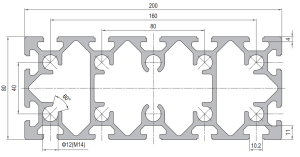 PG40 200 x 80 mm Fourteen Slot Aluminium Strut Profile Large Section Beam
A 200 x 80 mm fourteen slot PG40 aluminium strut profile at about 7.80…
 PG45 180 x 90 mm Twelve Slot Aluminium Strut Profile Heavy Duty Column
A 180 x 90 mm twelve slot PG45 aluminium strut profile at about 9.50…
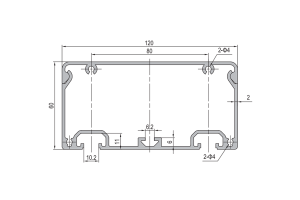 Aluminium Conduit Profile 120×60 mm Cable Duct Extrusion 2 mm Wall for Machine Wiring
120 x 60 mm aluminium conduit profile duct in 6063-T5 with a 2 mm…
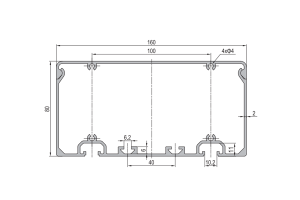 Aluminium Conduit Profile 160×80 mm Cable Duct Extrusion with Two Sided Mounting for Machine Frames
160 x 80 mm aluminium conduit profile duct in 6063-T5 with a 2 mm…
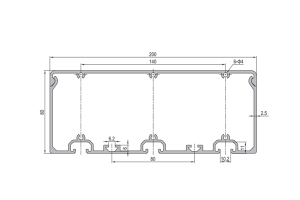 Aluminium Conduit Profile 200×80 mm Cable Duct Extrusion 2.5 mm Wall for Long Production Line Runs
200 x 80 mm aluminium conduit profile duct in 6063-T5 with a 2.5 mm…
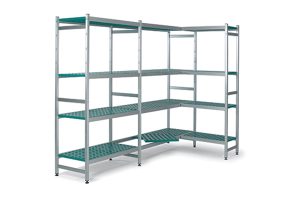 Agricultural Framework Aluminium Profile System 45×45 mm T-Slot for Shelving and Storage Racks
A bolted 45 x 45 mm T-slot aluminium profile framing system for agricultural shelving,…
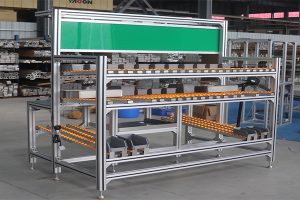 Assembly Line Workstation Aluminium Profile Frame 40×40 mm T-Slot Workbench Structure
A re-configurable assembly workstation frame in 40 x 40 mm T-slot aluminium profile with…
 Conveyor System Aluminium Profile Extrusion Frame 45×60 mm for Belt and Roller Lines
A bolted conveyor frame in 45 x 60 mm T-slot aluminium profile with 45…
