Aluminium Extruders 600 to 4000 Ton Press Capacity 40 to 160 mm Profile
Aluminium extrusion capacity across 600 to 4000 tonne presses, covering profiles up to about 160 mm circumscribed circle, with in-house ageing, anodising and dimensional inspection.
| Material | Aluminium |
|---|---|
| Alloy Grade | 6063-T5 |
| Temper | T5 |
| Section Size | Up to about 160 mm circumscribed circle |
| Slot | 20 to 50 series strut slots; other sections to drawing |
| Length | Saw cut to length from 6 m stock, +/-0.5 mm, square or mitred |
| Tolerance | EN 755-9, wall +/-0.15 mm |
| Surface | Mill finish / clear anodised / black anodised / powder coated |
| MOQ | Made to order; small quantities of catalogue sections from stock |
| Lead Time | 2 to 4 weeks for extrusion plus finishing; a new die adds 2 to 4 weeks |
| Loading Port | Shenzhen, Shanghai, Ningbo, Qingdao |
| Supply Ability | Four presses, in-house ageing, anodising, powder coating and inspection |
| Payment Terms | T/T 30 per cent deposit, balance against copy of bill of lading; L/C at sight on request |
| Trade Terms | EXW, FOB, CIF, CFR, DDP on request |
| Certifications | Mill certificate to EN 10204 3.1 on request, RoHS and REACH declarations, anodising film report |
01What an extruder actually is
An aluminium extruder is a factory, not a machine: a press that pushes hot billet through a die, an ageing furnace that brings the profile to temper, a stretcher that takes the bow out, and a finishing line that puts the surface on. When a buyer asks “what can you extrude”, the honest answer is a table of press tonnage against section size, because the press sets the hard limit on what section is possible.
This page lays out our press range, the section envelope each press can fill, the realistic minimum wall, and the finishing and inspection capacity behind every order. It is written for a buyer who is checking whether their section is inside our envelope before they send the drawing.
How do I know if my section can be extruded?
Two numbers decide it. The circumscribed circle, the smallest circle that contains the whole cross-section, has to be inside the press limit. And the circumscribed circle divided by the wall thickness has to be under about 100 to 130 for an aluminium die. A section that fails either number is made in two pieces, or not at all.
What is the minimum wall thickness?
About 0.8 mm on a small section with a small circumscribed circle, rising to 2 mm and more as the section gets bigger. The ratio matters more than the absolute number: a thin wall in a wide section will not fill the die.
02Press tonnage against section envelope
The tonnage is not about the force on the metal so much as about how large a die face can be filled while keeping the metal moving at one speed. Under about 700 bar of billet pressure the flow across a wide die face goes uneven and the wall drifts.
| Press | Tonnage | Typical circumscribed circle | Typical minimum wall | Suits |
|---|---|---|---|---|
| Small press | 600 T | up to about 50 mm | 0.8 to 1.2 mm | small angle, trim, small slot sections |
| Medium press | 1200 T | up to about 90 mm | 1.0 to 1.5 mm | 40 series strut, medium angle, rail |
| Large press | 2500 T | up to about 130 mm | 1.2 to 2.0 mm | large strut, 100 mm sections, wide flat |
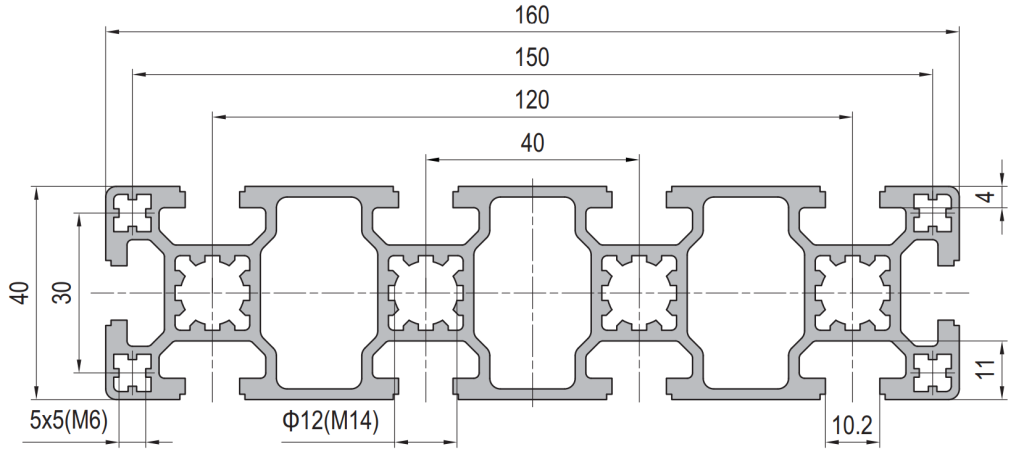
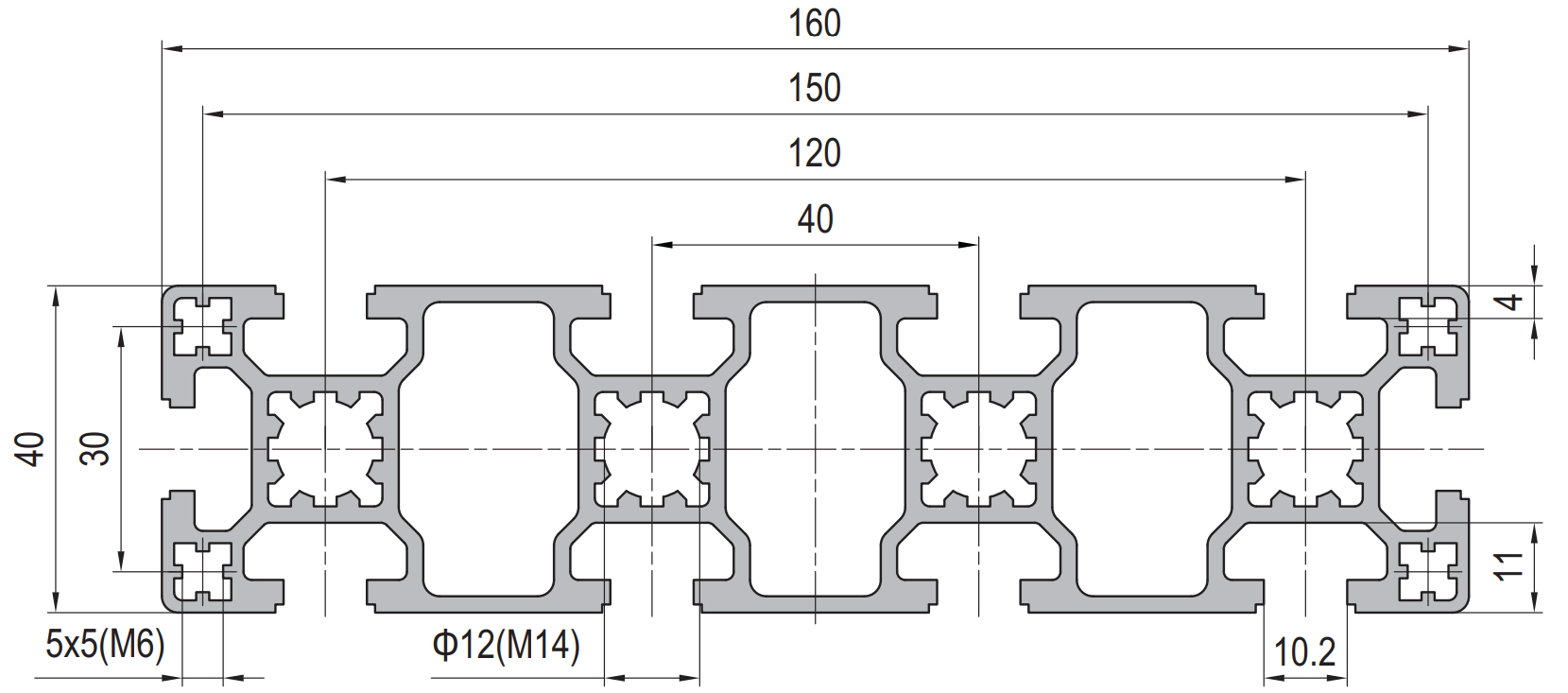
| Heavy press | 4000 T | up to about 160 mm | 2.0 mm and up | 40 x 160, 120 x 80, heavy framing |
The envelope is not a rectangle and it is not symmetrical: a section that is wide and thin is harder to fill than one that is roughly square, because the metal has further to travel across the wide face. That is why a 160 x 10 mm flat is a harder extrusion than a 100 x 100 mm box despite the smaller circumscribed circle.
The ratio that decides a die
- Circumscribed circle / minimum wall under about 100: comfortable, normal die life.
- Ratio 100 to 130: possible with a slower run and a careful die, and the price carries the slower speed.
- Ratio over 130: usually rejected, or made in two parts and assembled.
- Very small circle with a very thin wall (under 10 mm circle, under 1 mm wall) is a separate problem: the die tongue is too weak to survive the run.
03Heat treatment: how T5 and T6 are made
Aluminium comes out of the die soft. The strength comes from the quench and the ageing that follow, and the two tempers that buyers ask for are made differently.
| Temper | Quench | Ageing | Result | Used for |
|---|---|---|---|---|
| T5 | cooled on the run-out table by air and water mist | artificial ageing, a few hours at moderate temperature | cooled from the press, then aged | most architectural and strut sections |
| T6 | solution treated, then water quenched | artificial ageing to full strength | higher strength than T5 | angle profiles, structural sections |
| O | annealed, no quench | none | soft, for forming | parts that are bent after extrusion |
| H112 | as extruded, no controlled quench | none | moderate strength, no temper guarantee | sections for machining |
Our ageing furnaces are loaded by batch and the batch record carries the charge number, the time and the temperature, which is the traceability a T5 or T6 certificate rests on. If your project needs T6, say so at enquiry, because the quench line has to be set for it before the run starts.
Temper is a process, not a label. A supplier who cannot show an ageing record cannot honestly claim T5. Ask for the batch record with the mill certificate.
04Finishing capacity
Finishing is where a large part of the lead time sits, and where a bottleneck is most likely to affect a delivery date.
| Line | What it does | Capacity | Typical lead time |
|---|---|---|---|
| Anodising | clear or coloured, 10 to 20 micron | several thousand square metres a month | about a week for a batch |
| Powder coating | RAL colours, 60 to 100 micron | a large booth, batch work | a few days for a batch |
| Saw cutting | 6 m stock to length, square or mitred | high throughput | 1 to 2 weeks with drilling |
| CNC machining | drilling, tapping, milling | multi-axis cells | 1 to 3 weeks depending on the part |
The practical point for a buyer: the finishing lead time adds to the extrusion lead time, they do not run in parallel by default. A mill-finish order and an anodised order of the same section are not the same delivery date.
05Inspection equipment and what each check proves
A mill certificate states the alloy and the temper. It does not prove the section is the right shape, so the dimensional checks are separate and are done on the profile, not on the billet.
| Equipment | What it checks | Why it matters to the buyer |
|---|---|---|
| Spark spectrometer | chemical composition of the billet and the profile | proves the alloy is what was ordered, not a near neighbour |
| Tensile tester | yield and tensile strength, elongation | proves the temper was achieved, not just claimed |
| Hardness tester (Webster) | temper on the run, non-destructive | catches an improperly aged batch before it ships |
| Film thickness gauge | anodising film in micron | the number the corrosion warranty rests on |
| Callipers and gauges | wall, leg, slot and cut length | proves the section matches the drawing |
| Straightness check | bow per metre after stretching | a bowed profile will not assemble into a frame |
Every batch ships with a dimensional report and, on request, a mill certificate to EN 10204 3.1 showing the heat number and the chemistry. For anodised work we add the film thickness report in micron.
06Choosing an extruder: what to verify
Evidence that matters
- A press tonnage table with the section envelope for each press
- Ageing records with charge number, time and temperature
- In-house finishing, not a subcontractor you cannot audit
- A spectrometer on site, and a tensile tester
- A dimensional report with every batch
- An honest answer when your section is outside the envelope
Claims that mean little
- “Large capacity” with no tonnage or envelope
- “T5 and T6 available” with no ageing record
- “Anodised” with no film thickness figure
- “ISO 9001” with no dimensional report
- “Any section you want”, when some sections cannot be extruded
- “Best quality” with no inspection equipment named
07Failure modes that trace back to the press
| What goes wrong | Why it happens | Design it out by |
|---|---|---|
| Wall drifts across a wide face | die fills unevenly on a section that is wide and thin | keep the circle-to-wall ratio under about 130, or split the section |
| Section will not fill at all | circumscribed circle beyond the press limit | step up the press tonnage, or redesign the section |
| Temper not achieved | quench set for T5 but T6 ordered | state the temper on the enquiry and confirm the quench line is set |
| Bow along a long length | stretching skipped on a heavy section | specify stretch straightening and check bow per metre |
| Anodising colour varies between batches | two anodising runs on one assembly | order the whole assembly from one run, or accept a shade step |
| Die fails mid-run | tongue too thin on a small circle with a thin wall | increase the wall, or accept a two-part section |
08What to send with an enquiry
Information an extruder needs to quote
- The cross-section drawing, to scale, with the circumscribed circle shown.
- The alloy and temper: for example 6063-T5 or 6061-T6.
- The wall thickness and any critical dimension with its tolerance.
- The length and the cut list.
- The finish: mill, anodised or powder coated, with the micron.
- The quantity, in metres, pieces or tonnes.
- Any secondary operation: drilling, tapping, machining.
- The end use, so we can flag a section that is outside the envelope.
09Questions buyers ask
What press tonnage do you run?
600 T, 1200 T, 2500 T and 4000 T, covering circumscribed circles up to about 160 mm.
What is the largest profile you can extrude?
About 160 mm circumscribed circle on the 4000 T press, with a wall of 2 mm or more. Wide, thin sections are harder than square ones of the same circle.
What is the minimum wall thickness?
About 0.8 mm on a small section, rising with the circumscribed circle. The ratio of circle to wall matters more than either number alone.
Can you do both T5 and T6?
Yes. T5 is standard for strut and architectural sections; T6 is used for angle profiles and structural work, and the quench line is set accordingly.
Do you anodise in house?
Yes, clear and coloured, 10 to 20 micron, with a film thickness report on request.
What inspection do you carry out?
Chemistry by spectrometer, tensile and hardness for temper, dimensional checks on the profile, film thickness for anodising, and straightness after stretching.
What we need to quote an extrusion project
- The cross-section drawing, with the circumscribed circle.
- The alloy and temper.
- The critical dimensions and tolerances.
- The length, cut list and end cuts.
- The finish and the micron if anodised.
- The quantity in metres, pieces or tonnes.
- Any secondary operations and the end use.
Send those seven items and the quotation comes back with the extrusion, heat treatment, cutting, finishing and packing broken out separately, plus a note if any dimension is outside the press envelope. Browse the full aluminium profile catalogue and the aluminium sections range.
Not sure if your section is inside our press envelope?
Send the cross-section drawing with the circumscribed circle, the alloy and the quantity. We will confirm the press and flag anything outside the limit.
Request a quotationRelated Products
 Aluminium Extrusion Manufacturing Factory: 20 to 100 mm Profiles
Aluminium extrusion profiles for Gujarat, India, in 6063-T5 and 6061-T6, with anodising film selected…
 Aluminium Extrusion Manufacturers: 30 to 60 Series, 8 mm Slot
Aluminium extrusion profiles for Delhi NCR, India, in 6063-T5. Strut sections from 30 to…
 Aluminium Extrusion Profile Supply: 15 to 45 Series Kits, 8 mm Slot
Aluminium extrusion profile supply for Ahmedabad in 6063-T5: electrical cabinet frames with a designed…
 Aluminium Extrusion Profiles 20 to 45 Series for OEM, up to 100 mm
Aluminium extrusion profiles for Tamil Nadu in 6063-T5, with full batch traceability from heat…
 Aluminium Extrusion Manufacturer: 45 to 120 mm, 6063-T5
Aluminium extrusion for Chennai in 6063-T5, section supply with port logistics support through Chennai…
 Aluminium Angle Profile 35 x 35 x 4 mm Panel Edge Trim for Guarding
35 x 35 x 4 mm aluminium angle profile with an inner corner slot,…
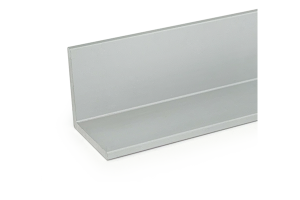 L Aluminium Angle 30 x 30 x 4 mm for Washdown Equipment Frames
30 x 30 x 4 mm L aluminium angle for washdown equipment frames. 6061-T6,…
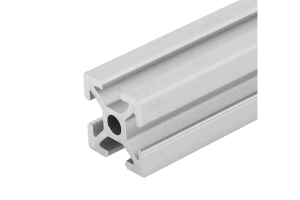 Aluminium 2020 Extrusion 20 x 20 mm for 3D Printer Frames
20 x 20 mm four slot aluminium 2020 extrusion for 3D printer and desktop…
