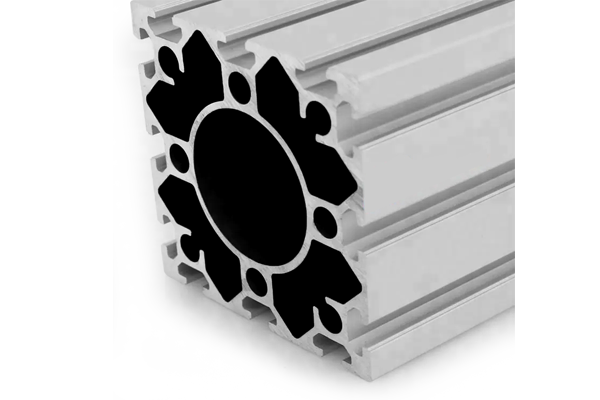
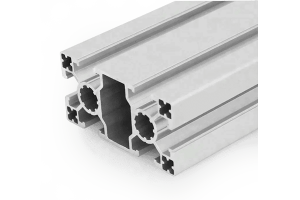
PG40 120×120 mm Twelve Slot Aluminium Strut Profile with 62 mm Centre Bore
A 120 x 120 mm twelve slot PG40 aluminium strut profile with a 62 mm centre bore and eight M14 bores on an 80 mm square pattern. For large machine columns and gantry uprights with internal cable routing.
| Material | Aluminium |
|---|---|
| Alloy Grade | 6063-T5 |
| Temper | T5 |
| Section Size | 120 x 120 mm |
| Slot | 12 x 10.2 mm groove, 8 mm mouth, 40 mm pitch, outer pair 80 mm apart, M8 |
| Length | 6 m stock, cut to drawing to +/-0.5 mm |
| Tolerance | EN 755-9 / GB/T 6892, wall +/-0.15 mm |
| Surface | Mill finish / clear anodised / black anodised |
| MOQ | 150 |
| Lead Time | 25-38 days after deposit for mill finish |
| Loading Port | Shanghai / Ningbo |
| Supply Ability | 150 t per month |
| Payment Terms | T/T 30% deposit + 70% before shipment | L/C at sight |
| Trade Terms | FOB | CIF | EXW |
| Certifications | ISO 9001:2015 | EN 755-9 | RoHS | REACH |
Structural framing · PG40 large column
A PG40 120 x 120 mm twelve slot aluminium strut profile is a large square column with a 40 mm slot pitch, a 10.2 mm groove and an 8 mm slot mouth, taking 40 series M8 hardware. Eight Ø12 mm bores tapped M14 sit on an 80 mm square pattern, and a 62 mm bore runs down the centre of the section. The flange is 4 mm and the web 11 mm, the internal cavities are set at 60 degrees, and the section weighs about 9.4 kg/m. It is supplied in 6063-T5, cut and machined to order.
The 62 mm centre bore is the feature that makes this section different from any other 120 mm column, and it is worth being precise about what it is for. It is not a weight-saving hole that happens to be there — it is a full-length through bore, and it changes what the column can do. Three uses come up again and again, and all three are about passing something through the structure rather than fixing something to it.
What a 62 mm through bore is actually for
Routing a cable or hose bundle down the structure
A 62 mm bore will take a substantial harness — several power cables, signal cables and a pneumatic line, with room to spare and without them being clamped against anything sharp. On a large machine, a gantry or a robot cell, running the services inside the column rather than along the outside is the difference between a machine that looks finished and one that looks like a prototype. It also protects the cable from swarf, coolant and impact, and it removes the snagging risk on a moving axis.
The bore is also a natural place for the cable to change direction, because you can break out of it at any point along the column by drilling through to the surface between two slots.
Passing a shaft, screw or spindle through the column
A 62 mm bore will pass a 50 mm shaft with clearance, or a 40 mm ball screw complete with its support bearing. That makes the column usable as a structural sleeve rather than only as a frame member: an axis can travel inside the structure, which is how a compact lift, a rotary indexer or a telescopic mast is built without an external guide.
It is worth being clear about the tolerance here. The bore is an extrusion feature, so it is straight but not a bearing fit. Where the shaft needs to be located accurately, bore the ends and fit a bearing housing rather than running the shaft directly on the extrusion.
Removing weight and material from the section
A solid 120 x 120 mm aluminium bar weighs about 39 kg/m. This section weighs about 9.4 kg/m, so roughly three quarters of the material in the envelope has been taken out — and the 62 mm bore is the largest single removal. Because the material sits near the outside where it carries bending stress, taking it out of the middle costs far less stiffness than the weight saving suggests. That is the same reason a tube is more efficient than a solid bar, taken to its logical conclusion inside a T-slot profile.
| Use of the 62 mm bore | What it takes | What it changes |
|---|---|---|
| Cable and hose routing | A multi-cable harness or several hoses | Services run inside the structure, protected and out of sight |
| Shaft or screw passage | A 50 mm shaft or a 40 mm ball screw | An axis can travel inside the column instead of beside it |
| Weight removal | The whole core of the section | About 9.4 kg/m instead of about 39 kg/m for a solid bar |
| Pneumatic and hydraulic runs | A bundle of lines up to 60 mm | No external conduit needed on a long column |
Tell us what you plan to run through it. A shaft passage and a cable route need different end treatments. If a shaft runs through the bore we will bore the ends for a bearing housing; if it is cable we will leave the ends open and supply grommets.
Twelve slots and the multi-directional node
Twelve slots on a 120 x 120 mm section means three mounting positions on each face, and that changes how a large frame is built. At a corner, members can arrive from four directions without any of them competing for a slot, and a cross member can be bolted through the middle of a face rather than at its edge. On a big structure that is what keeps the node count down.
The eight Ø12 mm bores tapped M14 are the structural fixings. They sit on an 80 mm square pattern, which is the same 80 mm as the outer slot spacing, so a bracket or an end plate can be designed once and used on either. Use the bores for anything carrying load and keep the slots for what has to be adjustable.
Why large sections are made to order
Below about 100 mm square, T-slot sections are standard products that distributors hold in stock. Above that, the economics change. A 120 x 120 mm die is a large piece of tooling, the extrusion press has to be big enough to push it, and the run length needed to make the setup worthwhile is measured in tonnes rather than metres. The result is that sections this size are normally extruded against an order rather than held on a shelf.
For you that has two practical consequences. Lead time is longer than for a small section, and the minimum order quantity is higher. In exchange, a section this size is a candidate for a custom die: if the standard 120 x 120 is close but not right, the tooling cost is spread over a long enough run to be worth considering. Tell us the envelope you actually need and we will say whether a custom die makes sense.
Frequently asked questions
Can the centre bore be used as a bearing housing?
Not directly. The extrusion bore is straight but it is not a precision fit, so a shaft running in it will not be located accurately. Bore the ends and fit a proper housing if the shaft position matters.
Is the 62 mm bore available on other sections?
The bore is a feature of this die, so it is specific to this section. If you need a similar bore in a different envelope, that is a custom die enquiry.
What is the lead time?
Longer than for a small section, because this size is extruded against an order rather than held in stock. Send us the quantity and we will confirm the schedule.
How stiff is the section?
About 600 cm4, which is a similar order to a heavy 120 x 120 mm section without the centre bore, at about 20 per cent less weight. Send us the span and the load and we will calculate the deflection.
Can you machine the ends and the bores?
Yes. We face and square the ends, drill and tap the eight M14 bores to the 80 mm pattern, bore the ends for a shaft housing if required, and supply end plates. Send DWG, DXF, STEP or PDF.
Send the column height and what runs through the bore
Tell us the height, the load and what you plan to run through the 62 mm bore. We will confirm the section and the end machining, and quote cut lengths and FOB pricing.
Request a QuoteRelated Products
 PG40 160×80 mm Twelve Slot Aluminium Strut Profile Heavy Beam for Gantry Frames
A 160 x 80 mm twelve slot PG40 aluminium strut profile heavy beam with…
 PG40 80×80 mm L-Shape Eight Slot Aluminium Strut Profile Corner Section
An 80 x 80 mm L-shape eight slot PG40 aluminium strut profile corner section…
 PG40 80×80 mm Eight Slot Heavy Aluminium Strut Profile High Load Column
An 80 x 80 mm eight slot heavy PG40 aluminium strut profile with diamond…
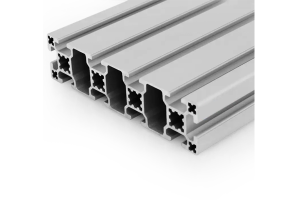 PG40 160×40 mm Ten Slot Aluminium Strut Profile Wide Beam for Overhead Rails
A 160 x 40 mm ten slot PG40 aluminium strut profile wide beam with…
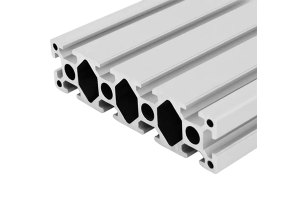 PG40 160×40 mm Ten Slot Heavy Aluminium Strut Profile for Cantilever Arms
A 160 x 40 mm ten slot heavy PG40 aluminium strut profile with round…
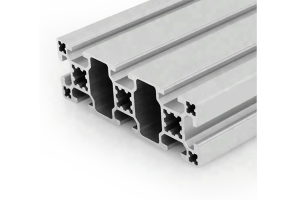 PG40 120×40 mm Eight Slot Aluminium Strut Profile Standard Beam for Table Frames
A 120 x 40 mm eight slot PG40 aluminium strut profile standard beam with…
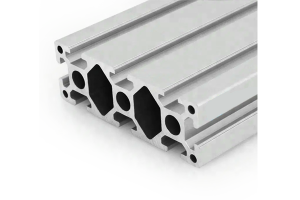 PG40 120×40 mm Eight Slot Heavy Aluminium Strut Profile for Machine Bases
A 120 x 40 mm eight slot heavy PG40 aluminium strut profile with round…
 PG40 80×40 mm Six Slot Super Light Aluminium Strut Profile for Enclosures
An 80 x 40 mm six slot super light PG40 aluminium strut profile with…
