If you buy extruded aluminium profiles from China, the unit price on the proforma invoice is the least interesting number in the deal. What decides whether the order made or lost money is everything that happens between signing and unloading: which standard the factory defaulted to, who owns the die, how the bundles were strapped, and whether anyone looked at the goods before they were loaded.
I have watched importers lose more margin to a single unspecified line on a purchase order than to a year of price negotiation. A container of 6-metre profiles that arrives 2 mm out on the slot position is not a bargaining problem — it is scrap with freight attached. The frustrating part is that almost every one of these losses is preventable with language that takes twenty minutes to write.
This guide is written for the person who signs the PO, not the person who drafts the extrusion. It walks through nine failure points in the order they typically bite, gives you the clause that closes each one, and finishes with a pre-shipment inspection plan you can attach to the order today.
Read this first
A useful mental model: the factory will build to the loosest interpretation of your documents that is still defensible. That is not dishonesty, it is how every manufacturing business protects its yield. Your job is to remove the room for interpretation, not to find a factory that will not use it.
Quick answer
The nine failure points, in the order they usually cost you money
If you only read one block on this page, read this one. Each item below is expanded later with the exact clause that closes it.
Alloy and temper appear in three places, not one State 6063-T5 on the PO, the drawing title block and the packing list. Require an EN 10204 type 3.1 mill test certificate per heat number.
Name the tolerance standard and its edition “Per EN 755-9” is not enough. Write the edition year, and flag the dimensions that govern hardware fit as critical.
Split mill lengths from cut-to-size Different processes, different tolerances, different scrap owner. One line item for both is how you pay for the saw kerf.
Document die ownership before you pay for the die A tooling agreement with an IP clause, a die register entry and a handover condition. Without it, changing supplier means paying twice.
Turn surface finish into numbers Film thickness class, sealing quality, colour difference limit and a retained physical sample. “Anodised” on its own is a wish.
Write the packing specification Bundle weight limit, interleaving, corner protection, no metal banding on visible faces. Damage in transit is a packing failure, not bad luck.
Match the Incoterm to who can actually control the risk FOB plus supervised loading, or CIF with an agreed carrier. All-risks cover, not minimum ICC(C).
Inspect before shipment, not after arrival An AQL sampling inspection at the factory with a written plan. Rejecting a container at your own dock is the most expensive place to discover a problem.
Keep a documented concession route Decide in advance what happens when goods are marginal: accept with a credit, rework, or return. Improvised decisions cost more than the defect.
Diagnosis
Why the factory is rarely the problem
When a shipment goes wrong, the instinct is to blame the supplier. In practice, an extrusion plant in Foshan or Ningbo is running to a standard it was given. If your order said “aluminium profile, 6063, mill finish, 6 m”, the factory produced exactly that, and it will pass their own inspection every time — because their inspection is against the same vague document.
The commercial trap is that the gap between your expectation and their default only becomes visible at your dock, after freight, duty and inland haulage have already been spent. At that point you are negotiating from the weakest possible position: the material is in your warehouse, the money is mostly paid, and your production line is waiting.
So the practical question is not “is this a good factory?” but “have I left any dimension, finish or obligation undefined?” The nine points below are the ones that appear again and again in claims files. I have ordered them roughly by how expensive they are when they go wrong, not by how technical they sound.
Where the money goes
The nine failure points
01 · Alloy and temper are specified in exactly one document
02 · The tolerance standard is left to the supplier’s default
03 · Mill lengths and cut-to-size are bundled into one line item
04 · You pay for the die but never own it
05 · Surface finish is written as an adjective instead of a number
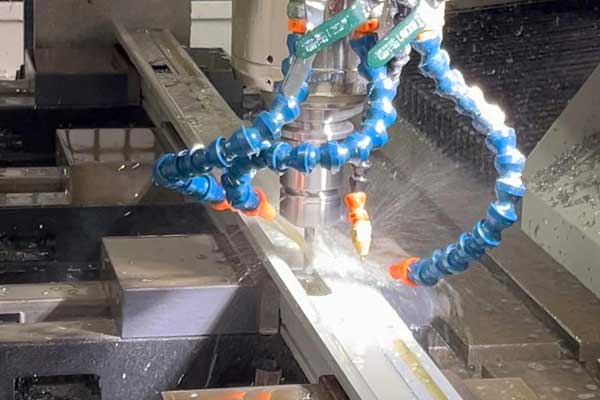
06 · The scope of secondary machining is assumed, not stated
07 · The packing specification does not exist
08 · The Incoterm does not match who can actually control the risk
09 · The only inspection happens after the goods arrive
Template
The clause set to paste into your purchase order
Everything above collapses into a short block of text. Adapt the numbers, keep the structure, and put it on every extrusion PO you raise — including repeat orders, because the documents that matter most are the ones nobody re-reads.
How to read the response
If a supplier pushes back on this list, that is useful information. The established export plants already work this way and will simply confirm it. A supplier who argues about a mill certificate or a packing photograph is telling you how the next claim will go.
Verification
The pre-shipment inspection plan
An inspection plan does two things: it tells the inspector what to measure, and it tells the supplier what will be measured. The second effect is usually the more valuable one, because a factory that knows the slot width will be gauged on a sampling basis tends to hold the slot width.
Sampling
For a typical container of profiles, sampling to ISO 2859-1 general inspection level II with an AQL of 1.5 for major dimensional characteristics and 4.0 for minor cosmetic characteristics is a defensible starting point. In practice this means roughly 80 pieces drawn at random from the lot for a lot size in the low thousands, with acceptance on a critical-defect-zero basis: any failure on a critical dimension is a rejected lot, not a negotiable finding.
What to measure, and with what
| Characteristic | Method | Typical limit | Class |
|---|---|---|---|
| Alloy and temper | Mill test certificate review against PO | Exact match, heat traceable | Critical |
| Slot width and depth | Vernier or slot gauge on a sample of sections | ±0.10 mm on critical fit | Critical |
| Wall thickness at slot | Ultrasonic or destructive section | Per drawing, minimum wall respected | Critical |
| Profile dimensions | Caliper on nominal dimensions | Per EN 755-9 class normal | Major |
| Straightness | Bar on a surface plate, feeler gauge | Per EN 755-9, length dependent | Major |
| Twist | Two-end offset measurement over full length | Per EN 755-9, length dependent | Major |
| Cut length | Tape or length stop gauge on sample | As specified on PO line | Major |
| Anodic film thickness | Eddy-current gauge, five points per sample | Within the specified ISO 7599 class | Major |
| Surface and colour | Visual against retained sample under defined light | No scratch, no colour step, ΔE within limit | Minor |
| Packing | Visual and photographic record | Meets packing specification clause | Major |
Classification follows the usual convention: a critical defect makes the goods unsafe or unusable, a major defect is likely to cause a functional or customer complaint, a minor defect is cosmetic. Only critical and major defects normally drive a rejection decision.
Where inspections go soft
Do not let the inspection become a paper exercise. The most common way this fails is that the inspector is nominated by the supplier, arrives after the goods are already packed and strapped, and measures whatever is convenient. Nominate the inspector yourself, require the inspection to happen before packing where possible, and insist the report carries photographs with a scale reference.
Cost model
The landed cost worksheet most importers skip
Comparing two quotations on unit price alone is how importers end up with the more expensive supplier. The comparison that matters is landed cost per usable piece, and it has five components that never appear on a quotation.
| Cost element | How it is usually hidden | What to do |
|---|---|---|
| Scrap and yield loss | Quoted as total weight; the offcut is billed but discarded | Ask for the yield percentage; convert to cost per finished piece |
| Freight volume, not weight | Profiles are bulky; you pay for container space | Compare cubic metres per piece, not tonnes |
| Duty and origin documentation | HS classification and origin rules change the rate | Confirm the HS code and origin status before the order, not at customs |
| Inspection and rework | Absent from the quotation entirely | Budget the third-party inspection fee and a rework contingency |
| Rework at your end | Re-drilling, re-cutting or sorting is invisible until it happens | Track hours spent on incoming rework and charge it back to the decision |
The last line is the one that changes behaviour. Once incoming rework hours are attributed to the supplier decision rather than absorbed by the warehouse, the cheap quotation stops looking cheap.
A practical discipline: keep a single spreadsheet column called cost per accepted piece. It is unit price, plus freight per piece, plus duty, plus inspection, plus the amortised cost of the tooling, plus the value of the pieces you scrapped, all divided by the pieces that actually went into production. Suppliers who look expensive on unit price frequently win on this column, because yield and rework are where the difference actually lives.
Action
What to do before the next order
Rewrite the PO template once
Take the clause set above, adapt the numbers to your standard products, and save it as a template. This is a one-hour job that pays back on the first order.
Add the three-place rule for alloy and temper
PO line, drawing title block, packing list. Then require the EN 10204 3.1 certificate. This single change eliminates the most expensive class of dispute.
Ask for the yield percentage on every quotation
The answer, and the willingness to answer, tells you more about a supplier than the unit price does.
Fix the tooling paperwork before you pay a tooling fee
If you already paid for a die without a written ownership clause, raise it now as an amendment rather than at the moment you want to leave.
Move inspection to the factory
Nominate your own inspector, define the sampling plan, and make the balance payment conditional on the report.
None of this requires a different supplier. It requires a purchase order that says what good means, and a payment schedule that only releases the money once someone has checked. That is the whole difference between importing aluminium profiles as a cost advantage and importing them as a recurring operational problem.
FAQ
Frequently asked questions
Specify it, then verify it
Turning the contract checklist into an actual purchase order
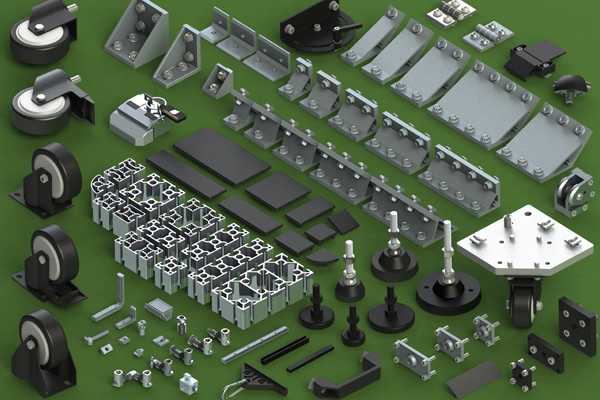
Every clause in this checklist attaches to a physical item. These are the entries where the packing specification, the inspection document and the tolerance class are stated per product rather than as a general promise.
Send us your drawing and we will tell you what is missing
We extrude, machine and finish aluminium profiles in-house. Send a drawing or a sample and we will come back with the tolerances, finish classes and packing specification we would hold — before you place an order.
Related reading
Twelve more engineering notes from this blog, picked for this article — plus every category below.
 Sourcing and ProcurementFOB vs CIF vs DAP vs DDP: Aluminium Profile Landed Cost
 Engineering DesignWho Owns the Extrusion Die After Tooling Is Paid?
 Engineering DesignCut-to-Length, Drilling and Tapping: What Fabrication Adds
 Quality and InspectionAluminium Extrusion Certificates and Standards Explained (EN 755, EN 12020, ISPM 15)
 Engineering DesignT-Slot Cross-Brand Compatibility: Bosch, Item and Generic
 Engineering DesignAluminium Extrusion Die Cost (2026): Price by Section Size
 Sourcing and ProcurementAluminium Profile Quote: What Changes the Number by Quantity
 Quality and InspectionGlobal Sourcing Excellence: Multi-Category OEM and ODM Manufacturing and Supply Chain Integration
 ApplicationsAluminium Partitions: The Three Performance Numbers Behind the Aesthetic
 Engineering DesignAluminum vs Steel Machine Frames: Choose by Deflection, Not by Strength
 Materials and Engineering6063-T5 Aluminium Profile: What the Designation Actually Guarantees
 Engineering DesignAluminum Corner Brackets for T-Slot Frames: How to Choose by Load Path, Not by Looks
