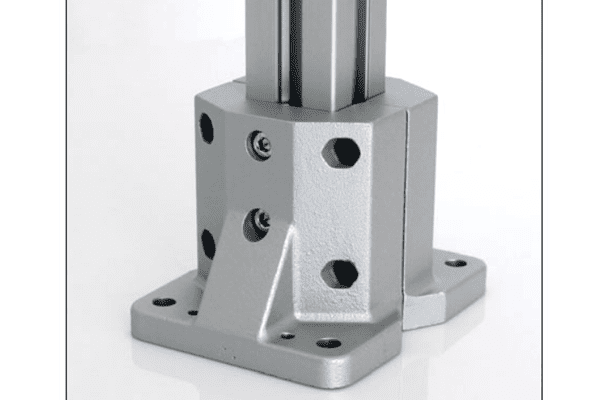
Aluminium Profile Base Plate
Drilled base plate bolted to the end of an aluminium profile leg to spread the leg load over a larger floor area and provide an anchorable footprint.
| Material | Aluminium 6063-T5 or steel |
|---|---|
| Alloy Grade | 6063-T5 (aluminium) or S235 (steel) |
| Temper | custom |
| Section Size | Fits 30x30 to 80x80 mm and rectangular sections |
| Slot | Hole pattern matched to M6-M12 profile end taps |
| Length | Plate 40x40 to 200x200 mm; 6-15 mm thick |
| Tolerance | ±0.2 mm on hole positions; ±0.15 mm on thickness |
| Surface | Anodised 10-15 µm, powder coated, or zinc-plated steel |
| MOQ | 200 |
| Lead Time | 15-25 days after deposit |
| Loading Port | Shanghai / Ningbo |
| Supply Ability | 100,000 pcs per month |
| Payment Terms | T/T 30% deposit + 70% before shipment | L/C at sight |
| Trade Terms | FOB | CIF | EXW |
| Certifications | ISO 9001:2015 | ISO 14001 | RoHS | REACH |
Floor elements · Load spreading
A base plate is a flat plate bolted to the end of a profile leg. Its engineering job is to turn a point load into a distributed load: the leg end bears on a small area, and the plate spreads that same force over a footprint several times larger, which drops the pressure on the floor by the same ratio.
That matters because floors have limits. A concrete slab, a screed, a raised access floor and a coated finish each have a bearing pressure they will take without deforming. A leg with no plate concentrates the whole frame load into the profile section, which on a heavy frame can exceed what the floor will tolerate. The plate is the cheapest way to stay under that limit — and it doubles as the surface the frame is anchored to when it has to be secured.
The arithmetic that decides the plate size
The plate size is set by the floor, not by the frame. Take the load on one leg, divide it by the bearing pressure the floor will accept, and you have the minimum plate area. Add the three-leg derating first, because uneven floors mean one leg on a four-leg frame usually carries little or nothing.
A worked example: a frame weighing 1,200 kg on four legs, with a machine on it. Design on three legs, so each leg carries 400 kg. A screed that will take 0.5 N/mm² needs about 8,000 mm² of plate, which is a 90 × 90 mm plate. The same load on a structural slab at 5 N/mm² needs only 800 mm², which any plate will provide. The floor is what drives the choice.
| Floor type | Safe bearing pressure | Plate for a 400 kg leg |
|---|---|---|
| Structural concrete slab | 5.0 N/mm² | 40 × 40 mm — any plate works |
| Screed over slab | 0.5 N/mm² | 90 × 90 mm |
| Raised access floor | 0.3 N/mm² | 115 × 115 mm or a spreader beam |
| Timber deck | 0.15 N/mm² | 165 × 165 mm or a load-spreading beam |
| Coated / epoxy finish | Check the coating | Plate plus a protective pad |
What the plate does beyond spreading load
- Thickness is about stiffness, not strength. A 6 mm plate and a 12 mm plate will both carry the load, but the thin one flexes and lets the leg settle. On a heavy frame the plate thickness is set by deflection, not by stress.
- Hole pattern follows the profile end taps. A 40 × 40 profile has four M8 end taps at a fixed spacing; the plate pattern matches them so no adaptor is needed.
- The plate must not overhang unsupported. A plate much larger than the leg only helps the floor if the plate itself does not bend — which brings the thickness requirement back.
Practical point: tell us the floor construction and the load on the heaviest leg, and we will size the plate for the floor rather than leave you to guess. Oversizing a plate costs a little material; undersizing it damages the floor, which costs a lot more to put right.
Finishing and installation
- Confirm the profile end taps The plate bolts into the M6, M8 or M10 end taps of the profile. Confirm the tap size and the spacing before the plate is drawn.
- Set the plate on the floor Fit the plate to the leg, then set the frame down. On an uneven floor, bed the plate on a thin grout or a shim pack before tightening, so the plate does not bridge a hollow.
- Tighten in a diagonal pattern Tighten the leg bolts diagonally in two passes. A single-pass pattern can tilt the plate and lift one corner off the floor.
- Anchor if required Drill and set the anchors after the frame is level and square. Anchor last, so the frame can still be adjusted.
Frequently asked questions
How do I know what size base plate I need?
From the floor, not the frame. Divide the load on the heaviest leg — using the three-leg rule — by the bearing pressure the floor will take, and size the plate to that area. Send us the floor build-up and we will do the calculation.
Does a base plate replace a levelling foot?
Only if it has an integral threaded boss. A plain base plate is fixed; where the frame also has to be levelled, use a plate with a boss or a separate levelling foot on top of the plate.
Can the plate be supplied undrilled?
Yes. Some customers drill on site for an unusual anchor layout. The plate is supplied flat and uncoated on the drilling faces so site drilling does not damage the finish.
What thickness is standard?
6 mm for light frames, 8 to 10 mm for general machine frames and 12 to 15 mm for heavy or anchored installations. Thickness is set by deflection under the leg load.
Will the plate mark a coated floor?
A bare aluminium or steel plate can mark a soft coating. Where the floor finish matters, specify a plate with a bonded rubber or nylon pad underneath.
Send the floor build-up and the leg load
Tell us the floor construction, the frame weight and the heaviest leg load. We will size the plate for the floor, confirm the hole pattern and return FOB pricing within one working day.
Request a QuoteRelated Products
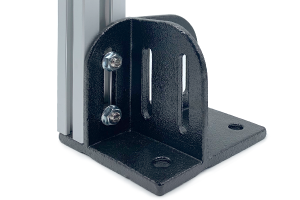 Base Plate 40×80 with Gasket
Rectangular base plate for 40 × 80 mm profiles with a full-perimeter EPDM gasket…
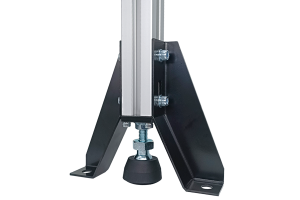 Base Angle Bracket
Gusseted angle bracket that braces the corner between a profile leg and the base,…
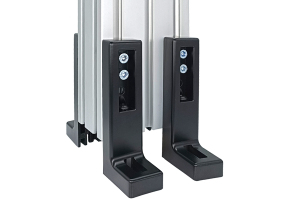 L-Base Corner Bracket
Unequal-leg L bracket that lets a profile leg stand on the floor, takes the…
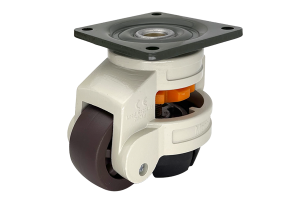 Levelling Castor
Combined castor and levelling foot: move the frame on the wheel, then wind the…
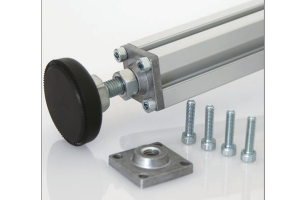 Foot Mounting Plate
Adapter plate bolted to the end of a profile leg that presents a standard…
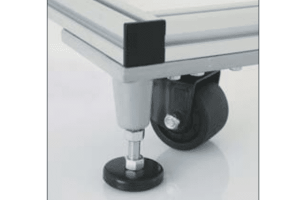 Foot and Castor Components
Spare and replacement components for foot and castor installations — pads, stems, locking nuts,…
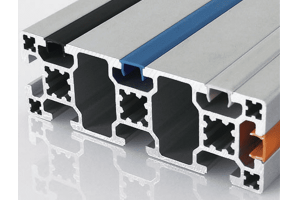 T-Slot Cover Profile
Snap-in T-slot cover strip that closes the open slot on aluminium framing profiles, giving…
 Aluminium Conduit End Cap
Snap-fit or screw-fixed end caps for aluminium conduit profiles from 40x40 to 80x200 mm,…
