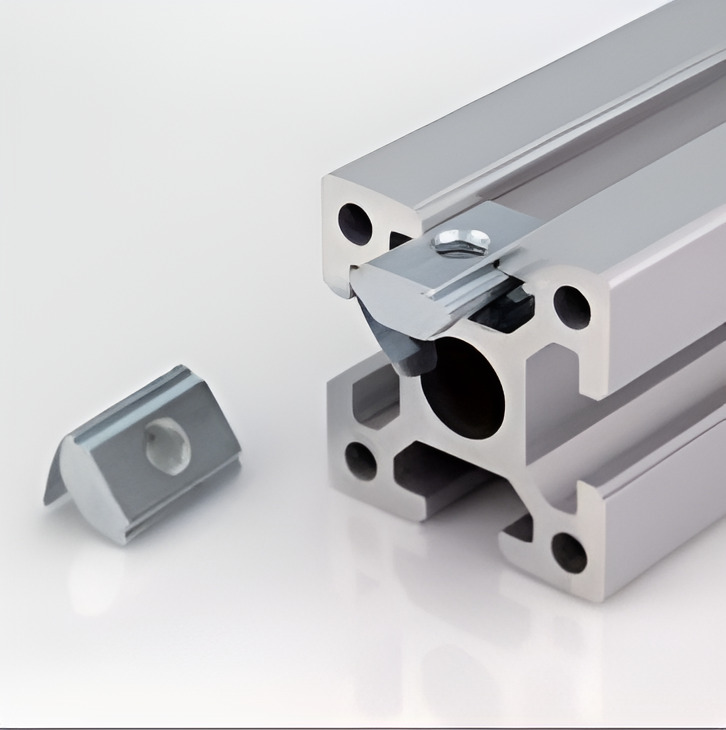
Subsequent Nut for 8 mm T-Slot Aluminium Profiles M5 M6 M8
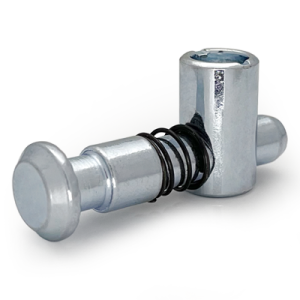
Subsequent T-slot nut for 30 and 40 series aluminium profiles. M5, M6 and M8 threads. Slides in from profile end face after assembly. Round or square body. Rescue fastener for retrofit.
| Material | Carbon steel |
|---|---|
| Alloy Grade | Carbon steel C1035, stainless A2 / A4 |
| Temper | custom |
| Section Size | n/a (piece part) |
| Slot | Fits 8 mm and 10 mm groove widths (30/40 series) |
| Length | n/a (piece part, sold per nut) |
| Tolerance | Thread 6H, body width +/-0.1 mm |
| Surface | Zinc plated / stainless steel A2 or A4 |
| MOQ | No MOQ for stock sizes; 500 pieces for custom sizes |
| Lead Time | Stocked sizes ship in 2 to 3 days; custom and stainless about 2 weeks |
| Loading Port | Shanghai, Ningbo, Qingdao |
| Supply Ability | Stocked carbon steel sizes in volume; stainless and custom sizes produced to order |
| Payment Terms | T/T 30 per cent deposit, balance against copy of B/L; L/C at sight for larger orders |
| Trade Terms | FOB, CIF, CFR, EXW |
| Certifications | RoHS, REACH, material certificate for stainless steel |
01What is a subsequent T-slot nut?
How does a subsequent nut differ from a pre-set nut?
A subsequent nut slides into the groove from the end face of an already-assembled profile. You do not need to disassemble the frame or plan the nut position in advance. A pre-set nut is placed from the slot mouth before the profiles are connected. Both types carry the same pull-out load once the bolt is tightened — the difference is entirely in the assembly sequence.
When is a subsequent nut the right choice?
When the frame is already built and you need to add a fitting, bracket or panel that was not planned in the original assembly. This happens in retrofit work, prototype iteration, and when an assembler forgets to place a pre-set nut at a joint. The subsequent nut is the rescue fastener — it lets you add a mounting point without taking the frame apart.
Is a subsequent nut as strong as a pre-set nut?
Yes. Once the bolt is tightened, both types seat the same way behind the groove lip. The pull-out force is determined by the nut body engagement and the groove wall strength, not by how the nut entered the slot. The load reduction myth comes from the fact that subsequent nuts are sometimes used in worn grooves (because the frame has been handled), which reduces the pull-out — but that is a groove condition issue, not a nut type issue.
02The rescue scenario: adding a fitting to a built frame
The typical use case for a subsequent nut is a frame that is already assembled and needs a new mounting point. The scenario plays out as follows: the frame is built, the brackets and panels are installed, and then someone discovers that a cable clip, a sensor or a support bracket needs to be added at a position where no nut was placed.
Without a subsequent nut, the options are to disassemble the joint (which may require removing panels and brackets to access the profile end), or to drill and tap a hole in the profile wall (which weakens the section). The subsequent nut lets you slide a nut in from the nearest open end of the profile, push it to the required position, and bolt on the fitting.
- Step 1: Identify the nearest open end of the profile. If the end is capped, remove the cap.
- Step 2: Slide the subsequent nut into the groove mouth at the end face. The nut body should enter smoothly — if it catches, check for burrs from the profile cut.
- Step 3: Push the nut along the groove to the target position. Use a probe or a bolt from the outside to locate it.
- Step 4: Insert the bolt through the fitting and thread it into the nut. Tighten to the recommended torque.
If the profile end is not accessible (e.g. it is inside a closed frame), you may need to use a pre-set nut with a spring tab instead, which can be pressed in from the slot mouth. But this requires a gap in the groove lip — the slot mouth is normally narrower than the nut body, so a pre-set nut cannot be retrofitted without a special tool.
03Subsequent vs pre-set: assembly time comparison
The time difference between subsequent and pre-set nuts depends on the number of fittings per profile and the distance the nut must slide. For a single nut on a short profile, the difference is negligible. For many nuts on a long profile, pre-set is significantly faster because all nuts are placed in one pass before assembly.
| Scenario | Pre-set time | Subsequent time | Difference |
|---|---|---|---|
| 1 nut, 300 mm profile | 5 sec | 8 sec | +3 sec |
| 4 nuts, 1000 mm profile | 12 sec | 35 sec | +23 sec |
| 8 nuts, 1200 mm profile | 20 sec | 70 sec | +50 sec |
| 1 nut retrofit (frame built) | n/a | 15 sec | rescue only |
| Forgotten nut (disassemble to add) | 120 sec | 15 sec | +105 sec saved |
The retrofit scenario is where the subsequent nut shines: adding a forgotten pre-set nut would require disassembling the joint (about 2 minutes), whereas sliding in a subsequent nut takes about 15 seconds. The 105 second saving per forgotten nut is why every assembly kit should include a few subsequent nuts as spares.
04Pull-out force: subsequent vs pre-set
There is a persistent belief that subsequent nuts are weaker than pre-set nuts. This is not true in terms of the nut design — both types have the same body width, the same engagement with the groove lip, and the same pull-out rating once bolted. The difference in measured pull-out comes from the groove condition, not the nut type.
Pre-set nuts are typically installed on new, clean grooves before the profile is handled. Subsequent nuts are often installed on grooves that have been through assembly, handling and possibly wear. The groove may have burrs from cutting, anodising build-up, or slight deformation from other bolts being tightened nearby. These conditions reduce the pull-out for subsequent nuts — but if the groove is in good condition, the pull-out is identical.
| Condition | Pre-set pull-out | Subsequent pull-out | Ratio |
|---|---|---|---|
| New, mill finish groove | 1.5 kN (M6) | 1.5 kN (M6) | 1.00 |
| New, anodised groove | 1.3 kN (M6) | 1.3 kN (M6) | 1.00 |
| Handled, minor burrs | 1.5 kN (M6) | 1.2 kN (M6) | 0.80 |
| Worn, several cycles | 1.3 kN (M6) | 1.0 kN (M6) | 0.77 |
| Damaged groove lip | 1.0 kN (M6) | 0.8 kN (M6) | 0.80 |
The ratio column shows that subsequent nuts are only weaker when the groove is in worse condition — which is correlated with subsequent nut use but not caused by it. If you install a subsequent nut in a clean, new groove, the pull-out is identical to a pre-set nut.
05Thread and series compatibility
Subsequent nuts are available for 30 and 40 series grooves. The 20 series groove (6 mm) is too narrow for a round body to slide smoothly from the end — the body catches on the slot mouth. For 20 series, pre-set nuts with spring tabs are the standard option.
| Series | Groove | Thread | Body type | Sliding force |
|---|---|---|---|---|
| 30 series | 8 mm | M6 | round | 0.5 to 1.5 N |
| 40 series | 10 mm | M8 | round | 0.5 to 1.5 N |
| 30 series | 8 mm | M5 (reducer) | round | 0.5 to 1.5 N |
| 40 series | 10 mm | M6 (reducer) | round | 0.5 to 1.5 N |
| 30 series | 8 mm | M6 | square | 1.5 to 3.0 N |
| 40 series | 10 mm | M8 | square | 1.5 to 3.0 N |
Square body subsequent nuts have higher sliding force because the flat sides drag on the groove walls. The benefit is that they do not rotate under torque — see the separate square nut page for details.
06When to choose subsequent over pre-set
Choose subsequent nuts
- Retrofit or modification of an existing frame
- Prototype where fitting positions are uncertain
- Frames where the profile ends are accessible for sliding
- Forgotten nut rescue — avoid disassembling the joint
- Frames with few fittings per profile (1 to 3)
Choose pre-set nuts
- Production runs of identical frames
- Frames with many fittings per profile (8+ per metre)
- Frames where profile ends will be capped or sealed
- Automated assembly where nut placement is jig-guided
- When you want maximum assembly speed at final bolt-up
07The maximum load question: does the nut type matter?
The short answer is no — once the bolt is tightened, the nut type does not affect the load capacity. The pull-out force is carried by the nut body bearing against the back of the groove lip, and both pre-set and subsequent nuts have the same body geometry. The only thing that matters is the groove condition.
However, there is a practical consideration: subsequent nuts are often used in retrofit applications where the groove may have been damaged by previous use. If the groove lip is rolled, cracked or worn, the pull-out will be reduced regardless of nut type. For structural joints in existing frames, inspect the groove before relying on a subsequent nut.
| Load type | Pre-set nut | Subsequent nut | Notes |
|---|---|---|---|
| Pull-out (axial) | 1.5 kN (M6) | 1.5 kN (M6) | same body geometry |
| Shear (lateral) | carried by bolt, not nut | same | nut type irrelevant |
| Vibration retention | 60 per cent | 60 per cent | neither has anti-rotation |
| Cyclic load | good if groove is new | good if groove is new | groove condition matters |
| Overload failure | groove lip deforms | groove lip deforms | same failure mode |
08Failure modes to design out
| What goes wrong | Why it happens | Design it out by |
|---|---|---|
| Nut cannot slide into groove | burr from profile cut at the end face blocks entry | deburr the end face before inserting; use a file or deburring tool |
| Nut sticks partway along groove | anodising build-up or corrosion in the groove | clean the groove with a brush; check width with a gauge |
| Nut rotates and thread position shifts | round body has no anti-rotation feature | use a square body subsequent nut for precision applications |
| Pull-out lower than expected | groove lip deformed by previous over-torque | inspect groove; use a new profile section if lip is damaged |
| Nut lost inside groove during positioning | no anti-drop tab; nut can slide past the target | use a bolt from outside to feel the nut position; or mark the groove |
09What to specify when ordering
Procurement checklist for subsequent T-slot nuts
- Confirm the profile series: 30 (8 mm groove) or 40 (10 mm). Subsequent nuts are not recommended for 20 series.
- Confirm the thread size: M6 or M8 for direct fit, M5 or M6 for reducer configurations.
- Confirm the body type: round for lowest friction, square for anti-rotation. Both are subsequent type (slide from end).
- Confirm the material: carbon steel zinc plated, or stainless steel A2 / A4.
- Confirm the quantity per size. Price breaks apply at 100, 500 and 1000 pieces.
- Keep a small stock of subsequent nuts as spares for retrofit work, even if the primary frame uses pre-set nuts.
10Questions buyers ask
Are subsequent nuts as strong as pre-set nuts?
Yes, once the bolt is tightened. Both types have the same body geometry and the same pull-out rating. The difference is only in how the nut enters the groove — pre-set from the mouth before assembly, subsequent from the end after assembly.
Can I use subsequent nuts on 20 series profiles?
Not recommended. The 6 mm groove is too narrow for a round body to slide smoothly from the end. For 20 series, use pre-set nuts with spring tabs.
How far can a subsequent nut slide along the groove?
As far as the groove is open and clean. On a 6 m profile, a nut can slide the full length if the groove is free of obstructions. In practice, sliding force increases with distance due to friction, so a probe or a bolt is used to push the nut to position.
Do subsequent nuts have an anti-drop tab?
No. Subsequent nuts are designed to slide freely along the groove, so they have no tab. Once the bolt is tightened, the clamping force holds the nut in position. For pre-assembly holding, use a pre-set nut with a spring tab instead.
What body type should I choose?
Round for lowest friction and fastest sliding, square for anti-rotation and positioning accuracy. For vibration resistance, use the anti-torsion winged type (see the separate anti-torsion nut page).
What is the lead time?
Stocked carbon steel sizes ship in 2 to 3 days. Stainless steel and custom sizes have a lead time of about 2 weeks.
What we need to quote subsequent T-slot nuts
- The profile series (30 or 40) and the groove width.
- The thread size: M6 or M8 standard, M5 or M6 reducer.
- The body type: round (standard) or square (anti-rotation).
- The material: carbon steel zinc plated, or stainless steel.
- The quantity per size, with total across all sizes.
- Whether you need matching bolts and at what lengths.
Send those six items and the quotation comes back with the unit price at each quantity break and the lead time for stocked and non-stocked sizes. Browse the full connecting elements range for related fasteners.
Need subsequent nuts for retrofit or rescue work?
Send the series, thread, body type, material and quantity. We quote stocked and custom sizes with matching bolts available.
Request a quotationRelated Products
 Anti-torsion Subsequent Nut for 8 mm T-Slot Aluminium Profiles
Anti-torsion subsequent T-slot nut with twin wings for 30 and 40 series aluminium profiles.…
 T-Bolt for 8 mm T-Slot Aluminium Profiles M6 M8 M10
T-bolt with integral T-head for 20, 30 and 40 series aluminium profiles. M5, M6,…
 Hole Reducer Bolt for 8 mm T-Slot Aluminium Profiles
Hole reducer bolt with stepped M8 to M6 thread for 30 and 40 series…
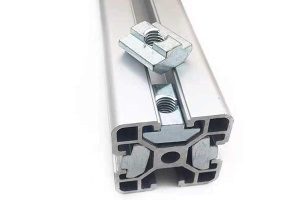 T-Nut and Bolt Set Aluminium Profile Fastener Kit M5 M6 M8 20-40 mm T-Slot Hardware
Matched T-nut, bolt and washer set for aluminium profile frames in M5, M6 and…
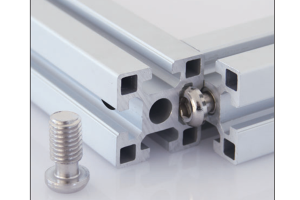 Screw Type Anchor Connector Aluminium Profile Hidden Joint Fastener 30 40 mm Series
Screw type anchor connector for aluminium profile giving a hidden joint with no visible…
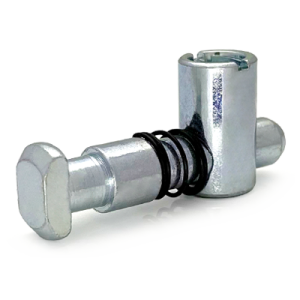 Miter Connector Model P 45 Degree Corner Joint for 30 and 40 mm Aluminium Profiles
Miter connector Model P, a hidden 45 degree corner joint for 30 and 40…
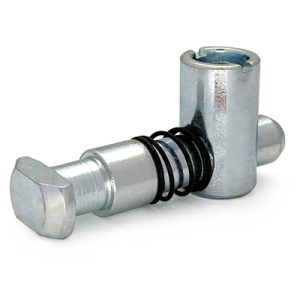 Standard Connector Model C Aluminium Profile Corner Joint 90 Degree 30 40 mm Series
Model C standard connector for a 90 degree corner in aluminium profile with both…
 Universal Connector Aluminium Profile Adjustable Angle Joint Fastener M8 30 40 mm
Universal connector for aluminium profile with an angle set during assembly. Suits diagonal braces,…
