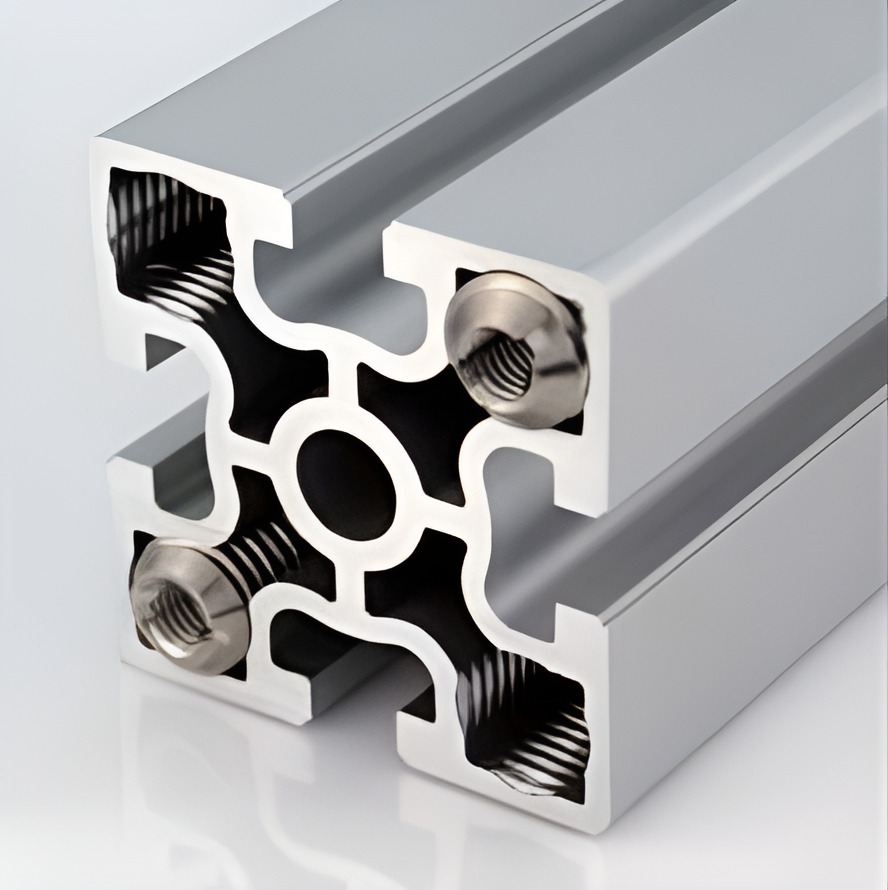
Hole Reducer Bolt for 8 mm T-Slot Aluminium Profiles
Hole reducer bolt with stepped M8 to M6 thread for 30 and 40 series aluminium profiles. Adapts M8 tapped centre bore to M6 component fitting. Single-piece, no separate bush.
| Material | Carbon steel |
|---|---|
| Alloy Grade | Carbon steel grade 10.9, stainless A2 / A4 |
| Temper | custom |
| Section Size | n/a (piece part) |
| Slot | Fits 30 series M8 bore and 40 series M8/M10 bore |
| Length | Total 32 mm: M8 15 mm + step 5 mm + M6 12 mm |
| Tolerance | Thread 6g, step diameter +/-0.05 mm, length +/-0.5 mm |
| Surface | Zinc plated / stainless steel A2 or A4 |
| MOQ | No MOQ for stock M8-to-M6; 500 pieces for custom combinations |
| Lead Time | Stocked M8-to-M6 ships in 2 to 3 days; custom about 2 weeks |
| Loading Port | Shanghai, Ningbo, Qingdao |
| Supply Ability | Stocked M8-to-M6 in volume; custom combinations produced to order |
| Payment Terms | T/T 30 per cent deposit, balance against copy of B/L; L/C at sight for larger orders |
| Trade Terms | FOB, CIF, CFR, EXW |
| Certifications | RoHS, REACH, bolt grade test report, material certificate for stainless steel |
01What is a hole reducer bolt?
What does a hole reducer bolt do?
It is a stepped bolt with two different thread diameters on one shank. The larger thread (M8) screws into the profile’s centre bore, which is tapped M8 on 30 and 40 series profiles. The smaller thread (M6) projects from the bore and accepts an M6 fitting — a bracket, a sensor mount, a panel or a levelling foot. It lets you use an M6 component on a profile that has an M8 tapped bore, without re-tapping or adding a separate reducer bush.
Why not just use an M8 bolt and a reducer bush?
You can, but the bush adds two parts (bush plus bolt) and a potential loosening point. The reducer bolt is one piece, with no bush to come loose under vibration. It is also shorter: the stepped section is only 5 mm long, versus a bush that adds 10 to 15 mm of stack height. In tight assemblies where the fitting must sit close to the profile face, the reducer bolt is the only option.
Can I get other thread combinations, like M10 to M6?
Yes, on request. The standard stocked combination is M8 to M6, because that is the most common adaptation: 40 series profiles have M8 tapped centre bores, and many fittings (sensor mounts, cylinder cleats) come with M6 threads. M10 to M8 and M10 to M6 are available as custom items.
02Why you need a reducer: the thread mismatch problem
Aluminium profiles in the 30 and 40 series have a centre bore that is tapped to a specific thread. The 30 series has a 9.5 mm bore tapped M8, and the 40 series has a 12 mm bore tapped M8 or M10. These bores are designed for through-bolting structural joints — tying two profiles together in tension.
The problem arises when you want to mount a component on the bore and the component has a different thread. Many sensor mounts, cylinder cleats and levelling feet have M6 threads, but the bore is M8. You have three options: re-tap the bore to M6 (which weakens the profile wall), use a separate reducer bush (which adds height and a loosening point), or use a hole reducer bolt that bridges the two threads in one piece.
| Option | Parts | Stack height | Vibration | Bore damage |
|---|---|---|---|---|
| Re-tap to M6 | 1 (M6 bolt) | lowest | standard | enlarges bore — irreversible |
| Reducer bush + M8 bolt | 3 (bush, bolt, nut) | 10-15 mm extra | bush can loosen | none |
| Hole reducer bolt | 1 (stepped bolt) | 5 mm extra | no bush to loosen | none |
| Through-bolt M8 + adapter nut | 2 (bolt, adapter) | 8 mm extra | adapter can loosen | none |
03Thread and series compatibility
The hole reducer bolt is designed for profiles with tapped centre bores. The 20 series does not have a tapped bore (the bore is too small at 6 mm for an M8 thread), so reducer bolts are not made for 20 series. The 30 and 40 series both have M8 bores, and the 40 series also has an M10 bore option.
| Series | Bore diameter | Bore thread | Reducer A (bore side) | Reducer B (component side) |
|---|---|---|---|---|
| 30 series | 9.5 mm | M8 x 1.0 | M8 | M6 |
| 40 series | 12.0 mm | M8 x 1.0 | M8 | M6 |
| 40 series | 12.0 mm | M10 x 1.5 (optional) | M10 | M8 |
| 40 series | 12.0 mm | M10 x 1.5 (optional) | M10 | M6 |
The M10 bore on 40 series is an optional configuration. Standard 40 series profiles have M8 tapped bores. If you need an M10 bore, specify it when ordering the profile — it cannot be re-tapped in the field because the wall is too thin for the larger thread.
04Series to bolt compatibility chart
The following chart shows which bolt thread can be used in each series, including direct fit (standard thread matching the bore) and reducer fit (using a reducer bolt to adapt to a smaller thread). This is the master reference for selecting fasteners for each profile series.
| Series | Bore thread | Direct fit bolt | Reducer bolt (to smaller) |
|---|---|---|---|
| 15 series | M4 | M4 | n/a (bore too small for reducer) |
| 20 series | M5 (untapped 6 mm) | M5 T-slot bolt | n/a (no centre bore) |
| 30 series | M8 x 1.0 | M8 through-bolt | M8 to M6 reducer bolt |
| 40 series | M8 x 1.0 | M8 through-bolt | M8 to M6 reducer bolt |
| 40 series | M10 x 1.5 (opt.) | M10 through-bolt | M10 to M8 / M10 to M6 reducer |
| 45 series | M10 x 1.5 | M10 through-bolt | M10 to M8 / M10 to M6 reducer |
The 15 and 20 series do not use reducer bolts because their centre bores are too small or untapped. For those series, T-slot nuts and T-bolts are the only fastening method.
05Stepped bolt design and dimensions
The reducer bolt is a single piece of steel with two thread sections and a stepped shoulder between them. The M8 thread is 15 mm long for full engagement in the aluminium bore. The stepped shoulder is 5 mm long, with a diameter of 9 mm — larger than the M6 thread (6 mm) but smaller than the M8 thread (8 mm), so it forms a natural transition between the two.
The M6 thread is 12 mm long, which is standard for M6 fitting engagement. The total bolt length is 32 mm, which means the M6 thread projects 12 mm from the profile face when the M8 thread is fully engaged in the bore.
| Dimension | Value | Note |
|---|---|---|
| M8 thread length | 15 mm | full engagement in aluminium bore |
| Step shoulder length | 5 mm | diameter 9 mm, transition zone |
| M6 thread length | 12 mm | standard M6 fitting engagement |
| Total bolt length | 32 mm | M8 fully engaged, M6 projects 12 mm |
| M8 thread pitch | 1.0 mm | standard coarse pitch |
| M6 thread pitch | 1.0 mm | standard coarse pitch |
| Bolt grade | 10.9 | alloy steel, quenched and tempered |
| Surface | zinc plated 5-8 micron | or stainless A2 |
06Torque limits and bore engagement
The torque limit on the M8 side is set by the aluminium bore wall strength. The M8 thread engages 15 mm of aluminium, which has a pull-out strength of about 3.5 kN on a 40 series profile. The maximum torque before the threads start to strip is about 25 Nm. Tightening beyond this will damage the bore and require re-tapping or scrapping the profile.
On the M6 side, the torque limit is set by the component fitting. Most M6 fittings are rated to 10 Nm. Tightening the M6 side beyond 10 Nm may damage the fitting thread or crack the fitting body. The reducer bolt itself is grade 10.9 and can withstand much higher torque, but the aluminium bore and the component fitting are the limiting factors.
| Side | Thread | Max torque | Limiting factor |
|---|---|---|---|
| Profile side (M8) | M8 x 1.0 | 25 Nm | aluminium bore thread (3.5 kN pull-out) |
| Component side (M6) | M6 x 1.0 | 10 Nm | component fitting rating |
| Bolt itself | grade 10.9 | 45 Nm | not the limiting factor |
07When to choose a reducer bolt vs alternatives
Choose a hole reducer bolt
- You have an M8 tapped bore but the component has an M6 thread
- You want a single-piece solution — no separate bush
- Stack height matters — the 5 mm step is shorter than a bush
- Vibration environment — no bush to come loose
- You want to preserve the bore thread — no re-tapping
Choose an alternative
- The component has an M8 thread — use a standard M8 through-bolt
- You need to go larger, not smaller (M6 bore to M8 component) — re-tap the bore or use a larger profile
- 20 series profile — no tapped bore; use T-slot nuts and bolts
- The bore is already damaged — re-tap to the next size up and use a standard bolt
- You need more than 25 Nm on the bore side — use a through-bolt with nuts on both ends
08Failure modes to design out
| What goes wrong | Why it happens | Design it out by |
|---|---|---|
| M8 thread strips in aluminium bore | torque exceeds 25 Nm or bore is worn from repeated use | limit torque to 20 Nm; use a thread locker on first installation |
| M6 thread does not fully engage component | component thread depth is less than 12 mm | check component thread depth before installing; use a shorter M6 section |
| Bolt loosens under vibration | no anti-loosening feature on the stepped bolt | apply medium thread locker to the M8 bore side before installation |
| Reducer bolt cannot be removed after tightening | M8 thread locked in bore by corrosion or thread locker | use low-strength thread locker if removal is expected; apply anti-seize |
| Step shoulder bottoms on profile face | bore is shallower than 15 mm (non-standard profile) | check bore depth before ordering; custom M8 thread length available |
09Terms used on this page
- Hole reducer bolt
- A stepped bolt with two thread diameters — larger on the profile side, smaller on the component side — that adapts a tapped bore to a smaller fitting thread.
- Centre bore
- The coaxial hole through the centre of a strut profile, tapped for through-bolting structural joints. 30 series: M8, 40 series: M8 or M10.
- Stepped shoulder
- The transition section between the two thread diameters on a reducer bolt. Its diameter is between the two thread sizes.
- Through-bolt
- A long bolt that passes through the centre bore and ties two profiles together in tension, independent of the T-slots.
- Bore engagement
- The length of thread contact between the bolt and the aluminium bore. 15 mm on a standard M8 bore gives about 3.5 kN pull-out.
- Pull-out force
- The axial force required to strip the threads out of the aluminium bore. Determined by the aluminium alloy and the engagement length.
10Questions buyers ask
What thread combinations are available?
The standard stocked combination is M8 to M6. Custom combinations available on request include M10 to M8 and M10 to M6 for 40 series profiles with the optional M10 bore.
Can I use a reducer bolt in a 20 series profile?
No. The 20 series does not have a tapped centre bore — the bore is 6 mm and untapped. For 20 series, use T-slot nuts and T-bolts in the groove.
How tight can I make the M8 side?
The maximum is 25 Nm. Tightening beyond this will strip the aluminium bore thread. For the first installation, 20 Nm is recommended with a medium thread locker.
Can I remove and re-use the reducer bolt?
Yes, but the aluminium bore thread wears with each cycle. After about 5 insertion cycles, the bore may need re-tapping. Apply anti-seize on the M8 thread if removal is expected.
Do you make stainless steel reducer bolts?
Yes, in A2 and A4 stainless steel. The torque limits are the same because the limiting factor is the aluminium bore, not the bolt.
Can you supply matching M6 fittings?
Yes. We supply a range of sensor mounts, cylinder cleats and levelling feet with M6 threads. Specify the fitting type and quantity when ordering.
What we need to quote hole reducer bolts
- The profile series (30 or 40) and the bore thread (M8 or M10).
- The component thread (M6 or M8) that the reducer bolt must accept.
- The bore depth if non-standard (standard is 15 mm for M8).
- The material: carbon steel grade 10.9, or stainless steel A2 or A4.
- The quantity per size. Price breaks apply at 100, 500 and 1000 pieces.
- Any custom thread combination (e.g. M10 to M8) and the engagement length required.
Send those six items and the quotation comes back with the unit price at each quantity break and the lead time for stocked and custom combinations. Browse the full connecting elements range for related fasteners.
Need reducer bolts for M8 bore to M6 fitting?
Send the series, bore thread, component thread, material and quantity. We quote stocked and custom combinations with lead times.
Request a quotationRelated Products
 T-Nut and Bolt Set Aluminium Profile Fastener Kit M5 M6 M8 20-40 mm T-Slot Hardware
Matched T-nut, bolt and washer set for aluminium profile frames in M5, M6 and…
 Screw Type Anchor Connector Aluminium Profile Hidden Joint Fastener 30 40 mm Series
Screw type anchor connector for aluminium profile giving a hidden joint with no visible…
 Miter Connector Model P 45 Degree Corner Joint for 30 and 40 mm Aluminium Profiles
Miter connector Model P, a hidden 45 degree corner joint for 30 and 40…
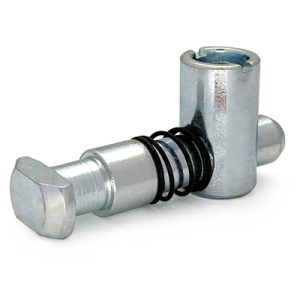 Standard Connector Model C Aluminium Profile Corner Joint 90 Degree 30 40 mm Series
Model C standard connector for a 90 degree corner in aluminium profile with both…
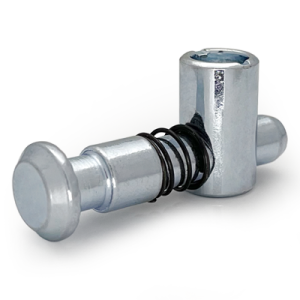 Universal Connector Aluminium Profile Adjustable Angle Joint Fastener M8 30 40 mm
Universal connector for aluminium profile with an angle set during assembly. Suits diagonal braces,…
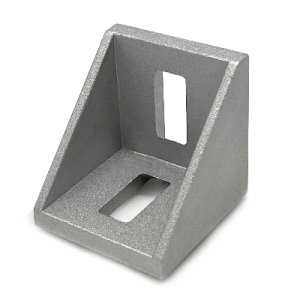 Die Cast Bracket for 20 to 50 mm Series Aluminium Profiles Corner
Die cast zinc alloy corner bracket for 20, 30, 40, 45 and 50 series…
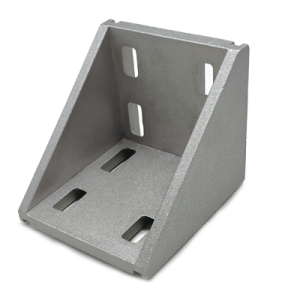 Heavy Duty Die Cast Corner Bracket for Aluminium Profile 60 80 90 100 mm Series
Heavy duty die cast corner bracket for large aluminium profile frames in 60, 80,…
 Rectangular Die Cast Corner Bracket Aluminium Profile 30×60 40×80 45×90 50×100 mm
Rectangular die cast corner bracket with unequal legs for aluminium profile frames built from…
