European Anodised Aluminium Specification: What Should a Purchase Order Contain?
A European buyer is rarely paying for the look of an anodised profile. They are paying for a finish whose thickness, sealing and certification can be written into a purchase order and measured on delivery. This is the standard that specification is built on, the six items it contains, and the three details that are usually left out of the sales version.
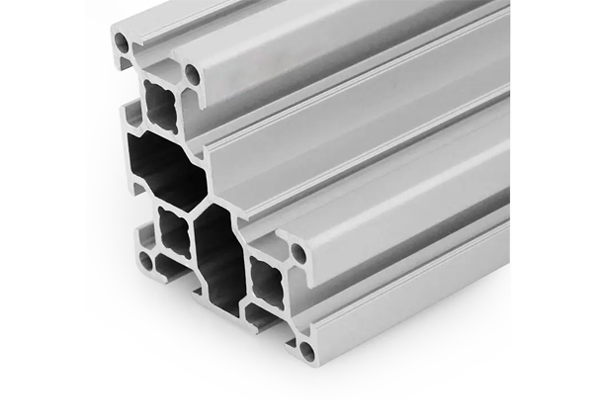
Short answer
A European buyer is not buying an appearance; they are buying evidence that can be written into a purchase order and checked on arrival, which in practice means a film thickness class in micrometres, a stated sealing route, and a third-party certification whose name and scope can be verified.
Three things are routinely missing from the sales version. Anodising changes dimensions, because about half of the coating thickness grows outward, so a 20 µm class adds roughly 10 µm to every coated surface. The regulatory question sits in the sealing chemistry rather than in the solvent claim, because two of the common sealing routes contain nickel. And tone consistency across batches is controlled by fixing the alloy, the line and a retained sample, not by asserting that it is consistent.
What does a European anodising specification actually include?
Direct Answer: Six items, and only one of them is about appearance. A European specification names the film thickness class, the sealing route, the alloy and temper, the third-party certification, an approved appearance sample, and the protection applied for transit.
The document a European specification is built on is EN ISO 7599, the international standard for specifying decorative and protective anodic oxidation coatings on aluminium. It is worth knowing what it actually does, because it is more specific than the sales language around anodising: it defines the thickness class system, it lists the test method for each characteristic, and it states in clause 4.2 exactly what the customer has to tell the anodiser before the work starts.
That clause is the specification. The customer has to give the reference to the standard, the intended service use of the part, the specification of the aluminium, which surfaces are significant, the surface preparation, the required coating thickness class, and whether the product is to be sealed and by which method. A purchase order that omits any of those is incomplete by the standard’s own definition, not by ours.
| Specification Item | Typical Wording in PO | Verification Method |
|---|---|---|
| Film thickness class | Anodised to EN ISO 7599, class AA 15 (15 µm minimum average) | Eddy-current gauge to ISO 2360, on the significant surface, and no reading within 5 mm of a contact mark or a sharp edge |
| Sealing route | Sealed, hydrothermal; or: nickel-free seal required | Supplier process record, plus ISO 3210 loss of mass or the ISO 2143 dye-spot test |
| Alloy and temper | EN AW-6063-T5; European drawings often name EN AW-6060 T66 | Mill certificate to EN 10204 3.1 |
| Certification | Anodised by a Qualanod-licensed plant | Scheme name, licence number, and the scope that licence covers |
| Appearance | Natural anodised, tone to approved limit sample | Visual comparison against the retained limit sample |
| Protection in transit | Interleaved and wrapped, no metal-to-metal contact | Inspection on receipt |
The thickness class is the item that changes most in practice. EN ISO 7599 grades coatings by the minimum average thickness and designates the class with the letters AA followed by the thickness grade: AA 5, AA 10, AA 15, AA 20 and AA 25. Class AA 15 means a minimum average of 15 µm, and the standard also fixes a floor for the lowest single reading, at 12 µm. The rule behind it is that no local thickness may fall below 80 per cent of the minimum average. A class is therefore a minimum with a stated tolerance rather than a target, and a buyer who writes AA 15 has to accept a local reading of 12 µm.
Certification is the piece European buyers value most and mention least. In anodising the recognised third-party scheme is Qualanod, the quality label for sulphuric-acid anodising founded in 1974 by the European aluminium and anodising associations, with around 219 licensed plants in 44 countries. It is a product certification scheme rather than a quality management system: it defines the coating requirements and has the plants audited against them. A buyer does not need a certificate number in the article text; they need to ask for the scheme name and the scope the licence covers, and to check that the scope matches the process being quoted.
The item that looks like a formality
Protection in transit. An anodised surface is harder than the base metal but it is thin, and it cannot be polished out the way a paint film can be touched up. Most appearance complaints on anodised deliveries are handling damage rather than coating failure, which is why the packaging requirement belongs in the finish specification and not in a separate conversation about logistics.
Does anodising change profile dimensions?
Direct Answer: Yes. The oxide forms partly within the original surface and partly outside it, and roughly half of the coating thickness is added to the outside. A 20 µm class therefore raises each coated surface by about 10 µm, which is 20 µm across a slot mouth or a hole.
It is often claimed that anodising preserves dimensions, and the useful version of that claim is narrower than it sounds. An anodic layer does not distort the section the way heat can, and it does not build up unevenly the way some coatings do. But it does grow from the surface, and the growth is split: the oxide occupies part of the metal it consumed and part of the space above it. The rule used across the industry is that a coated surface rises by about half the coating thickness, which means the dimensional consequence can be calculated from the class alone.
The direction of the change is what matters. The coating closes gaps rather than opening them, so a slot mouth narrows, a hole narrows, and a thread changes its pitch diameter. On a general framing profile that is negligible. On a slot mouth that has to accept a fastener, on a tapped hole, or on any feature with a stated fit, it is a real change and it has to be designed for.
There are two honest ways to handle it. Anodise first and verify the critical feature afterwards, accepting that the coating is present and the dimension includes it. Or mask the critical features and coat everything else, accepting the cost of masking. What does not work is to specify a tight dimensional tolerance and a coating class and to assume that the two are independent, because they are not.
Where this bites hardest
Threaded features and slot mouths. A thread that is coated changes pitch diameter, and a slot mouth that is coated narrows. If either is a functional interface, decide which of the two is the datum before the parts are made.
Is sealing chemistry the real compliance issue?
Direct Answer: Yes. For a European buyer the regulatory question is the sealing route, not the solvent claim. Two of the common sealing chemistries, hot nickel-acetate sealing and cold nickel-fluoride sealing, both contain nickel, and REACH Annex XVII entry 27 limits nickel release from articles in prolonged skin contact to 0.5 µg/cm² per week.
Anodising is usually described as environmentally favourable because it is a water-based inorganic process with no solvents. That is true, and it is not where the regulatory questions sit.
After anodising, the porous layer is sealed, and the purpose of sealing is to reduce the porosity and absorption capacity of the coating. The standard treats this as a real property rather than a finishing detail: EN ISO 7599 gives sealing its own clause and its own test methods, and those tests are surface-specific, measuring the resistance of the sealed surface to acid attack rather than the quality of the whole coating thickness. The referee method is the loss of mass after immersion in acid solution, with a maximum accepted loss variously set at 30 or 40 mg/dm², and there are also the dye-spot test and the admittance measurement.
The compliance point is the chemistry. A hot-water seal is the traditional route and contains no regulated metal. The two faster routes that dominate industrial production, nickel-acetate hot sealing and nickel-fluoride cold sealing, both put nickel into the process. Where the end use involves prolonged contact with skin, or where a customer’s own restricted-substances list covers nickel, a nickel-free or hot-water route has to be requested. Both routes are available, and the choice is not visible in the finished appearance, so it has to be stated.
Two smaller items belong in the same conversation. Restricted-substances rules limit lead, cadmium and hexavalent chromium, and in an aluminium context the relevant sources are impurities in the alloy and any chromate-based conversion treatment, which is a different process from an anodic layer. And the fasteners and accessories that ship with the profile carry their own finish: a frame can hold a compliant coating on the profile and a non-compliant one on the fixings, which is a common and avoidable audit finding.
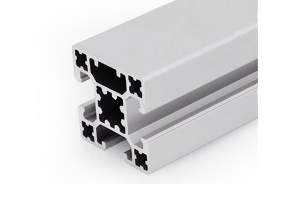
On our own supply the standard alloy and temper is EN AW-6063-T5, with 6061-T6 available on request, and the profiles are anodised in-house. The anodised aluminium profile range is quoted with the class and the sealing route as separate lines, so a nickel-free requirement does not have to be inferred from a colour name.
Why do anodised batches show tone variation?
Direct Answer: Because anodic tone depends on the alloy composition and on the anodising line and bath, not only on the process name. Two heats of the same alloy designation can produce slightly different tones, and two lines can differ even with the same alloy.
“Consistent across production runs” is a common claim, and it is worth understanding where the risk actually lies, because it is not where most buyers expect.
Anodic tone depends on the alloy composition and on the anodising process, including the bath chemistry and the thickness achieved. For a single machine frame this is invisible. For a facade, or for a multi-unit order where components will be seen side by side, it is a visible defect.
The controls are the ones a specification can actually impose. Fix the alloy and the temper and do not allow substitution, because a substitution that looks equivalent on a mill certificate is not equivalent in tone. Place multi-unit orders as one batch where the geometry permits, and require the same anodising line. And agree a retained appearance sample that both sides keep. EN ISO 7599 supports exactly this: where colour variation has to be limited, it states that the acceptable limits should be identified by agreed limit samples. The sample is the part that settles disputes, because tone is judged by comparison and a description cannot do the job.
Where tone is genuinely critical, the honest position is that a dyed or powder-coated finish gives more control over colour than a natural anodic finish, at the cost of the other properties that made anodising attractive. That trade belongs in the conversation rather than in a brochure.
What fails outdoors: alkali, chloride, abrasion?
Direct Answer: Three things fail, and a fourth is not a failure at all. Alkali such as concrete, mortar and alkaline cleaners etch the layer. Chloride from coastal and de-icing exposure pits it. Abrasion wears through it locally, because it is hard but thin. Salt spray ranks coatings against each other and does not predict years of service.
The layer is hard, integral and does not peel or chip the way a paint film can. It is also thin, and thinness is the whole story of how it fails. The protective window is a pH range of roughly 4 to 9; outside that range the oxide is attacked rather than protective.
Alkalis. Concrete, mortar and strongly alkaline cleaning products attack the layer, and the resulting etching and staining is often blamed on the coating rather than on the chemistry. On a building site, splash and run-off are a design case, not an accident.
Chlorides. Coastal and de-icing exposure pits the surface. A thicker class helps; it does not make the material immune, and a coastal installation needs an inspection interval rather than a no-maintenance assumption. Cut ends and drilled holes are the first places to look, because they expose uncoated metal.
Abrasion. The layer is much harder than the base metal and it is a fraction of a millimetre thick. On a surface that is repeatedly handled, dragged against other parts, or cleaned with an abrasive, it can be worn through locally, and once it is worn through the protection is gone.
Salt spray. ISO 9227 is a comparative test. It ranks one coating or supplier against another on a consistent basis, and it does not predict how many years a coating will last outdoors. Percentage claims about extended service life should be treated with the same caution.
What should I write into a European purchase order?
Direct Answer: Eight lines, and they are the same eight whether the order is one machine frame or a facade package: thickness class, sealing route, alloy and temper, certification, critical features after coating, appearance sample, restricted substances, and packaging.
RFQ checklist — anodised profiles for European delivery
- Film thickness class — the class in micrometres, for example AA 15, and where it will be measured.
- Sealing route — stated, and nickel-free if the end use or the customer’s list requires it.
- Alloy and temper — fixed, with substitution prohibited, because tone depends on it.
- Certification — the third-party scheme and the scope it covers, if the project requires one.
- Critical features after coating — which dimensions are the datum, and whether threads or slot mouths are masked.
- Appearance sample — retained by both parties, with an agreed tone range.
- Restricted substances — the customer’s list, applied to the profile and to the fasteners and accessories that ship with it.
- Packaging and handling — interleaving and wrapping, because most appearance complaints are transit damage.
Ask one question before ordering: is this finish being bought for appearance or for evidence. The answer decides whether you need a class, a certificate and a retained sample, or simply a colour. If it is evidence, send the requirement with the drawing — the quote form takes a thickness class, a sealing route and a restricted-substances list as separate fields.
Five ways an anodised order disappoints
Related on this site
- Anodised aluminium profiles— the range we anodise in-house, quoted by class and sealing route
- 45 series aluminium profiles— the metric section most European drawings are built around
- Anodised vs powder coated: a specification guide— the two routes compared properly
- Finishes: choose by failure mode— how each finish actually fails
- What a 6063-T5 designation guarantees— why the alloy has to be fixed for tone control
- Extrusion tolerance acceptance plan— writing tolerances a QC team can inspect
- Request a quote— send the thickness class, sealing route and any restricted-substances list
Terms used in this article
- EN ISO 7599
- The international standard for specifying decorative and protective anodic oxidation coatings on aluminium; it defines the AA thickness classes, the test methods for each property, and the information the customer must supply.
- AA class
- The thickness class designation used by EN ISO 7599: the letters AA followed by the minimum average thickness in micrometres, for example AA 15.
- Minimum local thickness
- The lowest single reading permitted on a coated surface. EN ISO 7599 sets it at 80 per cent of the minimum average, so 12 µm for class AA 15.
- Anodic growth
- Expansion of the surface during anodising: the oxide forms partly within and partly outside the original surface, so roughly half the coating thickness is added to the outside.
- Sealing
- The post-anodising step that closes the pores in the oxide layer and reduces its absorption capacity; the chemistry used is a regulatory consideration.
- Qualanod
- The European quality label for sulphuric-acid anodising; a product certification scheme that audits licensed plants, rather than a quality management system.
- Eddy-current measurement
- The non-destructive method used to measure coating thickness on aluminium, standardised as ISO 2360; readings are taken on the significant surface and not within 5 mm of contact marks or sharp edges.
- Retained limit sample
- A physical reference piece kept by both parties against which delivered tone is compared, which is the method EN ISO 7599 expects for limiting colour variation.
- Restricted substances
- Elements or compounds limited by regulation or by a customer’s own list, covering the alloy, the coating and the fasteners.
Questions buyers ask
Does anodising change the dimensions of a profile?
Yes. The oxide forms partly within and partly outside the original surface, so roughly half the coating thickness is added to the outside. A 20 µm class raises each coated surface by about 10 µm, which is 20 µm across a slot mouth or a hole, and the coating narrows those features rather than opening them.
Which thickness class should a European order specify?
Class AA 15 under EN ISO 7599 is the common architectural baseline, with a minimum average of 15 µm and a minimum local reading of 12 µm. Interior and decorative work can go lower; exterior, coastal and heavy-wear work should go up to AA 20 or AA 25. The class is a minimum with a tolerance, not a target.
Is nickel sealing a compliance problem?
It can be. Hot nickel-acetate sealing and cold nickel-fluoride sealing both put nickel into the process, and REACH Annex XVII entry 27 limits nickel release from articles in prolonged skin contact to 0.5 µg/cm² per week. A hot-water or nickel-free seal is available and has to be requested, because the choice is not visible in the finished appearance.
Why do two batches of the same profile look slightly different?
Anodic tone depends on the alloy composition and on the anodising line and bath. Two heats of the same designation, or two lines, can differ. Fix the alloy and temper, keep multi-unit orders in one batch, use one line, and agree a retained limit sample.
How long will an anodised coating last outdoors?
No test predicts that figure, and salt spray to ISO 9227 is a comparative ranking rather than a life estimate. Coastal and industrial exposure need a thicker class, sealed cut ends and an agreed inspection interval, and the protective window is a pH range of roughly 4 to 9.
Send the finish requirement, not just the colour
Tell us the thickness class, the sealing route, whether threads or slot mouths are critical, and any restricted-substances list that applies, and we will quote the finish as a specification with evidence.
Request a quoteGrownparts (Dalian Grownparts Industrial Co., Ltd.) — metric T-slot aluminium extrusion, precision cutting and anodising, Dalian, Liaoning, China. Engineering enquiries: [email protected].
Related reading
Twelve more engineering notes from this blog, picked for this article — plus every category below.
 Materials and EngineeringAnodised vs Powder Coated Aluminium Profiles: A Specification Guide for European Buyers
 Engineering DesignT-Slot Aluminium: The Slot Mouth Is the Interface Standard, Not the Series Name
 Engineering DesignWhat EN 755-9 Allows: Aluminium Extrusion Tolerances
 Engineering DesignESD Anti-Static Workbench Grounding: The Four Joints That Break the Path
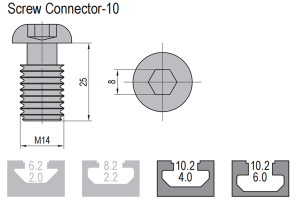 Engineering DesignAluminium Profile Anchor Pins: A Preloaded Joint, Not a Pin
 Materials and EngineeringAluminium Corrosion: Why a Salt Spray Number Is a Ranking, Not a Life
 Quality and InspectionAnodising vs Powder Coating: Thickness, Colour, Salt Spray
 Quality and InspectionGood vs Bad Aluminium Profiles: What Your Receiving Dock Can and Cannot Check
 ApplicationsAluminium Conveyor Frames: Why Belt Tracking Is a Geometry Problem
 ApplicationsWhere Modular Aluminium Framing Works: A Load-Tier Map Instead of an Industry List
 Engineering DesignHow to Choose the Right T-Slot Aluminium Profile Size
 ApplicationsAluminium Profile Display Boards: The Panel Is the Hard Part
