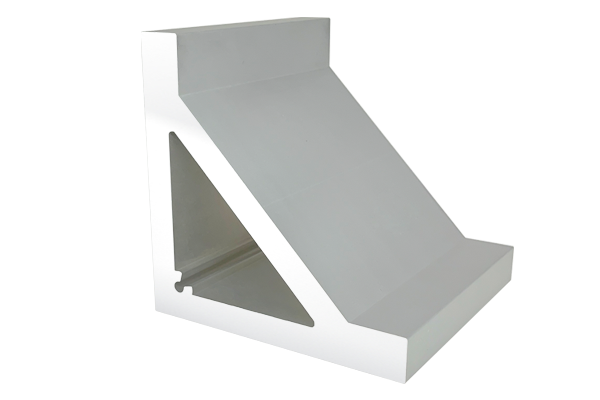
Aluminium Extrusion Manufacturing Factory: 20 to 100 mm Profiles
Aluminium extrusion profiles for Gujarat, India, in 6063-T5 and 6061-T6, with anodising film selected for chemical and coastal environments and SUS304 or SUS316 fasteners on request.
| Material | Aluminium |
|---|---|
| Alloy Grade | 6063-T5 |
| Temper | T5 |
| Section Size | Strut profiles and angles, 20 to 100 mm |
| Slot | 20 to 50 series strut slots; solid sections have no slot |
| Length | Saw cut to length, +/-0.5 mm, square or mitred |
| Tolerance | EN 755-9, wall +/-0.15 mm |
| Surface | Mill finish / clear anodised / black anodised / powder coated |
| MOQ | Made to order; mixed containers from several sections |
| Lead Time | 3 to 4 weeks to an Indian port plus inland haulage and clearance |
| Loading Port | Shenzhen, Shanghai, Ningbo |
| Supply Ability | In-house extrusion, saw cutting, anodising and export packing |
| Payment Terms | T/T 30 per cent deposit, balance against copy of bill of lading; L/C at sight on request |
| Trade Terms | FOB, CIF, CFR, DDP on request |
| Certifications | Mill certificate to EN 10204 3.1, RoHS and REACH declarations, anodising film report |
01Extrusion profiles for Gujarat industry
Gujarat buys aluminium extrusion for reasons that are specific to the state. The chemical and pharmaceutical belt along the Gulf of Khambhat and around Ankleshwar, Vapi and Dahej builds process skids, tank farms, plant rooms and clean utility frames. Those buyers are not asking for a decorative profile. They are asking for a profile that will still look and measure the same after five years in humid, saline, chemically loaded air.
That changes two specification lines and nothing else: the anodising film thickness, and the material of the fasteners. This page covers both, then the port and delivery side for Gujarat buyers ordering from China.
What anodising film thickness does a chemical plant need?
15 micron minimum, 20 micron preferred, for anything in a process area or within a few kilometres of the coast. A 10 micron film is appropriate for an indoor, air conditioned control room but not for a wet process bay. The film report should state the figure in micron.
Which fasteners should I use with anodised aluminium?
Stainless, SUS304 or SUS316. A galvanised or plain carbon steel bolt in an anodised aluminium frame is the classic bimetallic corrosion pair, and the joint will show white aluminium oxide and red rust within a couple of seasons. Stainless costs more per bolt and pays for itself in the first inspection.
02Anodising film choice for a Gujarat environment
The anodised film is aluminium oxide grown out of the surface. It is hard, it is chemically stable in a mildly acidic or alkaline atmosphere, and it is an electrical insulator. The thickness is the whole argument.
| Environment | Film | Expected life | Notes |
|---|---|---|---|
| Air conditioned control room | 10 micron | long, maintenance free | indoor, dry, no chemical load |
| General indoor plant room | 15 micron | 10 years plus | humid but not chemically loaded |
| Wet process bay | 20 micron | 10 years plus with washing | wash down periodically to remove salt |
| Coastal, within 5 km of the sea | 20 micron | reduced without washing | salt is the main attack; rinse helps |
| Direct acid or alkali splash | 20 micron plus a coated frame | film alone is not enough | use a powder coated or a non-metallic frame |
“Anodised” without a number is not a specification. Ask for the film thickness in micron and the report that proves it, and specify whether the surface is clear or dyed.
03Fasteners and bimetallic corrosion
Aluminium is anodic to steel, which means that when the two are in contact in the presence of moisture the aluminium is the one that corrodes. A carbon steel bolt in an aluminium frame sacrifices the frame. This is why the fastener choice is a real engineering decision, not a purchasing detail.
| Fastener material | With aluminium in a wet area | Verdict | Relative cost |
|---|---|---|---|
| Plain carbon steel | aluminium corrodes at the contact | do not use | lowest |
| Galvanised steel | zinc coat buys time, then the same problem | avoid in wet areas | low |
| SUS304 stainless | close enough in potential to be safe | recommended | mid |
| SUS316 stainless | safest in chloride and chemical areas | best for process bays | higher |
| Aluminium alloy bolt | same metal, no couple | good, but lower strength | mid |
- Isolate where you can: a nylon or PTFE washer between the aluminium and any steel part breaks the couple.
- Seal the joint: a bead of neutral cure silicone keeps the water out of the contact line.
- Do not use stainless in an acid splash zone without washing: even stainless pits in chlorides, and the pits then hold the salt.
04Section choice for plant frames
The sections most often ordered into Gujarat are the mid-weight strut profiles and the heavier angles, because process frames are usually carrying equipment and being moved by crane.
| Use in a Gujarat plant | Section | Why | Finish |
|---|---|---|---|
| Instrument and control panel frame | 20 series strut, 20 x 40 mm | light, adjustable, cable friendly | 15 micron clear anodised |
| Process skid frame | 40 series strut, 40 x 40 and 40 x 80 mm | carries pump and valve weight | 20 micron clear anodised |
| Tank farm walkway support | 50 series and heavy angle, 50 x 50 x 9 mm | structural, bolted | mill, painted, or 20 micron |
| Clean utility and HVAC frame | 30 series strut | light, clean, no pockets for dust | 15 to 20 micron |
| Heavy base and anchor angle | 100 x 100 x 15 mm | load into a concrete plinth | mill or 20 micron |
05Ports and delivery into Gujarat
Gujarat has three usable ports and the choice between them affects both the cost and the ease of clearance. The port matters less than the In-Bond or ex-bond decision and the customs broker you appoint.
| Port | Location | Character | Suits |
|---|---|---|---|
| Mundra | Kutch, north Gujarat | large container terminal, direct calls | container loads to Ahmedabad, Rajkot, north Gujarat |
| Pipavav | Saurashtra coast | container terminal | Saurashtra and south Gujarat |
| Kandla (Deendayal) | Kutch | older port, bulk and container | bulk and break bulk, Kutch industry |
| Nhava Sheva (JNPT) | Maharashtra | largest Indian container port | a fallback when Gujarat calls are full, then rail or road north |
- Deferred duty on ex-bond: a Gujarat plant registered as a manufacturer can often take a consignment ex-bond and defer the duty, which helps cash flow on a large order. Ask the broker.
- GST on import: the IGST is creditable against the output tax for a registered business, so it is a timing cost, not a lost cost.
- Inland haulage: Mundra to Ahmedabad is roughly a day by road; Mundra to Rajkot rather less.
- BIS: BIS marking applies to some aluminium products. Check the current scope with the broker before ordering; we supply the mill certificate and the dimensional report that a BIS application needs.
Local stock is the alternative. Gujarat has its own extruders, and for a small urgent quantity a local stockist is faster than any import. Where a Gujarat fabricator is short on a section, the usual answer is to buy locally for the urgent ten metres and import the balance at the better price.
06Importing from China versus buying local
Import from China
- A section size or finish not carried locally
- A large quantity where the unit price matters
- Consistent quality with a mill certificate for a process plant
- A full container can be made up from several sections
- The project schedule allows a 4 to 6 week total lead time
Buy from a Gujarat extruder
- You need a few metres this week
- The section is a standard local size
- The GST and freight arithmetic favours local on a small lot
- You need a stockist relationship for repeat small buys
- The project cannot wait for a sea shipment
The two are not exclusive. Most Gujarat buyers keep a local stockist for urgent and small quantities and import the bulk of a project from China, where the catalogue and the finish range are wider.
07Failure modes for a Gujarat installation
| What goes wrong | Why it happens | Design it out by |
|---|---|---|
| White corrosion bloom at bolt heads | carbon steel fasteners in wet air | switch to SUS304 or SUS316, or isolate with a nylon washer |
| Anodised surface dulls within a season | 10 micron film in a coastal or chemical area | specify 15 to 20 micron and rinse the frame periodically |
| Profile stains under a leaking process line | acid or alkali splash left on the anodised film | add a drip tray above, or use a powder coated frame |
| Frame cannot be earthed | anodising is an insulator | mask a bonding pad, or use a star washer through the film at one point |
| Clearance delay at the port | BIS scope or a documentation gap | confirm BIS scope with the broker and carry the mill certificate |
| Short of ten metres on site | the import is on the water and work has started | buy the urgent quantity locally and import the balance |
08What to check before you order for Gujarat
Procurement checklist for a Gujarat order
- Confirm the section, alloy and temper.
- Confirm the anodising film in micron for the environment (15 to 20 for process).
- Confirm the fastener specification: SUS304 or SUS316.
- Confirm clear or dyed anodising, and the colour if dyed.
- Confirm the port: Mundra, Pipavav, Kandla or Nhava Sheva.
- Confirm the trade term and who clears customs.
- Confirm the documents: mill certificate, dimensional report, film report.
- Confirm whether BIS marking applies to the product, with the broker.
09Questions Gujarat buyers ask
Do you supply aluminium extrusion to Gujarat?
Yes, in 6063-T5 and 6061-T6, mill or anodised, shipped to Mundra, Pipavav, Kandla or Nhava Sheva.
What anodising film should I specify for a chemical plant?
15 micron minimum and 20 micron preferred for a process area or a coastal site. 10 micron suits an air conditioned control room.
Which fasteners should I use with anodised aluminium?
SUS304 as standard and SUS316 in a chloride or chemical area. Carbon steel fasteners corrode the aluminium frame.
Can you make up a mixed container?
Yes. A container can be made up from several sections and finishes, packed as one shipment.
What is the lead time to Mundra?
About three to four weeks from order to arrival, plus inland haulage and clearance.
Does BIS marking apply?
BIS marking applies to some aluminium products. Confirm the current scope with your broker; we supply the mill certificate and the dimensional report a BIS application needs.
What we need to quote a Gujarat order
- The section, alloy and temper.
- The anodising film in micron, and clear or dyed.
- The fastener specification, if we are supplying fasteners.
- The quantity in metres or pieces.
- The port and the trade term.
- The documents you need: mill cert, dimensional report, film report.
- The end use, so we can advise on the film thickness.
Send those seven items and the quotation comes back with the material, cutting, anodising, packing and freight broken out separately. Browse the full aluminium profile catalogue and the angle profiles range.
Specifying aluminium extrusion for a Gujarat plant?
Send the section, the environment and the port. We will advise on the anodising film and the fasteners, and quote the material, finishing and freight separately.
Request a quotationRelated Products
 Aluminium Extrusion Manufacturers: 30 to 60 Series, 8 mm Slot
Aluminium extrusion profiles for Delhi NCR, India, in 6063-T5. Strut sections from 30 to…
 Aluminium Extrusion Profile Supply: 15 to 45 Series Kits, 8 mm Slot
Aluminium extrusion profile supply for Ahmedabad in 6063-T5: electrical cabinet frames with a designed…
 Aluminium Extrusion Profiles 20 to 45 Series for OEM, up to 100 mm
Aluminium extrusion profiles for Tamil Nadu in 6063-T5, with full batch traceability from heat…
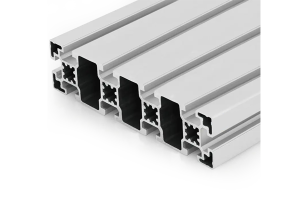 Aluminium Extrusion Manufacturer: 45 to 120 mm, 6063-T5
Aluminium extrusion for Chennai in 6063-T5, section supply with port logistics support through Chennai…
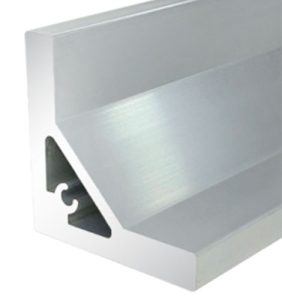 Aluminium Angle Profile 35 x 35 x 4 mm Panel Edge Trim for Guarding
35 x 35 x 4 mm aluminium angle profile with an inner corner slot,…
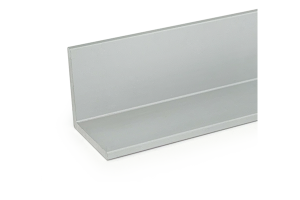 L Aluminium Angle 30 x 30 x 4 mm for Washdown Equipment Frames
30 x 30 x 4 mm L aluminium angle for washdown equipment frames. 6061-T6,…
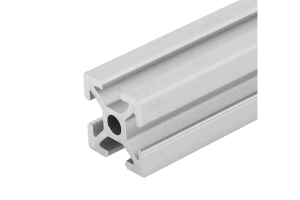 Aluminium 2020 Extrusion 20 x 20 mm for 3D Printer Frames
20 x 20 mm four slot aluminium 2020 extrusion for 3D printer and desktop…
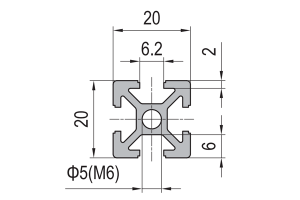 Aluminium 2020 Profile 20 x 20 mm for Laboratory Instrument Stands
20 x 20 mm aluminium 2020 profile for laboratory instrument stands. 0.62 kg/m, 6.2…
