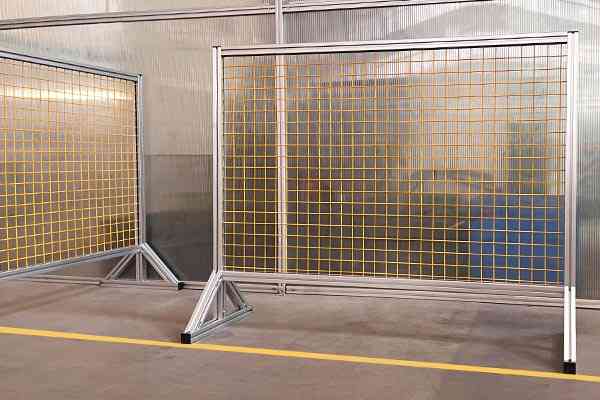
45 x 180 mm Aluminium Extrusion for Typhoon-Zone Frames
45 × 180 mm aluminium extrusion in 6063-T5 for outdoor frames in the Philippine typhoon belt. Ten 10.2 mm slots, 6.20 kg/m, AA20/AA25 for coastal sites, 3 m and 4 m LCL-friendly lengths—exported to Manila from Shanghai/Ningbo.
| Material | Aluminium |
|---|---|
| Alloy Grade | 6063-T5 |
| Temper | T5 |
| Section Size | 45 x 180 mm, ten slots |
| Slot | 10 x 10.2 mm groove, 10 mm mouth, 45 mm pitch, outermost pair 135 mm apart |
| Length | 6 m stock; 3 m and 4 m on request; cut to list to +/-0.5 mm |
| Tolerance | EN 755-9, wall +/-0.15 mm; straightness 1.5 mm per metre; twist 2 degrees |
| Surface | Mill finish, or anodised AA15 / AA20 / AA25 to EN ISO 7599; clear or black |
| MOQ | 150 m |
| Lead Time | 22 to 32 days after deposit for mill finish; about one week longer for anodising, plus ocean freight to Manila |
| Loading Port | Shanghai / Ningbo |
| Supply Ability | 600 t per month extrusion with in-house anodising |
| Payment Terms | T/T 30% deposit + 70% before shipment | L/C at sight |
| Trade Terms | FOB | CIF | EXW |
| Certifications | Mill certificate per heat, coating thickness report per lot, EN ISO 9227 salt spray on request, RoHS and REACH declarations |
Philippine buyers specifying outdoor canopies, hoardings, yard enclosures, shade and light solar frames in the typhoon belt need a 45 × 180 mm section that can take wind load through its strong axis and survive salt air. GrownParts extrudes and finishes this section in China and exports to Manila and other Philippine ports—we do not operate a local mill. The profile is rarely the first thing that fails; the base plate, anchors and post-to-rail joints are.
GrownParts exports GP-SP-45180-10S-PH (6063-T5, ~6.20 kg/m, ten 10.2 mm slots on a 45 mm pitch) from Shanghai / Ningbo, cut to length with AA20 or AA25 anodising for coastal sites. We are not a Philippine mill. This page is the high-wind structural landing for buyers who searched local extrusion language while specifying fastening and coating for NSCP wind zones.
Wind pressure first—then pick the axis of the 45 × 180
Start from velocity pressure, not from a catalogue page. A common engineering form is qw = 0.613 × V² with qw in N/m² and V in m/s. A 250 km/h gust (~69 m/s) is already on the order of 3 kPa before shape factors, exposure and importance multipliers from the National Structural Code of the Philippines (NSCP) are applied. Your frame sketch must state zone, height, and whether the face is open or clad—otherwise a “strong” extrusion quote is theatre.
Orient the 180 mm depth to resist the governing wind moment. About the strong axis this section offers roughly 400 cm⁴ class stiffness at 6.20 kg/m; the weak axis is far softer (order-of-magnitude difference). Ten slots on a 45 mm pitch help you land knee braces, base brackets and cladding rails on T-nuts, but slots do not create moment capacity—bolted connection design does.
What fails first: section, connection, or anchor?
Field failures after Philippine typhoons cluster in three places. Rank them before you argue about alloy temper.
- Anchor / base plate: undersized chemical anchors in cracked concrete, missing edge distance, or a steel base that yields while the post is still elastic.
- Post-to-rail joint: single-shear T-nut groups without a gusset; slot walls bearing into oval holes after cyclic load.
- Member buckling / excessive sway: only after (1) and (2) are competent does the 45 × 180 span table matter.
Tell us whether the base is concrete or steel and the post height. Those two answers change advice more than swapping to a heavier catalogue number. For importer packing and dock QC topics (different intent), see Mumbai arrival inspection; for process choice extrusion vs casting, see Rajkot process decision.
Coastal anodising and length logistics into Manila
Outdoor use: AA20 minimum. Within about 1 km of shore or in salt-spray yards: AA25 sealed to EN ISO 7599, clear or black. Mill finish outdoors in the typhoon belt is a maintenance decision, not a saving. We can supply EN ISO 9227 salt-spray data on request; coating thickness is checked by eddy current to ISO 2360.
Length reality: a 6 m stick of 6.20 kg/m is ~37 kg. Unsupported LCL stowage bows the section over a multi-week Pacific / South China Sea passage. Prefer 3 m and 4 m lengths for LCL into Manila, timber cradled, interleaved, ends protected; 6 m when the container and cradle plan support it end-to-end. Cut to list ±0.5 mm with deburred ends; holes and slots from drawing. Lead time typically 22–32 days after deposit for mill finish, about a week longer for anodising, plus ocean freight to Manila. MOQ 150 m. Trade terms FOB / CIF / EXW.
| Design input you must freeze | Why it changes the supply |
|---|---|
| NSCP wind zone + basic wind speed | Sets pressure; drives span and brace layout |
| Post height and rail span | Chooses strong-axis orientation and cut list |
| Base: concrete vs steel | Changes anchor hardware advice and hole pattern |
| Distance to shore | AA20 vs AA25 (and seal scrutiny) |
| LCL vs FCL, 3/4/6 m mix | Cradle pitch and straightness on arrival |
Acceptance after a typhoon—and at goods-in
- Straightness within 1.5 mm/m on the 180 mm face; twist ≤ 2°
- Coating thickness at AA class; no through-film corrosion at cut ends after seal
- Holes match drawing; no ovalled slot mouths at brace points
- After a storm: frame plumb, anchors tight, no cracked base concrete—member may be reusable
- Permanent set after overload (not spring-back)
- Torn slot walls at T-nut groups
- AA15 on a coastal PO that called AA25
- 6 m LCL arrived banana-shaped because cradle centres were only at the ends
Section properties (same physical die family)
Envelope 45 × 180 mm; ten grooves ~10 × 10.2 mm, 10 mm mouth, 45 mm pitch, outermost pair 135 mm apart; 6063-T5; EN 755-9 wall ±0.15 mm; ~6.20 kg/m; mill certificate per heat; RoHS / REACH on request. Process capability includes cut, deburr, drill, tap, notch, anodise, seal, and timber-cradled packing for LCL.
RFQ for Philippine high-wind frames
Send the wind zone and the frame sketch—we reply with a span check, not only a peso-per-metre number.
- NSCP zone / basic wind speed and site exposure notes
- Post height, rail spans, clad vs open
- Base type (concrete / steel) and preferred anchor concept
- AA20 or AA25; clear or black; metres and 3/4/6 m split
- Hole / notch drawing (PDF, DWG, DXF or STEP—or a dimensioned hand sketch)
- Manila (or other) port and FOB vs CIF
How to brief a structural engineer using this section
Hand the engineer three packages: (1) NSCP wind inputs and a marked-up elevation showing post height and rail spans; (2) the 45 × 180 property set—mass 6.20 kg/m, strong-axis stiffness on the order of 400 cm⁴, ten slots at 45 mm pitch; (3) connection assumptions—T-nut grade, gusset yes/no, base plate thickness. Without (3), a span check is fiction. GrownParts can cut, drill and anodise to that package; we do not replace the licensed engineer of record for Philippine building permits.
We state manufacturing origin clearly: China extrusion and finishing, exported to Philippine ports. Coastal durability and logistics facts on this page—AA class, LCL-friendly lengths, Manila freight—are written for the buyer, not as a local-plant claim.
Supply package typically includes mill certificate per heat, coating thickness report per lot, salt-spray on request, RoHS/REACH declarations, timber-cradled packing for LCL (or plywood case for cut lengths under 3 m), payment T/T 30/70 or L/C, and samples on request.
Typhoon-belt FAQ
Is 6063-T5 strong enough for typhoon canopies?
For many canopy and hoarding spans yes—if orientation, braces and anchors are designed. The alloy is not a substitute for connection engineering.
Why do 6 m bars arrive bent?
Self-weight over long sea passages with end-only support. Use shorter lengths or cradle at ~1.5 m centres.
After a typhoon, is the frame scrap?
Not automatically. Check permanent set, slot damage and anchors. Many frames are repairable if the base survived.
Do you manufacture inside the Philippines?
No. China extrusion and finish, export to Philippine ports. We do not manufacture inside the Philippines.
Designing for a named wind zone? Attach the sketch, zone and base type. We quote GP-SP-45180-10S-PH with coating class and a cradle plan that keeps the strong axis usable on arrival.
Related Products
 Aluminium Profile for Sale: 45 x 60 mm Cut to Length, No Minimum Run
45 x 60 mm aluminium profile in 6063-T5, sold by the length or by…
 20 x 80 mm Narrow Aluminium Profile for Textile and Diamond Machinery
20 x 80 mm ten slot narrow aluminium profile in 6063-T5 for machinery where…
 45 x 180 mm Aluminium Extrusion: Arrival Inspection for Importers
45 × 180 mm aluminium extrusion in 6063-T5 for importers clearing at Nhava Sheva.…
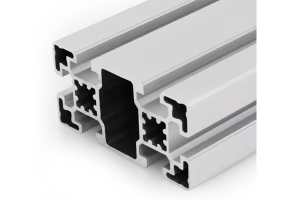 45 x 90 mm Aluminium Profile for Pharma Cleanroom Framing
45 x 90 mm aluminium extrusion in 6063-T5 for GMP cleanroom framing. Six 10.2…
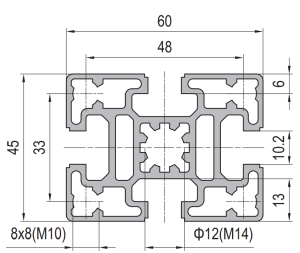 45 x 60 mm Aluminium Profile for Textile Machine Frames
45 x 60 mm four-slot aluminium extrusion in 6063-T5 for loom, winder and conveyor…
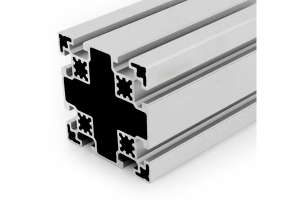 Aluminium Company Profile: How a 90 x 90 mm Section Is Made and Inspected
90 x 90 mm eight-slot aluminium extrusion in 6063-T5 for machine bases, robot pedestals…
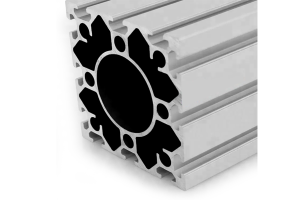 120 x 120 mm Aluminium Profile for Automotive Line Tooling
120 x 120 mm twelve-slot aluminium extrusion in 6063-T5 for welding jigs, assembly fixtures…
 45 x 90 mm Aluminium Profile: Stock Planning for Distributors
45 x 90 mm six-slot aluminium extrusion in 6063-T5 for distributor stock. 4.10 kg/m,…
