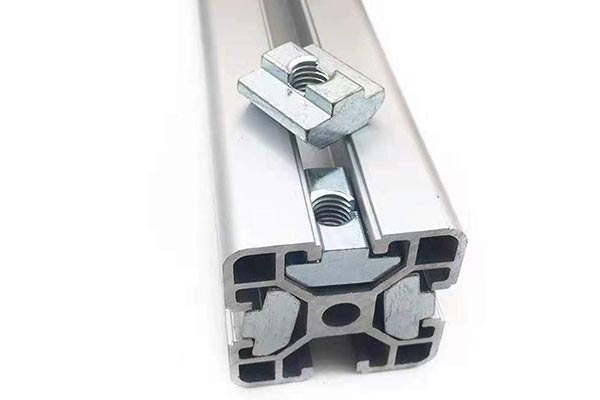
T-Nut and Bolt Set Aluminium Profile Fastener Kit M5 M6 M8 20-40 mm T-Slot Hardware
Matched T-nut, bolt and washer set for aluminium profile frames in M5, M6 and M8. Assorted for prototypes or packed by size, by member or by joint for production builds.
| Material | Steel |
|---|---|
| Alloy Grade | Zinc-plated steel / stainless steel |
| Temper | custom |
| Section Size | Suits 20 / 30 / 40 series grooves |
| Slot | M5 (20 series) / M6 (30 series) / M8 (40 series) |
| Length | Bolt lengths 8 / 10 / 12 / 16 / 20 mm |
| Tolerance | DIN 934 thread class 6H nut, 6g bolt |
| Surface | Zinc plated / stainless |
| MOQ | 5000 |
| Lead Time | 12-20 days after deposit |
| Loading Port | Shanghai / Ningbo |
| Supply Ability | 3,000,000 sets per month |
| Payment Terms | T/T 30% deposit + 70% before shipment | L/C at sight |
| Trade Terms | FOB | CIF | EXW |
| Certifications | ISO 9001:2015 | RoHS | REACH |
Fastening · Nut and bolt set
A T-nut and bolt set is a matched kit of the parts one frame consumes: T-slot nuts, bolts and washers in the sizes the frame uses. The nut drops into the groove, the bolt passes through the component and into the nut, and tightening pulls the nut against the groove lips so the joint locks. Supplied as a set, the three parts are already known to fit each other, which is not always true when they are bought separately.
The reason to buy a set rather than loose boxes is the way frame projects fail. They rarely fail because a fastener is too weak. They fail because the assembler reaches for a nut that is one series out, or because the count came up short on the last bay and the frame sits unfinished while a small order is placed. Both are avoided by sizing the kit from the joint count on the drawing instead of from the length of profile ordered.
Fastener count is a joint count, not a length
The most common way to size a fastener order is to take the total metres of profile and multiply by a number that felt right last time. It is quick and it is wrong, because fastener count is set by how many times two members meet, not by how long they are. Two frames with the same total profile length can need very different numbers of fasteners depending on whether they are a dense grid or a few long spans.
The reliable method is to walk the drawing and count joints. Every place where two members meet at a corner or a T needs its own fasteners, and every place where a panel, foot, caster or hinge lands on a member needs more. That joint count, multiplied by the fasteners per joint, is the number to order against.
| Frame | Profile used | Joints | Fasteners at 2 per joint | Fasteners at 4 per joint |
|---|---|---|---|---|
| Guard enclosure, 1,200 x 800 x 600 mm | 14 m | 16 | 32 | 64 |
| Workbench, 1,500 x 750 x 900 mm | 11 m | 14 | 28 | 56 |
| Trolley, 800 x 500 x 1,000 mm | 9 m | 12 | 24 | 48 |
| Machine base, 2,000 x 1,000 mm | 19 m | 22 | 44 | 88 |
| Display frame, 2,400 x 2,000 mm | 24 m | 20 | 40 | 80 |
Counting joints from the drawing
- Mark every intersection first Go over the drawing and put a dot on every place two members meet. Corners, Ts and crosses all count. Do this before thinking about fasteners, so the count is not coloured by how the frame will be assembled.
- Classify each intersection by how many faces are loaded A simple corner carries load in one plane and usually takes two fasteners. A corner that also carries a panel or a caster takes four or more. Write the number next to each dot rather than trying to keep it in your head.
- Add the non-structural fixings Panels, infill, feet, casters, hinges, handles and cable clips each add fasteners that do not appear as frame joints. These are the items most often left out of a first count, and they are usually a third of the total.
- Apply the allowance and round up to the pack size Add 15 per cent, then round up to the next full pack. The allowance covers dropped parts, a stripped nut, a late change on site and the spare that should be left in each member.
Why the allowance is 15 per cent
A frame is assembled by hand, and hand assembly loses parts. Nuts are dropped into machine bases and never recovered, bolts are started into the wrong hole and cross-threaded, and washers go missing between the box and the joint. None of that is unusual and none of it is predictable joint by joint.
Fifteen per cent covers the ordinary losses on a frame of a few dozen joints, and it is cheap next to the alternative. The cost of one extra box of nuts is trivial against a stopped assembly line waiting for a delivery of a part that costs a few cents. On a first build of a new design, allow 20 per cent, because a new design always finds a joint that was not on the drawing.
Bulk box or pre-sorted kit
| Option | What arrives | Best for | Watch out for |
|---|---|---|---|
| Bulk box by size | One size per box, counted | Repeat builds with a known consumption | Assembly time lost sorting on site |
| Assorted kit | Mixed sizes in one pack | Prototypes and one-off frames | The size you need runs out first |
| Per-member kit | Fasteners bagged per member | Large frames and sub-assembly work | Needs the drawing split before ordering |
| Per-joint kit | Fasteners bagged per joint | Training builds and high-mix production | Highest packing cost per piece |
Series matters more than thread size. An M8 nut for a 40 series groove will not fit a 30 series groove even though the thread is the same. Always specify the series as well as the thread when ordering a kit, because a box of the right thread in the wrong series is a box of scrap.
Frequently asked questions
How many fasteners do I need for a frame?
Count the joints on the drawing, multiply by the fasteners per joint, add the non-structural fixings, then add 15 per cent and round up to the pack size. A typical guard enclosure of about 14 m of profile has 16 joints and needs 32 to 64 fasteners depending on how many are loaded.
Why not just order by the metre of profile?
Because fastener count depends on how often members meet, not on how long they are. Two frames of the same profile length can differ by a factor of two in fastener count depending on whether they are a dense grid or a few long spans.
What is in a T-nut and bolt set?
T-slot nuts, the matching bolts and plain washers. Kits can be assorted across sizes for one-off work, or packed by size, by member or by joint for production builds. Tell us which and we will pack to it.
Can I mix M5, M6 and M8 in one kit?
Yes, and for a prototype that is usually the right choice. For a production build it is not, because mixed sizes mean the assembler has to check every part before fitting it, and that is where the wrong-size error comes from.
Do you supply stainless steel fasteners?
Yes. Zinc-plated steel is standard and stainless steel is available for outdoor, washdown and food area frames. Specify it at enquiry, because stainless affects both the price and the lead time.
Send the frame drawing and we will size the kit
Send the drawing or a bill of materials and we will count the joints, size the kit with the right allowance, quote the bulk price and supply a sample kit for a trial build.
Request a QuoteRelated Products
 Screw Type Anchor Connector Aluminium Profile Hidden Joint Fastener 30 40 mm Series
Screw type anchor connector for aluminium profile giving a hidden joint with no visible…
 Miter Connector Model P 45 Degree Corner Joint for 30 and 40 mm Aluminium Profiles
Miter connector Model P, a hidden 45 degree corner joint for 30 and 40…
 Standard Connector Model C Aluminium Profile Corner Joint 90 Degree 30 40 mm Series
Model C standard connector for a 90 degree corner in aluminium profile with both…
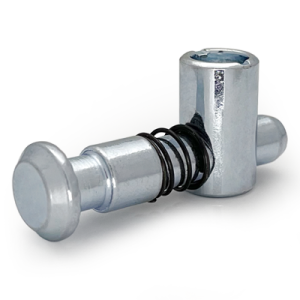 Universal Connector Aluminium Profile Adjustable Angle Joint Fastener M8 30 40 mm
Universal connector for aluminium profile with an angle set during assembly. Suits diagonal braces,…
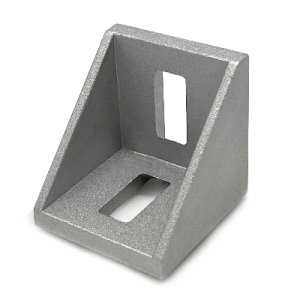 Die Cast Bracket for 20 to 50 mm Series Aluminium Profiles Corner
Die cast zinc alloy corner bracket for 20, 30, 40, 45 and 50 series…
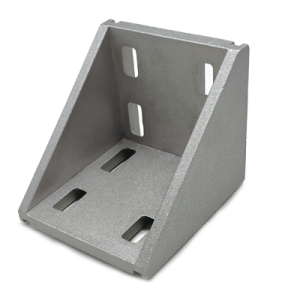 Heavy Duty Die Cast Corner Bracket for Aluminium Profile 60 80 90 100 mm Series
Heavy duty die cast corner bracket for large aluminium profile frames in 60, 80,…
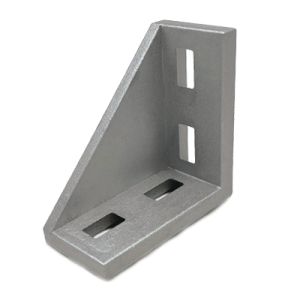 Rectangular Die Cast Corner Bracket Aluminium Profile 30×60 40×80 45×90 50×100 mm
Rectangular die cast corner bracket with unequal legs for aluminium profile frames built from…
 Assembly Line Workstation Aluminium Profile Frame 40×40 mm T-Slot Workbench Structure
A re-configurable assembly workstation frame in 40 x 40 mm T-slot aluminium profile with…
