Concealed joints

Anchor Connectors — Concealed Joints for Aluminium Profiles

An anchor connector is the only common way to build an aluminium frame corner with nothing visible from the outside. The connector sits entirely inside the slot and is tightened with a single screw, leaving both outer faces clean. This page covers how it works, why one profile always needs an end tap, and the failure modes that make people give up on concealed joints.

M6 / M8standard thread sizes2 piecesconnector plus end tapFully hiddenoutside faces stay cleanRe-openablewith a hex key

14 items

Products in this category

Anti-torsion Subsequent Nut for 8 mm T-Slot Aluminium Profiles

Anti-torsion Subsequent Nut for 8 mm T-Slot Aluminium Profiles

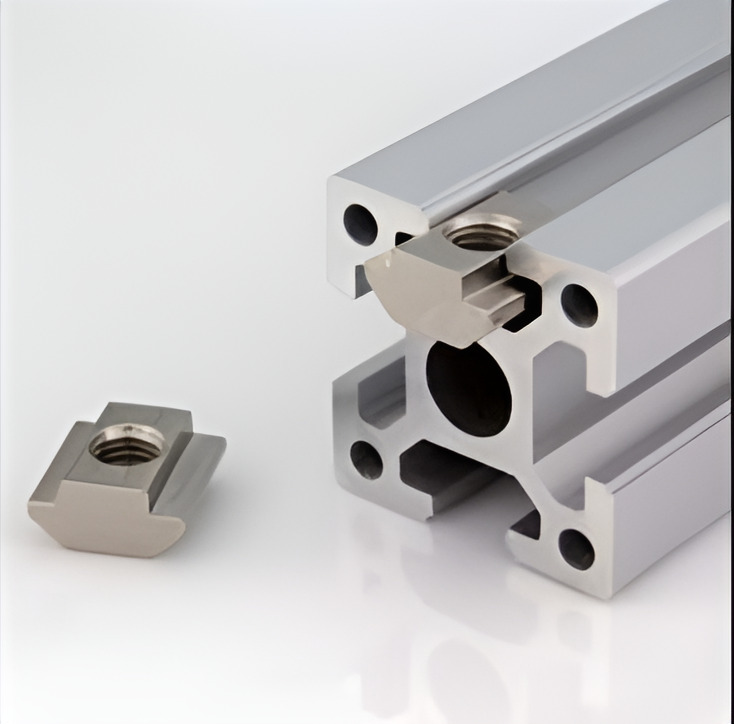
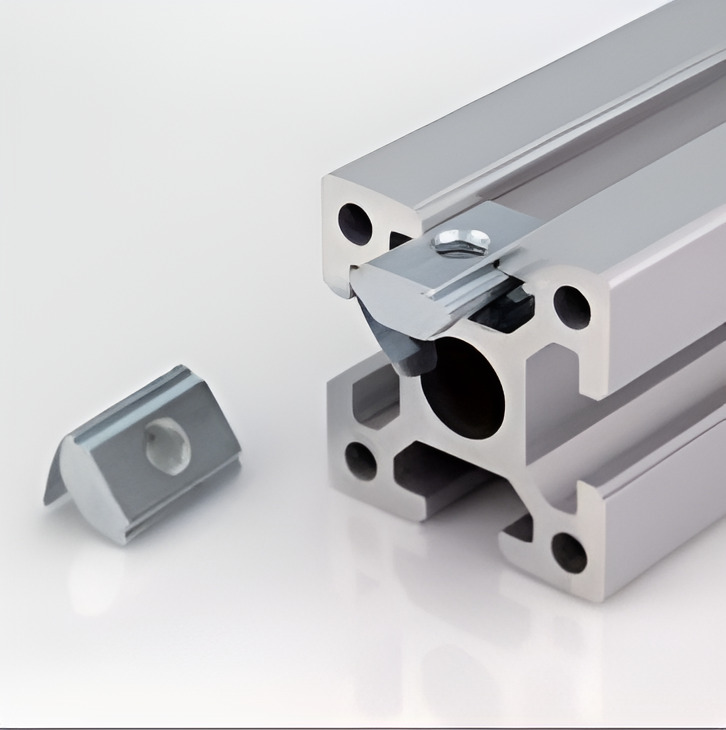
Anti-torsion subsequent T-slot nut with twin wings for 30 and 40 series aluminium profiles. M6 and M8 thread sizes. Vibration resistant, slides in from profile end.

MaterialCarbon steel
ToleranceThread 6H, body width +/-0.1 mm, wing span +/-0.05 mm
FinishZinc plated / stainless steel A2 or A4
Minimum orderNo MOQ for stock sizes; 500 pieces for custom sizes
Lead timeStocked sizes ship in 2 to 3 days; custom sizes about 2 weeks
Full specification →
Hole Reducer Bolt for 8 mm T-Slot Aluminium Profiles

Hole Reducer Bolt for 8 mm T-Slot Aluminium Profiles

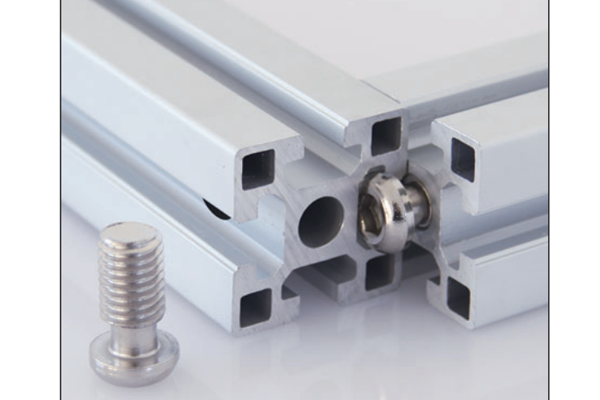
Hole reducer bolt with stepped M8 to M6 thread for 30 and 40 series aluminium profiles. Adapts M8 tapped centre bore to M6 component fitting. Single-piece, no separate bush.

MaterialCarbon steel
ToleranceThread 6g, step diameter +/-0.05 mm, length +/-0.5 mm
FinishZinc plated / stainless steel A2 or A4
Minimum orderNo MOQ for stock M8-to-M6; 500 pieces for custom combinations
Lead timeStocked M8-to-M6 ships in 2 to 3 days; custom about 2 weeks
Full specification →
Miter Connector Model C 90 Degree Corner Joint for 40 mm Aluminium Profiles

Miter Connector Model C 90 Degree Corner Joint for 40 mm Aluminium Profiles

Miter connector Model C for 90-degree corner joints on aluminium T-slot profiles. Internal tie rod, clean external corner. Available for 20, 30, 40 and 45 series.

MaterialZinc alloy housing / steel tie rod
ToleranceHousing to bore: H8/h7 sliding fit
FinishZinc plated / black zinc / nickel
Minimum orderStocked item; minimum 50 pieces per series
Lead timeTypically 1 to 2 weeks for stocked series and finishes
Full specification →
Oblique Connector Model C Angled Joint for 40 mm Aluminium Profiles

Oblique Connector Model C Angled Joint for 40 mm Aluminium Profiles

Oblique connector Model C for adjustable-angle joints on aluminium T-slot profiles. Internal tie rod, no panel face. Angle range 30 to 150 degrees. For 20, 30, 40 and 45 series.

MaterialZinc alloy housing / steel tie rod
ToleranceHousing to bore: H8/h7 sliding fit; angle set to +/-1 degree
FinishZinc plated / black zinc / nickel
Minimum orderStocked item; minimum 50 pieces per series
Lead timeTypically 1 to 2 weeks for stocked series and finishes
Full specification →
Oblique Connector Model P Angled Joint with Panel Face for 40 mm Aluminium Profiles

Oblique Connector Model P Angled Joint with Panel Face for 40 mm Aluminium Profiles

Oblique connector Model P with panel mounting face for angled joints on aluminium T-slot profiles. Adjustable 30 to 150 degrees, internal tie rod, panel face with tapped holes. For 20/30/40/45.

MaterialZinc alloy housing with panel face / steel tie rod
ToleranceHousing to bore: H8/h7; angle set to +/-1 degree; panel face flatness 0.2 mm
FinishZinc plated / black zinc / nickel
Minimum orderStocked item; minimum 50 pieces per series
Lead timeTypically 1 to 2 weeks for stocked series and finishes
Full specification →
Pre-set T-Slot Nut for 8 mm Aluminium Profiles M5 M6 M8

Pre-set T-Slot Nut for 8 mm Aluminium Profiles M5 M6 M8

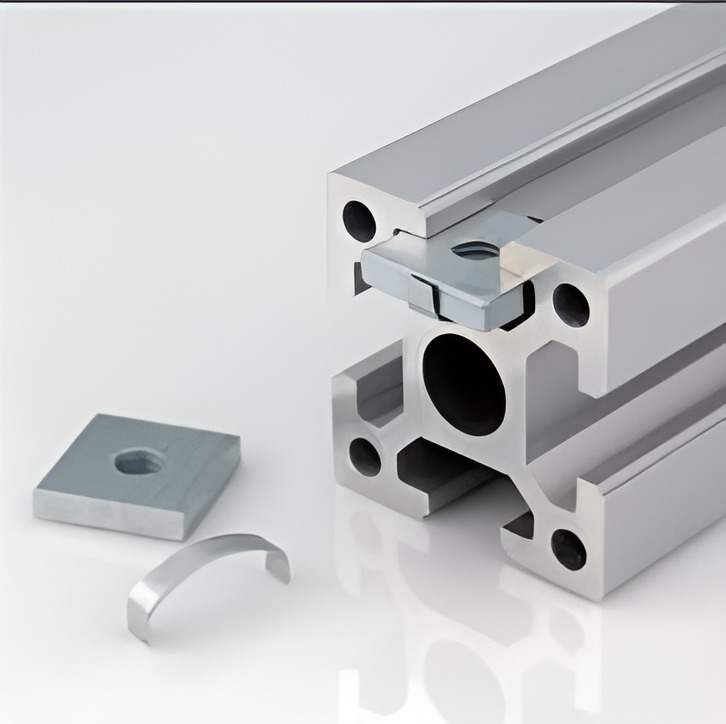
Pre-set T-slot nut with anti-drop spring tab for 20, 30 and 40 series aluminium profiles. M5, M6 and M8 thread sizes. Placed before assembly, bolted from outside.

MaterialCarbon steel
ToleranceThread 6H, body width +/-0.1 mm
FinishZinc plated / stainless steel A2 or A4
Minimum orderNo MOQ for stock sizes; 500 pieces for custom sizes
Lead timeStocked sizes ship in 2 to 3 days; custom sizes about 2 weeks
Full specification →
Square Nut for 8 mm T-Slot Aluminium Profiles M5 M6 M8

Square Nut for 8 mm T-Slot Aluminium Profiles M5 M6 M8

Square T-slot nut with four flat sides for 30 and 40 series aluminium profiles. M6 and M8 threads. Prevents rotation in groove, positioning accuracy +/-0.2 mm. For precision mounting.

MaterialCarbon steel
ToleranceThread 6H, body width +/-0.1 mm standard / +/-0.05 mm precision
FinishZinc plated / stainless steel A2 or A4
Minimum orderNo MOQ for stock sizes; 500 pieces for precision tolerance
Lead timeStocked sizes ship in 2 to 3 days; precision and stainless about 2 weeks
Full specification →
Subsequent Nut for 8 mm T-Slot Aluminium Profiles M5 M6 M8

Subsequent Nut for 8 mm T-Slot Aluminium Profiles M5 M6 M8

Subsequent T-slot nut for 30 and 40 series aluminium profiles. M5, M6 and M8 threads. Slides in from profile end face after assembly. Round or square body. Rescue fastener for retrofit.

MaterialCarbon steel
ToleranceThread 6H, body width +/-0.1 mm
FinishZinc plated / stainless steel A2 or A4
Minimum orderNo MOQ for stock sizes; 500 pieces for custom sizes
Lead timeStocked sizes ship in 2 to 3 days; custom and stainless about 2 weeks
Full specification →
T-Bolt for 8 mm T-Slot Aluminium Profiles M6 M8 M10

T-Bolt for 8 mm T-Slot Aluminium Profiles M6 M8 M10

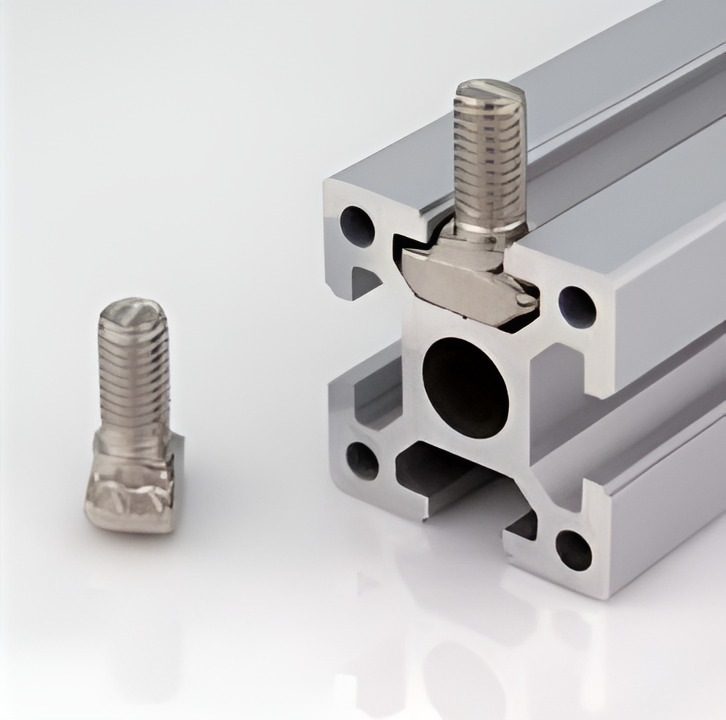
T-bolt with integral T-head for 20, 30 and 40 series aluminium profiles. M5, M6, M8 and M10 threads. Replaces separate T-nut, faster assembly. Carbon steel or stainless steel.

MaterialCarbon steel
ToleranceThread 6g, head width +/-0.1 mm, head thickness +/-0.05 mm
FinishZinc plated / stainless steel A2 or A4
Minimum orderNo MOQ for stock sizes; 500 pieces for custom sizes
Lead timeStocked sizes ship in 2 to 3 days; custom sizes about 2 weeks
Full specification →
T-slot nuts and fasteners for aluminium extrusion profiles

T-Nut for 10 mm Aluminium Profiles M4 M5 M6 M8 M10

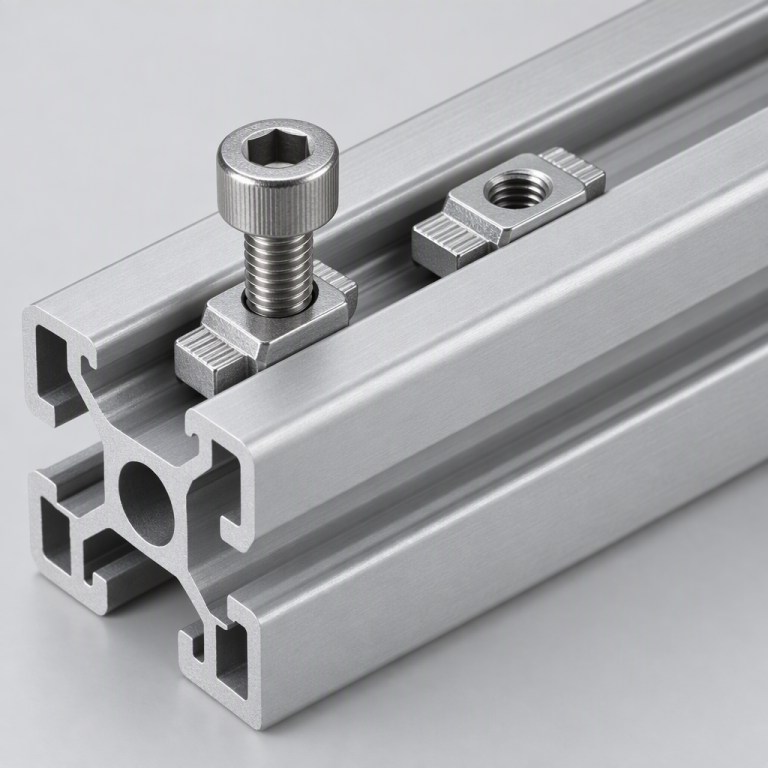
Full range of T-slot nuts from M4 to M10 for 15 to 60 series aluminium profiles. Pre-set, subsequent, square and anti-torsion types. Carbon steel or stainless. Master selection guide for nut, thread and series.

MaterialCarbon steel
ToleranceThread 6H, body width +/-0.1 mm, body height +/-0.1 mm
FinishZinc plated / stainless steel A2 or A4
Minimum orderNo MOQ for stock sizes; 500 pieces for custom configurations
Lead timeStocked sizes ship in 2 to 3 days; custom and stainless about 2 weeks
Full specification →

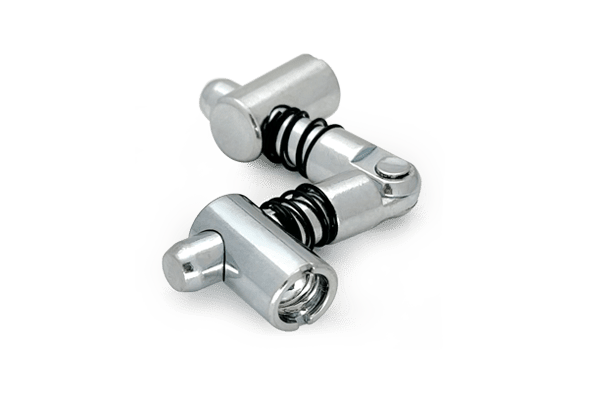
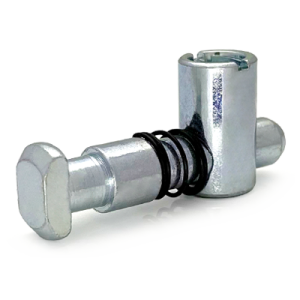
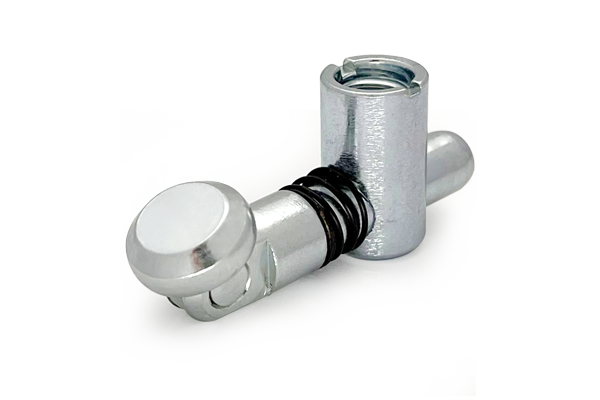
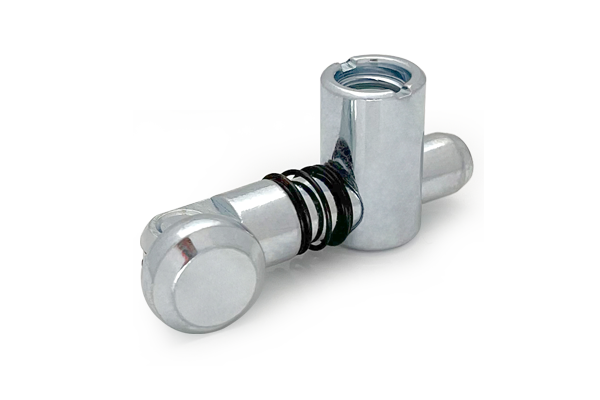
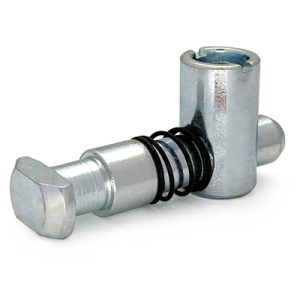
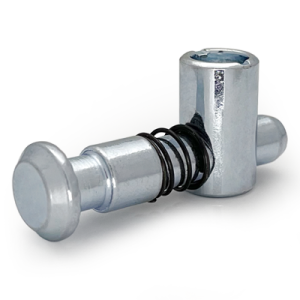
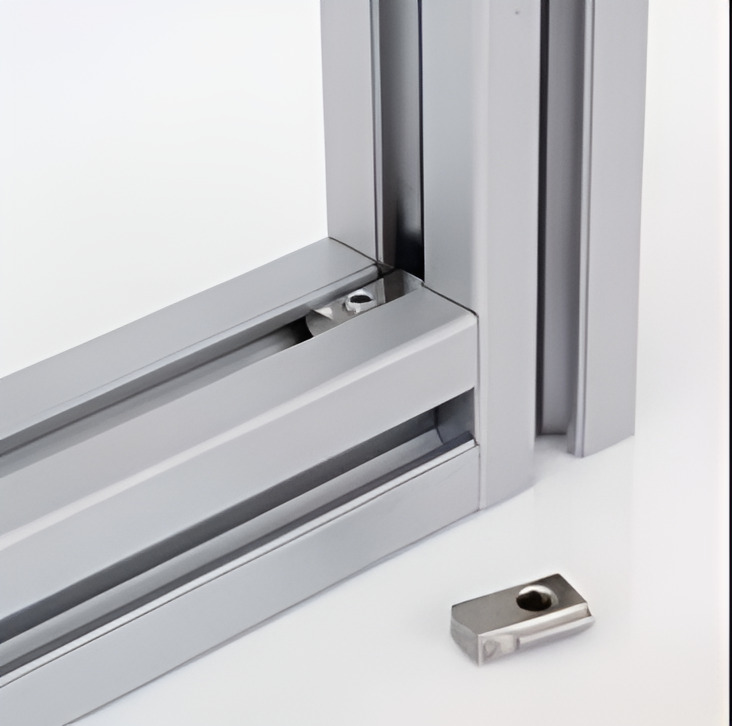
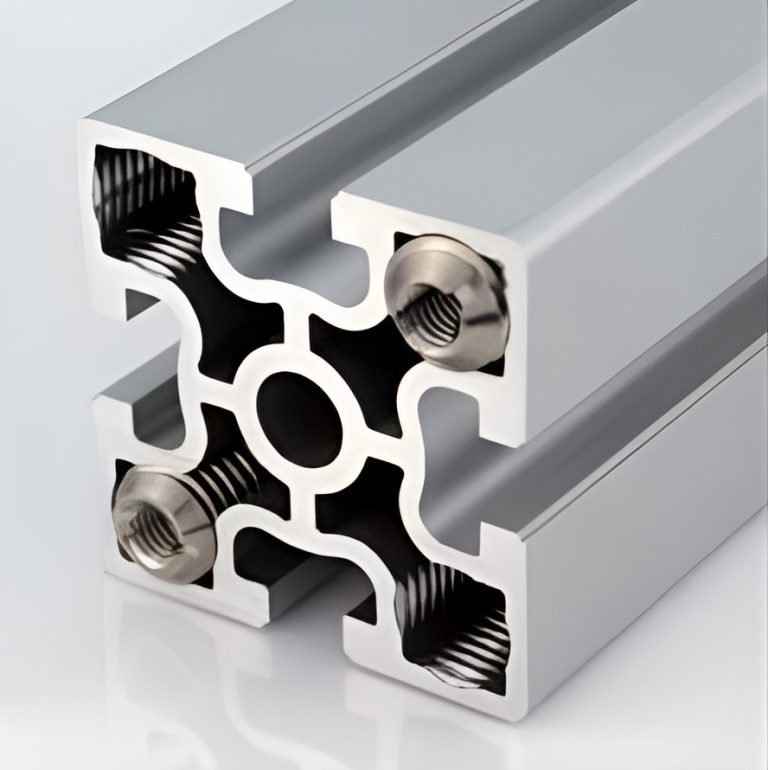
An anchor connector is a two-part concealed joint. A body sits in the slot of the abutting member and an expanding element grips the slot of the through member as the screw is tightened, so the joint is made from inside the profile. The result is a corner with no bracket and no fastener head visible on either outside face. It is the standard joint for furniture, display frames and any structure where the aluminium is meant to be seen.

Below: the assembly sequence, why the abutting member needs an end tap, and the three ways concealed joints fail.

How the joint is made

The mechanism is simple. One member is cut square and its end face is tapped or counterbored. The connector body is inserted into the slot of that member, and the screw passes through the end face into the body. The expanding element, sitting in the slot of the second member, is drawn up as the screw turns and grips the slot lips.

Three consequences follow directly from that mechanism, and they explain almost every practical restriction on concealed joints.

  • The abutting member must be machined. Without an end tap or a counterbore there is nothing for the screw to bear against, so an anchor connector cannot be retrofitted to a profile that has already been cut.
  • The joint is assembled in a specific order. The connector has to be positioned in the slot before the members come together. A frame built with anchor connectors is assembled once, deliberately, not test-fitted and re-assembled.
  • The load goes into the slot lip. The gripping element presses against the inside of the slot, so the lip takes the whole joint load. That is why the number and position of connectors matters more than their size.

The assembly sequence

Getting the order wrong is the single most common reason a concealed frame will not go together.

StepActionWhy it matters
1Cut all members square and deburrA burr stops the end face seating flat and shows as an open corner
2Tap or counterbore the ends that take a connectorDo this before assembly; it cannot be done afterwards
3Insert the connector body into the abutting member's slotThe body must be in place before the members meet
4Offer the members together on a flat surfaceA flat surface is what makes the corner square
5Tighten progressively, checking the diagonalFully tightening one corner before the others pulls the frame out of square
6Check and re-tighten after the frame is completeEarlier joints relax as the frame is closed up

Practical point: assemble on a flat reference surface and check the diagonals rather than the corner angles. A frame is square when its diagonals are equal, and a tape measure across the diagonals is the fastest quality check there is.

Where an anchor connector is the right choice

Furniture and bench frames

Nothing should be visible on the outside faces of a bench or a table frame, and the joint has to be re-openable for transport.

Display and exhibition structures

Clean anodised faces on every visible side, and the frame can be dismantled and re-used.

Door and window frames

Used with door and window elements where the frame has to look like joinery rather than a machine structure.

Enclosures and cabinets

Where the outside face carries a panel or is on show, and an internal bracket would be acceptable but a visible one would not.

Machine frames with clad faces

Where the outer slot has to stay clear for panel installation elements.

When not to use one

Concealed joints are not a universal upgrade over visible brackets. There are three situations where a visible bracket is the better engineering answer.

Retrofit and repair

An anchor connector needs an end tap, so it cannot be added to a profile that is already cut. A die-cast bracket or an angle profile bracket can be bolted onto an assembled frame with a hex key, which makes them the right choice for braces, repairs and prototypes.

Very high joint loads

A single anchor connector concentrates the entire joint load on a short length of slot lip. Where a corner carries a machine or a cantilevered load, one connector is not enough: use two, or add a joining plate so the load is spread along the profile.

Frames that will be assembled and disassembled repeatedly

Each assembly cycle works the slot lip. On a frame that is built and struck several times a year, a visible bracket with a replaceable T-nut is more forgiving than a concealed joint that bears directly on the extrusion.

The three ways concealed joints fail

FailureCausePrevention
The corner will not closeEnd not tapped deep enough, a burr on the end face, or the connector not seated before assemblyTap to the depth the connector maker specifies, deburr every end, and check the connector sits flush before offering the members up
The joint loosens under vibrationA single connector on a vibrating frame, or insufficient preloadUse two connectors, add a plate, and use a thread-locking compound on dynamic structures
The slot lip is crushedOver-torquing, or a connector sized for a different slot widthTorque to the maker's figure, and confirm the slot width on every member before ordering hardware

All three are avoidable, and all three are cheaper to avoid than to repair. A crushed slot lip cannot be restored; the member has to be replaced.

Choosing the right connector

Anchor connectors are made in thread sizes to suit the profile series — M6 for 30 series, M8 for 40 and 45 series — and in variants for corners, tees and in-line joints. The variants differ in the angle at which the screw is approached and in whether the connector body sits in the abutting member or the through member. Ordering the correct variant matters more than the brand: a corner connector used at a tee will not seat, and the frame will not pull square.

Confirm three things before ordering: the profile series and slot width, the joint type, and whether the end face will be tapped or counterbored. Related hardware is listed under connecting elements, other connecting elements and fastening elements.

Machining the ends

End taps are the one operation worth doing at the factory. Doing it on a bench drill without a jig produces a tap that is not perpendicular to the end face, and a tap that is off-angle will pull the corner out of square as it tightens. We cut to ±0.3 mm with square ends, deburr, and tap or counterbore to the connector maker's depth in the same order, so the frame assembles without re-work. See CNC machining for the processes available. Related ranges: strut profiles, 30 series, 40 series, die-cast brackets and joining plates.
FAQ

Questions buyers ask about this range

What is an anchor connector?+

A two-part concealed joint for aluminium profiles. The body sits in the slot of one member and an expanding element grips the slot of the other, so the joint is tightened from inside the profile and nothing shows on the outside faces.

Does an anchor connector need machining?+

Yes. The abutting member needs an end tap or a counterbore for the screw to bear against. That is why concealed joints cannot be added to profiles that are already cut.

Can I retrofit an anchor connector to an existing frame?+

No. Use a die-cast bracket or an angle profile bracket instead, which bolt into the slot and can be fitted to an assembled frame with a hex key.

How many anchor connectors does a corner need?+

One is adequate for a bench or a light frame. Use two, or one plus a joining plate, wherever the corner carries a machine, a cantilevered load or vibration.

Why will my concealed corner not close?+

Usually the end is not tapped deep enough, there is a burr on the end face, or the connector was not seated in the slot before the members were offered together.

What torque should I use?+

Use the connector maker's figure rather than tightening by feel. Over-torquing crushes the slot lip permanently, and the member then has to be replaced.

What thread size do I need?+

M6 suits the 30 series with an 8 mm slot; M8 suits the 40 and 45 series with a 10 mm slot. Confirm the series and slot width before ordering.

Are concealed joints as strong as visible brackets?+

A single anchor connector concentrates load on a short length of slot lip, so a visible bracket or a plate can be stronger at the same joint. Concealed joints are chosen for appearance, and should be doubled up where load matters.

Related product categories

Connecting ElementsDie-Cast BracketsAngle Profile BracketsJoining PlatesFastening ElementsStrut ProfilesCNC MachiningAll products

Need this range specified for your project?

Send the drawing, the section size or a sample and we will confirm the alloy, the tolerance, the finish and the commercial terms. Quotes for standard items normally go out within one working day.

Request a quotation