Recycled Aluminium Profiles: A Number You Have to Be Able to Evidence
Aluminium is the most recycled metal in common industrial use, and almost every catalogue now claims a green profile. The useful question is not whether the claim is true but whether it can be evidenced, to whom, and against which boundary, because since January 2026 a European buyer has a second reason to ask.
Short answer
The case for recycled aluminium rests on two well-established numbers. The global average carbon footprint of primary aluminium, from mine to cast metal, is about 16.5 tonnes of CO2 equivalent per tonne, and recycling aluminium saves roughly 95 per cent of the energy needed for primary production and a similar share of the greenhouse gas emissions. The complication is that recycled content is a claim rather than a property: it depends on the boundary, on whether the scrap is pre-consumer or post-consumer, and on whether there is a chain of custody behind it. A claim without a boundary and a custody chain is a marketing statement. Since 1 January 2026 the CBAM definitive period has been running and aluminium is a covered sector, so a European buyer has a compliance reason to ask for verified emissions data, not just a percentage. The right answer is a documented one: a declared boundary, a scrap classification, an emissions figure tied to a production installation, and a change-control commitment.
Two numbers, and the gap between them is the whole story
The first number is the carbon footprint of primary aluminium. The International Aluminium Institute publishes a global average figure for the cradle-to-gate greenhouse gas emissions of primary aluminium that is widely quoted at about 16.5 tonnes of CO2 equivalent per tonne of cast metal, covering mining, refining, anode production, electrolysis and casting, including electricity and process emissions. That number is an average, and the spread around it is enormous: a smelter running on hydroelectricity is in a completely different place from one running on coal.
The second number is the saving from recycling. The IAI states that recycling aluminium saves about 95 per cent of the energy required for primary production, and a similar proportion of the greenhouse gas emissions. The reason is that remelting scrap takes a fraction of the electricity that electrolysis does, because the aluminium is already reduced metal.
So the gap between roughly 16.5 tonnes and a fraction of a tonne per tonne of metal is real and it is large. The whole of the rest of this article is about the conditions attached to claiming it, because the gap is only available if the metal in the profile actually comes from the low-carbon route, and that is a question about the supply chain rather than about the alloy.
| Claim | What it usually means | What evidence it needs |
|---|---|---|
| Recyclable | The metal can be recycled at end of life | Nothing beyond the alloy; almost all aluminium is recyclable |
| Recycled content | A share of the input metal came from scrap | A stated boundary, a scrap classification, and a chain of custody |
| Low-carbon primary | The metal was smelted with low-carbon electricity | A verified, installation-level emissions figure |
| Carbon footprint | The emissions per unit of product | A declared methodology and boundary, and verification |
| CBAM-compliant | Embedded emissions are available for declaration | Data tied to the installation and the correct commodity code |
Pre-consumer and post-consumer scrap are not the same claim
Aluminium scrap comes in two very different kinds, and a recycled-content percentage that does not distinguish them is not very informative.
Pre-consumer scrap, sometimes called process scrap, is the material generated inside the manufacturing chain: the butt ends of extrusion billets, the trimmings from a cut, the swarf from machining, the offcuts from a fabricator. It is clean, it is known, and it is usually remelted back into the same alloy family. It has always been recycled, because it is valuable, and counting it as recycled content is therefore a claim about normal good practice rather than about a circular economy.
Post-consumer scrap is material that has been through a product life: a window that was removed from a building, a car part, a beverage can. Recycling it displaces primary metal in a way that process scrap does not, because the alternative destination for post-consumer scrap is landfill or downcycling. A recycled-content figure that separates the two, and that reports post-consumer content separately, is far more useful than a single number, and it is the number a serious buyer should ask for.
There is a third complication that a percentage hides: alloying. Extrusion alloys are made to a specification, and a remelted scrap stream has to be refined back to that specification, which may require adding primary metal. A high recycled-content claim on a 6063 profile therefore has to explain how the chemistry was held.
Recycled content is a claim that needs a chain of custody
Because recycled content is a claim about the origin of material, it needs a custody model. Three models are in common use, and they give very different assurances.
At the strongest end, physical segregation keeps recycled metal in a separate stream so the claimed content is physically in the product. In the middle, mass balance allows recycled and primary metal to be mixed while the accounting tracks the recycled share across a production period. At the weakest end, a certificate or book-and-claim model allows a recycled-content certificate to be purchased separately from the metal, so the product may contain no recycled metal at all even though the claim is supported on paper.
None of these is dishonest if it is declared. The failure is an undeclared model, where the buyer assumes segregation and receives book-and-claim. So the enquiry should ask which model applies, over what period the balance is struck, and who audits it. A supplier who can answer those three questions is a supplier whose claim can be used in a customer’s own reporting.
CBAM: what changed on 1 January 2026
The EU carbon border adjustment mechanism moved from its transitional period into its definitive period on 1 January 2026. Aluminium is one of the covered sectors, alongside cement, iron and steel, fertilisers, hydrogen and electricity, and the mechanism applies to specified goods identified by their EU commodity codes.
The obligations sit with an authorised declarant, which is normally the EU importer or an indirect customs representative acting in that role. The mechanism works through annual declarations rather than quarterly reports, with certificates purchased and surrendered against the declared embedded emissions. On the published timeline, certificate sales begin on 1 February 2027 and the first annual declaration and surrender, covering 2026 imports, is due on 30 September 2027. Imports in 2026 already carry the liability even though the purchasing happens later.
There is a de minimis threshold: an importer whose annual net mass of the relevant iron and steel, aluminium, fertiliser and cement imports is below 50 tonnes is outside the obligation. The threshold is annual and per importer, and it aggregates across those sectors, so it is not a per-shipment allowance, and going over it brings the whole year’s relevant imports into scope rather than just the excess.
Why a recycled-content claim does not automatically lower a CBAM figure
This is the point that catches people out. CBAM is built on embedded emissions, which are calculated for a defined product and process boundary, and for aluminium the current scope covers direct emissions. A recycled-content percentage is a different quantity: it describes the origin of the input metal, not the emissions of the producing installation.
So a profile made from recycled metal at a plant with a high-emission process and a coal-fired furnace may still carry a significant embedded emissions figure, and a profile made from primary metal smelted with hydroelectricity may carry a low one. The two claims are related but they are not the same, and a buyer who substitutes one for the other will be surprised.
There is also a choice of route. A declarant can use verified actual emissions or published default values for the origin and product. A default value is not automatically worse, and it is not automatically better; it depends on the plant and the commodity. The honest position is that a low-carbon claim is only useful to a CBAM declarant if it is supported by an installation-level, verified emissions figure that fits the calculation rules. A recycled-content certificate is not that figure.
The digital product passport and the environmental product declaration
Two further pieces of European policy point in the same direction, and both are about carrying data with the product rather than making a claim about it.
The first is the digital product passport being introduced under the Ecodesign for Sustainable Products Regulation. The idea is that a product carries a machine-readable record of its composition, its origin and its environmental performance, so that information follows it through the supply chain. For an aluminium profile, the data that would populate such a record is largely the same data CBAM asks for, plus the recycled content and its custody model.
The second is the environmental product declaration, an independently verified summary of a product’s environmental impact produced to a defined methodology. An EPD is the established way to make a footprint claim that a specifier can compare across suppliers, and it is what turns a percentage into a document.
Neither is mandatory for every aluminium profile today. Both point the same way, and a supplier that already holds the underlying data can respond to either without a new project.
What to send, and what to ask
When recycled content or carbon performance is part of the specification, the enquiry should ask for the boundary of the claim, the scrap classification with post-consumer reported separately, the custody model and the period over which it is balanced, the emissions figure with its methodology, and whether the supplier can provide installation-level data for CBAM. Ask also whether a change in the metal source will be notified, because a claim that was true at the first order and unverified at the third is not a claim a buyer can rely on.
The profile itself does not change much. What changes is the paperwork that travels with it, and the buyer’s ability to use it.
RFQ checklist — recycled and low-carbon profiles
- Claim boundary — cradle-to-gate or another boundary, stated explicitly rather than implied.
- Scrap classification — pre-consumer and post-consumer reported separately, with the post-consumer share called out.
- Custody model — physical segregation, mass balance or book-and-claim, and the period over which it is balanced.
- Emissions figure — the value, the methodology behind it, and who verified it.
- CBAM data — whether installation-level direct emissions data is available, and in what format.
- Commodity code — the EU code for the goods, so the importer can confirm scope and threshold.
- Change notification — the commitment to notify a change of metal source or process.
- Documentation format — whether the data can populate a product passport or support an environmental product declaration.
Ask one question before quoting: which custody model backs the recycled content, and over what period it is balanced. It is the difference between a number that can be reported and a number that cannot.
Four ways a green claim comes apart
Related on this site
- Aluminium extrusion: five advantages, five conditions— the honest ledger on weight, stiffness and cost
- Importing aluminium profiles: contract checklist— the clauses that decide who carries a documentation risk
- Quality and inspection protocol— how certificates and material records are tied to an order
- Strut profiles category— the standard range, available in mill, anodised and coated finish
Terms used in this article
- Pre-consumer scrap
- Scrap generated inside the manufacturing chain, such as billet butts and offcuts, which is clean and usually remelted into the same alloy.
- Post-consumer scrap
- Material that has completed a product life, whose recycling displaces primary metal rather than returning process material.
- Mass balance
- A custody model in which recycled and primary material may be mixed while the recycled share is tracked across a production period.
- Embedded emissions
- The greenhouse gases released in producing a good, calculated for a defined product and process boundary.
- De minimis threshold
- The annual net mass below which an importer is outside the CBAM obligation, aggregating the relevant sectors per importer.
- Environmental product declaration
- An independently verified statement of a product’s environmental impact, produced to a defined methodology so it can be compared.
Questions buyers ask
How much carbon does recycled aluminium actually save?
Recycling saves about 95 per cent of the energy needed for primary production, and a similar share of greenhouse gas emissions, because remelting avoids electrolysis. Primary aluminium averages around 16.5 tonnes of CO2 equivalent per tonne from mine to cast metal, so the gap is large — provided the metal really comes from the recycled route.
Is recycled aluminium weaker than primary?
Not if the chemistry is held. A remelted stream is refined to the extrusion alloy specification, so the delivered profile meets the same 6063 or 6061 chemistry and temper as one made from primary metal. The relevant risk is control of the melt, not the origin of the metal.
Does recycled content reduce my CBAM cost?
Not by itself. CBAM is built on embedded emissions for a defined boundary, and for aluminium the current scope covers direct emissions. A recycled-content percentage is a different quantity, so the useful evidence is an installation-level, verified emissions figure that fits the calculation rules.
What is the 50-tonne CBAM threshold?
It is an annual de minimis: an importer whose net mass of relevant iron and steel, aluminium, fertiliser and cement imports over a calendar year stays below 50 tonnes is outside the obligation. It aggregates across those sectors and is per importer, not per shipment.
When is the first CBAM declaration due?
On the published timeline, certificate sales begin on 1 February 2027 and the first annual declaration and certificate surrender, covering 2026 imports, is due on 30 September 2027. Imports made in 2026 already carry the liability.
Ask for the boundary, not just the percentage
Tell us the claim you need to make and the reporting it feeds, and we will tell you what data we can provide and how it is bounded.
Request a quoteRelated reading
Twelve more engineering notes from this blog, picked for this article — plus every category below.
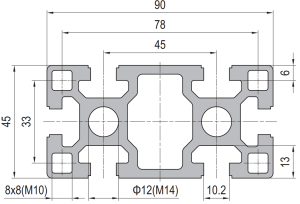 Materials and EngineeringAluminium Extrusion Section Design: What Each Feature on the Drawing Costs You
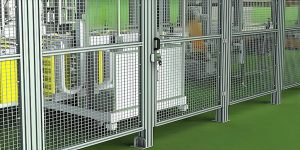 Quality and InspectionGlobal Sourcing Excellence: Multi-Category OEM and ODM Manufacturing and Supply Chain Integration
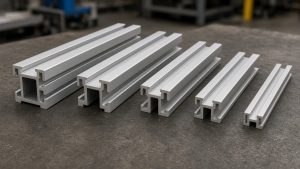 Engineering DesignT-Slot Cross-Brand Compatibility: Bosch, Item and Generic
 Engineering Design3030 vs 4040 Aluminium Profile: A Decision With Numbers
 Quality and InspectionHow to Choose (and Audit) an Aluminium Extrusion Supplier
 ApplicationsAluminium Profiles in Industry and Construction: One Material, Two Acceptance Logics
 Engineering DesignModular Aluminium Components: Where the System Saves Money and Where It Costs You
 Engineering DesignWhat Is a 4040 Aluminium Profile? (Weight, Slot and Load)
 ApplicationsAluminium Workstations: From Fixed Benches to Reconfigurable Cells
 Engineering DesignPrecision Cutting and Tapping of Aluminium Profiles: The Tolerance That Actually Matters
 Engineering DesignAluminium Profile Anchor Pins: A Preloaded Joint, Not a Pin
 ApplicationsESD-Safe Aluminum Profile Workbenches: Why Anodising Alone Fails the Audit
