How Much Does an Aluminium Extrusion Die Cost?
In 2026 a custom aluminium extrusion die in China typically costs about US$400–3,500 for common industrial T-slot and solid sections, and more for large hollows. The number is set by three things: the circumscribed circle, whether the section is hollow, and the number of internal features.
Short answer
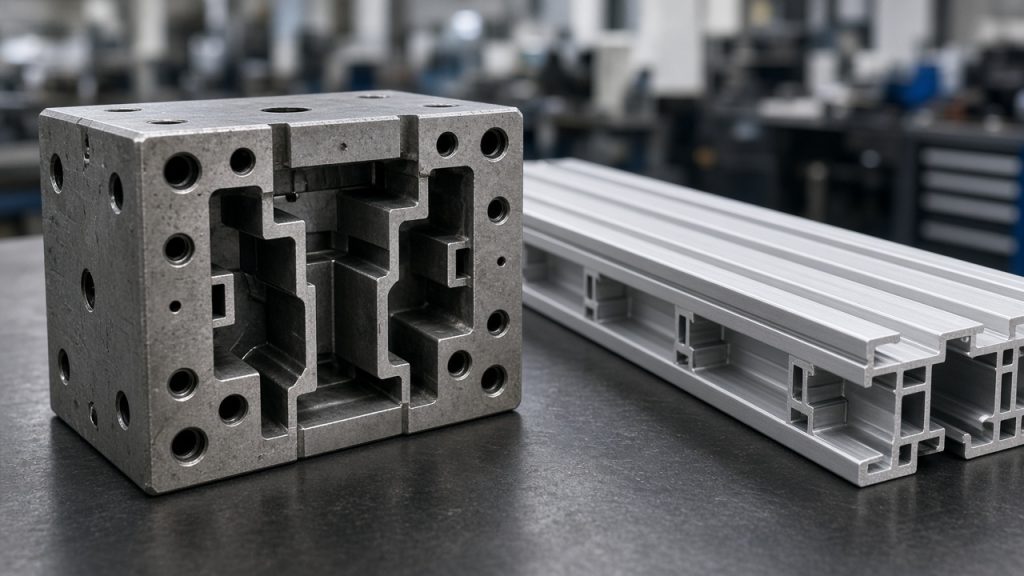
Die cost is a one-off tooling line, not a mystery percentage on the metal. Small solid or single-slot dies for 2020 / 3030 class sections often sit near US$400–900. Mid-size T-slot and semi-hollow tools for 4040 / 4545 commonly land US$700–1,800. Large or multi-void dies for 8080 / 9090 / 100100 class sections run US$1,800–4,000 and up. The die is a consumable with a finite life and a repair record; who owns it after payment is a contract clause, not a courtesy. Amortise the fee across 500 m, 2,000 m and 5,000 m before you judge the per-metre price. New-die orders carry a 500 m MOQ; existing dies release from 150 m. Payment T/T 30/70 or L/C at sight; shipment FOB/CIF/DAP/DDP Shanghai or Ningbo.
What is the tooling cost for a new 2020 die and who owns it
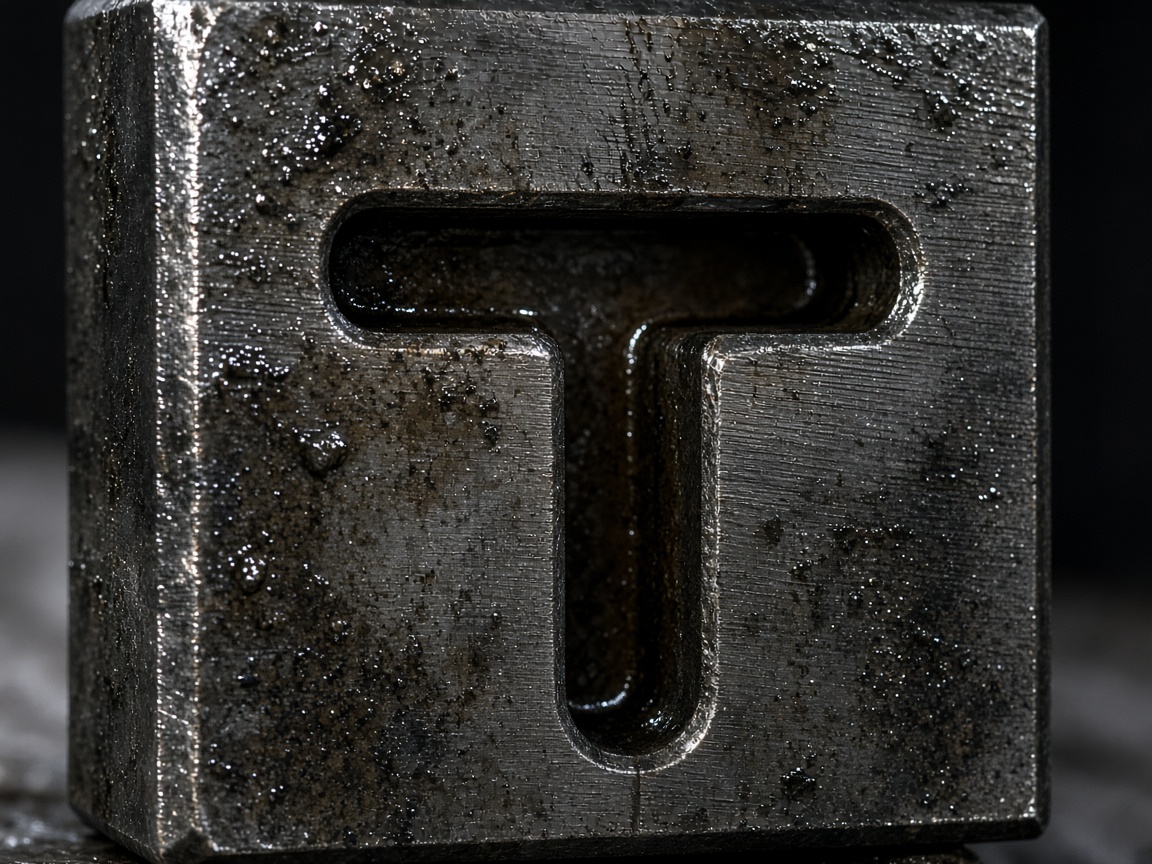
A new 2020-class T-slot die in 2026 typically quotes about US$400–900; title after payment follows the die-ownership clause you sign, not an industry default.
The same structure applies across the catalogue sizes: the die fee scales with circumscribed circle and hollow class, while ownership is always a written term. GrownParts treats paid tooling as buyer-owned under the standard clause unless a loaner or amortised model is agreed — read who owns the die before the PO. Die making adds 7–12 days. The first production release on a new tool is 500 m; later releases off that owned die drop to the 150 m existing-die floor.
| Section class | 2026 die band (USD) | First MOQ | Ownership default |
|---|---|---|---|
| 2020 / 3030 T-slot | US$400–900 | 500 m | Buyer-owned after payment* |
| 4040 / 4545 T-slot | US$700–1,800 | 500 m | Buyer-owned after payment* |
| 4080 / 4590 / 5050 | US$1,000–2,400 | 500 m | Buyer-owned after payment* |
| 8080 / 9090 | US$1,800–3,500 | 500 m | Buyer-owned after payment* |
| 100100 / 16080 | US$2,200–4,000+ | 500 m | Buyer-owned after payment* |
| Complex multi-void | US$2,500–8,000+ | 500 m+ | Confirm in writing |
*Confirm in the quotation. Loaner dies and fully amortised “free tooling” models exist; they change unit price and exit rights.
How much does a custom aluminium extrusion die cost
Across Chinese industrial extrusion in 2026, expect roughly US$400–3,500 for most custom T-slot and solid dies buyers actually open, with complex hollows climbing past US$4,000.
Three geometric drivers explain almost all of the spread. Circumscribed circle diameter picks the press class and the steel blank size. Hollow versus solid decides whether a flat die is enough or a porthole / bridge construction is required. Internal features — slot count, thin tongues, multi-voids — add CNC time and shorten die life, which the quote prices in. Tolerance class and visible-face requirements add tryout cycles before the die is signed off. Alloy matters secondarily: 6063 is forgiving; harder alloys wear tools faster and may need a tougher steel or a spare.
Lead time for die manufacture and first articles is typically 7–12 days for standard industrial sections, longer for large multi-void tools. The die fee is due with the tooling PO; metal for the 500 m first release follows the usual T/T 30/70 or L/C at sight against the production order.
How much does a die cost for a custom section by size
Die cost rises with section size and hollow class; the table is a 2026 planning band for a single-cavity industrial die, not a catalogue price list.
Use it to decide whether a library section at 150 m is enough, or whether a new tool plus 500 m is justified. Amortisation examples sit in the next section. Reference prices are tooling only — metal is separate.
| Section | Circumscribed circle | Type | Reference price (USD) | Notes |
|---|---|---|---|---|
| 2020 | ~28 mm | Light T-slot die | US$400–900 | Often already in library |
| 3030 | ~42 mm | Light T-slot die | US$500–1,000 | Simple slot geometry |
| 4040 | ~57 mm | Standard T-slot die | US$700–1,500 | Highest request volume |
| 4080 | ~89 mm | Rectangular T-slot | US$1,000–2,200 | Larger blank, more slot work |
| 4545 | ~64 mm | 45-series die | US$800–1,800 | Confirm slot standard |
| 4590 | ~101 mm | 45-series wide | US$1,200–2,600 | Watch tongue ratio on slots |
| 5050 | ~71 mm | 50-series die | US$900–2,000 | Heavier slot lips |
| 8080 | ~113 mm | Heavy T-slot die | US$1,800–3,200 | Press class steps up |
| 9090 | ~127 mm | Heavy T-slot die | US$2,000–3,500 | Longer tryout common |
| 100100 | ~141 mm | Heavy structural | US$2,200–4,000 | Confirm press availability |
| 16080 | ~179 mm | Wide structural | US$2,400–4,500+ | Large circumscribed circle |
What the price is actually made of
Die price is steel, CNC/EDM time, heat treatment, tryout metal and the expected repair life — not a round number invented for the quotation.
A die is a consumable. Bearing surfaces wear, slots erode, and a well-run tool still needs recorded corrections and eventual replacement. Ask for the expected shot life or metre life and for a repair log once the tool is in service. Spreading a US$1,200 die across metres is simple arithmetic: at the 500 m new-die MOQ the tooling adder is US$2.40/m; at 2,000 m it is US$0.60/m; at 5,000 m it is US$0.24/m. That adder sits on top of the metal and conversion price, which itself steps at 500 / 2,000 / 5,000 / 10,000 m. A “free die” offer usually hides the same cash in a higher unit rate until a stated volume is reached; demand the break-even metres in writing.
Compare that path with keeping a library section at 150 m and no die fee. Many frames accept a standard 4040 envelope once the hardware is checked. When the drawing truly needs a new section, pay the die, own it under contract, and plan the first 500 m so the per-metre adder is intentional rather than accidental.
RFQ checklist — die cost
- Dimensioned section drawing — with hollows and critical tolerances marked.
- Alloy and temper — 6063-T5 default unless load needs otherwise.
- Annual metres — so amortisation at 500 / 2,000 / 5,000 m is honest.
- Ownership model — buyer-owned, loaner, or amortised into price.
- Spare die — whether a second tool is required for continuity.
- First release — 500 m new-die MOQ, Incoterm and port.
Ask for die fee, expected life, and ownership in three separate sentences. If any sentence is missing, the quote is incomplete.
Four tooling traps
Related on this site
- how die cost amortises per meter— unit rate after the tooling line
- minimum order with a new die— 500 m first release
- die making adds 7–12 days— before first metal
- who owns the die— title, loaners and exit
Terms used in this article
- Circumscribed circle
- Diameter of the smallest circle enclosing the section; selects press class and blank size.
- Porthole / bridge die
- Two-part die construction used to form hollows; costlier than a solid die.
- Tryout
- First extrusion trials used to correct the die before production sign-off.
- Die life
- Expected metres or shots before major repair or replacement; a consumable metric.
- Amortisation
- Die fee divided by metres ordered; falls sharply from 500 m to 5,000 m.
Questions buyers ask
What is included in the quoted price?
A die quote should include design, CNC/EDM, heat treatment, tryout and the first dimensional report. It does not include production metal, finishing or freight. Production metres are quoted separately under FOB, CIF, DAP or DDP from Shanghai or Ningbo, with T/T 30/70 or L/C at sight. State whether a spare die or nitride treatment is inside the number.
Do you charge for samples?
First articles off a new die are part of tryout; extra sample lengths beyond that are usually charged as short-run metres plus freight. Sample approval does not waive the 500 m production MOQ on a new tool. Existing-die samples follow the MOQ page rules.
How long is the quotation valid?
Die quotes are commonly held 30–60 days because tool steel and shop time move slower than billet. Production metal quotes beside them follow the shorter 14–30 day billet window in 2026. Lock both dates on the same PDF.
Can the price be fixed for a contract?
The die fee is fixed once the tool is paid and accepted. Production conversion can be indexed to billet under a call-off, with MOQ rules at 150 m existing / 500 m new and steps at 500 / 2,000 / 5,000 / 10,000 m. Ownership and repair responsibility should be fixed in the same contract as the die fee.
Send the section drawing for a die quote
Include the circumscribed size, hollows, alloy and planned metres at 500 / 2,000 / 5,000 m. We will return the die band, ownership terms and the per-metre amortisation before you cut steel.
Request a quoteRelated reading
Twelve more engineering notes from this blog, picked for this article — plus every category below.
 Quality and InspectionAluminium Extrusion Claims: What the Contract Must Say
 Sourcing and ProcurementImporting Aluminum Profiles from China: Nine Failures That Quietly Raise Your Landed Cost
 Engineering DesignWhat Your Extrusion Drawing Must Show (and What Costs You Money)
 ApplicationsWhy T-Slot Aluminium Profiles Are Used in Automation and When They Are Not
 Engineering DesignStandard vs Custom Aluminium Extrusion: The Break-Even Calculation
 Engineering DesignHow to Choose the Right T-Slot Aluminium Profile Size
 Applications20 Series T-Slot Profiles: Where the Limits Actually Are
 Engineering Design6063 vs 6061 vs 6082 and T5 vs T6: What Changes in Practice
 Materials and EngineeringAnodised vs Powder Coated Aluminium Profiles: A Specification Guide for European Buyers
 Materials and EngineeringIndustrial Aluminum Profiles: Alloys, Tempers and How to Select Them
 Materials and EngineeringAluminium Corrosion: Why a Salt Spray Number Is a Ranking, Not a Life
 Quality and InspectionAluminium Profile Finishes: Choose by Failure Mode, Not by Process Name
