Distributor Terms: Territory, Margin and Price Protection
The distributor bears territory and margin risk when exclusivity, undercut rules and price-change notice are left vague. Close it with three written levers: a mapped territory with a volume gate, a published 2026 distributor net list with notice before increases, and tiered discounts by metres and tonnes so margin is predictable before the container sails.

Short answer
Exclusive distribution is not automatic: it is granted for a named territory only when an annual volume gate and performance review are in the agreement. Price protection means a published distributor net list in USD for 2026, at least 30 days’ written notice before an increase, confirmed POs locked at the old net, and a defined inventory credit if list prices fall while stock sits in the warehouse. Undercutting by another buyer in the same market is the distributor’s commercial loss unless the contract stops supplier direct sales and new appointments in that territory, with a notify-and-cure path. Payment remains T/T 30% deposit + 70% before shipment or L/C at sight; goods move under FOB / CIF / DAP / DDP. Quality references stay EN 755-9, EN ISO 7599 and GB/T 6892 on every stock PO.

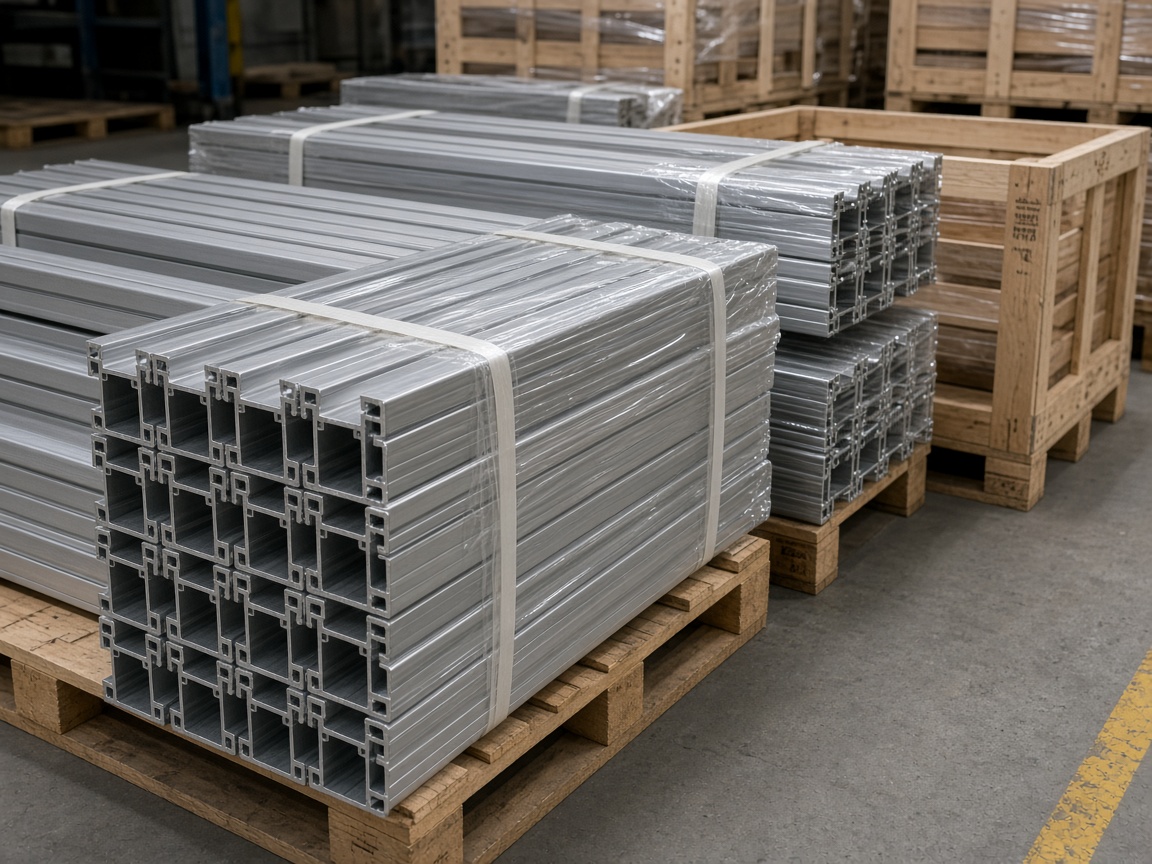
Do you offer exclusive distribution in the US
Exclusive distribution in the US — or any other named market — is available only as a written appointment tied to a territory schedule and a minimum annual volume, not as a default on the first PO.
Non-exclusive supply is the starting point for new importers. Exclusivity, when granted, lists the geography (states, countries or named metros), the product series covered, house accounts reserved to the factory, and the annual tonne or metre gate. Miss the gate after a cure period and the appointment converts to non-exclusive or a second stockist may be added. The table uses the same structure for each market buyers ask about.
| Market | Territory definition | Exclusivity form | Carve-outs | Contract must say |
|---|---|---|---|---|
| United States | US states or named metro list | Exclusive only if annual volume gate met | House accounts + online passive sales carve-outs | Written territory schedule + annual review |
| Germany | DE + optional DACH | Exclusive tied to tonnes/year | OEM national accounts reserved | Written territory schedule + annual review |
| United Kingdom | GB postcode regions | Exclusive or sole stockist by series | Direct project bids listed in schedule | Written territory schedule + annual review |
| Canada | Provinces named | Exclusive on performance review | Cross-border US fulfilment rules | Written territory schedule + annual review |
| Australia | States / NZ separate | Exclusive with stock depth clause | Sea lead-time buffer in SLA | Written territory schedule + annual review |
| France | FR + optional Benelux | Non-exclusive default; exclusive on gate | Language pack + CE docs | Written territory schedule + annual review |
| Nordics | SE/NO/DK/FI named | Exclusive per country or cluster | Cold-chain packing not required; ISPM 15 still | Written territory schedule + annual review |
| Southeast Asia | Country list (SG/MY/TH/VN…) | Usually non-exclusive multi-stockist | Parallel import control language | Written territory schedule + annual review |
What happens if another buyer in the US undercuts me
If another buyer undercuts you in your market, you absorb the margin loss unless the distribution agreement forbids supplier direct sales and competing appointments in that territory and gives you a notify-and-cure remedy.
Resale prices are set by the distributor; we do not police street price. What we can contract is channel discipline: no active solicitation of your named accounts, no second exclusive appoint in the same map while you meet the gate, and a credit or exclusivity review when a breach is proven. Passive online enquiries and pre-listed house accounts need explicit schedules. The table repeats the same logic per market.
| Scenario | Who bears it | What the contract should say | Mitigation |
|---|---|---|---|
| Another buyer undercuts in United States | Distributor bears margin loss unless contract bans supplier direct / third-party appointment in territory | No active solicitation by supplier; notify + cure; credit or reclaim exclusivity | Named house accounts; MAP-style list price optional (resale free) |
| Another buyer undercuts in Germany | Distributor bears margin loss unless contract bans supplier direct / third-party appointment in territory | No active solicitation by supplier; notify + cure; credit or reclaim exclusivity | Named house accounts; MAP-style list price optional (resale free) |
| Another buyer undercuts in United Kingdom | Distributor bears margin loss unless contract bans supplier direct / third-party appointment in territory | No active solicitation by supplier; notify + cure; credit or reclaim exclusivity | Named house accounts; MAP-style list price optional (resale free) |
| Another buyer undercuts in Canada | Distributor bears margin loss unless contract bans supplier direct / third-party appointment in territory | No active solicitation by supplier; notify + cure; credit or reclaim exclusivity | Named house accounts; MAP-style list price optional (resale free) |
| Another buyer undercuts in Australia | Distributor bears margin loss unless contract bans supplier direct / third-party appointment in territory | No active solicitation by supplier; notify + cure; credit or reclaim exclusivity | Named house accounts; MAP-style list price optional (resale free) |
| Another buyer undercuts in France | Distributor bears margin loss unless contract bans supplier direct / third-party appointment in territory | No active solicitation by supplier; notify + cure; credit or reclaim exclusivity | Named house accounts; MAP-style list price optional (resale free) |
| Another buyer undercuts in Nordics | Distributor bears margin loss unless contract bans supplier direct / third-party appointment in territory | No active solicitation by supplier; notify + cure; credit or reclaim exclusivity | Named house accounts; MAP-style list price optional (resale free) |
| Another buyer undercuts in Southeast Asia | Distributor bears margin loss unless contract bans supplier direct / third-party appointment in territory | No active solicitation by supplier; notify + cure; credit or reclaim exclusivity | Named house accounts; MAP-style list price optional (resale free) |
How do you protect distributor pricing in the US
Distributor pricing is protected by a published net list, advance notice before increases, locked confirmed POs, and an inventory credit window when list prices fall — the same mechanism in every market, including the US.
In 2026 quotes, nets are stated in USD per metre or per tonne with alloy, finish and Incoterm clear. Billet movement can be footnoted as an index; it does not silently rewrite a confirmed line. Stock rotation and price-drop credits apply only to sealed, unsold inventory bought at the higher net within the agreed window (typically 30–60 days). Quality on stock POs still cites EN 755-9 extruded tolerances, EN ISO 7599 anodising and GB/T 6892.
| Market | Price basis | Increase notice | Protection mechanics | Cadence |
|---|---|---|---|---|
| United States | Published distributor net list in USD (2026) | 30 days written notice before increase | Open confirmed POs locked; inventory credit window 30–60 days on stock reduction | Quarterly price sheet + billet index note |
| Germany | Published distributor net list in USD (2026) | 30 days written notice before increase | Open confirmed POs locked; inventory credit window 30–60 days on stock reduction | Quarterly price sheet + billet index note |
| United Kingdom | Published distributor net list in USD (2026) | 30 days written notice before increase | Open confirmed POs locked; inventory credit window 30–60 days on stock reduction | Quarterly price sheet + billet index note |
| Canada | Published distributor net list in USD (2026) | 30 days written notice before increase | Open confirmed POs locked; inventory credit window 30–60 days on stock reduction | Quarterly price sheet + billet index note |
| Australia | Published distributor net list in USD (2026) | 30 days written notice before increase | Open confirmed POs locked; inventory credit window 30–60 days on stock reduction | Quarterly price sheet + billet index note |
| France | Published distributor net list in USD (2026) | 30 days written notice before increase | Open confirmed POs locked; inventory credit window 30–60 days on stock reduction | Quarterly price sheet + billet index note |
| Nordics | Published distributor net list in USD (2026) | 30 days written notice before increase | Open confirmed POs locked; inventory credit window 30–60 days on stock reduction | Quarterly price sheet + billet index note |
| Southeast Asia | Published distributor net list in USD (2026) | 30 days written notice before increase | Open confirmed POs locked; inventory credit window 30–60 days on stock reduction | Quarterly price sheet + billet index note |
Which series profile to use (by series)
Distributors should stock 20 / 40 / 45 series as the high-turn core and treat 50 / 60 series as forecast or press-to-order — series choice is a slot, load and hardware decision, not a branding one.
Match the slot class to the hardware ecosystem your customers already buy. Deep inventory on heavy series ties cash; thin coverage with a clear lead-time promise sells better. Link pricing maths to how die cost amortises per meter when a private-label die is part of the programme.
| Series | Slot | Typical use | Load band | Verdict |
|---|---|---|---|---|
| 20 series | 6 mm class | Light guards, small fixtures | Low | High turn SKU for distributors |
| 30 series | 8 mm class | Light frames, displays | Low–mid | Stock with 20 for mix |
| 40 series | 8–10 mm | Machine guards, workstations | Mid | Core distributor line |
| 45 series | 10 mm class | Industrial frames, conveyors | Mid–high | Core; match hardware ecosystem |
| 50 series | 10–12 mm | Heavier frames | High | Stock on forecast, not deep |
| 60 series | 12 mm class | Heavy structures | High | Press-to-order; thin distributor stock |
Is there a distributor margin structure
Yes — margin is the gap between the distributor net (off the published list) and the reseller’s own street price, plus any quarterly rebate earned against the annual volume gate.
We do not fix resale prices. Structure in the agreement: (1) base off-invoice discount by partner tier, (2) volume breaks by metres/tonnes on the PO, (3) rebate accrued on paid shipments inside the contract year. Payment T/T 30% + 70% before shipment or L/C at sight keeps nets clean; overdue balances pause rebate payout. Tooling for private sections follows who owns the die.
What is the minimum annual volume for a distribution agreement
A formal distribution agreement usually starts when the parties can commit to a reviewed annual volume in the low tens of tonnes (or the metre equivalent for light series) — below that, ordinary PO supply is the right tool.
Exclusivity gates sit higher than a plain stockist agreement and are set per territory in writing. First-year plans often use a ramp: provisional non-exclusive for two quarters, then exclusive if the gate is met. New-die programmes still observe minimum order with a new die and the 7–12 day tooling adder on die making adds 7–12 days.
What discount do you give a distributor ordering (by variant)
Distributor discounts step up with order size — 100 m, 500 m, 1 t, 2 t, 5 t and annual-frame tonnes — and are written as net off list, not as a verbal “best price”.
Exact percentages sit on the 2026 price sheet for the alloy/finish pair; the table below states who benefits and what the contract must lock. Mixed SKUs on one sailing can aggregate toward a tonne break when the agreement allows. Incoterms FOB / CIF / DAP / DDP change landed cost, not the net-metre discount logic.
| Scenario | Who bears it | What the contract should say | Mitigation |
|---|---|---|---|
| Distributor order 100 m | Buyer pays list; thin volume leverage | Entry net = list minus base distributor off-invoice (single-digit %) | Combine SKUs to hit next break |
| Distributor order 500 m | Shared: better press fill | Step discount vs 100 m band on same finish/alloy | Standard stock lengths 6.02 m |
| Distributor order 1 tonne | Seller production efficiency | Tonne break on net; confirm kg/m for section | Plan one sailing; FOB Shanghai/Ningbo |
| Distributor order 2 tonnes | Seller | Deeper net; eligible for frame rebate accrual | Mix series under one PO |
| Distributor order 5 tonnes | Seller schedule priority | Best standard tier before annual deal | FCL packing ISPM 15 cradle |
| Annual frame ≥ agreed tonnes | Both — volume gate | Contract net + quarterly rebate; exclusivity review | T/T 30/70 or L/C; price review notice 30 days |
RFQ checklist — distributor terms
- Territory map — countries/states and series covered.
- Exclusive or not — volume gate, cure period, house accounts.
- Net list — USD 2026 sheet, notice period, inventory credit.
- Payment & Incoterm — T/T 30/70 or L/C; FOB / CIF / DAP / DDP.
- Stock mix — series, finish, target metres per quarter.
Send your territory map, target annual tonnes and the series you will stock. We return a draft appointment schedule with nets and gates.
Four distributor-term failures
Related on this site
- how die cost amortises per meter — private-label cost maths
- minimum order with a new die — stock programme gates
- die making adds 7–12 days — promise dates to your customers
- who owns the die — tooling title on distributor dies
Terms used in this article
- Exclusivity gate
- Minimum annual volume that keeps exclusive rights active.
- House account
- Customer reserved to the factory and listed in a schedule.
- Distributor net
- Unit price to the distributor after agreed off-invoice discount.
- Inventory credit
- Credit when list prices fall on unsold stock bought higher.
- Call-off / frame
- Annual agreement with releases against a volume plan.
Questions buyers ask
What happens if you sell direct to my customers
If the agreement is exclusive and the customer is not a listed house account, direct active sales in your territory breach the appointment. Remedy is written notice, cure, and commercial credit or reinstatement terms. Non-exclusive agreements allow factory direct sales; know which form you signed.
What is the onboarding process for a new distributor
Share territory map, target tonnes, series mix and credit references. We issue a draft appointment, 2026 net sheet and sample/stock plan. First orders run on ordinary PO terms (T/T 30/70 or L/C) while the agreement is signed; exclusivity starts only when the written gate is in force.
What if a distributor shipment arrives out of tolerance
Open a claim within 30 days against EN 755-9 with measurements and the mill certificate. Stock held for resale should stay sealed until the path (rework, concession or remake) is agreed so evidence remains intact.
Who owns the tooling on a distributor private-label die
Title follows the tooling agreement: buyer-paid dies transfer after full die payment; factory-amortised dies stay with the factory until buy-out. Distribution rights and die title are separate clauses — see who owns the die on this site.
What is the claim window on distributor stock
Seven days for visible transit damage, 30 days for dimensional defects from delivery at the named place. Keep bundle IDs and ISPM 15 packing photos. Quality standards on the PO remain EN 755-9, EN ISO 7599 and GB/T 6892.
Send territory map, tonnes and series mix
List the countries or states, the annual volume you can commit, and whether you need exclusivity. We return a draft appointment with 2026 nets, gates and price-notice language.
Request a distributor terms draftRelated reading
Twelve more engineering notes from this blog, picked for this article — plus every category below.
 Sourcing and ProcurementPayment Terms for Aluminium Profile Orders (T/T, L/C and the Risk)
 Sourcing and ProcurementAluminium Profile Shipping: Packing, Container Loading and ISPM 15
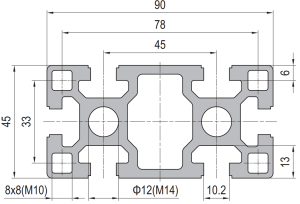 Materials and EngineeringAluminium Extrusion Section Design: What Each Feature on the Drawing Costs You
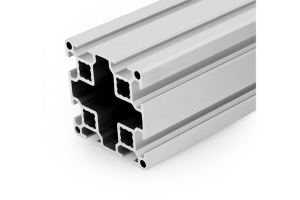 Engineering Design30 Series T-Slot Profiles: The Middle That Has to Justify Itself
 Quality and InspectionAluminium Extrusion Claims: What the Contract Must Say
 Engineering DesignModular Aluminium Components: Where the System Saves Money and Where It Costs You
 Quality and InspectionT-Slot Aluminium Profiles for Industrial Frames and Automation: A Specification Playbook
 Engineering DesignStandard vs Custom Aluminium Extrusion: The Break-Even Calculation
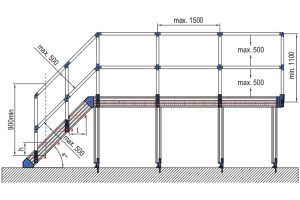 ApplicationsWhy T-Slot Aluminium Profiles Are Used in Automation and When They Are Not
 Materials and EngineeringAluminium Corrosion: Why a Salt Spray Number Is a Ranking, Not a Life
 ApplicationsHow to Choose the Right 4040 T-Slot Aluminium Profile for Industrial Applications
 Engineering DesignT-Slot vs V-Slot Aluminium Profiles: The V Is a Raceway, Not a Cheaper T
