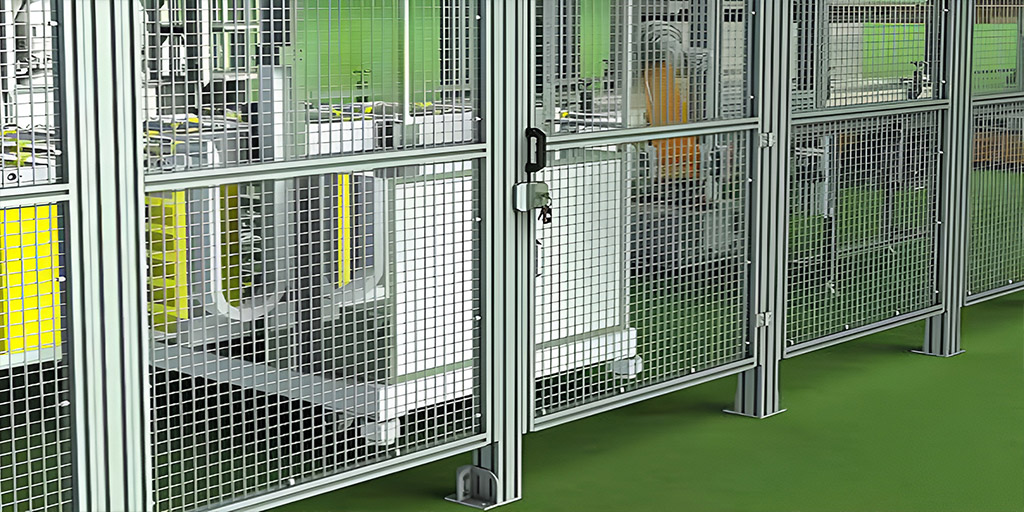
Quick answer
Four things that decide whether a sourcing programme works
Decide who owns the design before you send drawings. OEM means your design and your tooling; ODM means theirs. Most successful programmes are a hybrid — an ODM base platform with OEM features added — and that choice sets the tooling cost, the exclusivity and the minimum quantity all at once.
There are five gates, and skipping one moves the problem later. Capability, quotation, sample, pilot run, repeat order. Every gate has a document that closes it. A programme that skips the pilot run does not save a step, it moves the discovery to your own production floor.
You control the specification, the inspection and the paperwork. You do not control the promise. A supplier’s assurance is worth nothing at the point of dispute; a lot-linked test report and an agreed inspection level are worth everything.
The repeat order is the real test of a supplier. Anyone can produce a good first batch with attention. The question is whether the fifth order matches the first, and that depends on whether the specification was written down well enough to be repeated by someone who was not in the original conversation.
The first decision
OEM or ODM: the difference is who owns the drawing
The two terms are used loosely in the market, but they describe one concrete difference: who holds the design. Everything else follows from that — who pays for tooling, who carries the design risk, who can sell the same product to your competitor, and how quickly you can start shipping.
| OEM | ODM | Hybrid, and what most projects should do | |
|---|---|---|---|
| Who owns the design | You. The factory manufactures to your drawing. | The factory. You select from their range. | ODM base platform with OEM features added. |
| Tooling cost | Yours. Dies, jigs and fixtures are a capital item. | None, or shared. | Only the dies and fixtures the OEM features actually need. |
| Time to first shipment | Longest. Design, tooling, sample and approval all sit in front of production. | Shortest. The product already exists. | Middle. Tooling only for the features you are adding. |
| Exclusivity | Complete, if the tooling is yours and the drawings are yours. | None by default. The same product is on the market. | Negotiable on the features you paid for, and it must be written into the agreement. |
| Minimum quantity | Set by the tooling and the press, so it is the highest of the three. | Set by the factory’s stock policy, so it is the lowest. | Set by whichever die has to run, so keep the OEM features on the sections you already buy. |
| Design risk | Yours. A design fault is your cost, not the factory’s. | Theirs. The product is proven. | Split, and the split should be stated explicitly in the agreement. |
| When to choose it | The product is your differentiator and must not be copyable. | You need speed, low volume, or a commodity product. | Almost always, for a manufacturer buying profile systems and machined components. |
The hybrid row is the one worth dwelling on, because it is where most real programmes end up and where most of the value is. You take a proven extruded section that already exists and has an accessory range behind it — our aluminium sections and fastening elements ranges are built on exactly that principle — and you add what makes the product yours: a specific length and tolerance, a hole pattern that suits your assembly, a particular anodising or a laser-marked part number, a private-label package, or a die modification that adds one feature nobody else has.
The line that belongs in the agreement
Whatever route you take, put one sentence in the purchase agreement: which drawings and which dies are yours, and what happens to them if you stop buying. This is the single most commonly omitted clause in OEM sourcing, and it is the one that determines whether you can move the product to another factory in two years or start again from a blank drawing.
The structure
Five gates, and what closes each one
A sourcing programme that runs late has almost always left one of these gates implicit. Each gate has a deliverable, and the deliverable is what stops the next gate from starting on an assumption.
| Gate | What you need to have | What closes it | What fails here |
|---|---|---|---|
| 1. Capability screen | The process list, the equipment, the capacity and the certifications, all specific to your part | A written process route, not a catalogue | Suppliers who outsource the operation you actually care about |
| 2. Quotation | A defined scope: quantity, finish, cutting and machining included, packaging, Incoterm | A quote broken out by scope, so it can be compared | Quotes that cannot be compared, because each one assumed something different |
| 3. Sample | A physical sample plus a measured first-article report | Your signed approval against the drawing, with the measurements recorded | Approving a sample by eye and discovering a dimensional drift at scale |
| 4. Pilot run | A small production run made on the real process, not a hand-made sample | An inspection report at the agreed sampling level | The pilot that was really a sample, and the problem that appears at order quantity |
| 5. Repeat order | The full specification, the die number and the previous order reference | An incoming inspection that matches the first-article record | Silent drift in tolerance, alloy, finish or packaging between batches |
Gate 4 is the one most often skipped, and it is the one that catches process problems. A sample can be made slowly, by hand, by the most experienced operator on the line. A pilot run has to be made on the actual production route at something close to the actual rate, and that is where you find out whether the tolerance holds when the press is running and the anodising line is busy.
The enquiry
What to put in the RFQ so the quotes are comparable
Three quotations for the same part will come back at three different prices for three different scopes, and the difference is almost never in the raw material. It is in what each supplier decided to include. Nine lines make the scope identical and the numbers comparable.
Two of those nine lines cause most of the avoidable disputes. Process scope is where a cheap quote is usually cheap because something was left out — most often the anodising, the machining or the deburring. And packaging is where a perfectly good part arrives damaged, because nobody said that 1,200 mm anodised members cannot be shipped in a bundle without interleaving.
The technical block is separate
For profile work specifically, the dimensional and metallurgical specification belongs in its own block on the drawing: section, slot geometry, alloy and temper, wall thickness and its tolerance, straightness, cut length tolerance and finish. Our specification playbook sets that block out line by line. The RFQ above is the commercial envelope around it.
Supplier selection
Factory or trader: six questions that settle it
Traders are not dishonest and they are not always the wrong choice — a good trading company can aggregate several processes and manage the logistics better than you can. The problem is not dealing with a trader. It is dealing with a trader while believing you are dealing with a factory, because then your assumptions about lead time, capacity and quality control are all wrong.
What is your press tonnage and how many dies do you hold?
A factory answers with numbers and offers the die list. A trader answers with adjectives. This single question separates the two faster than any other.
Which operations are in house?
Extrusion, heat treatment, anodising, machining, assembly, packing. Ask for each one separately and note the pauses before the answers. Every outsourced operation is a lead time you do not control.
Who does your anodising?
Anodising is the operation most often outsourced and the one that most often causes delay, because the anodiser’s queue is driven by their other customers. If it is outsourced, ask for the anodiser’s name and their capacity.
Can we see the line that will run our part?
A live video call showing your section being extruded or your part being machined is worth more than an audit certificate. A factory will say yes. A trader will offer you a tour of somebody else’s plant.
Which certifications are yours?
ISO 9001 held by the company you are contracting with is meaningful. A certificate held by a subcontractor is not, unless the subcontractor is named and their scope covers your process.
What is your monthly capacity in this section?
Ask for capacity in the specific section and finish you are buying, not in tonnes of everything. A factory that makes ten thousand tonnes a year may have no spare capacity in the one die you need.
The answer that should worry you
If a supplier cannot tell you which machine will make your part, they cannot tell you when it will be made or what happens when it breaks down. That is the practical reason to insist on the process route at gate one. It is not a formality — it is the only way to know what you are actually buying.
Quality
The four inspections and the record each one produces
Quality control in a sourcing programme is not an inspection at the end. It is four inspections at four points, each producing a document that is linked to a specific lot. A certificate that is not lot-linked proves only that somebody once made a good part.
| Stage | What is checked | The record it produces |
|---|---|---|
| Incoming material | Alloy and temper, billet identity, chemical composition and mechanical properties | Mill certificate, referenced to the heat or lot number of the material used |
| In process | Wall thickness, envelope dimensions, straightness, surface on the extruded section | In-process measurement record, with the measurement, the instrument and the operator |
| Final | All drawing dimensions, finish and coating thickness, appearance, marking | Dimensional report and a first-article record signed against the drawing revision |
| Pre-shipment | Sampling inspection at the agreed level, packing, labelling, quantity | Inspection report stating the sampling level and the defect classification, plus loading photographs |
Two conventions are worth agreeing explicitly, because they are frequently left to the supplier to interpret. The first is the sampling level: industrial buyers commonly work to a documented sampling scheme such as ISO 2859-1, with a typical starting point of zero acceptance for critical defects and a defined acceptance quality limit for major and minor ones. Whatever you choose, it has to be written down, because “we check everything” is not a specification. The second is the defect classification: you need to say which deviations are critical, which are major and which are cosmetic, and what happens to each.
What a certificate does not prove
A mill certificate proves that a batch of material met the specification. It does not prove that the material in your shipment came from that batch, unless the certificate is referenced to the lot or heat number that appears on your packing list. Ask for the reference, and check that the two numbers match. This is the difference between documentation and assurance.
The paperwork
The document pack a shipment should carry
Ask for the full pack on the first order and you will find out which documents the supplier can actually produce. Ask for it on the fifth order and you will find out whether they were produced consistently. The pack has nine items and each one answers a different question.
| Document | The question it answers |
|---|---|
| Mill certificate for the material | Is the alloy and temper what the drawing specifies, and which lot was it? |
| Dimensional inspection report | Were the drawing dimensions met, and on which sample? |
| Coating or anodising report | Is the coating thickness and, for anodising, the seal quality within specification? |
| First-article record | Was the first part off the process checked against every drawing dimension? |
| Packing list with net and gross weight | What is in the box, and does the weight match the drawing? |
| Loading photographs | Was the shipment packed as agreed, and was it loaded without damage? |
| Certificate of origin | Where the goods were made, which drives the duty rate in your market. |
| Tooling record | Which dies and fixtures were used, who owns them, and what is the die number for the repeat order? |
| Commercial invoice matching the packing list | Do the declared values and quantities match the physical shipment? |
The tooling record is the one buyers most often forget to ask for, and it is the one that makes the second order repeatable. Without the die number, the second order is a new enquiry and the supplier is free to use whatever die is closest. With the die number on the purchase order, the second order is a repeat of a known process.
Time and cost
Where the schedule goes, and what the price does not include
First orders take longer than second orders, and the difference is almost entirely front-loaded. A custom extrusion programme is a good illustration because it contains all the stages: tooling, sampling, approval, material, production, finishing and freight.
| Stage | Typical duration | What makes it slip |
|---|---|---|
| Die design and manufacture | 2 to 4 weeks | Design changes after the die is cut, which usually means a new die rather than a modification |
| First sample and your approval | 1 to 2 weeks | Your own approval process. This is the stage buyers most often blame on the supplier and most often cause themselves |
| Billet procurement | 1 to 3 weeks | An unusual alloy or a non-standard billet diameter, which may have to be ordered in |
| Extrusion and heat treatment | A few days to 2 weeks | Press scheduling. Small orders wait behind large ones |
| Anodising or painting | A few days to 1 week | The finishing line queue, which is worst immediately before a public holiday |
| Machining and assembly | Depends on the features | A feature that has to be re-fixtured, which is a design issue rather than a capacity one |
| Packing and inland transport to port | About 1 week | Packaging that has to be redesigned after the parts are made |
| Ocean transit | 3 to 6 weeks by lane | Port congestion and blank sailings, neither of which you control |
| Total, first order | Typically 8 to 14 weeks door to door | Almost always the approval loop and the finishing queue, not the manufacturing |
Read that table as a schedule risk register rather than a timetable. Two of the nine rows are inside your control and both of them are the ones that slip most often: your own sample approval, and the packaging decision. Everything else is a queue you can plan around but cannot shorten by asking.
The unit price is not the cost
The number on the quotation is the beginning of the landed cost, not the end of it. When you compare two suppliers, compare this line rather than the unit price:
landed cost per part = unit price + freight per part + duty + insurance + inland transport + inspection + the cost of the defects you did not catchThe last term is the one that decides most supplier comparisons, and it is the only one that is invisible until it is too late. It is also the term that an agreed inspection level at pre-shipment is designed to reduce.Incoterms, in one paragraph
The Incoterm decides where your risk starts. Under FOB you take control at the port of loading, which means you choose the freight forwarder, you see the freight cost, and you own the customs entry. Under CIF the supplier arranges the freight and insurance, which is convenient but hides both costs inside a single number. Under DDP the supplier delivers to your door with duty paid, which is the easiest to administer and the hardest to audit, because you cannot see what the duty and freight actually cost. For a first order, FOB gives you the clearest view of the real cost structure, and you can move to a delivered term later once you know what it should cost.
Questions
Frequently asked questions
What is the difference between OEM and ODM?
OEM means the factory manufactures to your drawing, so you own the design, the tooling and the design risk. ODM means you buy the factory’s own design and brand it, so you get speed and low volume but no exclusivity and no ownership. Most manufacturing programmes use a hybrid: an existing, proven platform with OEM features added, such as a specific length, hole pattern, finish or private label.
What is a typical minimum order for a custom aluminium extrusion?
Minimum order quantities for custom extrusion are normally quoted in kilograms rather than pieces, commonly a few hundred kilograms per section and finish combination, because the press needs a minimum billet sequence to run economically. That is why the tooling decision and the order quantity decision are effectively the same decision: a die is only affordable if the first order is large enough to absorb it.
Who owns the tooling in an OEM programme?
You do, if you paid for it, and it should say so on the invoice and in the tooling record. Ask three questions before the die is cut: who owns it, where is it stored, and what happens if you move to another supplier. A die that is physically tied to one press is not really a movable asset, so settle this in writing before the tooling is made rather than when you want to leave.
What documents should arrive with a shipment?
At minimum: a mill certificate for the material referenced to the lot, a dimensional inspection report, a coating or anodising report, a first-article record, a packing list with net and gross weight, loading photographs, a certificate of origin, a tooling record and a commercial invoice that matches the packing list. Ask for all of them on the first order, and check that the lot number on the mill certificate matches the one on your packing list.
How long does a first order take?
For a custom extrusion programme, typically eight to fourteen weeks from purchase order to goods at your door, including die manufacture, sampling, your approval, material procurement, extrusion, finishing, packing and ocean transit. The second order is much shorter because the die exists and the process is approved. The two stages that most often slip are your own sample approval and the finishing line queue.
How do I check whether a supplier is a factory or a trader?
Ask what press tonnage they run and how many dies they hold, which operations are in house, who does their anodising, whether you can see the line that will run your part, which certifications are theirs rather than a subcontractor’s, and what their monthly capacity is in your specific section. A factory answers those with numbers. A trader answers with adjectives and offers you a tour of somebody else’s plant.
Send us a drawing and a quantity
We will come back with a process route, a scope broken out line by line, and the documentation we will supply with the shipment. Tell us your market and we will quote the right Incoterm.
Related reading
Twelve more engineering notes from this blog, picked for this article — plus every category below.
 Engineering DesignAluminium Extrusion Die Cost (2026): Price by Section Size
 Engineering DesignAluminium Profile Anchor Pins: A Preloaded Joint, Not a Pin
 Engineering DesignStandard vs Custom Aluminium Extrusion: The Break-Even Calculation
 Sourcing and ProcurementImporting Aluminum Profiles from China: Nine Failures That Quietly Raise Your Landed Cost
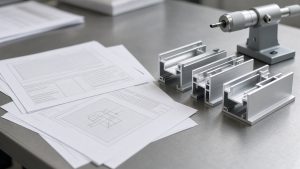 Quality and InspectionAluminium Extrusion Certificates and Standards Explained (EN 755, EN 12020, ISPM 15)
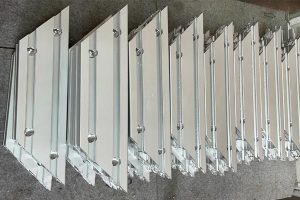 Engineering DesignAluminium Extrusion Tolerances: What to Write, and How to Inspect
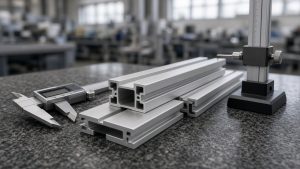 Quality and InspectionAluminium Extrusion Claims: What the Contract Must Say
 Engineering DesignAluminium Extrusion Lead Time: New Die vs Existing Die
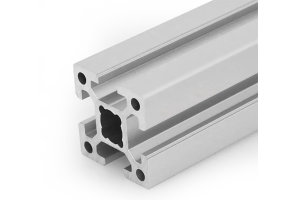 Engineering DesignWhat Is a 3030 Aluminium Profile? (Weight, Slot and Load)
 Applications40×40 Aluminium Profile: Where It Works, Where It Fails, and Why
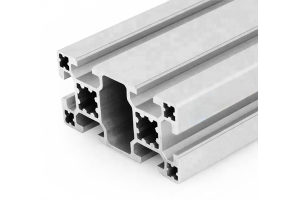 ApplicationsAluminium Workstations: From Fixed Benches to Reconfigurable Cells
 Engineering DesignAluminium Profile Sizes: The Four Slot Dimensions That Decide Compatibility
