Aluminium Profile Anchor Pins: A Preloaded Joint, Not a Pin
Anchor pins are usually sold on alloy grade and surface finish. What decides whether the joint holds is different: how much clamping force the pin actually develops, and whether the aluminium thread it goes into can carry that force without stripping.
Short answer
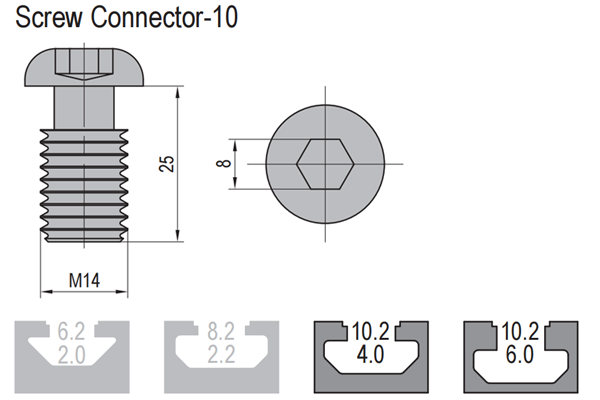
An anchor pin is a preloaded joint, and the pin itself is rarely the weakest element. The joint carries its load by clamping the two members together, and the clamping force depends on the torque applied, on friction in the threads and under the head, and on how much of that torque is lost before it becomes preload. Most of it is lost to friction. The limiting component is usually the tapped thread in the aluminium profile, which has far less strip-out strength than a steel nut. So the questions that matter are the engagement length, the torque specification and the lubrication condition it assumes, the coating on the pin and whether that coating damages the thread or the fatigue performance, and how the pin is protected from the galvanic couple it forms with the aluminium around it. Alloy grade and hardness are screening tools, not the answer.
A pin is a spring, not a peg
The mental model most buyers carry is that a pin passes through two parts and holds them by being there. That is a shear pin. An anchor pin works differently: it is tightened and, in doing so, clamps the two members together. The friction and the compression at the interface carry the load. The pin mostly holds the clamp.
This changes what matters. If the clamp is maintained, the joint is stiff and the pin sees little fluctuating load. If the clamp is lost, the joint moves, the pin is loaded in a way it was never designed for, and it starts to see a reversing load that will eventually crack it. That is the mechanism behind the classic report of a frame that was tight on commissioning and rattling a year later.
Clamp force is generated by torque, but the relationship is indirect. Most of the torque applied to a fastener goes into overcoming friction in the threads and under the head, and only a small fraction becomes preload. Because friction is the dominant term, the same torque applied to a lubricated pin and a dry one produces very different clamping forces. A torque figure quoted without a lubrication condition is therefore not a specification; it is a number.
The tapped hole is in aluminium
This is the single most important point about anchor pins and it is the one the usual material-science discussion skips. The pin may be steel or stainless, but the thread it engages is cut into aluminium. Aluminium has lower shear strength than steel, so the internal thread strips before the steel pin breaks.
Three consequences follow. First, engagement length matters more than it does in steel-to-steel joints. The common rules of thumb for thread engagement are written for a steel screw in a steel nut; a steel fastener in aluminium needs more engagement, not less, and the number should be stated on the drawing rather than left to the workshop.
Second, the load capacity of the joint is usually set by the aluminium thread, so asking a supplier for a stronger pin does not raise the capacity. The useful question is how much thread engagement the joint provides and whether that is enough for the intended torque.
Third, where the load is significant, the reliable answer is to take the thread out of the equation: a through-bolt with a nut on the far side, or a steel insert that distributes the load over more aluminium. Both cost more in parts and less in failures. Through-threaded centre bores exist for exactly this purpose on many profiles, and they are worth using rather than drilling a new hole in a face.
Alloy and heat treatment: what the grade really decides
Two alloys dominate this application. A 6061 type alloy offers a good balance of strength and corrosion resistance and is the usual choice for load-bearing pins. A 6082 type offers somewhat higher strength and is used where the connection is highly stressed. Impurity levels matter as well: excess iron or copper degrades corrosion resistance, which matters on a pin that lives outdoors.
Heat treatment is what turns the alloy into the temper. Solution treatment dissolves the alloying elements, and artificial ageing precipitates them to raise strength. Both steps have a window. Under-age and the pin is soft; over-age or overheated and the grain coarsens and toughness falls. None of this is visible, which is why the temper claim on the certificate is the part worth reading.
Hardness is the practical screening measurement, because it is quick and non-destructive. It is not the acceptance criterion. A hardness reading can tell you that a batch is broadly right; it cannot tell you the proof stress. Where the connection is structural, the definitive check is a tensile test on a sample from the same lot, and that is what the certificate should report.
Where a good finish makes a bad fastener
Surface treatment is the section where the usual advice does the most damage, because a coating that is excellent for a decorative profile can be wrong for a precision threaded part.
Anodising a threaded pin. Anodising produces a hard, brittle oxide layer. On a thread it introduces two problems. It grows into and out of the surface, so it changes dimensions on a part whose whole purpose is dimensional precision, and it changes them unevenly on a thread form. And the layer is brittle, so it can initiate cracks at the thread root, which is exactly the location where fatigue cracks start. Anodising is the right answer for a visible profile face and usually the wrong answer for a precision thread.
Electroplating a high-strength steel pin. Zinc and cadmium plating on high-strength steel introduces a hydrogen embrittlement risk, because hydrogen absorbed during plating can cause delayed brittle failure under sustained load. Where a high-strength steel pin must be plated, the process has to include a post-plating bake and the requirement has to be stated, not assumed. The alternative is a coating that does not involve hydrogen, or a stainless grade, and both are usually cheaper than a failure.
The galvanic couple. A stainless or plated steel pin in an aluminium profile forms a couple in any damp environment, and the aluminium is the metal that corrodes. Keep water out of the joint, keep the cathodic area small, and use isolation where the detail allows. Where isolation is used, remember that it also breaks electrical continuity, which matters if the structure carries a bonding requirement.
The tests that actually predict joint performance
Most quality discussions about pins stop at tensile strength and salt spray. Those two tests are useful and neither one predicts whether the joint will stay tight.
| Test | What it tells you | What it does not |
|---|---|---|
| Torque against preload | Whether the pin develops usable clamping force, and how much scatter there is | Nothing about long-term behaviour on its own |
| Repeated tightening and loosening | Whether the thread and the aluminium hole survive service and re-work | Whether the joint will loosen under vibration |
| Vibration or transverse load cycling | Whether preload is retained, which is the real failure mode | Absolute life in a different application |
| Go / no-go thread gauging | Whether the thread is dimensionally correct after coating | Anything about strength |
| Hardness | A quick screen for temper | Proof stress, which needs a tensile test |
| Salt spray | Comparative performance between coatings or suppliers | Service life, which it cannot predict |
The transverse or vibration test is the one that most closely matches how joints actually fail. Preload is lost not because the bolt stretches but because the joint settles, the surfaces bed in, and small relative movements work the fastener loose. Anything that reduces that movement, including a longer engagement, a larger bearing area, or a thread-locking method, does more for reliability than a stronger pin.
Storage, handling and re-use
A pin that was correct when it left the factory can be wrong by the time it is installed. Three practical items are worth specifying.
Cleanliness. Contamination and light corrosion on the thread change friction, which changes preload for the same torque. Pins stored in a humid workshop do not stay in the condition they were tested in, which is the real argument for controlled storage and protective packaging rather than a matter of tidiness.
Handling damage. A nicked or burred thread will not develop the intended preload, and it damages the aluminium thread it enters. On a precision part, damaged threads should be a rejection reason, not something to be dressed with a file.
Re-use policy. Locking elements that rely on a deformed thread or an insert lose effectiveness after a limited number of uses, and a joint that has been apart and back together several times is not the same joint. A stated re-use limit, and a rule about replacing the locking element rather than the whole pin, is a small line in a purchase order that prevents a common field problem.
What to send with an anchor pin enquiry
RFQ checklist — anchor pins and hidden fasteners
- Profile series and slot — the pin has to match the slot family, not just the size.
- Joint load and direction — tension, shear or a combination, and whether there is a lever arm.
- Thread size and engagement — and whether the aluminium thread is the intended load path or a through-bolt is used.
- Torque specification and lubrication condition — a torque figure without the friction condition is not a specification.
- Pin alloy and temper — with the certificate type that has to accompany the batch.
- Coating — and explicitly whether the thread may be coated, given the effect on dimensions and fatigue.
- Environment — indoor, washdown or coastal; it decides the galvanic control and the coating.
- Re-use and locking policy — how many times the joint may be opened, and what gets replaced.
Ask one question before ordering: which thread carries the load, the pin’s or the one cut into the aluminium. If the answer is the aluminium thread, the engagement length is the number that matters.
Five ways an anchor pin joint fails
Related on this site
- T-slot connectors: what each type is good at— choosing the connection method before the part
- How strong is a profile: it depends how you fix it— why the joint, not the section, sets capacity
- Good vs bad profiles: a three-tier inspection— how to check what arrives
- Connecting elements category— brackets, anchors and slot nuts
Terms used in this article
- Preload
- The clamping force induced in a joint by tightening; it is what carries the service load.
- Strip-out
- Failure of an internal thread by shear, which in aluminium occurs before the steel fastener breaks.
- Engagement length
- The depth of thread in contact, measured in multiples of the nominal diameter.
- Hydrogen embrittlement
- Delayed brittle failure of high-strength steel caused by hydrogen absorbed during plating or pickling.
- Anodic growth
- Expansion of an anodised surface: the oxide forms partly within and partly outside the original surface, changing dimensions.
- Galvanic couple
- Two dissimilar metals in electrical contact in an electrolyte; the more anodic one corrodes.
Questions buyers ask
Does a stronger pin make a stronger joint?
Usually not. The tapped thread is in the aluminium, which has lower shear strength, so the internal thread normally strips first. Engagement length or a through-bolt raises capacity; a higher-grade pin does not.
Should anchor pins be anodised?
Normally not, if the thread is a functional surface. Anodising changes dimensions unevenly on a thread and produces a brittle layer at the thread root, which is where fatigue cracks initiate.
Why does the same torque give different results?
Because most of the torque is consumed by friction, and friction depends on lubrication, plating and surface condition. The torque specification is only meaningful together with the friction condition it assumes.
What is the right test for a joint that keeps loosening?
A transverse or vibration test, which reproduces the small relative movements that actually lose preload. A tensile test will pass while the joint still loosens in service.
Are stainless pins safe in an aluminium frame outdoors?
They are common and they create a galvanic couple with the aluminium whenever the joint is wet. Keep water out, keep the stainless area small, and isolate where the detail allows, remembering that isolation also breaks continuity.
Send the joint, not just the part number
Tell us the series, the load direction and the torque you intend to apply, and we will specify the pin, the engagement and the coating for the environment it will live in.
Request a quoteRelated reading
Twelve more engineering notes from this blog, picked for this article — plus every category below.
 Quality and InspectionGlobal Sourcing Excellence: Multi-Category OEM and ODM Manufacturing and Supply Chain Integration
 Engineering DesignAluminium vs Steel, Extruded vs Cast: What Actually Changes
 ApplicationsWhy T-Slot Aluminium Profiles Are Used in Automation and When They Are Not
 Engineering DesignRobot Cell Framing in Aluminium: Stiffness, Damping and the 2025 Safety Revision
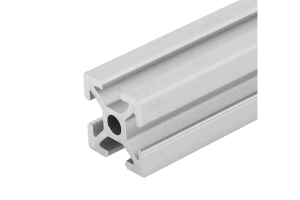 Applications20 Series T-Slot Profiles: Where the Limits Actually Are
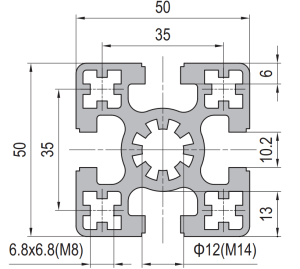 Engineering DesignAluminium Profile Sizes 20 × 20 to 100 × 100: What Fails First
 Engineering DesignAluminium Extrusion Die Cost (2026): Price by Section Size
 Applications40×40 Aluminium Profile: Where It Works, Where It Fails, and Why
 Sourcing and ProcurementPayment Terms for Aluminium Profile Orders (T/T, L/C and the Risk)
 Sourcing and ProcurementFOB vs CIF vs DAP vs DDP: Aluminium Profile Landed Cost
 Sourcing and ProcurementAluminium Extrusion Price per kg in 2026 (China FOB)
 Sourcing and ProcurementAluminium Profile Price Breaks: How Volume Changes the Unit Price
