Aluminium Partition Support Feet (T-Shape & L-Shape)
A partition maker in Poznań is building freestanding acoustic shopfloor dividers and office glass screens on 40×40 and 45×45 aluminium frames. The enquiry is for 3,000 sets of support feet: T-type double-sided shoes for mid-room screens, and L-type single-sided shoes for runs flush against a wall. They asked whether we stock 350–500 mm bases, whether the shoes are sandblasted clear or black anodised or die-cast, whether the underside is tapped for M8/M10 nylon levelling glides, and whether a custom 420 mm length can carry a laser-etched logo. The answers sit in the geometry of the foot, not in a heavier post, and in the listed nylon pads — not in a catalogue T or L shoe, because we do not publish one.
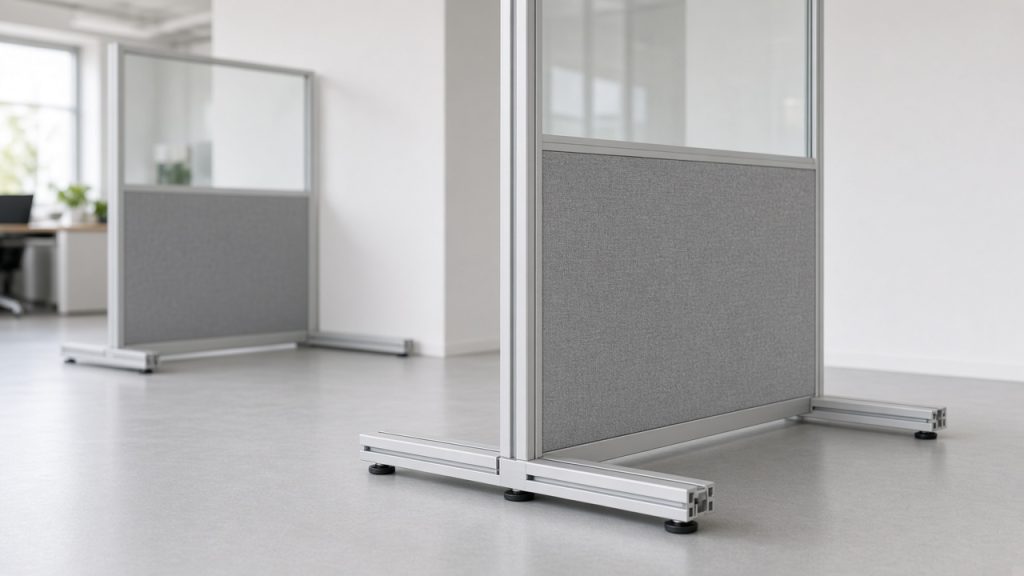
Short answer
We do not catalogue a T-type or L-type partition-foot SKU. The aluminium body is quoted to drawing. A mid-room freestanding screen needs a double-sided T so a push from either face is resisted; a run flush to a wall, a column or a machine needs a single-sided L, because there is no room for the second arm. What resists tipping is the effective base width, and that width must be written on the drawing. Lengths such as 350–500 mm, or a custom 420 mm, are buyer sizes we can cut and machine; they are not listed SKUs and they are not a published overturning load. Under the shoe we use the listed PA6 nylon feet — usually nylon pivot foot GP-FE-NPF-01, with swivel ball foot GP-FE-SBF-01 or cup pivot foot GP-FE-CPF-01 where the geometry calls for them. M8 and M10 sit inside the published M8–M16 range; there is no M8/M10-only glide SKU. NPF pads are 40 / 50 / 60 / 80 mm, rated 400 / 600 / 1,000 / 1,600 kg, 90 °C continuous, electrically insulating, and will not mark epoxy or vinyl. For 3,000 sets we quote the T/L body to drawing and the listed pads in their own 2026 USD bands (NPF, MOQ 500: 2,000–9,999 pcs $2.05; 10,000–49,999 $1.24). We do not stock a sandblasted clear or black anodised partition shoe, we do not list a die-cast T/L grade, and we do not relabel the short L-base bracket GP-FE-LBB-01 (long leg 60–120 mm) as a 350–500 mm shoe.
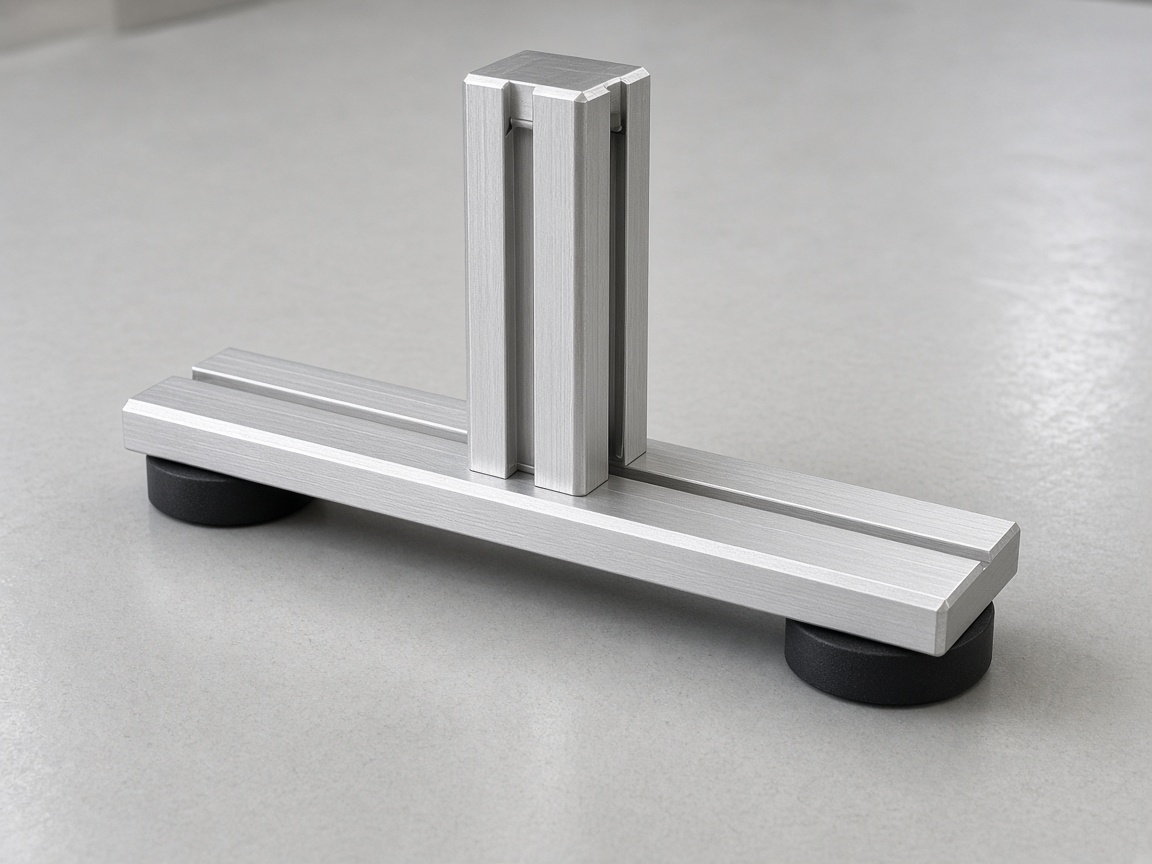
A mid-room screen needs a T foot; a wall-flush run needs an L
Choose a double-sided T when the screen stands in the middle of a room and can be pushed from either face; choose a single-sided L when the run sits flush to a wall, a column or a machine and there is no room for the second arm. Tip-over is a geometry problem, not a strength problem. A horizontal push at mid-height or at the top of a tall glass or fabric screen tries to rotate the assembly about the near edge of the foot. The resisting moment is the self-weight acting through the effective base width — the plan distance from that pivot edge to the load. On a symmetric T, that width is set by how far the shoe extends on each side. On an L, the only resisting arm in the critical direction is the outward leg; a push toward the wall is taken by the wall, provided the run is flush. A heavier 40 or 45 series post adds a little mass. It does not lengthen the resisting arm, and changing 40×40 to 45×45 will not rescue a short shoe under a tall screen.
We will not publish a span chart or an overturning figure in kN. That number depends on screen height, the mass of glass versus fabric, whether people lean on the panel, and the floor. What we will do is put the effective base width on the drawing and quote the aluminium body to that drawing. The 350–500 mm envelope in the enquiry, and a custom 420 mm cut length, are buyer sizes we can machine. They are not listed SKUs. The same geometry applies when the floor must not be drilled; that plant-fence case is already covered in freestanding plant partition fencing. This article is the office, acoustic and glass job — a 3,000-set programme on 40 and 45 series frames — not that layout.
The shoe attaches to 30, 40 and 45 series posts from the drawing
There is no hidden fastener SKU for a T or L partition shoe; the post sits in a pocket, a clamp or a stub specified on the drawing, and is held by slot bolts or end bolts matched to the series. The frames are 40×40 and 45×45; a 30 series post is a normal request. The interface is called out, not assumed. Typical routes are a vertical socket that the post drops into and is bolted through the T-slot; a short stub that engages the slot from below or from the side with T-nuts; or end-face fixings where the post stands on a pad or plate at the junction. We will not invent a clamp part number.
40 series and 45 series do not share a slot and end-tap standard, so a mixed 3,000-set programme needs the pocket, the bolt set and the series written on each line. For published slot data see T-slot dimensions, and for the sections themselves what a 40×40 profile is and 40×80 versus 45×45. Two listed parts are easy to confuse with this shoe and should not be substituted for it. The fixed foot with profile base GP-FE-FFB-01 is a short, non-adjustable block under a leg (bases 60×60 to 100×100 mm, 4×M6 to 4×M10 plus slot engagement). The L-base bracket GP-FE-LBB-01 is a short floor-anchor at the leg, long leg 60–120 mm, short leg 30–60 mm. Neither is a 350–500 mm partition shoe.
M8 and M10 nylon pads under the shoe come from the listed PA6 feet
We do not catalogue an M8/M10-only glide for partition shoes; M8 and M10 sit inside the published NPF, SBF and CPF ranges, and those listed PA6 pads are what we put under the shoe. Tapped holes in the underside of the T or L body are machined to the drawing. The usual pad is GP-FE-NPF-01 (model NPF-M8-M16): a moulded PA6 pivot joint and base that will not corrode or mark epoxy or vinyl, electrically insulating, 90 °C continuous. Stems, pad diameters and loads are in the table below. Stem length is published as 40–80 mm, overall height 55–140 mm. A mid-room T usually takes a pad at each arm; an L usually takes one under the outward arm. Confirm the count, the stem and the pad diameter on the drawing.
Where the post or the floor is a few degrees off vertical, GP-FE-SBF-01 is the listed self-aligning option. Its ball-and-socket joint absorbs 10–15 degrees of leg angle — not 15–20 degrees — so the pad stays flat and the stem is not bent over an edge. Standard SBF stem lengths are 40 / 50 / 60 / 80 mm. Private-label marking is listed on moulded SBF and NPF pads; that is not a laser-etched logo on the aluminium shoe, which is a separate, to-drawing request. GP-FE-CPF-01 is the listed cup foot when a profile end is captured. It fits 20, 30, 40, 45 and 60 mm square sections, and the cup outside is up to about double the profile section. Use it for a post end in a cup, not as a substitute for an NPF pad under a long arm. The aluminium profile base plate GP-FE-BPL-01 is a different listed part: a 40×40 to 200×200 mm plate, 6–15 mm thick, with an optional threaded boss and bonded pad. It can sit under a leg. It is not the T or L shoe.
| Listed pad | Stems | Pad or cup | Static load | MOQ and 2026 band at 3,000 pcs |
|---|---|---|---|---|
| NPF-M8-M16 | M8 / M10 / M12 / M16 | 40 / 50 / 60 / 80 mm pads; PA6, 90 °C, non-marking, insulating | 400 / 600 / 1,000 / 1,600 kg | MOQ 500; 2,000–9,999 pcs $2.05 |
| SBF-M8-M16 | M8 / M10 / M12 / M16 | 40 / 50 / 60 / 80 mm pads; ball joint 10–15° | 400 / 600 / 1,000 / 2,000 kg | MOQ 200; 1,000–4,999 pcs $4.20 |
| CPF-20-60 | M8 / M10 / M12 / M16 | Fits 20 / 30 / 40 / 45 / 60 mm square; cup outside up to about double the section | 500 / 700 / 1,000 / 1,200 / 1,600 kg | MOQ 500; 2,000–9,999 pcs $2.90 |
Lead time on the listed pads is 15–25 days after deposit. Do not treat the three 2026 bands as one mixed-kit price.
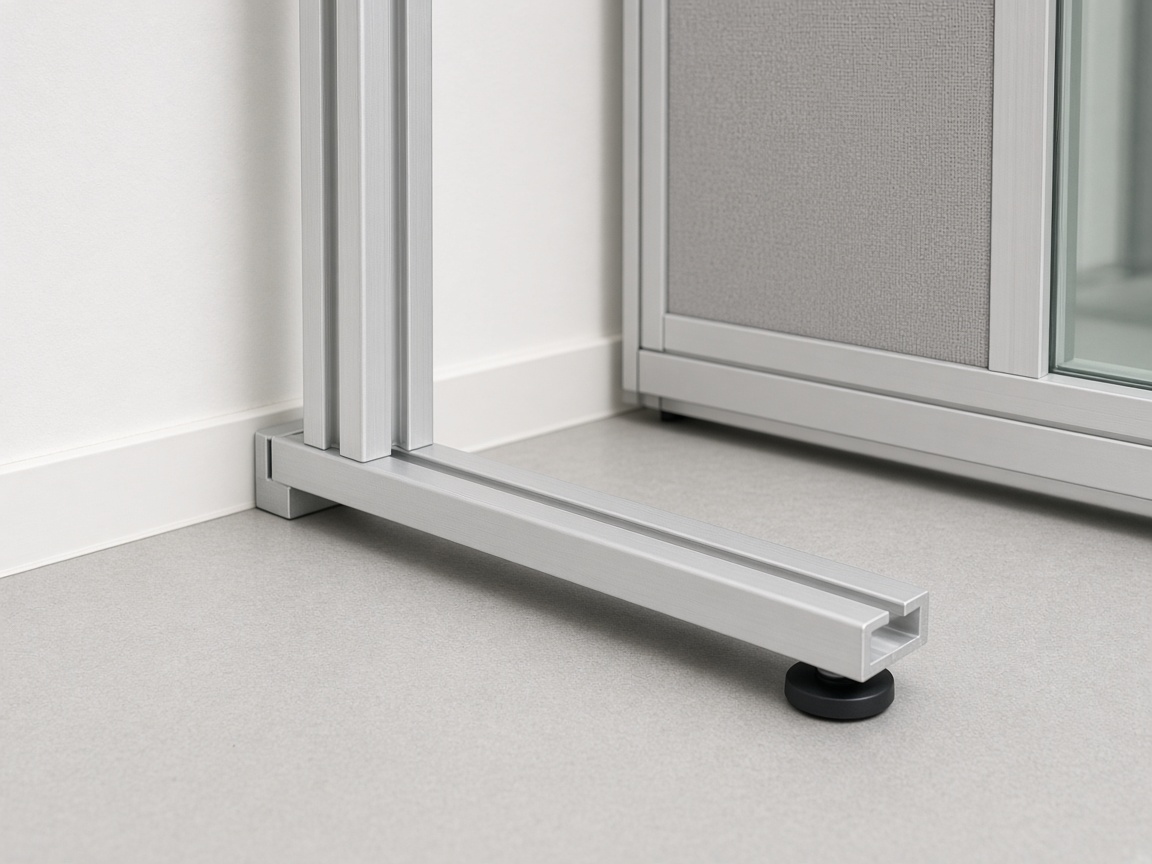
Finish, a 420 mm length and a logo are quoted from the drawing
We do not stock a sandblasted clear or black anodised partition shoe, and we do not list a die-cast T or L grade; finish, a 420 mm cut length and any logo are quoted from the drawing. The finishes we do publish are on related listed parts, and they are a starting point, not a stock promise on the shoe. GP-FE-BPL-01 is anodised 10–15 µm, powder coated 60–80 µm, or zinc-plated steel. GP-FE-FFB-01 is anodised 10–15 µm or powder coated 60–80 µm, in ADC12 die-cast or 6063-T5 machined aluminium. A T or L shoe can be machined from plate or from an extrusion, and a die-cast route can be discussed, but that is not a published partition-foot grade. See anodising versus powder coating.
A 420 mm base is a buyer length inside the 350–500 mm envelope already named in the enquiry. We can cut and machine it. We will not put 350, 420 or 500 mm into a catalogue length table as if those were stock sizes. A laser-etched logo on the aluminium shoe is also to drawing: location, depth and artwork come with the RFQ. Private-label marking is listed on some moulded feet (SBF and NPF). That is mould marking on the pad, not a confirmed laser-etch process on a 420 mm extrusion, and we will not treat it as one.
A 3,000-set programme is quoted as a to-drawing shoe plus listed pads
We will not lump 3,000 mixed T and L shoes, in 40 and 45 series, into one catalogue unit price; the aluminium body is quoted to drawing, and the listed pads keep their own 2026 bands. Split the bill of materials. Line one is the T and L aluminium bodies, broken out by type, series, base width, finish and any logo. Line two is the pads, broken out by SKU and stem. A T that takes two NPF pads and an L that takes one will land in different pad quantities; at 3,000 shoes the pad count may still sit in the NPF 2,000–9,999 band at $2.05, or it may cross into 10,000–49,999 at $1.24. That is why the PO has to state pads per shoe rather than sending “3,000 sets” as one mixed line.
Use the 2026 USD pad bands in the table above. FFB (MOQ 200, lead 20–30 days after deposit) and BPL (MOQ 200, lead 15–25 days) remain available if a short profile-base foot or a plate is genuinely what the frame needs; they are not a proxy price for the T or L shoe. The shoe itself is to drawing, so its unit price and lead time are confirmed with the quote. Samples and OEM or ODM work are available. Send DWG, DXF, STEP, IGES or PDF.
What the purchase order must state
- Post series and section (40×40, 45×45, or 30 series) and how the post attaches (slot clamp, pocket or end bolts).
- Screen height, and whether the panel is glass, fabric or mixed.
- T or L, and whether the run is mid-room or flush to a wall, column or machine.
- Effective base width, written as a dimension. Buyer lengths such as 350–500 mm or a custom 420 mm belong here, not in a catalogue table.
- Pad family (NPF, SBF or CPF), stem (M8 or M10, or another listed size), pad diameter, and pads per shoe.
- Finish of the aluminium body, and logo or marking if required, with location and artwork.
- Quantity by type — not 3,000 mixed sets as one line.
- Floor finish (vinyl, epoxy or other) and whether it may be drilled.
Related on this site
- How do T and L feet hold a partition when the floor must not be drilled? — the same geometry, on a plant-fence job, not this office programme
- Nylon pivot foot GP-FE-NPF-01 — PA6 pads 40–80 mm, M8–M16, 400–1,600 kg
- Swivel ball foot GP-FE-SBF-01 — ball joint 10–15 degrees, not 15–20
- Cup pivot foot GP-FE-CPF-01 — captures 20–60 mm square ends
- L-base bracket GP-FE-LBB-01 — long leg 60–120 mm, not a 350–500 mm shoe
- What is a 40×40 aluminium profile? — the 40-series post in this enquiry
- How does 45×45 compare with 40-series sections? — the other post in the mixed programme
- What are the T-slot dimensions by series? — so the pocket and bolts match the post
- Anodising versus powder coating — listed finishes, not a sandblasted stock shoe
Terms used
- Effective base width
- The plan distance that resists tipping. It must be stated on the drawing, not taken from a published kN figure.
- T-type shoe
- A double-sided floor base for mid-room screens, quoted to drawing. Not a listed SKU.
- L-type shoe
- A single-sided floor base for a flush run, quoted to drawing. Not a listed SKU, and not the L-base bracket.
- L-base bracket
- GP-FE-LBB-01. A short floor-anchor at the leg (long leg 60–120 mm). Not a 350–500 mm partition shoe.
- Nylon pivot foot
- GP-FE-NPF-01 (NPF-M8-M16). The listed PA6 pad under the shoe. M8 and M10 sit inside M8–M16.
Questions buyers ask
Do you catalogue T-type and L-type partition support feet in 350, 420 and 500 mm lengths?
No. There is no published T-type or L-type partition-foot SKU. The aluminium body is quoted to drawing. Lengths such as 350–500 mm, or a custom 420 mm, are buyer sizes we can machine; they are not a catalogue table.
What is the difference between a T foot and an L foot for office or acoustic screens?
A T is double-sided, for mid-room screens that can be pushed from either face. An L is single-sided, for a run flush to a wall, column or machine. The critical direction on an L is a push away from the wall.
How long should the base be so a freestanding screen does not tip over?
State the effective base width on the drawing against the screen height and the panel mass. A heavier 40 or 45 series post will not fix a tall, narrow foot. We will not publish a span chart or an overturning figure in kN.
Do you offer sandblasted clear or black anodised, or a die-cast partition foot, as stock?
No. A T or L shoe finish is quoted from the drawing. Related listed parts (BPL, FFB) are anodised 10–15 µm or powder coated 60–80 µm; BPL is also offered as zinc-plated steel, and FFB is ADC12 die-cast or 6063-T5 machined. That is not a listed sandblasted or die-cast partition-foot grade.
Can the shoe take M8 or M10 nylon levelling glides, and will they mark the floor?
Yes, as listed pads, not as an M8/M10-only SKU. Tapped holes in the shoe are machined to the drawing. GP-FE-NPF-01 takes M8–M16 stems, with 40 / 50 / 60 / 80 mm PA6 pads rated 400 / 600 / 1,000 / 1,600 kg. The pad is insulating, rated to 90 °C continuous, and will not mark epoxy or vinyl. SBF adds a 10–15 degree ball joint; CPF is the cup option for a captured profile end.
Can we order a custom 420 mm base with our logo laser-etched?
Yes, as a to-drawing request. 420 mm is a buyer length, not a listed size. A laser-etched logo needs location, depth and artwork on the drawing. Private-label marking on moulded SBF and NPF pads is not a confirmed laser-etch process on a 420 mm extrusion.
Is the L-base bracket the same as an L-type partition shoe?
No. GP-FE-LBB-01 is a short floor-anchor at the leg (long leg 60–120 mm, short leg 30–60 mm). It is not a 350–500 mm partition shoe, and we will not relabel it as one.
How do you quote 3,000 sets for 40 and 45 series, mixed T and L?
The aluminium T/L body is quoted to drawing, broken out by type, series, base width and finish. Listed pads keep their own 2026 USD bands: NPF MOQ 500, 2,000–9,999 pcs $2.05; SBF MOQ 200, 1,000–4,999 pcs $4.20; CPF MOQ 500, 2,000–9,999 pcs $2.90. We will not lump 3,000 mixed T+L+40+45 sets into one catalogue price.
Also searched as: aluminium partition support feet, T-type double-sided and L-type wall-flush feet, 350–500 mm or custom 420 mm base, M8/M10 nylon levelling glides, office acoustic and glass partition feet on 40×40 and 45×45 frames
Send the drawing, the screen height and the quantity by type
Give us the post series, screen height and panel type, T or L and whether the run is mid-room or flush, the effective base width, the pad and stem, the finish, any logo artwork, and the quantity broken out by type. We will quote the aluminium T/L body to drawing and the listed PA6 pads in their 2026 bands.
Request a partition-foot quoteRelated reading
Twelve more engineering notes from this blog, picked for this article — plus every category below.
 ApplicationsNylon Levelling Feet and Swivel Ball Feet
 Engineering DesignAluminium Profile Max Span: Deflection Table by Section
 Engineering DesignFreestanding Plant Partition Fencing
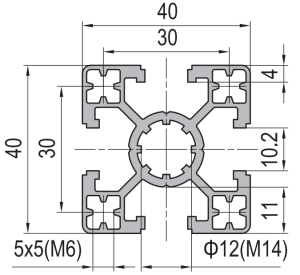 Engineering DesignAluminium Profile Standard Sizes: How the Series Matrix Actually Works
 Engineering DesignExtruded vs Cast Aluminium: Stronger in One Direction, Not in All of Them
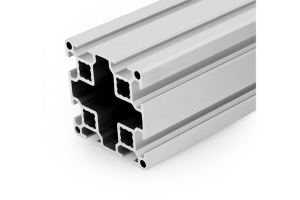 Engineering Design30 Series T-Slot Profiles: The Middle That Has to Justify Itself
 Engineering DesignAluminium Extrusion Lead Time: New Die vs Existing Die
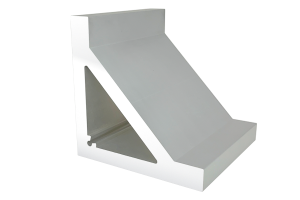 ApplicationsAluminium Profiles in Industry and Construction: One Material, Two Acceptance Logics
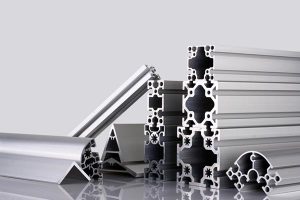 Materials and EngineeringAnodised vs Powder Coated Aluminium Profiles: A Specification Guide for European Buyers
 Sourcing and ProcurementFOB vs CIF vs DAP vs DDP: Aluminium Profile Landed Cost
 Materials and EngineeringRecycled Aluminium Profiles: A Number You Have to Be Able to Evidence
 Quality and InspectionAluminium Profile Finishes: Choose by Failure Mode, Not by Process Name