Extruded vs Die-Cast Aluminium Corner Brackets
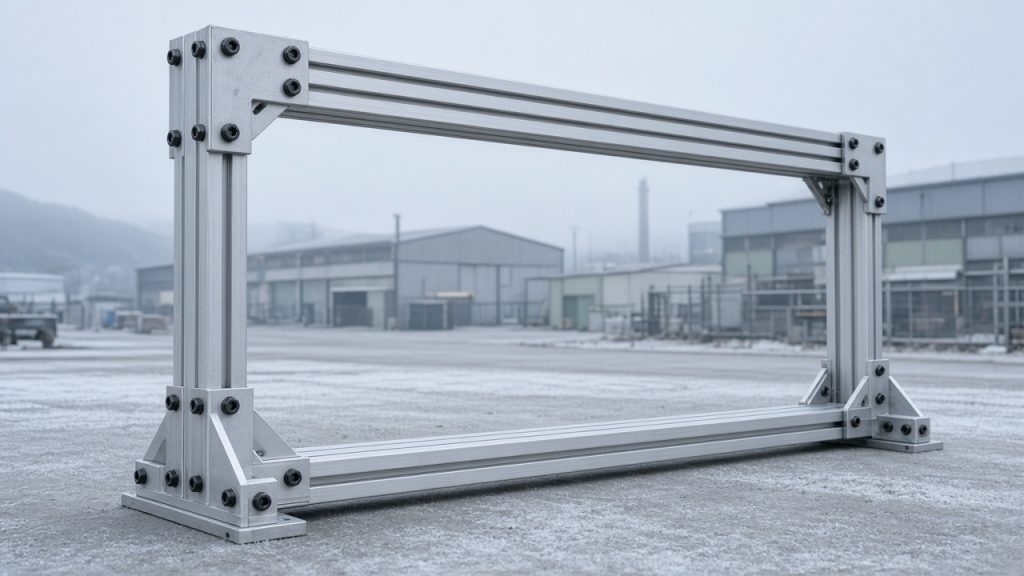
An engineering team in Karaganda is building mining equipment frames that must work down to −30°C under heavy vibration. They have already taken die-cast zinc and die-cast aluminium brackets off the primary load-bearing corners, because they do not trust those alloys in impact at that temperature. What they want is a solid extruded aluminium corner bracket: cut from thick-walled angle stock, CNC slotted or drilled, and clear anodised, in 6063-T6 or 6061-T6. The RFQ asks what wall they can have for 40×80, 45×90 and 60×60 — 6, 8 or 10 mm — whether custom widths such as 78 mm or 116 mm, with four or eight bolt holes, can be cut from angle stock, and whether 3,000 pieces across those sizes can be quoted.
Short answer
6, 8 and 10 mm walls all sit inside our published extruded-angle range of 1.5 mm to 15 mm. We do not list a finished catalogue row that is exactly a 40×80, 45×90 or 60×60 extruded bracket at those walls, and we will not invent a load rating in kN for one. The parts are cut and machined from thick-walled extruded angle stock, CNC slotted or drilled to the drawing, and clear anodised. 6061-T6 is the structural standard; 6063-T6 is published as standard on the 100×100×15 mm heavy gusset and can be agreed on a made-to-drawing corner. Yes, we can cut custom widths such as 78 mm or 116 mm, with four or eight bolt holes — cut length to ±0.5 mm, holes to the drawing. A 3,000-piece mixed-size release is quoted per size, wall, hole pattern, alloy and finish, not as one invented lump sum. Our listed die-cast corners are zinc alloy, not ADC12; they remain a sound choice for secondary, indoor, non-impact corners, not for a primary corner at −30°C.
Why a primary corner at −30°C is not a catalogue die-cast job
Die-cast zinc, and the aluminium–silicon grades many drawings still call ADC12, are a poor choice for a primary load-bearing corner that has to live at −30°C under vibration — which is why this RFQ already bans them there.
A mining frame in Karaganda sees a static moment, shock from the machine, and continuous vibration, in air that can sit at −30°C. Zinc die-cast and many Al–Si die-cast alloys can be notch-sensitive, and their impact performance is poorer in the cold than that of a wrought T6 extrusion. We do not publish a Charpy value in joules, and we will not invent a “brittle below X °C” figure we have never tested and printed. The principle is the one this buyer is already applying: do not put a cast, notch-sensitive corner on a primary load path in the cold.
That ban is about duty, not about the entire die-cast family. GrownParts’ listed die-cast brackets — the 20-to-50 series (GP-BR-DC), the 60-to-100 series (GP-BR-DH) and the unequal-leg 30×60-to-50×100 series (GP-BR-DR) — are zinc alloy, not ADC12. They are self-aligning, they carry an internal or full-length rib, and the heavier patterns use slotted holes so the frame can be squared on assembly. Those are the published features. We do not list anti-rotation locating claws as a catalogue feature. On a secondary indoor corner with no impact, a zinc die-cast bracket is still the faster, lower-cost joint. On a primary corner at −30°C, it is the wrong material.
Wrought 6061-T6 and 6063-T6 remain ductile as the temperature falls through −30°C; they have no steel-like ductile-to-brittle transition. That is a selection principle, not a test-certificate claim, unless you ask for the EN 10204 3.1 mill certificate available on the angle range.
Extruded T6 gussets vs die-cast: the real mechanical boundary
The boundary is duty, not appearance: die-cast zinc stays useful on secondary, indoor, non-impact corners, where unit cost and a self-aligning rib matter; primary corners that see heavy load, impact or low temperature want a solid 6061-T6 or 6063-T6 extruded gusset.
A die-cast corner is a one-piece zinc-alloy gusset. Published notes, and no others: the 20-to-50 series part is about 30 per cent stronger than a cut angle, with an internal rib, and is stocked by series; the 60-to-100 series uses two slotted holes per flange and has roughly three times the moment capacity of a single-bolt flange, with a full-length rib; the unequal-leg series exists so each leg on a 40×80 or 45×90 frame reaches its own groove, and capacity is set by the shorter leg. Volume prices and lead times sit in the table below. None of that is impact toughness at −30°C.
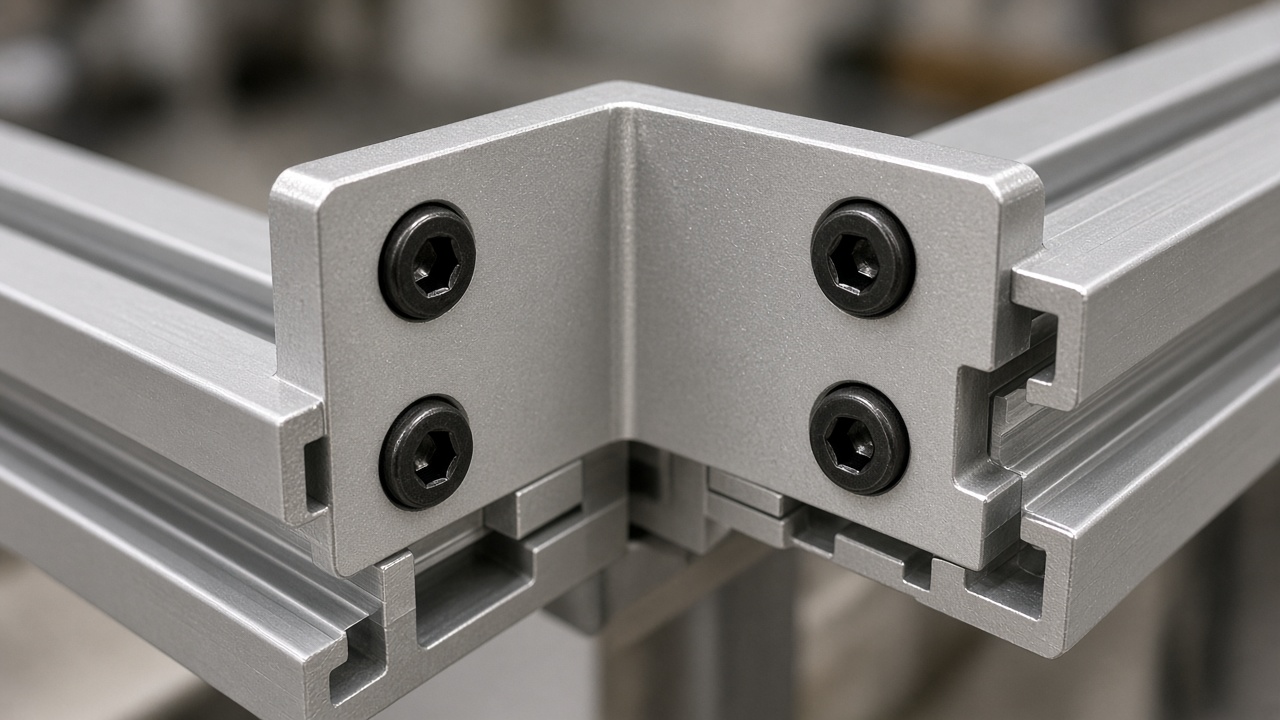
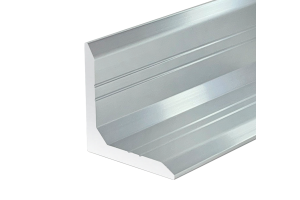
The extruded answer is a solid L from the published equal-leg range: 20×20 mm to 100×100 mm, walls 1.5 mm to 15 mm, cut to length and drilled to the drawing. 6061-T6 is the structural standard; 6063-T5 is listed where welding or finish is the priority. Two finished gussets give scale: the 50×50×9 mm (GP-BR-AP50) in 6061-T6 has a section modulus of about 12 cm³; its custom note points heavy and gantry corners to the 100×100×15 mm (GP-BR-AP15), 6063-T6 as standard, 6061-T6 available, section modulus about 45 cm³. For a made-to-drawing 6, 8 or 10 mm gusset we will not invent a kN rating. Capacity follows the drawing, the bolt pattern, and the T-nut pull-out or slot-lip limit of the profile.
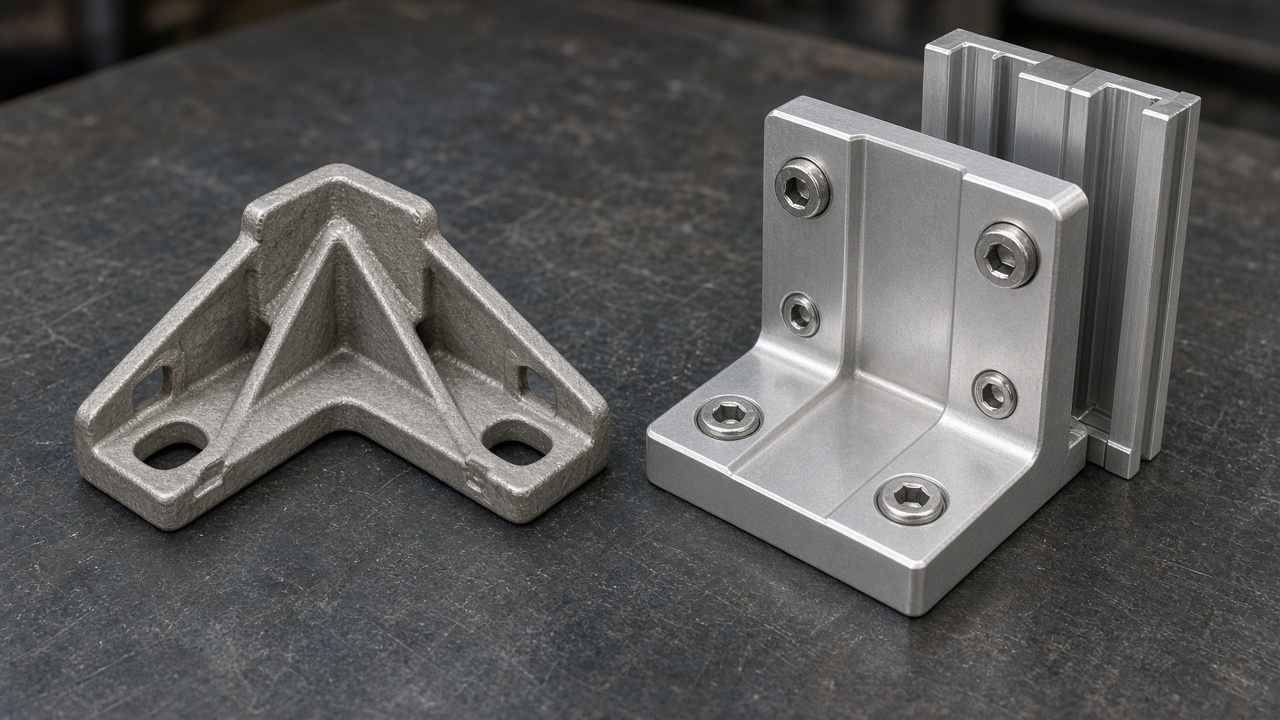
This RFQ also asked for reinforced diagonal ribs. A die-cast bracket has a published internal or full-length rib; that rib is a casting feature. A solid extruded L has a heel and a root radius, not a diagonal rib, unless a special section or a plate gusset is drawn. We will not invent a ribbed extruded die that we do not list. The toughness path on this duty is the solid 6–10 mm T6 wall. If a rib is required, it belongs on a custom section drawing and is quoted as such.
| Die-cast zinc (our catalogue) | Extruded / cut T6 gusset | |
|---|---|---|
| Material | Zinc alloy (GP-BR-DC, DH, DR). ADC12 is a common industry aluminium die-cast, not our listed alloy. | 6061-T6 structural standard; 6063-T5 for welding or finish; 6063-T6 published as standard on the 100×100×15. |
| Form | One-piece gusset with an internal or full-length rib; self-aligning; slotted holes for squaring on the heavier series. | Solid L with a heel and root radius (equal to one wall thickness on the 20–100 mm angle). No automatic diagonal rib. |
| At −30°C | Notch-sensitive under impact. No Charpy figure is published. | Remains ductile; no steel-like ductile-to-brittle transition. EN 10204 3.1 mill certificate on request. |
| Published strength | DC: ~30 per cent stronger than a cut angle. DH: ~3× the moment of a single-bolt flange. DR: capacity set by the shorter leg. | AP50: section modulus ~12 cm³. AP15: ~45 cm³. Custom 6–10 mm capacity is to the drawing, bolt pattern and T-nut pull-out — no invented kN. |
| Commercial (2026, USD) | DC: stocked; larger quantities 2–3 weeks. DH: MOQ 1,000; $0.95–$3.40 / piece; 18–28 days. DR: MOQ 2,000; $0.28–$1.05 / piece; 15–25 days. | Quoted per piece, steps at sample, trial and production. Typically 1–2 weeks cut and drill, plus a week for anodising (10–15 µm); AP15 typically 2–3 weeks mill, ~1 week longer for 15–25 µm anodising. |
The selection rule
Use a die-cast zinc bracket on secondary, indoor, non-impact corners, where unit cost, a self-aligning rib and slotted holes for squaring are the point. Use a solid extruded T6 gusset on primary load-bearing corners, and anywhere the frame sees low temperature, vibration or impact.
6, 8 or 10 mm walls for 40×80, 45×90 and 60×60
6, 8 and 10 mm walls all sit inside our published 1.5 mm to 15 mm extruded-angle range, but we do not list a finished 40×80, 45×90 or 60×60 extruded bracket at those walls as a stock SKU.
Specify them as cut-and-machine parts from that stock: choose the wall and the alloy, cut the width, CNC slot or drill the holes, and clear-anodise. 6061-T6 is the alloy we will put on a structural corner unless the drawing says otherwise. 6063-T6 is already the standard temper on the 100×100×15 mm gusset and can be agreed for a made-to-drawing part; it is not the stocked temper across the whole angle range, much of which is listed as 6063-T5 when 6063 is offered.
Leg length should follow the profile face, so the bolts land in the T-slot — the same reason the unequal-leg die-cast series exists for 40×80 and 45×90. A 60×60 post can take a 60 mm, or larger, equal-leg gusset. A 40×80 or 45×90 corner needs unequal legs, or a carefully placed hole pattern on a larger equal-leg section, so each bolt lands in its T-slot. We will not invent an unequal-leg extruded SKU; we will quote against a drawing that shows both faces. The 80×80×9 mm 45° plate gusset in the range is machined from 6061-T6 plate for a diagonal brace, not a 90° corner for this RFQ.
| Requested corner | Catalogue status | How we would make it |
|---|---|---|
| 40×80 at 6, 8 or 10 mm | No finished extruded SKU | Cut and machine from thick-walled angle stock; unequal legs or carefully placed holes so each bolt lands in the T-slot. 6061-T6 as standard; 6063-T6 by agreement. |
| 45×90 at 6, 8 or 10 mm | No finished extruded SKU | The same route; match each leg to its face, as with the unequal-leg die-cast pattern. |
| 60×60 at 6, 8 or 10 mm | No finished 60×60 extruded SKU at these walls | A 60 mm, or larger, equal-leg gusset cut from the 20×20 to 100×100 range, drilled or slotted to the drawing. |
Cutting custom widths (78 mm, 116 mm) and hole patterns from angle stock
Yes — a factory can cut a heavy gusset to 78 mm or 116 mm wide, with four or eight bolt holes, from extruded angle stock, because cut length and hole pattern are already published process, not a new catalogue row.
“Width” here is the cut length along the extrusion, held to ±0.5 mm, with holes drilled or slotted to the drawing. A 78 mm-wide four-hole gusset and a 116 mm-wide eight-hole gusset are two cut lists and two hole patterns, not two invented stock codes. Send the pattern, edge distances, and which profile face each hole must hit. Drawings and 3D models can be exchanged as PDF, DWG, DXF, STEP or IGES. There is no public STEP file on the downloads page for a 78 mm or 116 mm part that does not yet have a drawing; the model is produced from that drawing, or from a model we return for approval. A mill certificate to EN 10204 3.1 is available on request.
How a 3,000-piece mixed-size RFQ is quoted
A 3,000-piece release across sizes is quoted per size, wall, hole pattern, alloy and finish, not as one invented lump sum.
Three thousand pieces is a production quantity, but it is not one part number. A 40×80 gusset at 8 mm with four holes is not the same blank or anodising load as a 116 mm-wide 60×60 gusset with eight holes. The useful quotation is a unit price for each line, with price steps at sample, trial and production, and a lead time that follows the published windows: typically one to two weeks for cutting and drilling, plus a week for anodising. Samples are available where the product pages say so.
We will not lift the die-cast price tiers across and call them an extruded price. Those published figures — $0.95 to $3.40 and $0.28 to $1.05 per piece, 2026, USD — belong to the zinc die-cast series. The extruded parts are quoted per piece against the drawing. Send a size split, a wall for each line, a hole pattern, the alloy and temper, and the finish via the contact page. If a rib or an unequal-leg section is required, say so on the drawing rather than assuming it is a stock feature.
Related on this site
- Aluminium angle profiles, 20×20 to 100×100 — walls 1.5–15 mm, cut and drilled to drawing
- Extruded aluminium angle — 6061-T6 standard, root radius equal to one wall
- 100×100×15 mm heavy gusset — 6063-T6 standard, section modulus about 45 cm³
- 50×50×9 mm medium-duty gusset — 6061-T6, for 30 and 40 series
- Angle profile brackets — the cut and machined gusset family
- Unequal-leg die-cast bracket — 40×80 and 45×90 faces
- Die-cast brackets — secondary and indoor corners
- Corner brackets by load path — a wider guide, not this low-temperature case
- 6063 vs 6061 vs 6082 — alloy and temper choices
- Downloads — drawings and models where a catalogue part already exists
Terms used
- Extruded angle gusset
- A solid L cut from thick-walled extruded aluminium angle, then CNC-drilled or slotted and, if specified, anodised.
- Die-cast zinc bracket
- A one-piece corner gusset in zinc alloy (GP-BR-DC, DH and DR), with a published internal or full-length rib.
- ADC12
- A common industry Al–Si aluminium die-cast. It is often what a buyer means by “die-cast aluminium”, and it is not our listed alloy.
- 6061-T6 / 6063-T6 / 6063-T5
- Wrought tempers. 6061-T6 is the structural standard on our angle range; 6063-T6 is published as standard on the 100×100×15; 6063-T5 is listed for welding or finish.
- Section modulus
- A published geometric property of the 50×50×9 and 100×100×15 gussets (about 12 cm³ and 45 cm³), not a load rating in kN.
- T-nut pull-out / slot lip
- The usual ceiling on a bolted T-slot corner: the nut in the groove, or the lip of the slot, often fails before the solid T6 gusset does.
Questions buyers ask
What wall thickness do you offer for 40×80, 45×90 and 60×60 heavy extruded brackets — 6, 8 or 10 mm?
All three walls sit inside the published 1.5–15 mm range. There is no finished catalogue SKU at those exact sections and walls; we cut and machine the parts from thick-walled angle stock. A 60×60 post can take a 60 mm or larger equal-leg gusset; 40×80 and 45×90 need unequal legs or carefully placed holes so each bolt lands in the T-slot.
Can you cut custom-width gussets, for example 78 mm or 116 mm wide with four or eight bolt holes, from angle extrusion stock?
Yes. Width is the cut length along the extrusion, held to ±0.5 mm, with holes drilled or slotted to the drawing. Those dimensions are a cut list and a hole pattern, not stock codes. Drawings can be exchanged as PDF, DWG, DXF, STEP or IGES.
Can you quote 3,000 pieces across sizes?
Yes, as a mixed-size production release quoted per size, wall, hole pattern, alloy and finish — not as one invented lump sum. Lead time is typically 1–2 weeks for cutting and drilling, plus a week for anodising. Send the size split with the drawings.
How do extruded aluminium corner brackets compare with die-cast brackets for strength and impact toughness at −30°C?
Wrought 6061-T6 and 6063-T6 remain ductile at −30°C. Zinc die-cast and many Al–Si die-casts, including ADC12, can be notch-sensitive under impact in the cold. We publish no Charpy joules and no invented kN for a custom 6–10 mm gusset. Custom capacity is to the drawing, the bolt pattern and T-nut pull-out.
Are GrownParts die-cast brackets ADC12, and do they have anti-rotation claws?
No. Our listed die-cast corners are zinc alloy, not ADC12. Published features are self-aligning form, slotted holes for squaring on the heavier series, and an internal or full-length rib. We do not list anti-rotation locating claws as a catalogue feature.
Should we specify 6063-T6 or 6061-T6, and what is the best heavy-duty corner for a 40×80, 45×90 or 60×60 T-slot gantry?
Use 6061-T6 as the structural standard unless the drawing says otherwise. 6063-T6 is published as standard on the 100×100×15 mm gusset and can be agreed for a made-to-drawing part. The honest heavy-duty corner for these faces is a solid 6–10 mm extruded gusset cut to the drawing, not a catalogue die-cast part and not the 80×80×9 45° plate brace.
Also searched as: extruded vs die-cast aluminium corner brackets, heavy-duty 6061-T6 extruded gusset, 40×80 45×90 60×60 T-slot corner bracket, custom-width aluminium angle gusset, die-cast zinc bracket at low temperature, 6 mm 8 mm 10 mm extruded corner bracket, ADC12 vs extruded T6 gusset, solid aluminium corner brackets for mining frames.
Send the corner drawing, not a part number we do not have
Give us a drawing for each 40×80, 45×90 and 60×60 line, the wall (6, 8 or 10 mm), the cut width and hole pattern, 6061-T6 or 6063-T6, and the quantity split in the 3,000-piece mix. You will get a written offer per line — cut and machined from thick-walled extruded angle, with a clear no where a catalogue die-cast part is the wrong duty.
Request an extruded gusset quoteRelated reading
Twelve more engineering notes from this blog, picked for this article — plus every category below.
 Engineering DesignFreestanding Plant Partition Fencing
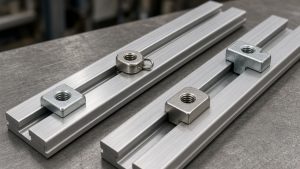 Engineering DesignHow to Choose T-Slot Nuts for Slot 8 and 10
 Engineering DesignCustom Aluminium Extrusion: From Drawing to Production
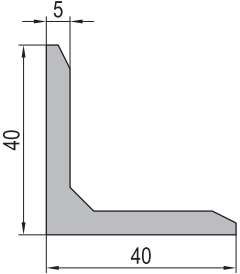 ApplicationsHow to Choose the Right 4040 T-Slot Aluminium Profile for Industrial Applications
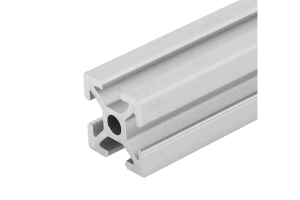 Engineering DesignWhat Is a 2020 Aluminium Profile? (Weight, Slot and Load)
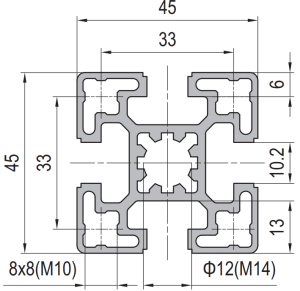 Engineering DesignHow to Choose the Right T-Slot Aluminium Profile Size
 ApplicationsAluminium Profile Shelving: It Buckles and Tips Before It Bends
 Engineering DesignWhich Profile Size for Your Application: A Selection Guide
 Quality and InspectionAluminium Extrusion Claims: What the Contract Must Say
 ApplicationsESD-Safe Aluminum Profile Workbenches: Why Anodising Alone Fails the Audit
 Quality and InspectionAluminium Profile Finishes: Choose by Failure Mode, Not by Process Name
 Sourcing and ProcurementPayment Terms for Aluminium Profile Orders (T/T, L/C and the Risk)