Sampling and First Article Approval for Aluminium Extrusion
Plan 30–40 days to a finished first article with a new die and anodising, or 12–20 days on an existing die and mill finish — then hold production until dimensions, finish and colour are signed. Sampling is a gated sequence, not a free extra bar in the carton.
Short answer
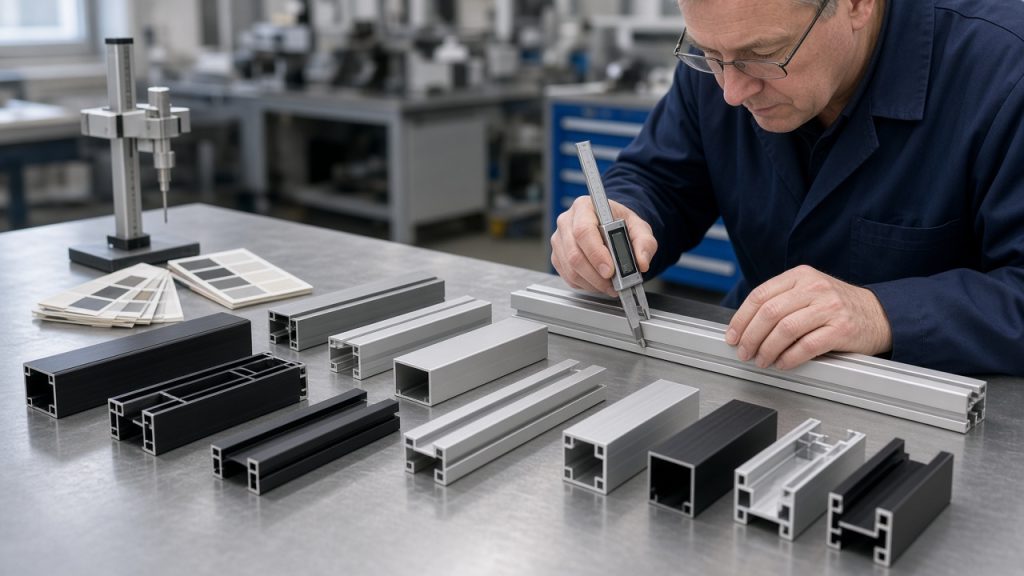
First-article approval for aluminium extrusion is a written gate on the purchase order: named sample quantity, inspection list, colour standard and a hold on mass metres until you sign. On a new die with anodising, plan 30–40 days to load the sample; on an existing die and mill finish, plan 12–20 days. Die making adds 7–12 days before the press when the tool is new. Prototype cost in 2026 USD is the sum of die (if new), pilot metres, finish, inspection and express freight — not a single opaque “sample fee”. Colour is approved on anodised or coated chips against a named standard before the production bath runs. Fabrication on sample parts holds cut length ±0.5 mm, hole position ±0.2 mm and end square within 0.3 mm unless the drawing tightens those call-outs.
How do i approve a first article before mass production
Write the sample quantity, the inspection list and an explicit production hold on the PO; measure the first article against the same revision used for the die and the quote, then release mass metres only after written approval.
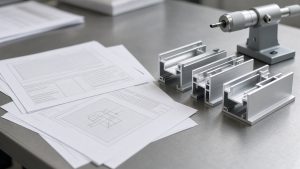
A first article is not “a few bars from the press”. It is an identified piece (or short set) with a dimensional report, surface check and, when required, a colour chip. Check critical dimensions across more than one position along the bar, plus straightness and twist over the delivered length. Run at least one assembly fit if the profile mates to hardware or panels. Keep the same drawing revision on the sample tag, the report and the approval email. If the sample fails, decide whether the fix is die correction, process tweak or a drawing change — each path has a different calendar.
| Check | What to measure | Evidence | Fail mode | Owner |
|---|---|---|---|---|
| Section CTQs | Marked dims vs drawing | FAI / CMM sheet | Die or press issue | QA + buyer |
| Straightness / twist | Over full sample length | Straight-edge / dial | Stretch / cooling | Plant |
| Surface | Die lines, pickup, marks | Photos + visual class | Die condition / packing | QA |
| Finish / colour | Vs approved chip | Chip + lot card | Bath or alloy | Buyer + finish |
| Secondary ops | Holes, taps, ends | ±0.5 / ±0.2 / 0.3 mm | Fixture / program | Fab |
| Assembly fit | Hardware / mating parts | Build note | Tolerance stack | Engineering |
What is the cost of a prototype run before mass production
Prototype cost in 2026 USD is itemised as die (if new), pilot metres, finish, inspection and freight — usually low thousands for an extruded trial on a production die, far less for a CNC-machined fit model that skips tooling.
Two paths exist. A CNC-machined prototype from billet proves envelope and assembly in days with no die, but it does not prove press fill, die lines or anodise response. An extruded sample from the production die proves the real process and leaves you with the tool you need for the 500 m new-die MOQ (or the 150 m existing-die floor). Ask every quote to break out: die line, trial/correction, sample metres, anodising or powder, FAI report, and express freight. Do not accept a single “sample fee” that hides whether die correction is included. For how the die fee later spreads into the metre price see how die cost amortises per meter; for the production floors see minimum order with a new die.
How do i approve a colour sample before production
Approve colour on finished anodised or coated chips (or short bars) against a named standard and lighting condition, then lock that chip to the production bath lot before mass metres run.
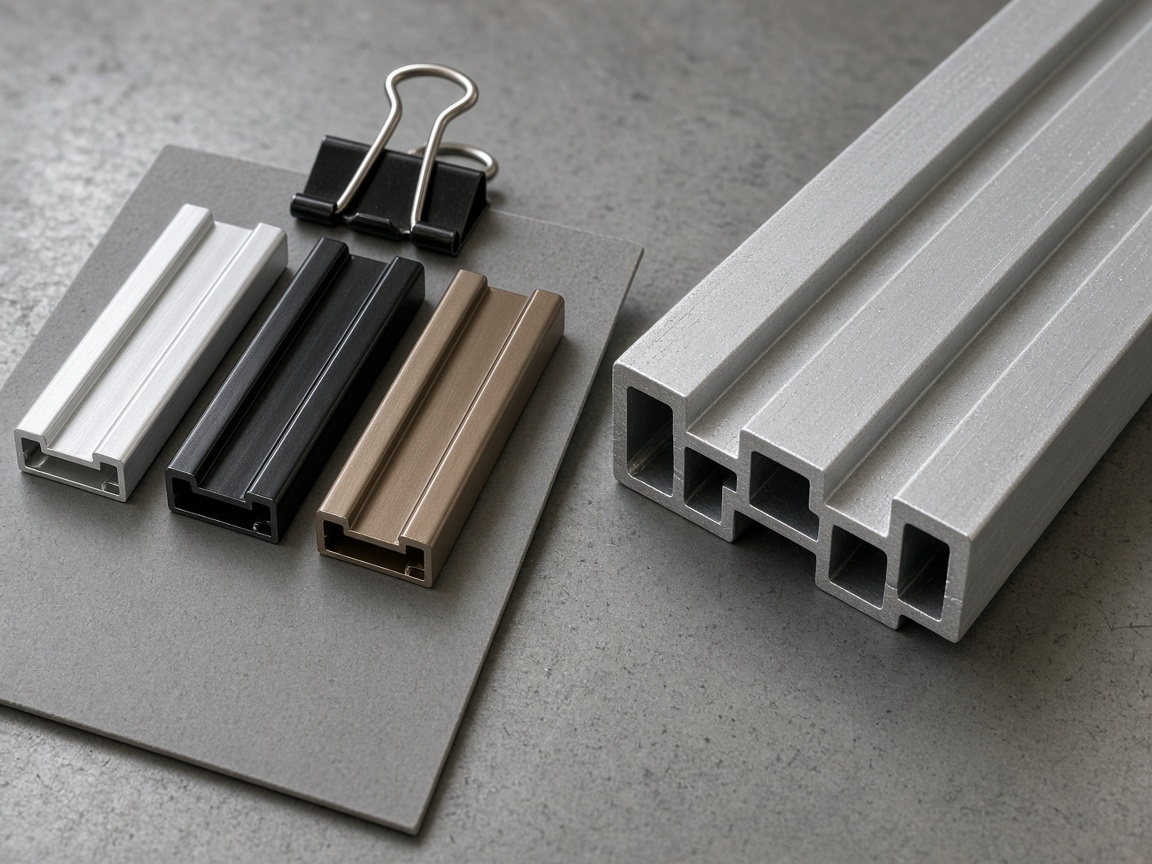
Mill-finish metal is not a colour sample. Alloy, temper and surface condition change how anodising reads; powder shade depends on the batch and the substrate. Send or agree a master (RAL / Pantone / customer chip), receive laboratory or line chips, view them under the lighting your customer will use, and sign one chip as the release master. Keep that chip with the PO revision. A colour change after die proving does not need a new die, but it does need a new finish sample and a hold on the production bath. Special colours can reintroduce a finishing minimum even when extrusion MOQ is already cleared.
What happens at each step
The sampling path is drawing intake and DFM, die cut when needed, trial extrusion, dimensional first article, finish and colour sample, written approval, then mass release — with calendar driven by die status and finish.
Drawing review catches wall balance and missing CTQs before steel is ordered. Die making adds 7–12 days on a new tool — see die making adds 7–12 days. Trial extrusion produces the metal for FAI; finish and colour sit after temper. Ownership and exclusive-use terms for the die should already be written — see who owns the die. Only after written sample approval do the bulk metres start; shipping unapproved bars to “save a week” usually returns as scrap and a second press booking.
| Step | Planning window | Output | Gate | If skipped |
|---|---|---|---|---|
| Drawing + DFM | Days at intake | Approved rev | Buyer sign-off | Die rework later |
| Die making (new) | 7–12 days typical | Trial-ready die | Tooling PO paid | No metal |
| Trial + FAI | Inside 12–20 / 30–40 d | Measured sample | Dimensional OK | Bad mass lot |
| Colour / finish sample | Finish window | Signed chip | Colour OK | Wrong shade on site |
| Mass release | After written OK | Production metres | PO hold lifted | Schedule slip |
RFQ checklist — sampling
- Drawing package — PDF + DWG/DXF (+ STEP if machined), one revision.
- Sample quantity — metres or pieces named on the PO.
- FAI list — CTQs, straightness, surface class, secondary ops.
- Colour master — RAL / Pantone / chip; lighting note.
- Hold language — no mass ship before written approval.
- Cost breakout — die, trial, finish, FAI, express freight.
- MOQ after approval — 150 m existing / 500 m new.
- Payment / Incoterms — T/T 30/70 or L/C; FOB/CIF/DAP/DDP.
Put the approval gate on the PO before the press runs. A verbal “looks fine” is not a release.
Four sampling mistakes
Related on this site
- how die cost amortises per meter — tooling share after the pilot
- minimum order with a new die — 150 m existing vs 500 m new
- die making adds 7–12 days — before first-article metal
- who owns the die — title after the trial
Terms used in this article
- First article (FAI)
- Identified sample measured against the drawing before mass metres are released.
- Colour chip / master
- Signed finish sample that locks the production bath or oven shade.
- Pilot / prototype run
- Short extruded length from the production die used for approval, not the bulk MOQ.
- DFM
- Design for manufacturability review before the die is cut.
- Production hold
- PO language that blocks mass shipment until written sample approval.
Questions buyers ask
What do you need from me to start?
A revision-controlled drawing package (PDF + DWG/DXF, STEP if machined), the sample quantity, the FAI checklist, any colour master, and PO language that holds mass metres until approval. Alloy, lengths and finish must match the production intent.
Can I approve a sample first?
Yes — that is the default gate on custom and first-release work. On a new die with anodising plan 30–40 days to the finished sample; on an existing die and mill finish plan 12–20 days. Production quantities ship only after your written release.
What happens if my drawing changes?
Bump the revision. Changes before die cut update engineering; changes after die cut may need tool rework and a new sample. A colour-only change needs a new finish chip, not a new die. Partial FAI can re-check only the affected characteristics.
How do I track the order?
Ask for stage dates: DFM done, die in cut, trial pressed, FAI sent, colour chip sent, approval received, mass released, cargo ready. Keep one revision number on every status mail so the sample and the bulk lot stay tied.
Request a first-article plan with your RFQ
Send the drawing package, name the sample quantity and colour master, and ask for an itemised 2026 USD breakout of die, trial, finish and freight. We will return a stage calendar with a written production hold.
Send drawings for a sample planRelated reading
Twelve more engineering notes from this blog, picked for this article — plus every category below.
 Engineering DesignESD Anti-Static Workbench Grounding: The Four Joints That Break the Path
 Engineering DesignCut-to-Length, Drilling and Tapping: What Fabrication Adds
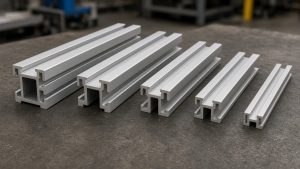 Engineering DesignT-Slot Cross-Brand Compatibility: Bosch, Item and Generic
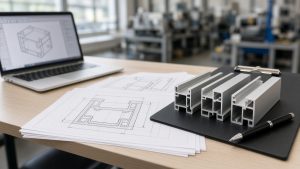 Engineering DesignHow to Request a Quote for Custom Aluminium Extrusion (RFQ Checklist)
 Engineering DesignStandard vs Custom Aluminium Extrusion: The Break-Even Calculation
 Sourcing and ProcurementFOB vs CIF vs DAP vs DDP: Aluminium Profile Landed Cost
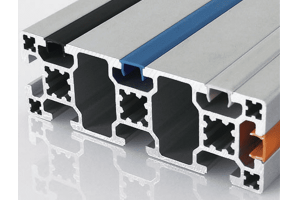 ApplicationsCleanroom and Medical Framing: There Is No Medical-Grade Aluminium Extrusion
 Quality and InspectionAluminium Extrusion Certificates and Standards Explained (EN 755, EN 12020, ISPM 15)
 ApplicationsAluminium Pergola Profiles: A Beam Problem With a Water Problem
 ApplicationsWhere Modular Aluminium Framing Works: A Load-Tier Map Instead of an Industry List
 ApplicationsAluminium Conveyor Frames: Why Belt Tracking Is a Geometry Problem
 Applications20 Series T-Slot Profiles: Where the Limits Actually Are
