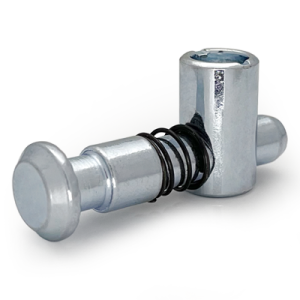
Special joints

Other Connecting Elements — Cubic, Linear and End Connectors

Not every joint is a corner. Where two members cross at the same level, where a butt joint has to be hidden, or where a member ends inside another, the standard bracket range runs out. This is the family that covers those cases: cubic connectors, linear and bar connectors, end connectors and inner brackets.

Cross · butt · teejoints coveredHidden optionsfor butt jointsSeries-matchedbolt centres per seriesStandard hardwareT-nuts and bolts

23 items

Products in this category

Aluminium Extrusion Connector System for 20×20 to 100×100 mm T-Slot Frames

Aluminium Extrusion Connector System for 20×20 to 100×100 mm T-Slot Frames

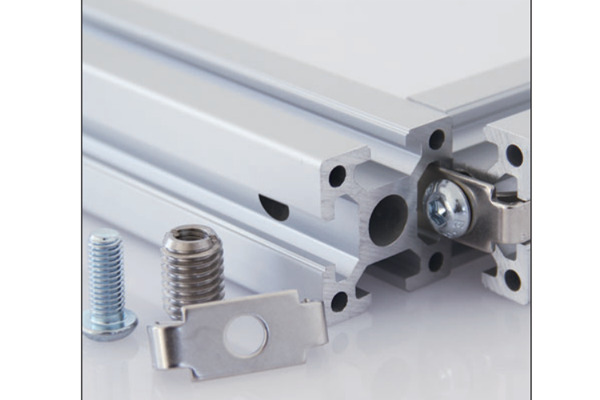
A complete aluminium extrusion connector system covering visible brackets, hidden inner brackets, cubic corner blocks, screw connectors and end face connectors for 20 to 50 series T-slot profiles.

MaterialAluminium, zinc alloy and steel by family
ToleranceDie casting and machining to ISO 8062 and ISO 2768-m
FinishMill finish / anodised / zinc plated / black oxide
Minimum order500
Lead time15-25 days after deposit
Full specification →
Anti-torsion Subsequent Nut for 8 mm T-Slot Aluminium Profiles

Anti-torsion Subsequent Nut for 8 mm T-Slot Aluminium Profiles

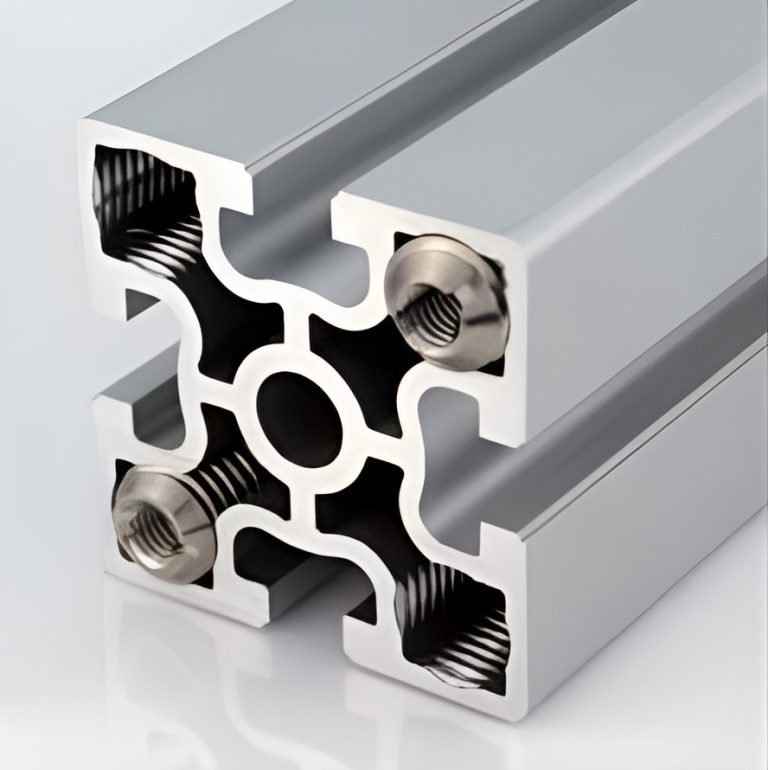
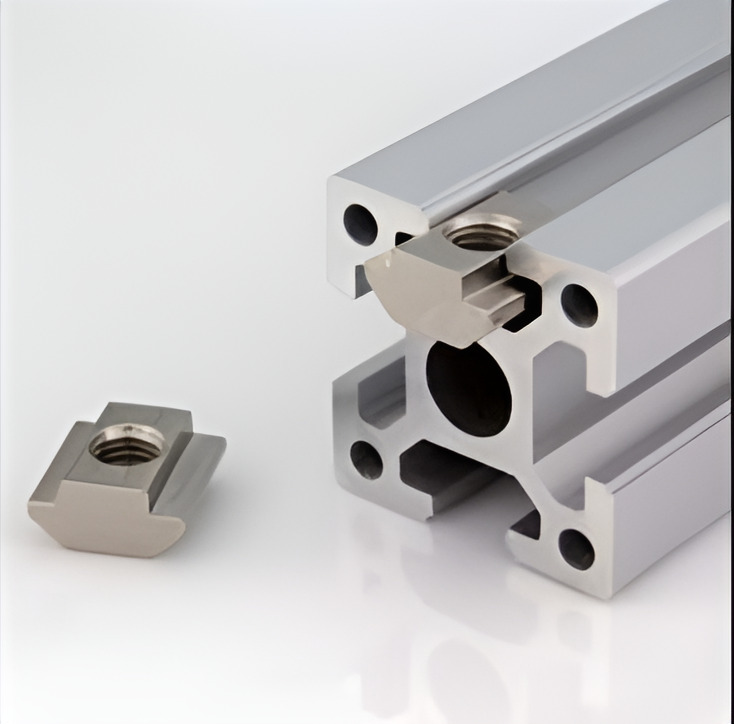
Anti-torsion subsequent T-slot nut with twin wings for 30 and 40 series aluminium profiles. M6 and M8 thread sizes. Vibration resistant, slides in from profile end.

MaterialCarbon steel
ToleranceThread 6H, body width +/-0.1 mm, wing span +/-0.05 mm
FinishZinc plated / stainless steel A2 or A4
Minimum orderNo MOQ for stock sizes; 500 pieces for custom sizes
Lead timeStocked sizes ship in 2 to 3 days; custom sizes about 2 weeks
Full specification →
Butt Connector

Butt Connector

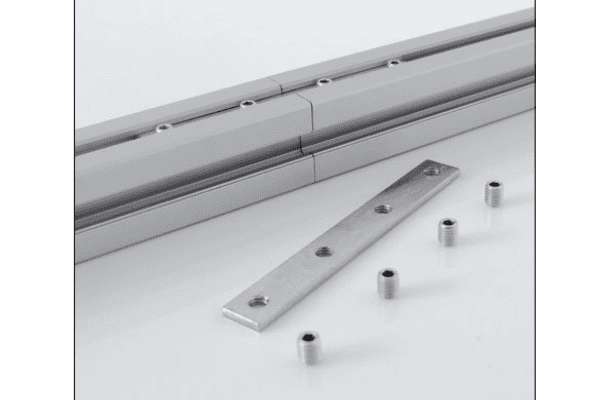
Connector that joins two profiles end to end in a straight line, transmitting bending and shear across the butt joint so the members behave as one.

MaterialZinc-plated steel or stainless bar; aluminium plate
Tolerance±0.15 mm on bar diameter and plate holes
FinishZinc plated; anodised or powder coated plate
Minimum order300
Lead time15-25 days after deposit
Full specification →
Hole Reducer Bolt for 8 mm T-Slot Aluminium Profiles

Hole Reducer Bolt for 8 mm T-Slot Aluminium Profiles

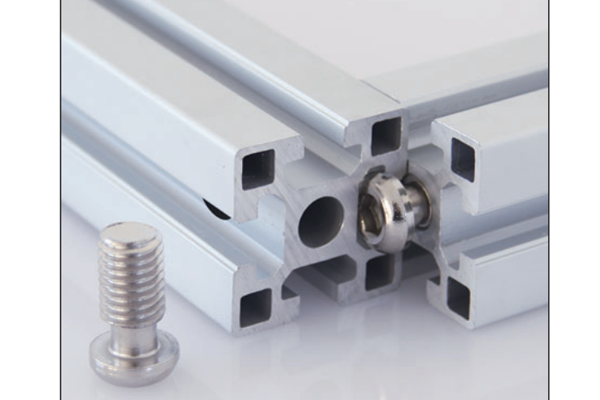
Hole reducer bolt with stepped M8 to M6 thread for 30 and 40 series aluminium profiles. Adapts M8 tapped centre bore to M6 component fitting. Single-piece, no separate bush.

MaterialCarbon steel
ToleranceThread 6g, step diameter +/-0.05 mm, length +/-0.5 mm
FinishZinc plated / stainless steel A2 or A4
Minimum orderNo MOQ for stock M8-to-M6; 500 pieces for custom combinations
Lead timeStocked M8-to-M6 ships in 2 to 3 days; custom about 2 weeks
Full specification →
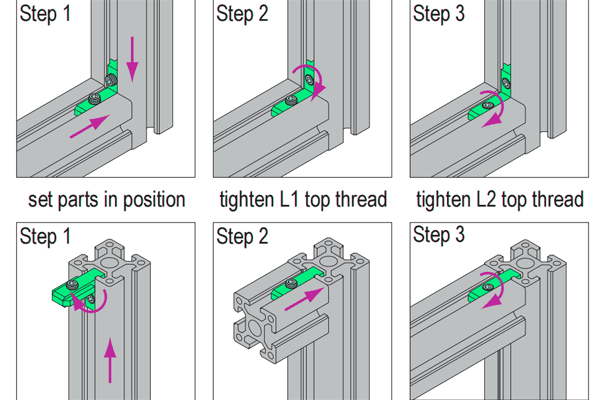
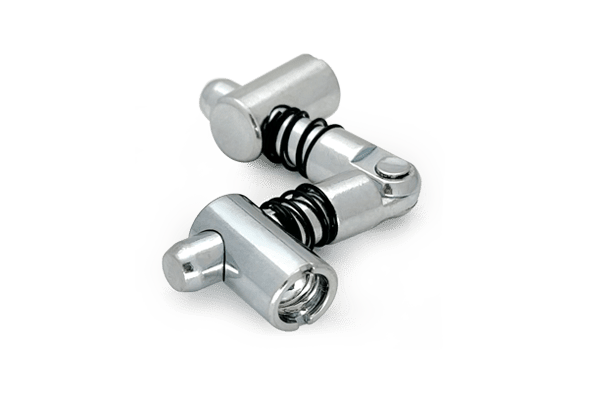
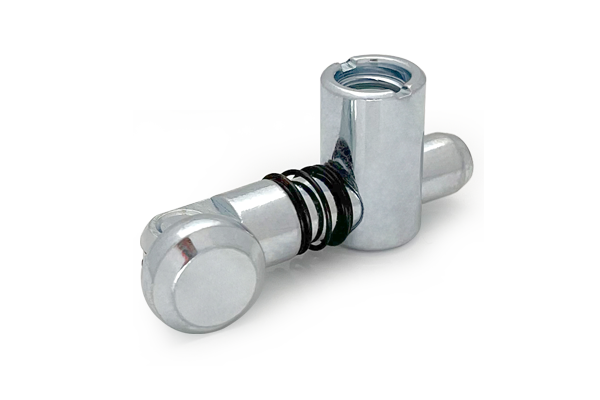
Linear bar connector with top thread for T-slot aluminium profiles

Linear Bar Connector 8/10 with Top Thread

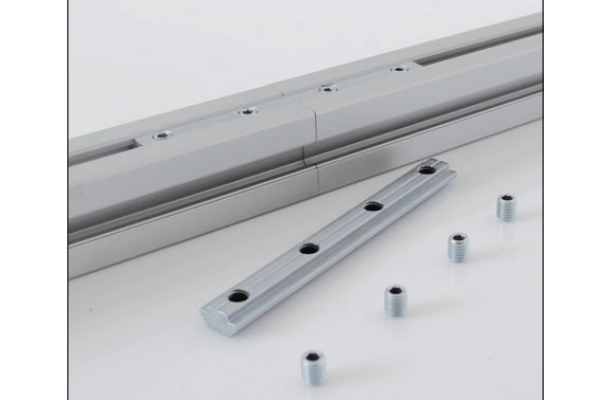
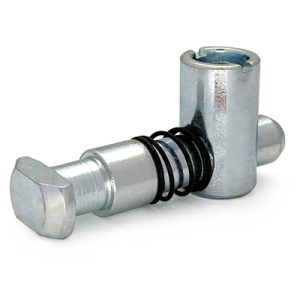
Hidden bar connector made in one length that serves both the 8 mm and the 10 mm slot ranges, so one part covers 40 and 45 series frames end to end.

MaterialZinc-plated steel or stainless steel bar; steel connecting screw
Tolerance±0.1 mm on bar diameter
FinishZinc plated; stainless option
Minimum order500
Lead time15-25 days after deposit
Full specification →
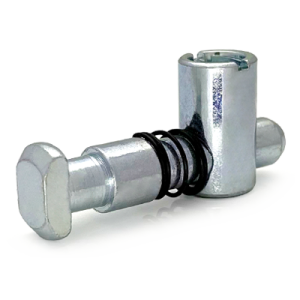
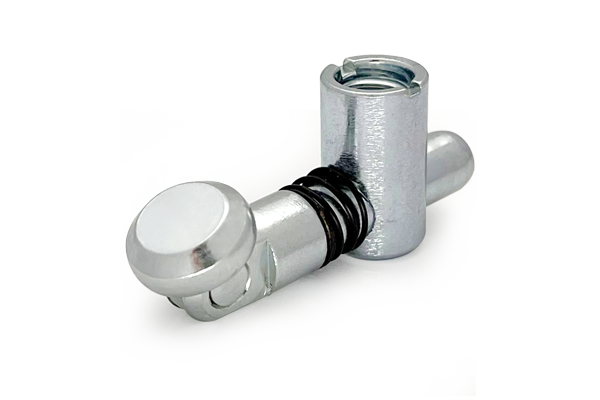
Linear Bar Connector with Top Thread

Linear Bar Connector with Top Thread

Hidden linear bar connector that joins two profiles end to end from inside the core hole, leaving the outer faces clean, with a top thread for a cap or fitting.

MaterialZinc-plated steel or stainless steel bar; steel connecting screw
Tolerance±0.1 mm on bar diameter
FinishZinc plated; stainless option
Minimum order500
Lead time15-25 days after deposit
Full specification →
Miter Connector Model C 90 Degree Corner Joint for 40 mm Aluminium Profiles

Miter Connector Model C 90 Degree Corner Joint for 40 mm Aluminium Profiles

Miter connector Model C for 90-degree corner joints on aluminium T-slot profiles. Internal tie rod, clean external corner. Available for 20, 30, 40 and 45 series.

MaterialZinc alloy housing / steel tie rod
ToleranceHousing to bore: H8/h7 sliding fit
FinishZinc plated / black zinc / nickel
Minimum orderStocked item; minimum 50 pieces per series
Lead timeTypically 1 to 2 weeks for stocked series and finishes
Full specification →
Oblique Connector Model C Angled Joint for 40 mm Aluminium Profiles

Oblique Connector Model C Angled Joint for 40 mm Aluminium Profiles

Oblique connector Model C for adjustable-angle joints on aluminium T-slot profiles. Internal tie rod, no panel face. Angle range 30 to 150 degrees. For 20, 30, 40 and 45 series.

MaterialZinc alloy housing / steel tie rod
ToleranceHousing to bore: H8/h7 sliding fit; angle set to +/-1 degree
FinishZinc plated / black zinc / nickel
Minimum orderStocked item; minimum 50 pieces per series
Lead timeTypically 1 to 2 weeks for stocked series and finishes
Full specification →
Oblique Connector Model P Angled Joint with Panel Face for 40 mm Aluminium Profiles

Oblique Connector Model P Angled Joint with Panel Face for 40 mm Aluminium Profiles

Oblique connector Model P with panel mounting face for angled joints on aluminium T-slot profiles. Adjustable 30 to 150 degrees, internal tie rod, panel face with tapped holes. For 20/30/40/45.

MaterialZinc alloy housing with panel face / steel tie rod
ToleranceHousing to bore: H8/h7; angle set to +/-1 degree; panel face flatness 0.2 mm
FinishZinc plated / black zinc / nickel
Minimum orderStocked item; minimum 50 pieces per series
Lead timeTypically 1 to 2 weeks for stocked series and finishes
Full specification →
Pre-set T-Slot Nut for 8 mm Aluminium Profiles M5 M6 M8

Pre-set T-Slot Nut for 8 mm Aluminium Profiles M5 M6 M8

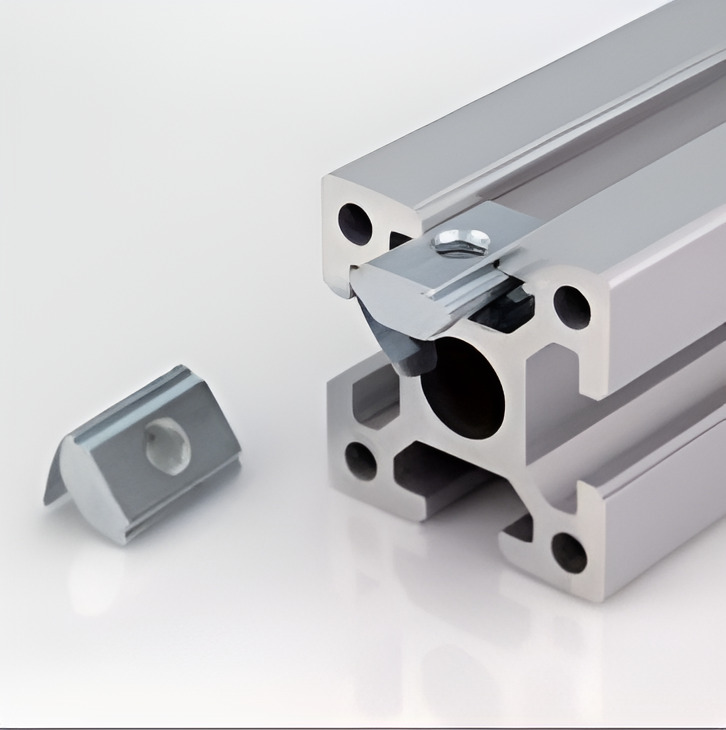
Pre-set T-slot nut with anti-drop spring tab for 20, 30 and 40 series aluminium profiles. M5, M6 and M8 thread sizes. Placed before assembly, bolted from outside.

MaterialCarbon steel
ToleranceThread 6H, body width +/-0.1 mm
FinishZinc plated / stainless steel A2 or A4
Minimum orderNo MOQ for stock sizes; 500 pieces for custom sizes
Lead timeStocked sizes ship in 2 to 3 days; custom sizes about 2 weeks
Full specification →
Square Nut for 8 mm T-Slot Aluminium Profiles M5 M6 M8

Square Nut for 8 mm T-Slot Aluminium Profiles M5 M6 M8

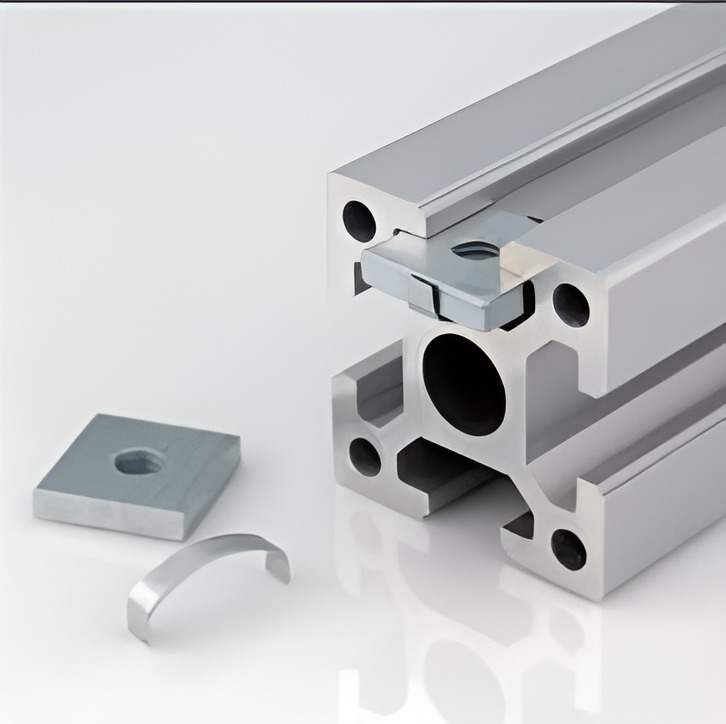
Square T-slot nut with four flat sides for 30 and 40 series aluminium profiles. M6 and M8 threads. Prevents rotation in groove, positioning accuracy +/-0.2 mm. For precision mounting.

MaterialCarbon steel
ToleranceThread 6H, body width +/-0.1 mm standard / +/-0.05 mm precision
FinishZinc plated / stainless steel A2 or A4
Minimum orderNo MOQ for stock sizes; 500 pieces for precision tolerance
Lead timeStocked sizes ship in 2 to 3 days; precision and stainless about 2 weeks
Full specification →
Subsequent Nut for 8 mm T-Slot Aluminium Profiles M5 M6 M8

Subsequent Nut for 8 mm T-Slot Aluminium Profiles M5 M6 M8

Subsequent T-slot nut for 30 and 40 series aluminium profiles. M5, M6 and M8 threads. Slides in from profile end face after assembly. Round or square body. Rescue fastener for retrofit.

MaterialCarbon steel
ToleranceThread 6H, body width +/-0.1 mm
FinishZinc plated / stainless steel A2 or A4
Minimum orderNo MOQ for stock sizes; 500 pieces for custom sizes
Lead timeStocked sizes ship in 2 to 3 days; custom and stainless about 2 weeks
Full specification →
T-Bolt for 8 mm T-Slot Aluminium Profiles M6 M8 M10

T-Bolt for 8 mm T-Slot Aluminium Profiles M6 M8 M10

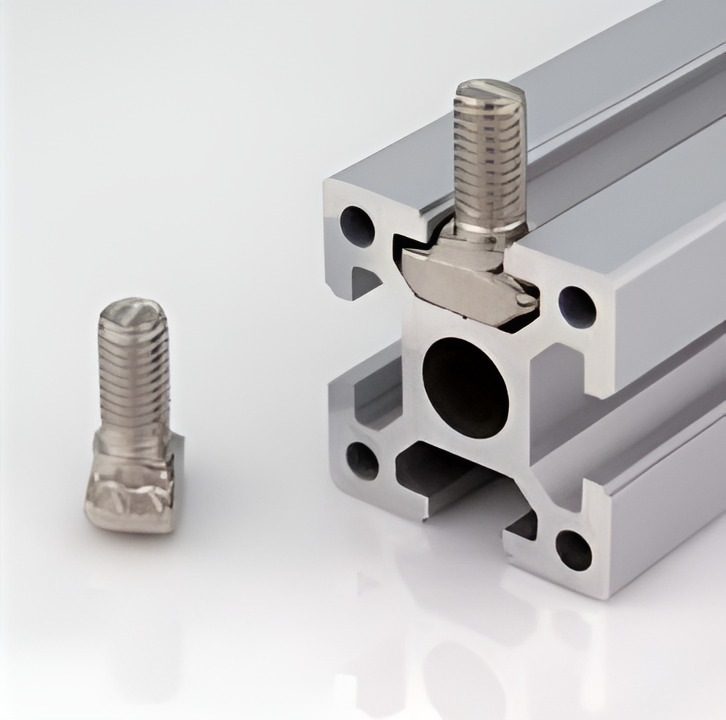
T-bolt with integral T-head for 20, 30 and 40 series aluminium profiles. M5, M6, M8 and M10 threads. Replaces separate T-nut, faster assembly. Carbon steel or stainless steel.

MaterialCarbon steel
ToleranceThread 6g, head width +/-0.1 mm, head thickness +/-0.05 mm
FinishZinc plated / stainless steel A2 or A4
Minimum orderNo MOQ for stock sizes; 500 pieces for custom sizes
Lead timeStocked sizes ship in 2 to 3 days; custom sizes about 2 weeks
Full specification →
T-slot nuts and fasteners for aluminium extrusion profiles

T-Nut for 10 mm Aluminium Profiles M4 M5 M6 M8 M10

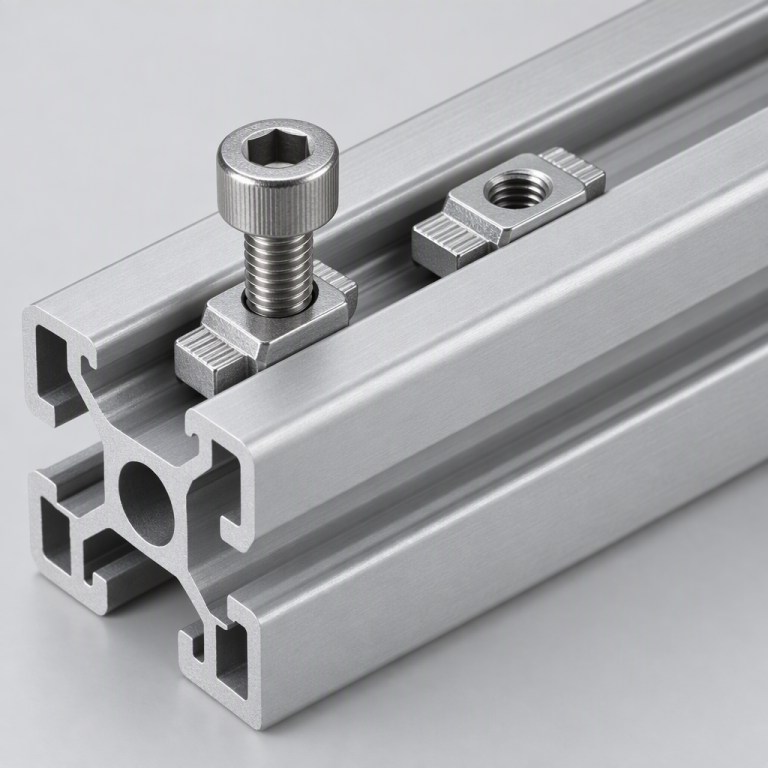
Full range of T-slot nuts from M4 to M10 for 15 to 60 series aluminium profiles. Pre-set, subsequent, square and anti-torsion types. Carbon steel or stainless. Master selection guide for nut, thread and series.

MaterialCarbon steel
ToleranceThread 6H, body width +/-0.1 mm, body height +/-0.1 mm
FinishZinc plated / stainless steel A2 or A4
Minimum orderNo MOQ for stock sizes; 500 pieces for custom configurations
Lead timeStocked sizes ship in 2 to 3 days; custom and stainless about 2 weeks
Full specification →

Other connecting elements are the joints the standard corner-bracket range does not cover: cross joints where two members intersect at the same level, butt joints that have to be joined invisibly, and end connections where one member terminates inside another. The common parts are cubic connectors, linear or bar connectors, end connectors and inner brackets.

Below: which part suits which joint, and why the joint you cannot find hardware for is usually the joint that should be redesigned.

The joints this family covers

JointProblemUsual part
Cross at the same levelTwo members intersect; neither can pass through the otherCubic connector, or a corner bracket pair on a cube
Hidden butt jointTwo members in line, with nothing visible on the outside facesLinear bar connector or an internal butt connector
End into a through memberA member ends against the side of another, at any angleEnd connector or an anchor connector variant
Screw connectionA joint that must be made without any external bracket at allScrew connector, using a tapped hole in the profile
Inner braceA corner that needs to be braced from inside with nothing on the outer facesInner bracket

Cubic connectors

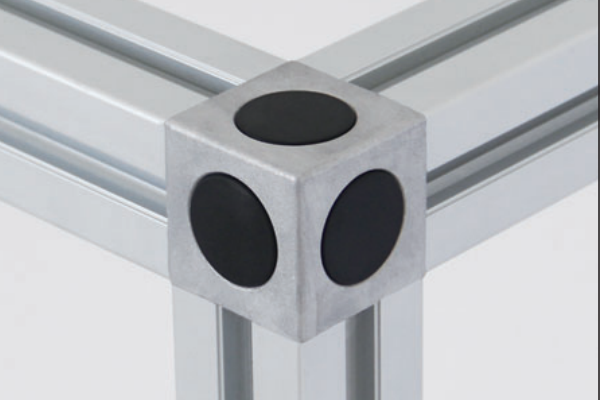
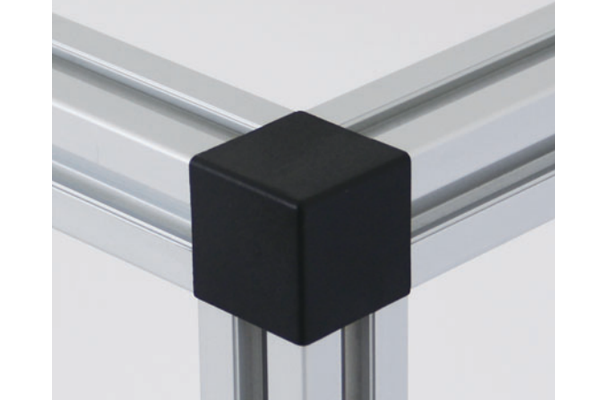
A cubic connector is a cube-shaped fitting that sits in the slot of two crossing members and joins them at the same level. It is the standard answer where a cross joint is genuinely required and one member cannot be continuous.

Two practical points. First, a cubic connector is a compact fitting carrying a cross joint, so it is not a high-load part; where a cross joint carries load, one member should be continuous and the other should be terminated against it with a plate. Second, because the cube sits in the slot, it consumes slot length at the intersection, which affects where the neighbouring hardware can go.

Linear and bar connectors

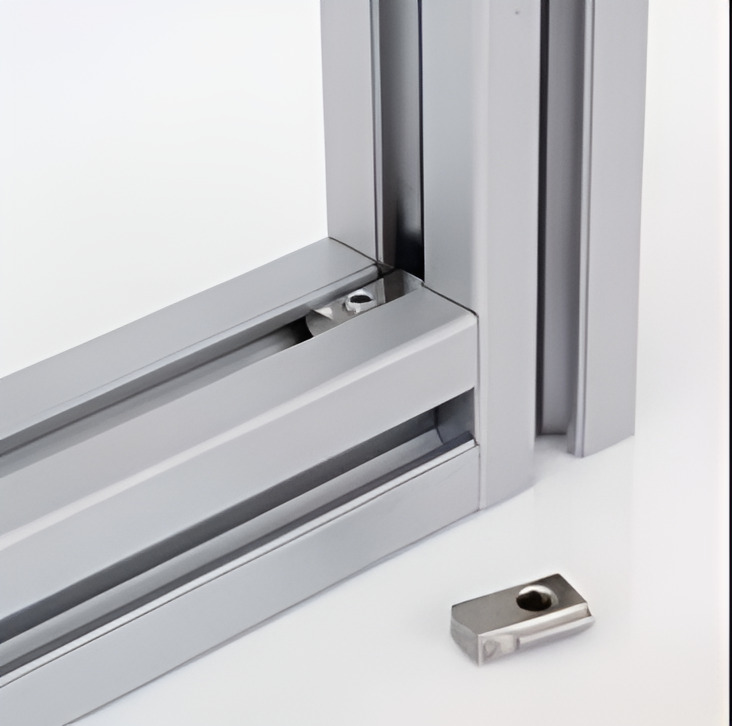
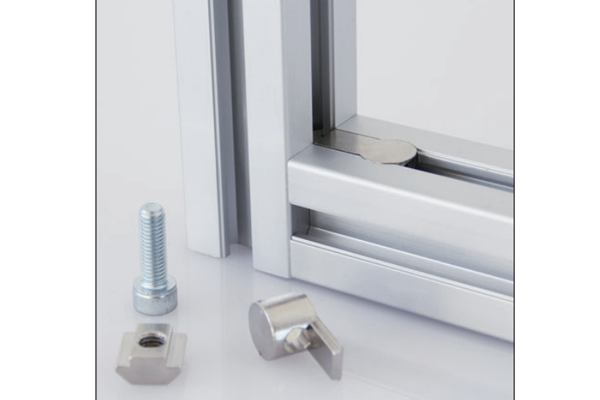
A linear or bar connector joins two members end to end with the fixing hidden inside the slot. It is the concealed equivalent of a joining plate, and it exists for the same reason as an anchor connector: a butt joint on a visible face should not show hardware.

TypeHow it fixesNotes
Internal bar connectorA bar spans the joint inside the slot, bolted from each sideThe usual choice; needs access to the slot on one face
Threaded bar connectorA threaded bar with a top thread is screwed into tapped endsFully concealed; needs both ends tapped
End connectorFixes into an end face and into the slot of the abutting memberUsed where one member terminates inside another
Screw connectorUses a tapped hole drilled directly into the profile coreNo bracket at all; the load goes into the extrusion itself

When the joint is the wrong joint

There is a useful rule in profile framing: if no standard part fits a joint, the joint is usually the problem. Three cases come up repeatedly, and all three have a cheaper standard answer.

  • A cross joint that could be a tee. If one member can be cut and terminated rather than passing through, a tee joint uses standard parts and is stronger.
  • A butt joint that could be a single longer member. Extrusions are supplied in 6 m lengths. Two members joined in line are almost always a compromise against a single member, and the joint is the weak point.
  • A joint that could move to a corner. Cross and tee joints concentrate load on a through member's slot. Where the layout allows, moving the joint to a corner puts the load into a member end instead, which is far better.

Practical point: redesigning a layout to use only corner and tee joints usually removes the need for special connectors entirely, reduces the part count, and produces a stiffer frame. Special connectors are a solution, but they are rarely the best one.

Hidden joints and access

Concealed butt and end connectors share one requirement with concealed corner joints: the fixing has to be reachable. An internal bar connector needs access to the slot on one face; a threaded bar connector needs both ends tapped before assembly. That means the frame has to be planned and the machining done before anything is cut, and it means a concealed joint cannot be added later.

Where access is uncertain, a visible plate or bracket is the safer choice. It is better to accept a visible fixing than to design a frame that cannot be assembled.

Load behaviour

Special connectors are generally compact, and compact means the load is concentrated. Three points are worth remembering.

  • A cubic connector is not a structural joint. Where a cross joint carries load, make one member continuous and terminate the other against it with a plate.
  • Bar connectors spread load along the slot, which makes them much better than a single point connector for a loaded butt joint — but only if the bar is long enough to engage a useful length of slot.
  • Screw connectors load the extrusion core rather than the slot lip. That is a different load path and it is not necessarily stronger; it depends on the wall thickness around the tapped hole.

Hardware and series matching

These connectors use the standard fastener family for their series: M6 for the 30 series with an 8 mm slot, M8 for the 40 and 45 series with a 10 mm slot. Bolt length is critical on concealed parts because there is no room for a bolt that bottoms out. Where a connector is supplied as a kit, use the fasteners supplied rather than substituting from stock.

The full hardware range is described under fastening elements, and the standard joint parts under connecting elements.

Specifying these parts

Describe the joint rather than the part: which members meet, at what angle, whether either member is continuous, whether the outside faces have to stay clean, and whether the frame is already built. From that we can identify the correct part, and tell you if a layout change would remove the need for it. If you have a drawing of the joint, send it — a section view is usually enough. Standard parts are quoted within one working day. Related ranges: connecting elements, anchor connectors, joining plates, angle profile brackets and CNC machining.
FAQ

Questions buyers ask about this range

What are cubic connectors used for?+

Cross joints where two aluminium profiles intersect at the same level and neither can pass through the other. They are compact fittings rather than high-load structural joints.

How do I join two profiles end to end without visible hardware?+

Use a linear bar connector inside the slot, or a threaded bar connector with both ends tapped. Both are concealed equivalents of a joining plate.

Can a butt joint be as strong as a continuous member?+

Not usually. The joint is always the weak point, so where possible use a single longer extrusion - standard lengths go up to 6 m.

What is a screw connector?+

A connector that uses a tapped hole drilled directly into the profile core, so no external bracket is needed. The load goes into the extrusion rather than the slot lip.

Why can I not find a standard part for my joint?+

Usually because the joint is a cross or a butt that could be redesigned as a corner or a tee, which uses standard parts and is stronger. Redesigning the layout often removes the need for a special connector.

Do these connectors need machining?+

Concealed types do. Internal bar connectors need slot access, threaded bar connectors need tapped ends, and screw connectors need a tapped hole in the profile.

What fastener sizes are used?+

The standard family for the series: M6 for the 30 series with an 8 mm slot, and M8 for the 40 and 45 series with a 10 mm slot.

Can these joints be added to an assembled frame?+

Generally no, because the concealed types need machining done before assembly. Visible plates and brackets are the retrofit option.

Related product categories

Connecting ElementsAnchor ConnectorsJoining PlatesAngle Profile BracketsFastening ElementsStrut ProfilesCNC MachiningAll products

Need this range specified for your project?

Send the drawing, the section size or a sample and we will confirm the alloy, the tolerance, the finish and the commercial terms. Quotes for standard items normally go out within one working day.

Request a quotation