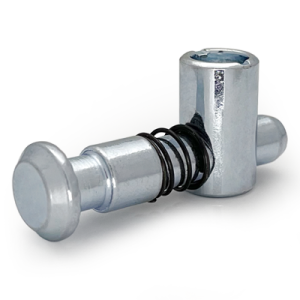
Joint hardware

Connecting Elements for Aluminium Profiles — How to Choose a Joint

Connecting elements are what turn a pile of cut profiles into a frame. Every joint type — butt, corner, tee, cross — has a small number of viable hardware choices, and picking the wrong one is the most common reason a bolted frame moves. This page is the selection guide for the whole accessory family.

4joint types in practiceConcealed or visiblefixing stylesDie-cast or steelbracket materialsM6 / M8 / M10fastener families

32 items

Products in this category

Aluminium angle profile 35 x 35 x 4 mm extruded equal leg section

Aluminium Angle Extrusion 40x40x5 mm for Frame Assembly and Bracing

40 x 40 x 5 mm aluminium angle extrusion in 6061-T6 for frame assembly and bracing. Solid section, drilled and tapped to drawing, with M6 and M8 threads in the 5 mm wall.

MaterialAluminium
ToleranceEN 755-9, wall +/-0.15 mm; hole position +/-0.2 mm
FinishMill finish / clear anodised / black anodised
Minimum orderMade to order; small quantities from stock
Lead timeTypically 1 to 2 weeks for cutting and drilling, plus a week for anodising
Full specification →
Aluminium Extrusion Connector System for 20×20 to 100×100 mm T-Slot Frames

Aluminium Extrusion Connector System for 20×20 to 100×100 mm T-Slot Frames

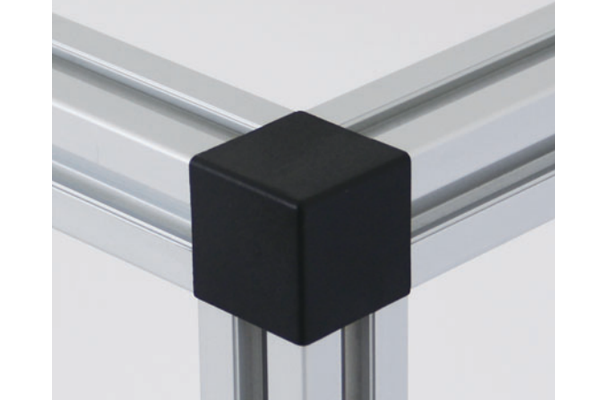
A complete aluminium extrusion connector system covering visible brackets, hidden inner brackets, cubic corner blocks, screw connectors and end face connectors for 20 to 50 series T-slot profiles.

MaterialAluminium, zinc alloy and steel by family
ToleranceDie casting and machining to ISO 8062 and ISO 2768-m
FinishMill finish / anodised / zinc plated / black oxide
Minimum order500
Lead time15-25 days after deposit
Full specification →
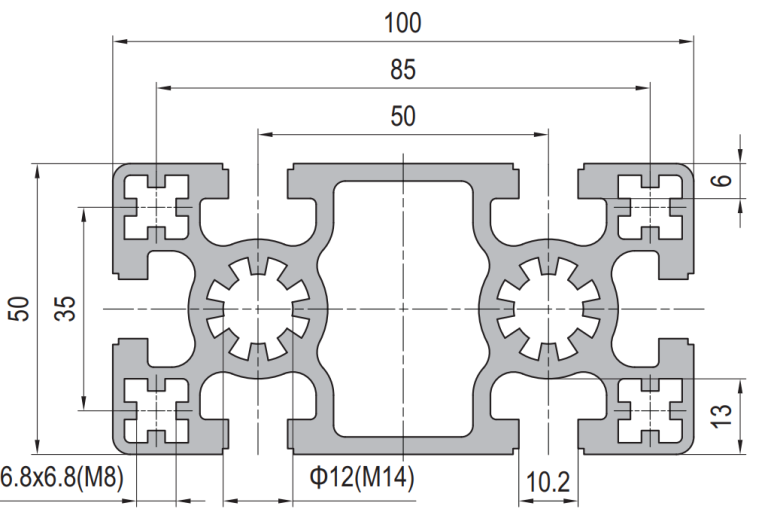
50 x 100 mm six slot aluminium profile section for heavy frames

Aluminium Extrusion Profile Supply: 15 to 45 Series Kits, 8 mm Slot

Aluminium extrusion profile supply for Ahmedabad in 6063-T5: electrical cabinet frames with a designed earth path, solar mounting rails, and frame kits cut to a cut list with connectors and fasteners.

MaterialAluminium
ToleranceEN 755-9, wall +/-0.15 mm
FinishMill finish / clear anodised / black anodised / powder coated
Minimum orderMade to order; frame kits from a repeat quantity
Lead time3 to 4 weeks to a Gujarat port plus inland haulage and clearance
Full specification →
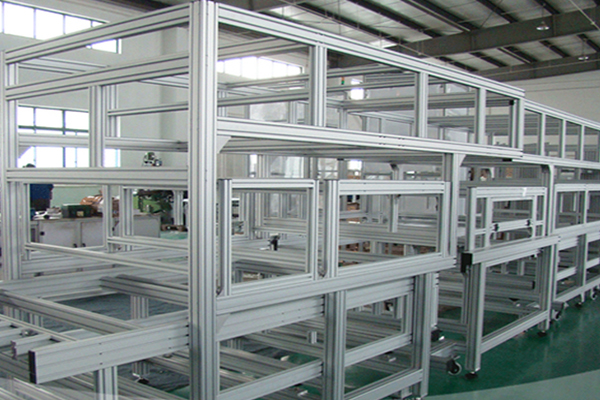
Aluminium profile frame built from T-slot extrusion

Aluminium Profile Hinge 40 Series 180 Degree for 8 mm Slot Guard Doors

180 degree hinge for 40 series aluminium profile guard doors. Two leaves clamp into the 8 mm slot with M6 T-nuts, in die-cast zinc, polyamide or stainless, with a door stop and backing plate as options.

MaterialZinc die-cast / polyamide / stainless steel
ToleranceHinge leaves fit the 8 mm slot; knuckle clearance is the dominant contributor to door sag
FinishZinc die-cast as cast or black coated; polyamide in black; stainless passivated
Minimum orderNo fixed minimum; priced per door set
Lead timeStock hinges ship in about a week; frame kits 2 to 3 weeks plus finish
Full specification →
Anti-torsion Subsequent Nut for 8 mm T-Slot Aluminium Profiles

Anti-torsion Subsequent Nut for 8 mm T-Slot Aluminium Profiles

Anti-torsion subsequent T-slot nut with twin wings for 30 and 40 series aluminium profiles. M6 and M8 thread sizes. Vibration resistant, slides in from profile end.

MaterialCarbon steel
ToleranceThread 6H, body width +/-0.1 mm, wing span +/-0.05 mm
FinishZinc plated / stainless steel A2 or A4
Minimum orderNo MOQ for stock sizes; 500 pieces for custom sizes
Lead timeStocked sizes ship in 2 to 3 days; custom sizes about 2 weeks
Full specification →
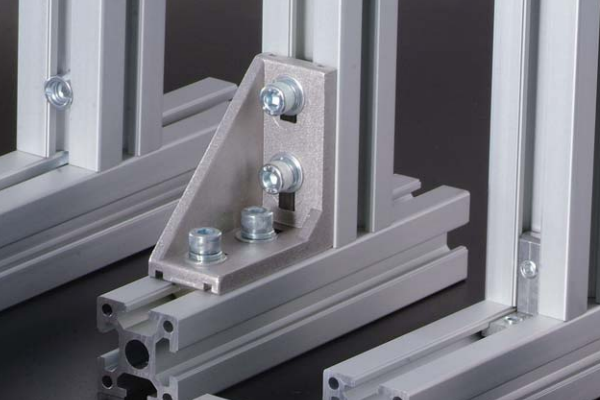
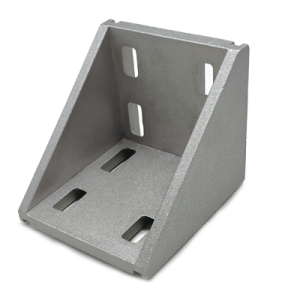
Die Cast Bracket for 20 to 50 mm Series Aluminium Profiles Corner

Die Cast Bracket for 20 to 50 mm Series Aluminium Profiles Corner

Die cast zinc alloy corner bracket for 20, 30, 40, 45 and 50 series aluminium profiles, with M5, M6 and M8 fixings. A one-piece corner gusset stronger than a cut angle.

MaterialZinc alloy
ToleranceCast tolerance per series
FinishBright / black painted
Minimum orderSold in small packs; larger quantities quoted per piece
Lead timeStocked by series; larger quantities 2 to 3 weeks
Full specification →
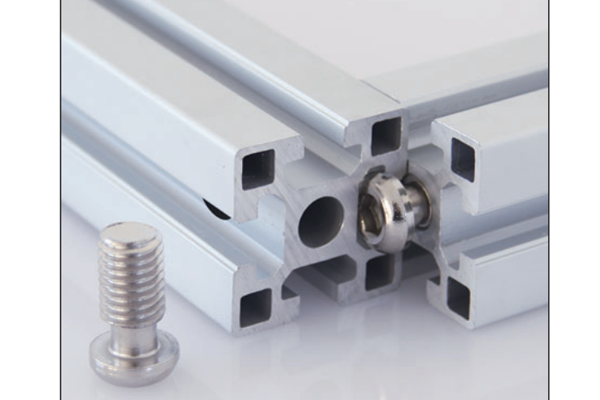
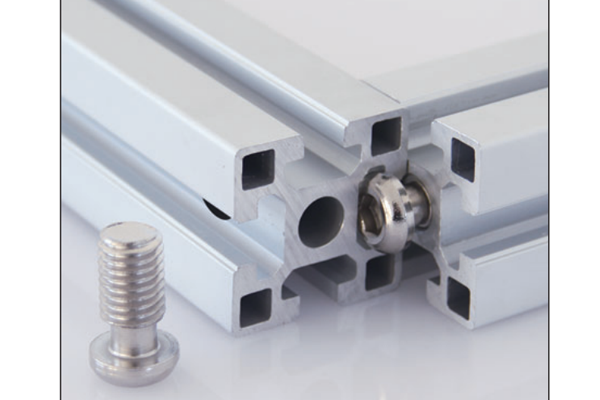
Hole Reducer Bolt for 8 mm T-Slot Aluminium Profiles

Hole Reducer Bolt for 8 mm T-Slot Aluminium Profiles

Hole reducer bolt with stepped M8 to M6 thread for 30 and 40 series aluminium profiles. Adapts M8 tapped centre bore to M6 component fitting. Single-piece, no separate bush.

MaterialCarbon steel
ToleranceThread 6g, step diameter +/-0.05 mm, length +/-0.5 mm
FinishZinc plated / stainless steel A2 or A4
Minimum orderNo MOQ for stock M8-to-M6; 500 pieces for custom combinations
Lead timeStocked M8-to-M6 ships in 2 to 3 days; custom about 2 weeks
Full specification →
Miter Connector Model C 90 Degree Corner Joint for 40 mm Aluminium Profiles

Miter Connector Model C 90 Degree Corner Joint for 40 mm Aluminium Profiles

Miter connector Model C for 90-degree corner joints on aluminium T-slot profiles. Internal tie rod, clean external corner. Available for 20, 30, 40 and 45 series.

MaterialZinc alloy housing / steel tie rod
ToleranceHousing to bore: H8/h7 sliding fit
FinishZinc plated / black zinc / nickel
Minimum orderStocked item; minimum 50 pieces per series
Lead timeTypically 1 to 2 weeks for stocked series and finishes
Full specification →
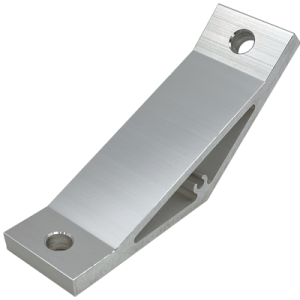
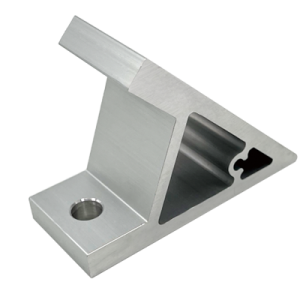
Oblique Connector Model C Angled Joint for 40 mm Aluminium Profiles

Oblique Connector Model C Angled Joint for 40 mm Aluminium Profiles

Oblique connector Model C for adjustable-angle joints on aluminium T-slot profiles. Internal tie rod, no panel face. Angle range 30 to 150 degrees. For 20, 30, 40 and 45 series.

MaterialZinc alloy housing / steel tie rod
ToleranceHousing to bore: H8/h7 sliding fit; angle set to +/-1 degree
FinishZinc plated / black zinc / nickel
Minimum orderStocked item; minimum 50 pieces per series
Lead timeTypically 1 to 2 weeks for stocked series and finishes
Full specification →
Oblique Connector Model P Angled Joint with Panel Face for 40 mm Aluminium Profiles

Oblique Connector Model P Angled Joint with Panel Face for 40 mm Aluminium Profiles

Oblique connector Model P with panel mounting face for angled joints on aluminium T-slot profiles. Adjustable 30 to 150 degrees, internal tie rod, panel face with tapped holes. For 20/30/40/45.

MaterialZinc alloy housing with panel face / steel tie rod
ToleranceHousing to bore: H8/h7; angle set to +/-1 degree; panel face flatness 0.2 mm
FinishZinc plated / black zinc / nickel
Minimum orderStocked item; minimum 50 pieces per series
Lead timeTypically 1 to 2 weeks for stocked series and finishes
Full specification →
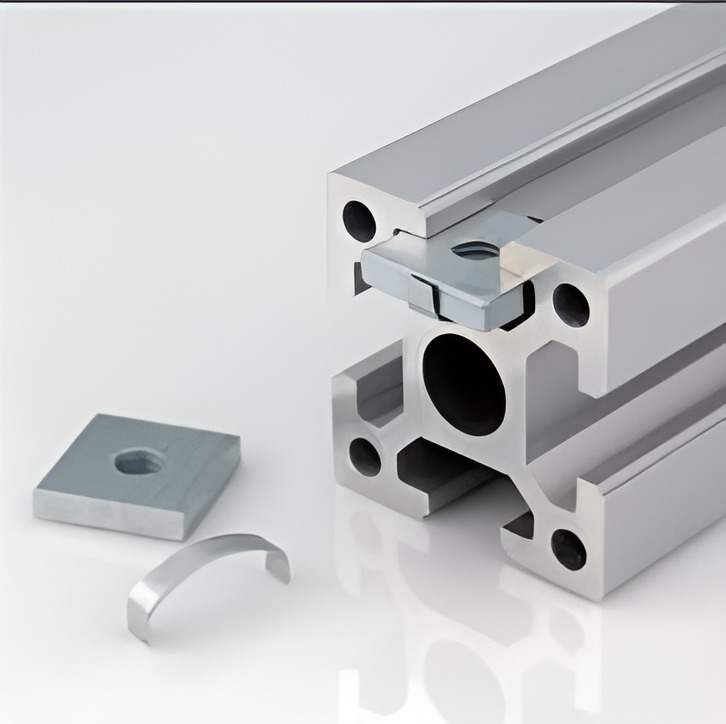
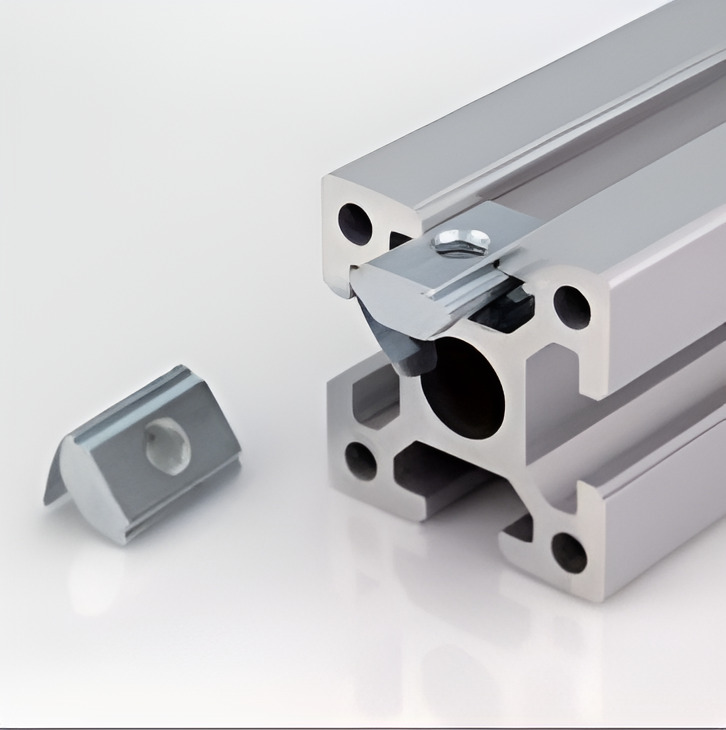
Pre-set T-Slot Nut for 8 mm Aluminium Profiles M5 M6 M8

Pre-set T-Slot Nut for 8 mm Aluminium Profiles M5 M6 M8

Pre-set T-slot nut with anti-drop spring tab for 20, 30 and 40 series aluminium profiles. M5, M6 and M8 thread sizes. Placed before assembly, bolted from outside.

MaterialCarbon steel
ToleranceThread 6H, body width +/-0.1 mm
FinishZinc plated / stainless steel A2 or A4
Minimum orderNo MOQ for stock sizes; 500 pieces for custom sizes
Lead timeStocked sizes ship in 2 to 3 days; custom sizes about 2 weeks
Full specification →
Square Nut for 8 mm T-Slot Aluminium Profiles M5 M6 M8

Square Nut for 8 mm T-Slot Aluminium Profiles M5 M6 M8

Square T-slot nut with four flat sides for 30 and 40 series aluminium profiles. M6 and M8 threads. Prevents rotation in groove, positioning accuracy +/-0.2 mm. For precision mounting.

MaterialCarbon steel
ToleranceThread 6H, body width +/-0.1 mm standard / +/-0.05 mm precision
FinishZinc plated / stainless steel A2 or A4
Minimum orderNo MOQ for stock sizes; 500 pieces for precision tolerance
Lead timeStocked sizes ship in 2 to 3 days; precision and stainless about 2 weeks
Full specification →
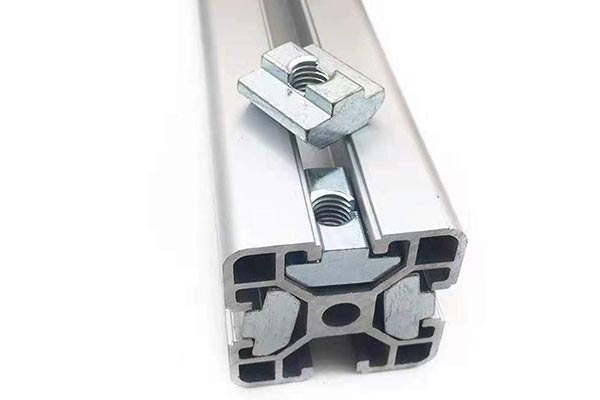
Subsequent Nut for 8 mm T-Slot Aluminium Profiles M5 M6 M8

Subsequent Nut for 8 mm T-Slot Aluminium Profiles M5 M6 M8

Subsequent T-slot nut for 30 and 40 series aluminium profiles. M5, M6 and M8 threads. Slides in from profile end face after assembly. Round or square body. Rescue fastener for retrofit.

MaterialCarbon steel
ToleranceThread 6H, body width +/-0.1 mm
FinishZinc plated / stainless steel A2 or A4
Minimum orderNo MOQ for stock sizes; 500 pieces for custom sizes
Lead timeStocked sizes ship in 2 to 3 days; custom and stainless about 2 weeks
Full specification →
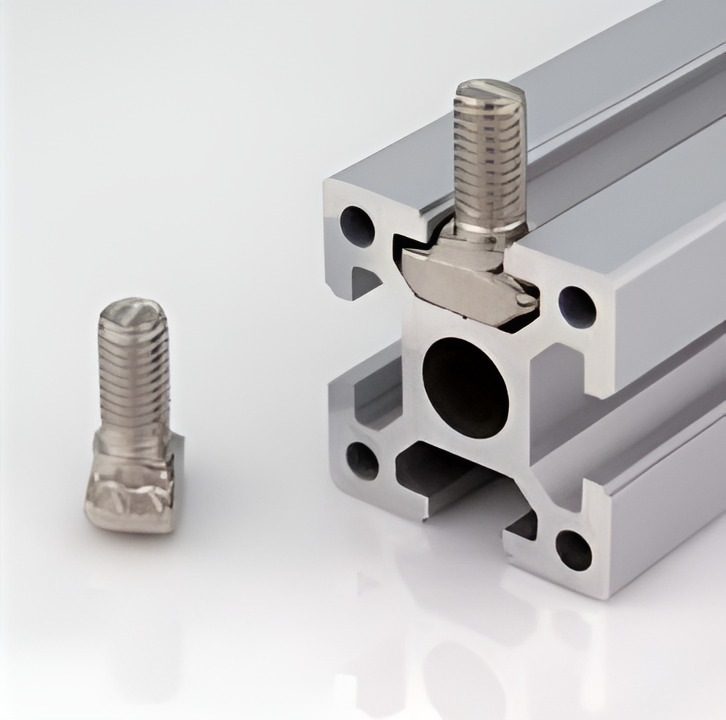
T-Bolt for 8 mm T-Slot Aluminium Profiles M6 M8 M10

T-Bolt for 8 mm T-Slot Aluminium Profiles M6 M8 M10

T-bolt with integral T-head for 20, 30 and 40 series aluminium profiles. M5, M6, M8 and M10 threads. Replaces separate T-nut, faster assembly. Carbon steel or stainless steel.

MaterialCarbon steel
ToleranceThread 6g, head width +/-0.1 mm, head thickness +/-0.05 mm
FinishZinc plated / stainless steel A2 or A4
Minimum orderNo MOQ for stock sizes; 500 pieces for custom sizes
Lead timeStocked sizes ship in 2 to 3 days; custom sizes about 2 weeks
Full specification →
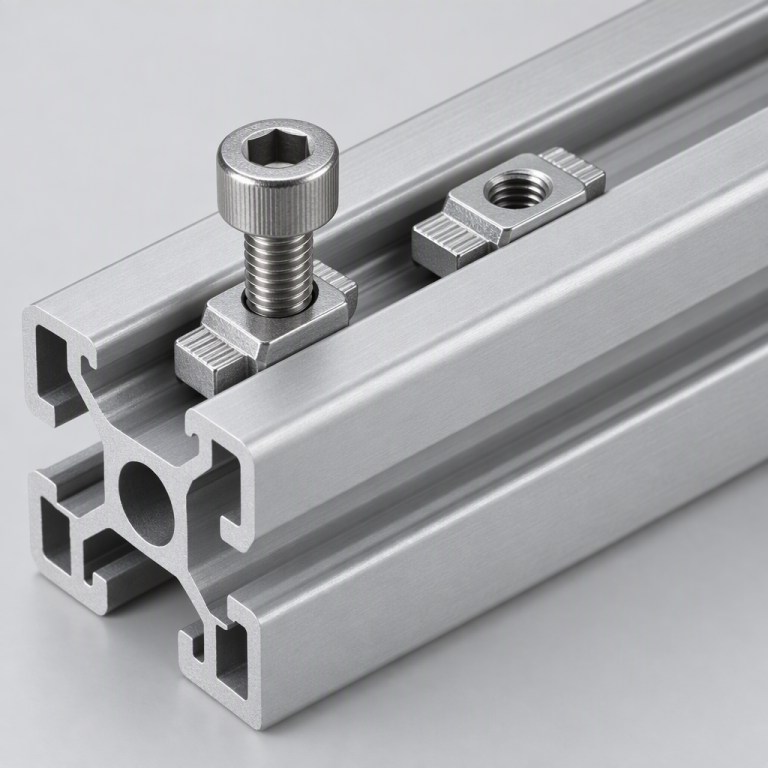
T-slot nuts and fasteners for aluminium extrusion profiles

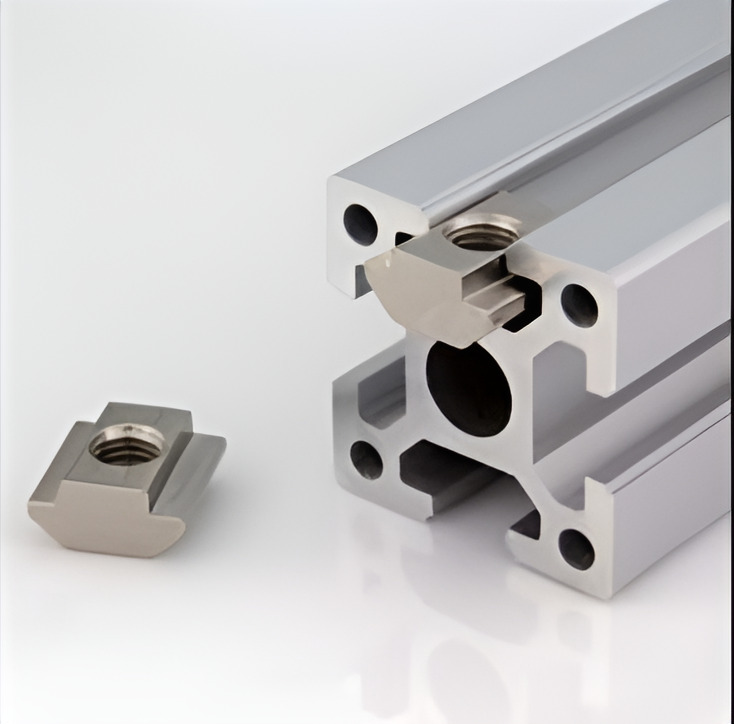
T-Nut for 10 mm Aluminium Profiles M4 M5 M6 M8 M10

Full range of T-slot nuts from M4 to M10 for 15 to 60 series aluminium profiles. Pre-set, subsequent, square and anti-torsion types. Carbon steel or stainless. Master selection guide for nut, thread and series.

MaterialCarbon steel
ToleranceThread 6H, body width +/-0.1 mm, body height +/-0.1 mm
FinishZinc plated / stainless steel A2 or A4
Minimum orderNo MOQ for stock sizes; 500 pieces for custom configurations
Lead timeStocked sizes ship in 2 to 3 days; custom and stainless about 2 weeks
Full specification →

Connecting elements are the brackets, connectors and plates that join aluminium profiles. They divide into two families: concealed connectors that sit inside the slot and leave the outside faces clean, and visible brackets that bolt onto the outside of a joint. Choose by joint type first, then by load, then by whether the outside faces have to stay clear.

Below: the four joint types, the hardware options for each, and the load-path rule that prevents most frame failures.

Start with the joint type, not the part

Almost every aluminium frame is built from four joints. Identify which one you are making and the hardware shortlist becomes obvious.

JointDescriptionTypical hardware
Butt / in-lineTwo members meet end to end in a straight runLinear connector or a joining plate
CornerTwo members meet at 90° in the same planeAnchor connector, die-cast bracket, angle profile bracket or an internal joining plate
TeeOne member ends against the middle of anotherAnchor connector into the through member, or a bracket plus a plate
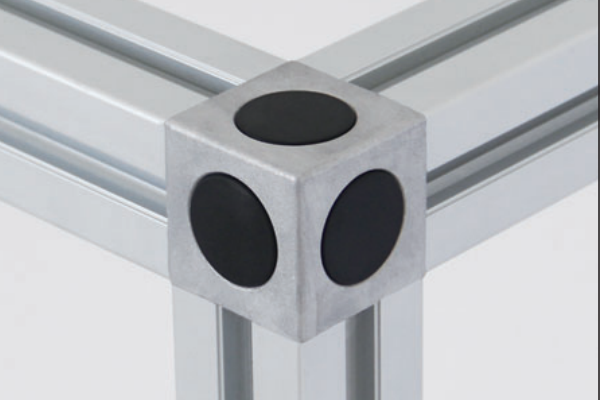
CrossTwo members cross, either at the same level or one over the otherCubic connector, or a bracket pair where one member is continuous

Concealed or visible?

The first real decision is appearance, because it removes half the options.

Concealed joints

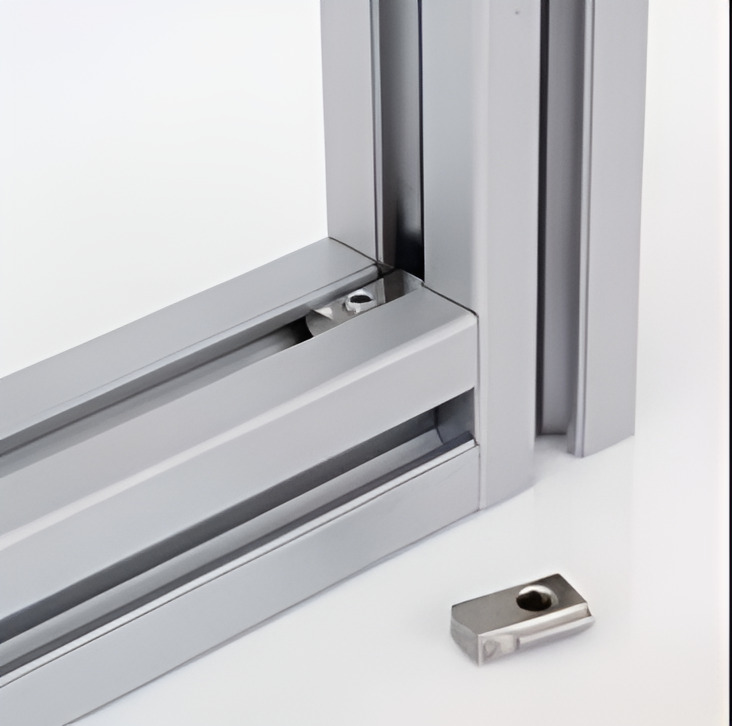
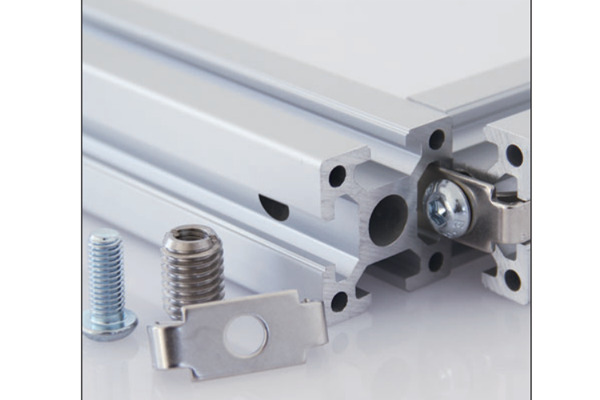
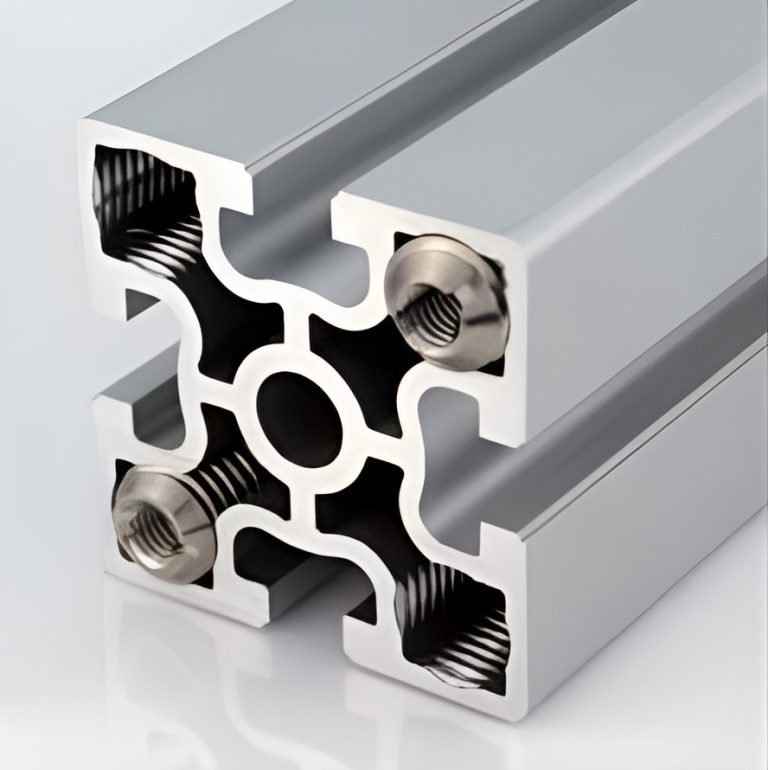
A concealed connector sits inside the slot and is tightened through a hole in the profile or from the end face. The outside of the frame stays clean, which matters on furniture, display structures, doors and any frame the customer will see. The cost is that the members need machining — usually an end tap or a counterbored hole — so the frame has to be planned before it is cut.

Visible joints

A visible bracket bolts onto the outside or inside of the corner. It needs no machining, can be fitted with a standard hex key, and can be added or removed on an assembled frame. The cost is appearance and, on the inside of a corner, the space the bracket occupies. Inside-mounted brackets are usually invisible in service and are the pragmatic choice for machine frames.

CriterionConcealedVisible
Outside facesCleanBracket or fastener heads show
Machining neededYes — end tap or counterboreNo
Assembly speedSlower; needs correct orientationFast
Retrofit onto an existing frameDifficultEasy
Typical useFurniture, displays, doors, visible framesMachine frames, guarding, prototypes

The load path rule

Frames rarely fail in the middle of a member. They fail at joints, and they fail because the load is concentrated on a short length of slot lip.

A connector transfers load into the profile through the lip of the slot. The lip is thin, and it is the weakest feature of an otherwise strong section. The rule that follows is simple: never let one connector carry a load that a pair could share.

  • At a corner, use two connectors, or one connector plus a joining plate, wherever the frame carries a machine or a moving load.
  • At a tee, the through member is being loaded across its slot. Use a plate to spread the load, or fit the connector into the through member rather than the abutting one.
  • On a cantilever, the moment at the joint rises with the length of the arm. Two brackets separated along the profile are far stronger than one larger bracket.
  • Where a frame vibrates, a joint that is adequate statically will still loosen. Add a second load path, or use a serrated washer and a thread-locking compound.

Practical point: adding a second connector at a corner costs a few cents and a few seconds. Replacing a frame that has moved under load costs the whole build. When in doubt, over-specify the joints and under-specify the profile.

The accessory families

Anchor connectors

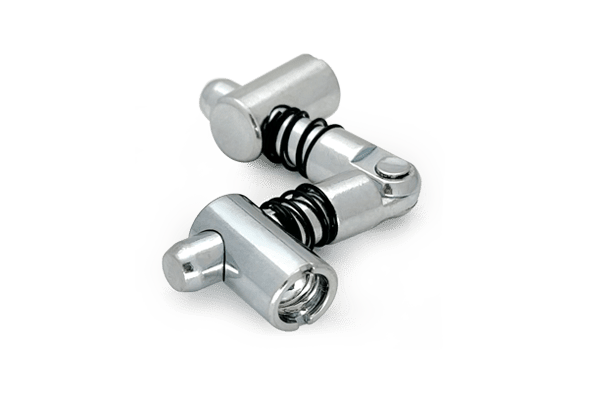
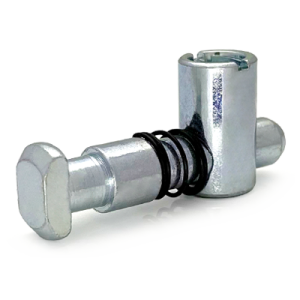
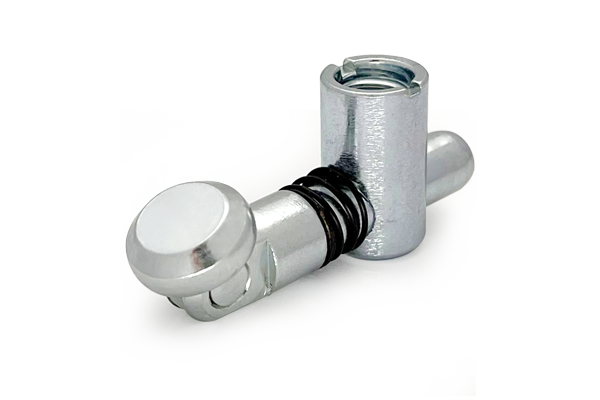
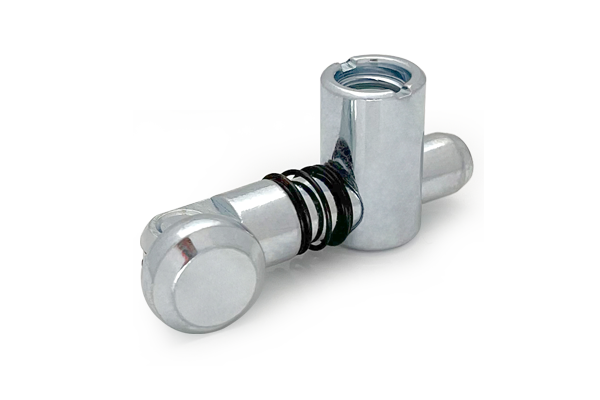
Concealed corner and tee joints. Tightened from the end face or through a hole, leaving the outside clean. See anchor connectors.

Die-cast brackets

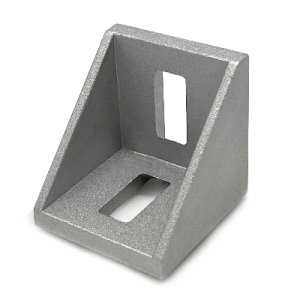
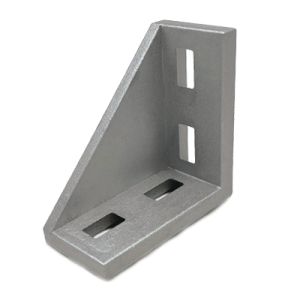
Cast corner brackets that bolt into the slot. Fast to fit, available for every standard series. See die-cast brackets.

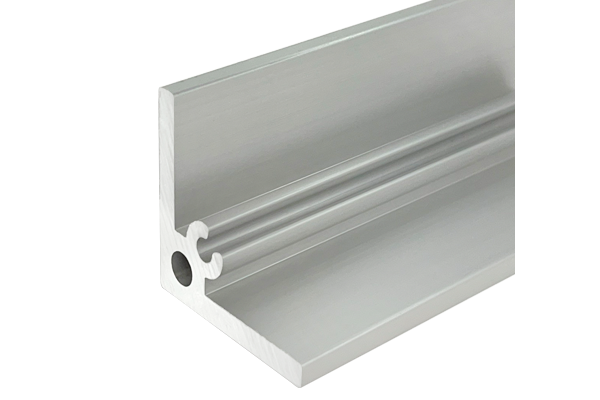
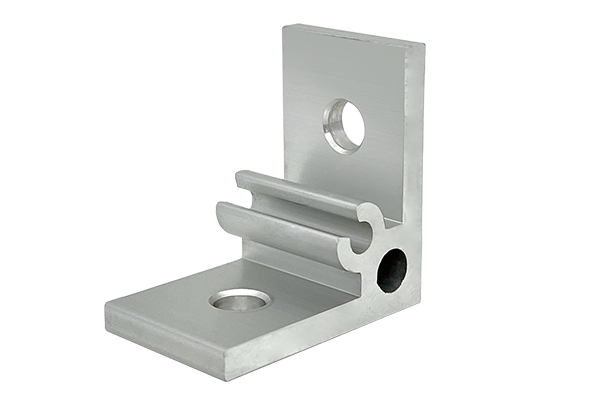
Angle profile brackets

Extruded or machined L-brackets for heavier corners and for retrofitting a brace. See angle profile brackets.

Joining plates

Flat plates that span a butt joint or reinforce a corner, spreading load over a long length of slot. See joining plates.

Other connecting elements

Cubic connectors, end connectors, screw connectors and linear bar connectors for the joints the standard range does not cover. See other connecting elements.

Fastening elements

T-nuts, hammer nuts, flange nuts, bolts and washers — the hardware every joint also needs. See fastening elements.

Materials and what they mean

Brackets are made from die-cast zinc, die-cast aluminium or steel, and the material affects how the joint behaves.

MaterialBehaviourUse it when
Die-cast zincStrong and dimensionally accurate; heavier than aluminiumGeneral structural corners at standard loads
Die-cast aluminiumLight; slightly lower strength; anodises to match the frameAppearance matters and the load is moderate
Extruded or machined aluminiumStrong in the direction of the extrusion; heavier sectionHeavy corners and long brackets
Steel, zinc platedHighest strength; different colour from the frameHigh-load joints where appearance is secondary

Common mistakes

  • Mixing series. A 30 series bracket will not seat on a 40 series profile. Slot width and bolt centres both differ, and the same trap exists between 40 and 45 series.
  • Using a bracket as a structural member. A bracket joins two profiles; it does not replace a diagonal brace. Where a frame needs stiffness, brace it.
  • Forgetting the fastener. A bracket is only half the joint. The T-nut, the bolt length and the washer matter as much as the bracket, and bolt length is series-specific.
  • Overtightening. Torquing a small slot beyond its limit crushes the lip permanently. Use the fastener maker's figure rather than tightening by feel.
  • Assuming a corner is square. A corner joint aligns two members but does not guarantee 90°. Assemble on a flat surface and check the diagonals.

How to specify joint hardware

The fastest way to order is to send the frame layout and the series. From that we can list the connectors, plates, fasteners and quantities, which is usually quicker and cheaper than ordering part by part. If you already know the parts, give the series, the joint type, whether the joint is concealed or visible, and the quantity. Standard hardware is quoted within one working day. Related ranges: strut profiles, 30 series, 40 series, profile accessories and panel installation elements.
FAQ

Questions buyers ask about this range

What is the difference between a connecting element and a fastening element?+

Connecting elements join two profiles - brackets, connectors and plates. Fastening elements are the nuts, bolts and washers that hold them, including T-nuts and hammer nuts.

Which connector should I use for a corner?+

For a clean outside face, an anchor connector. For fast assembly or retrofitting, a die-cast bracket. For a heavily loaded corner, an anchor connector plus a joining plate, or two connectors.

Can I mix brackets from different series?+

No. Slot width and bolt centres differ between series, so a 30 series bracket will not seat correctly on a 40 series profile. The same applies between 40 and 45 series.

How many connectors does a corner need?+

One is adequate for a bench or a light frame. Use two, or one plus a joining plate, wherever the frame carries a machine, a moving load or vibration.

Do I need to machine the profiles for a concealed joint?+

Yes, usually an end tap or a counterbored hole. That is why a concealed joint has to be planned before the profiles are cut.

Why does my frame move under load?+

Almost always a joint problem rather than a profile problem. The load is concentrated on a short length of slot lip, so add a second connector or a plate to spread it.

What material are the brackets made from?+

Die-cast zinc and die-cast aluminium are the common materials, with extruded or machined aluminium and zinc-plated steel for heavier duty. The material affects strength and appearance rather than fit.

Can brackets be fitted to an assembled frame?+

Visible brackets can, which is why they are the usual choice for retrofitting a brace. Concealed connectors generally cannot, because they need an end tap.

Related product categories

Anchor ConnectorsDie-Cast BracketsAngle Profile BracketsJoining PlatesOther Connecting ElementsFastening ElementsStrut ProfilesAll products

Need this range specified for your project?

Send the drawing, the section size or a sample and we will confirm the alloy, the tolerance, the finish and the commercial terms. Quotes for standard items normally go out within one working day.

Request a quotation