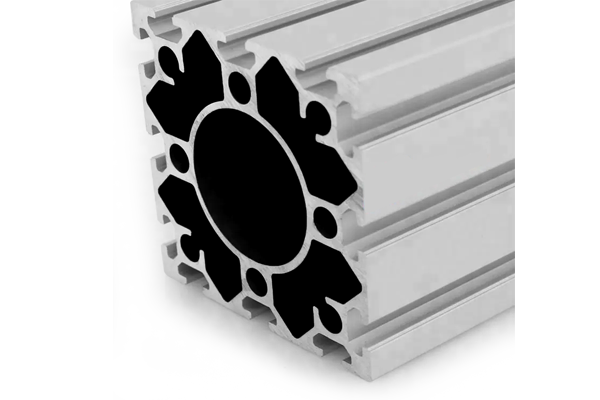
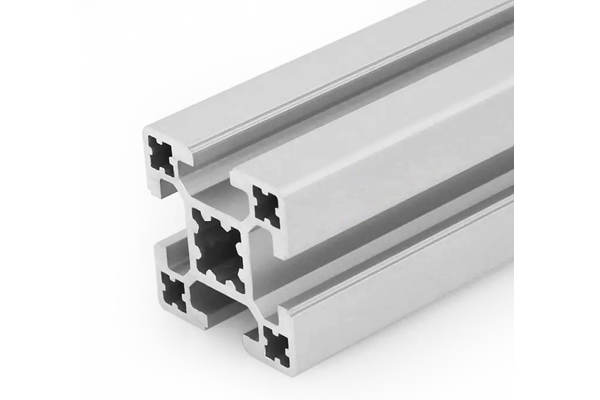
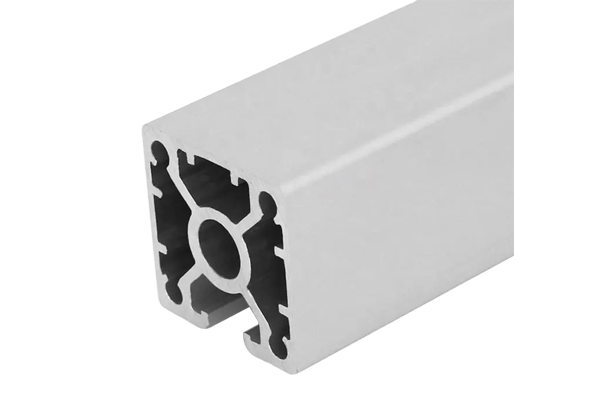
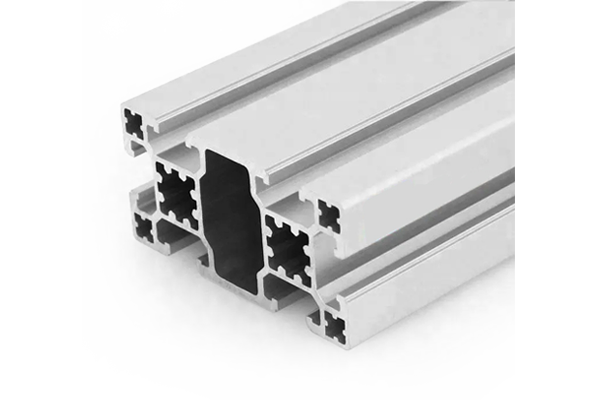
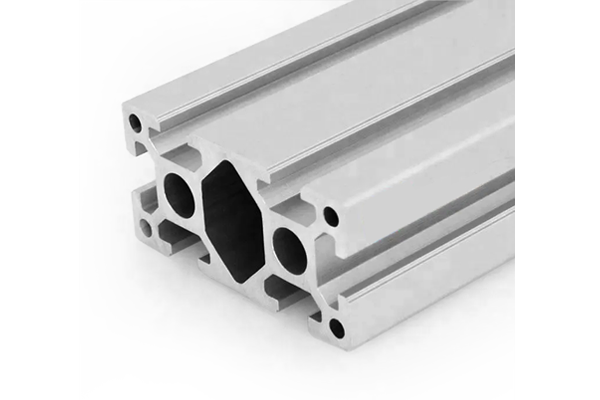
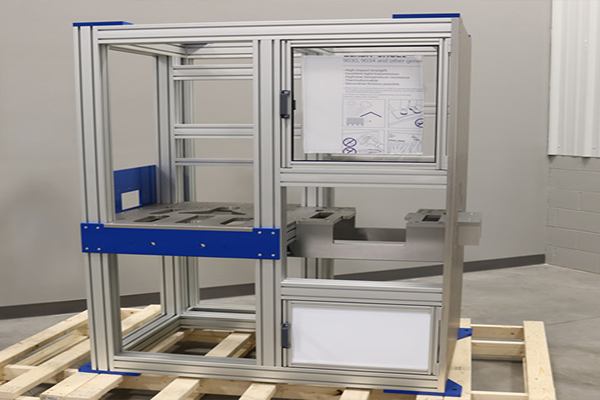
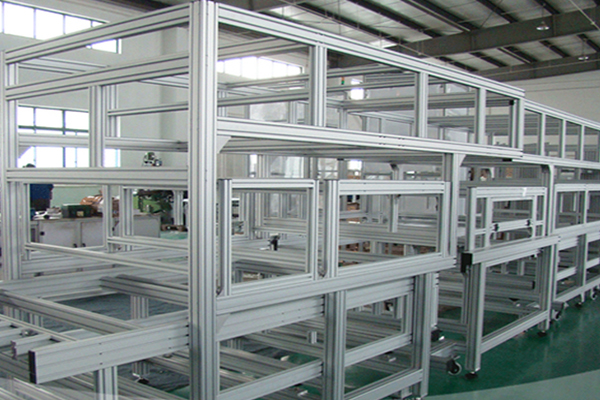
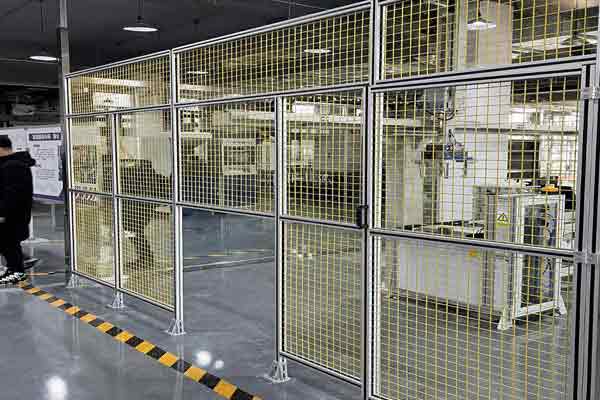
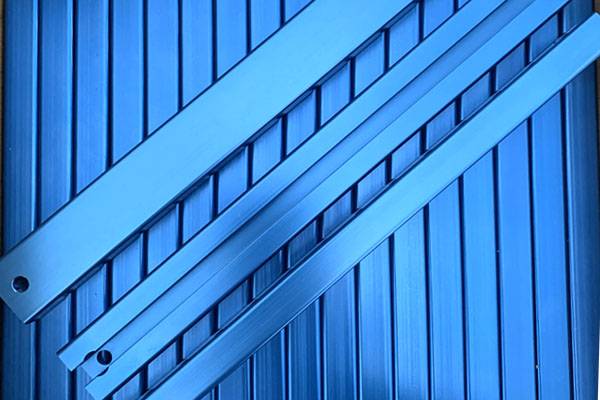
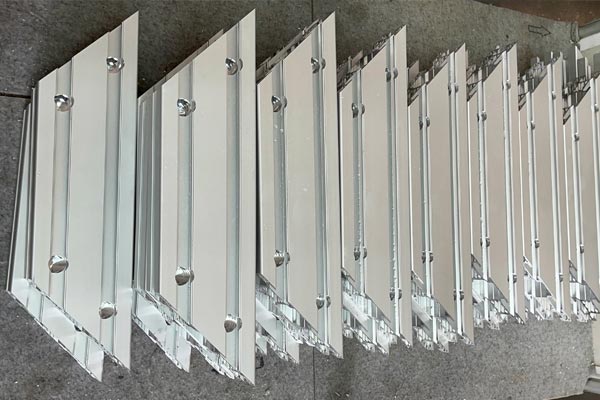
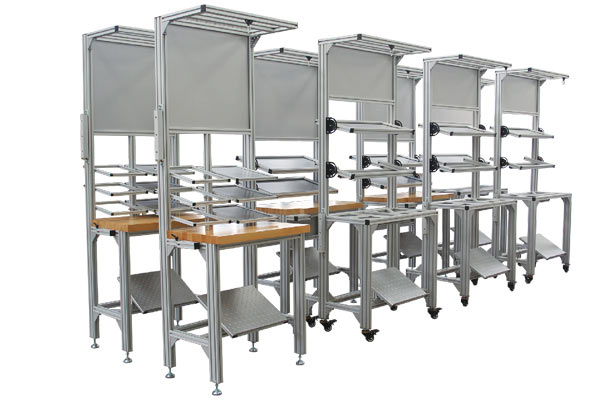
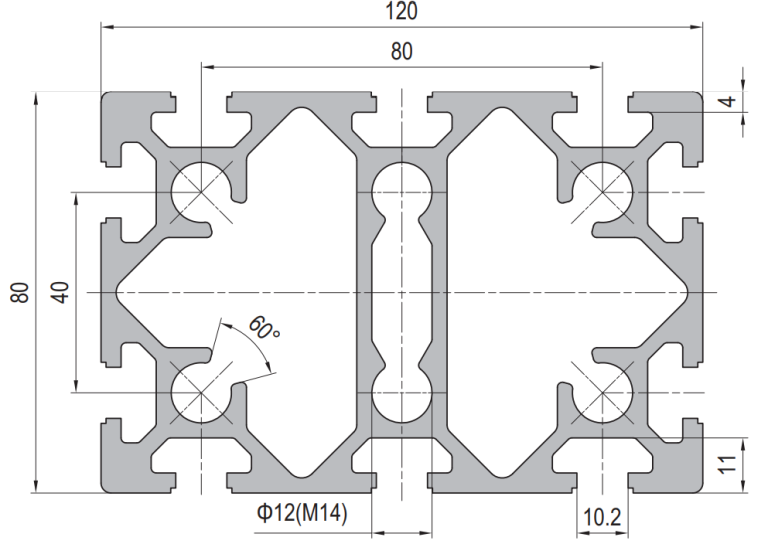
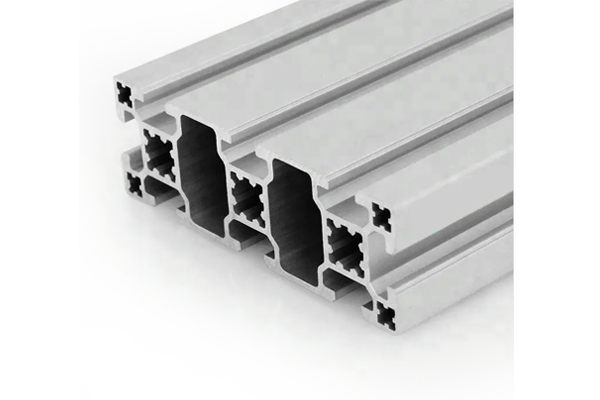
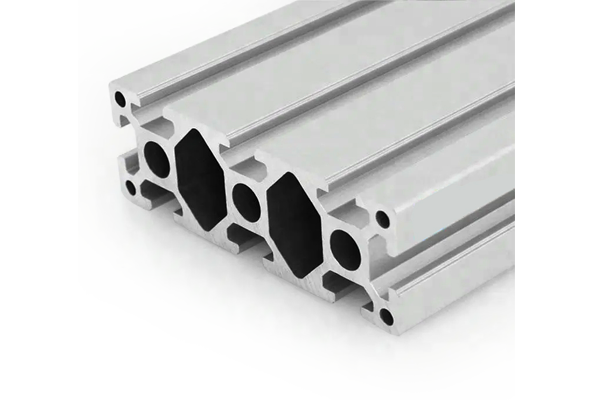
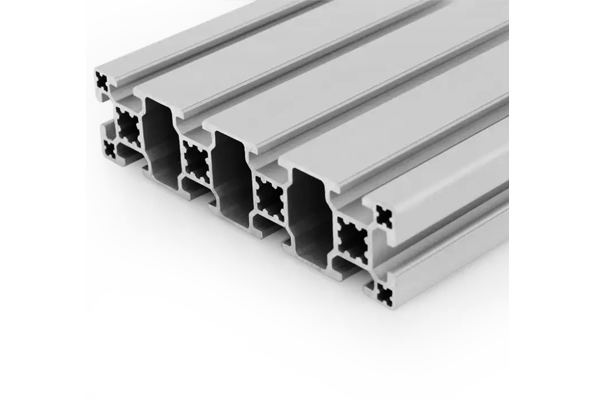
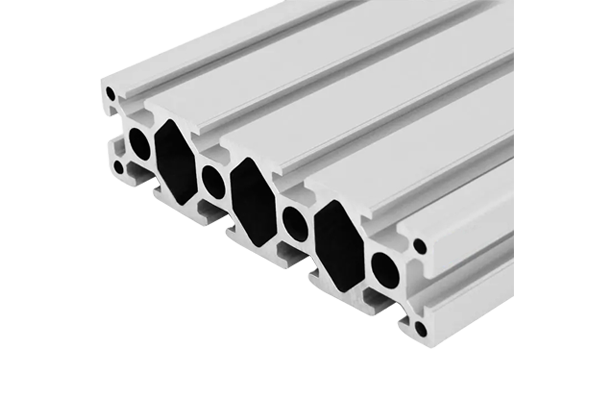
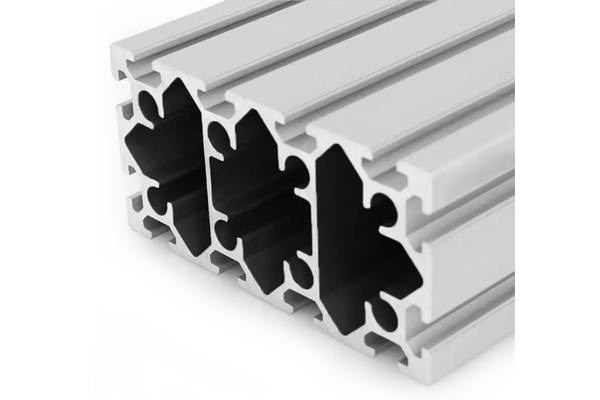
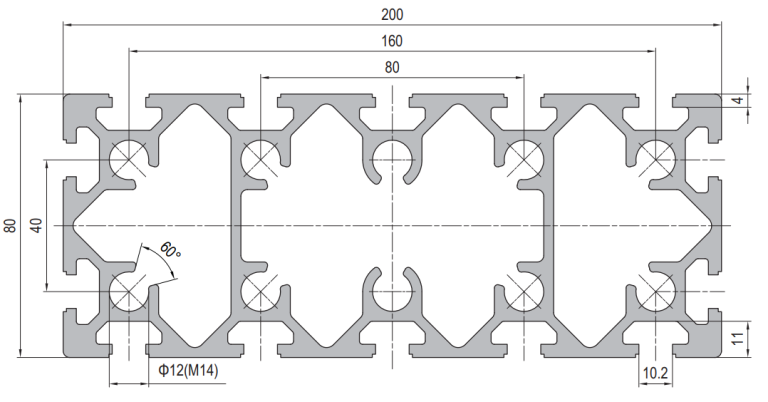
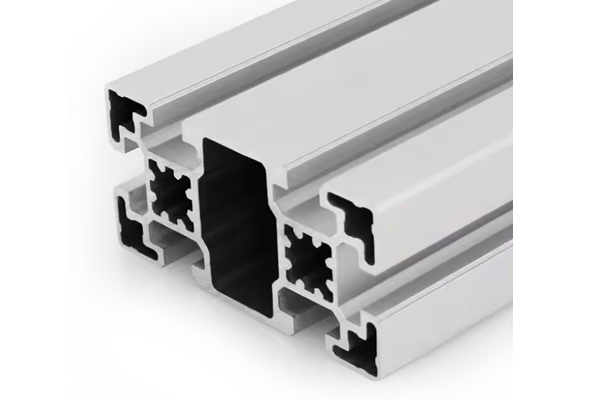
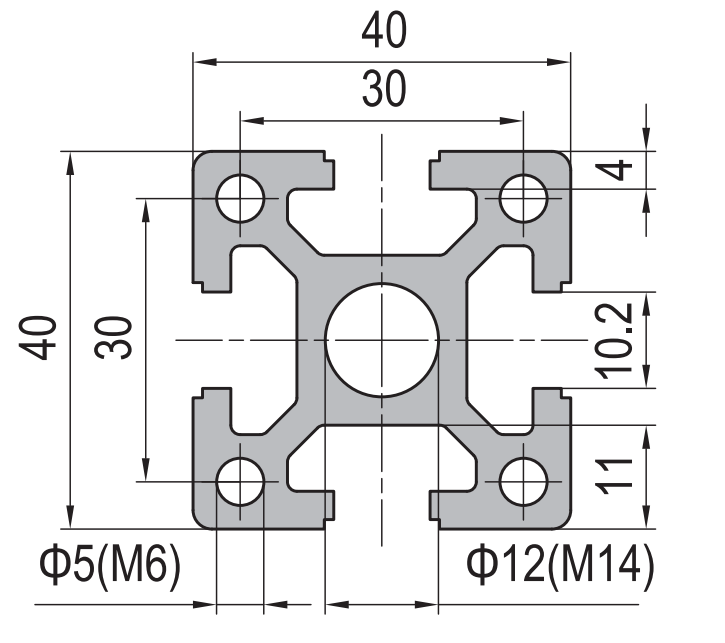
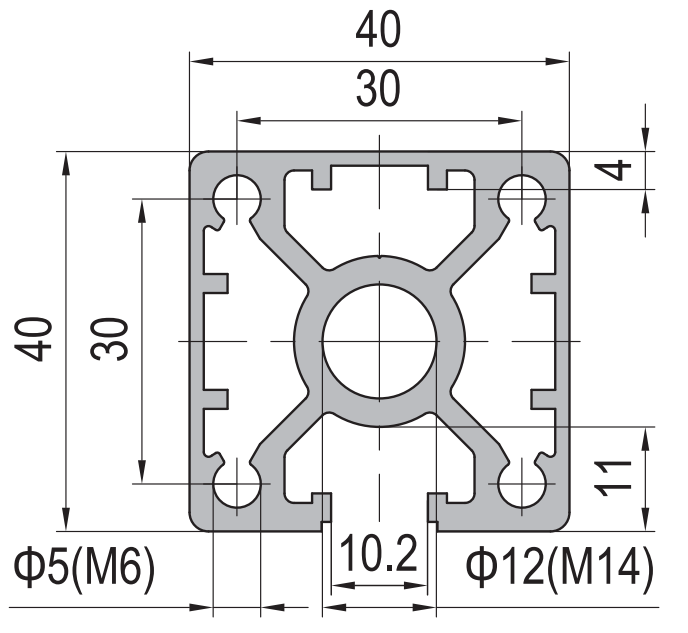
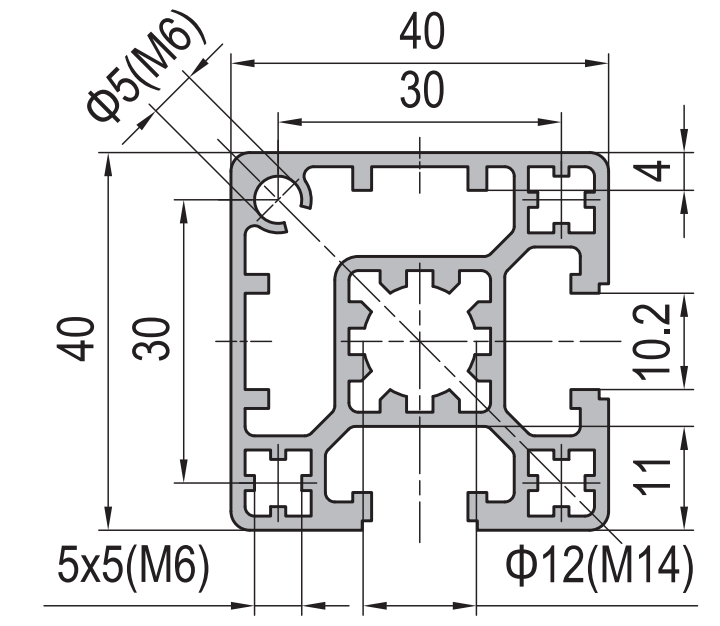
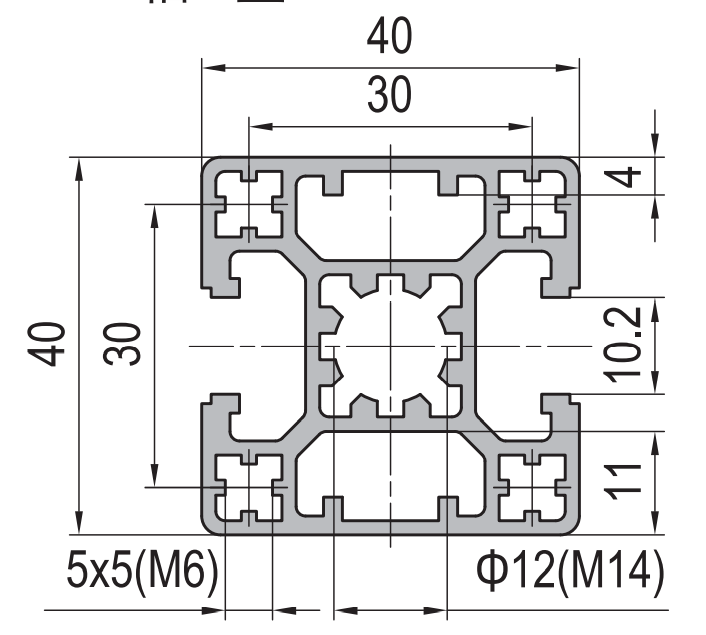
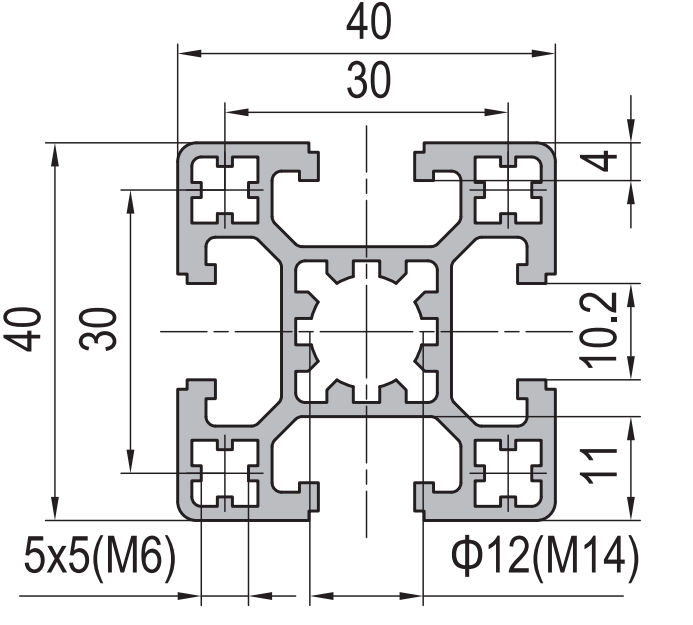
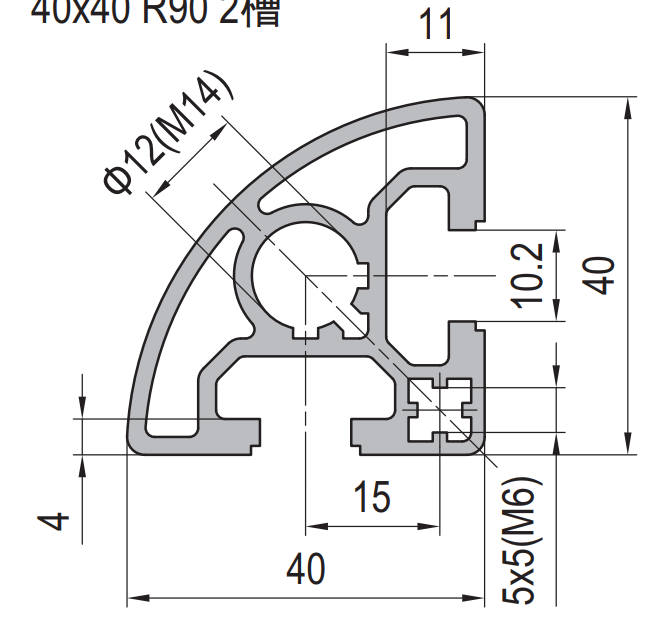
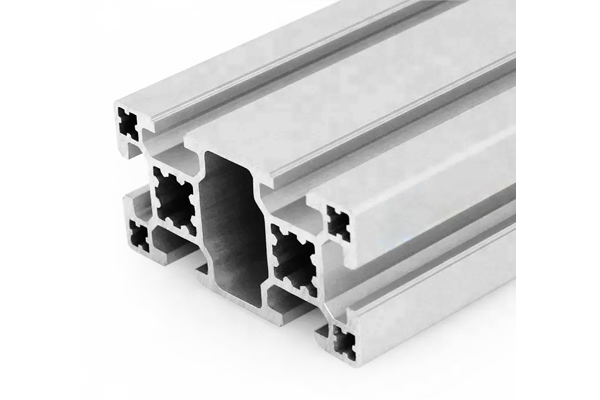
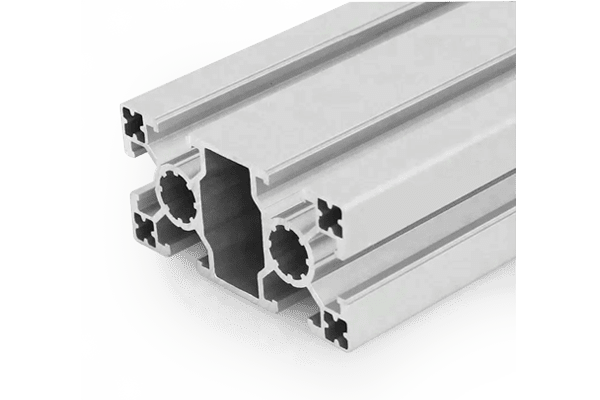
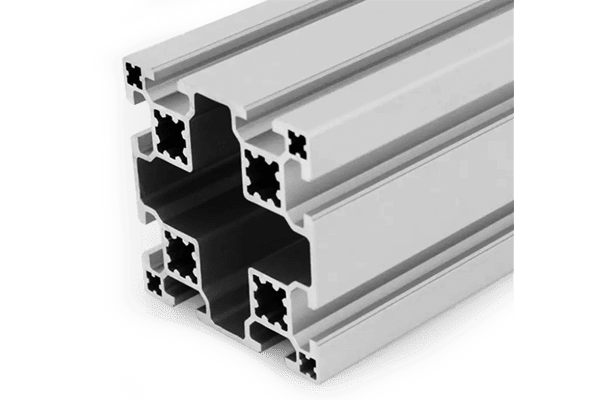
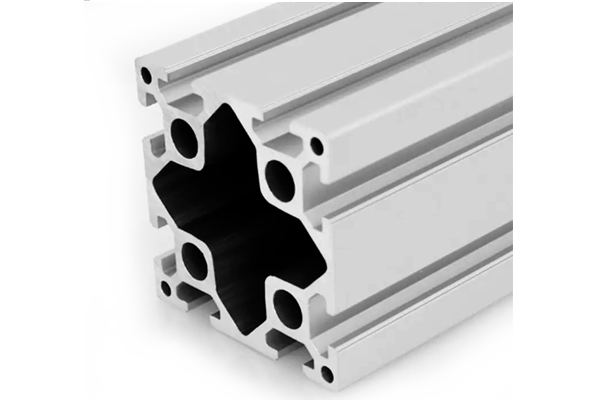
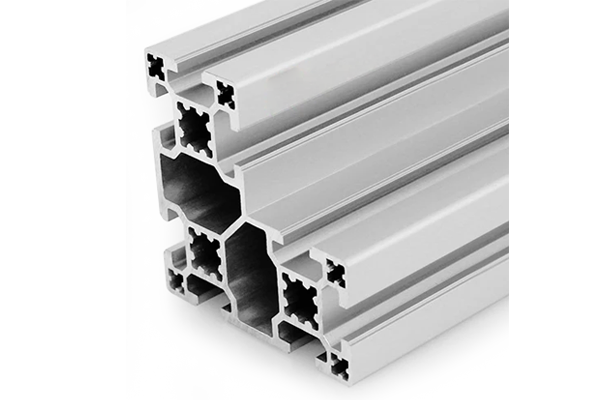
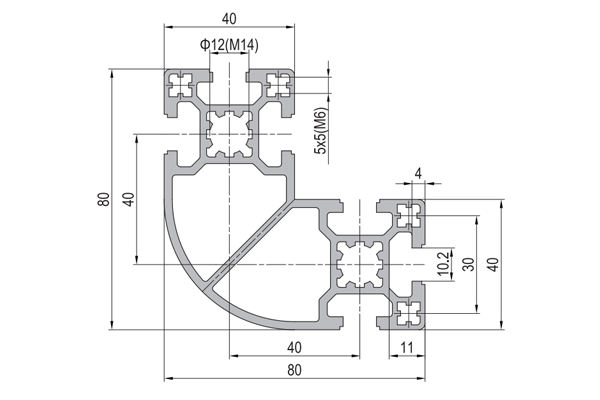
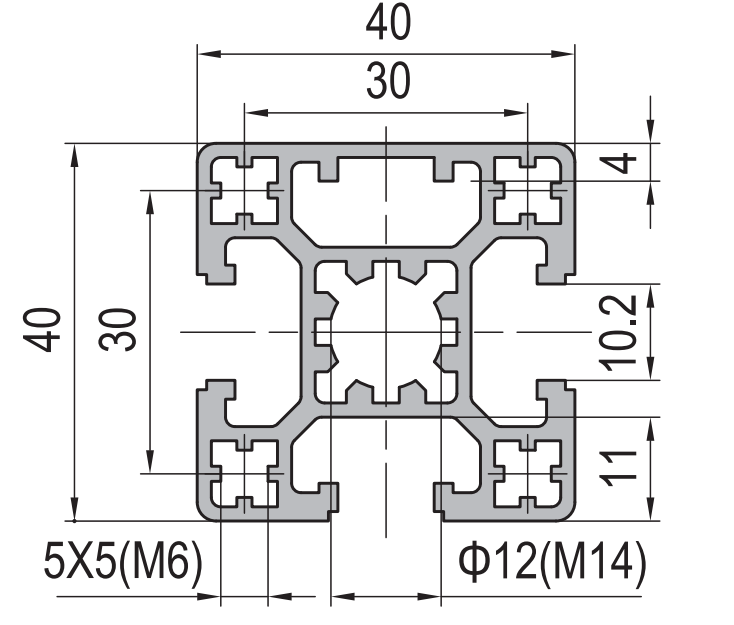
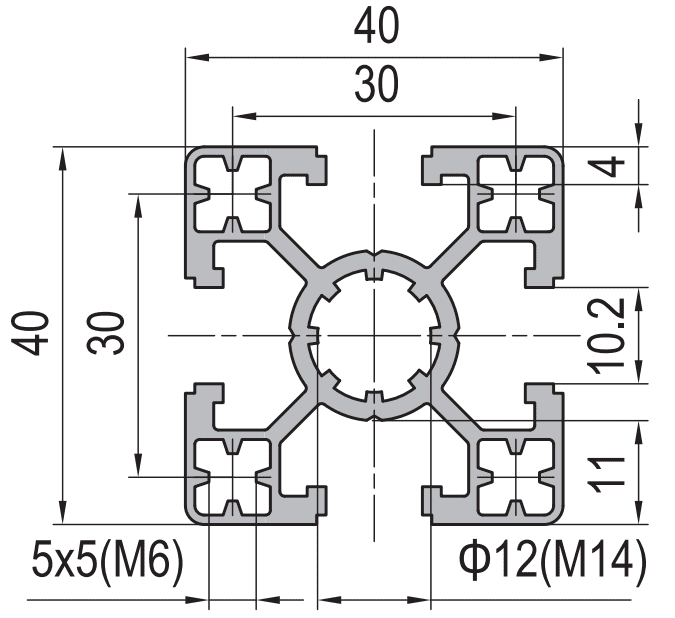
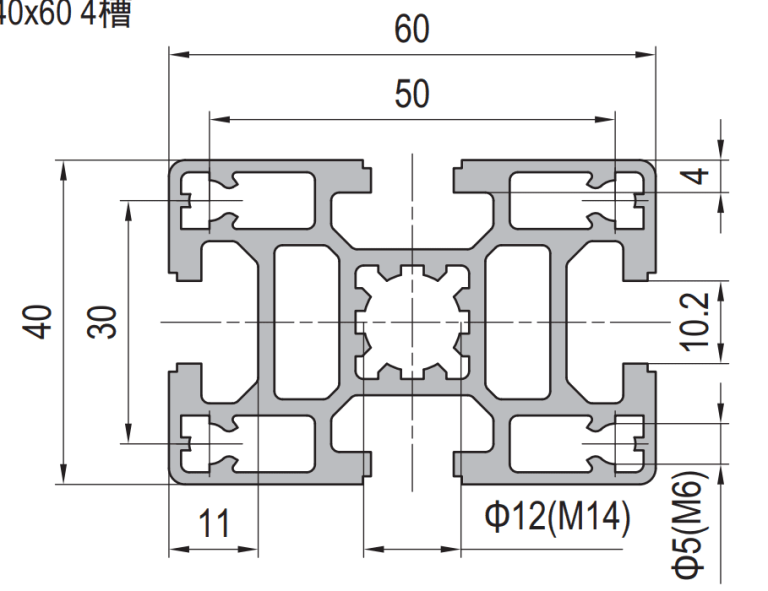
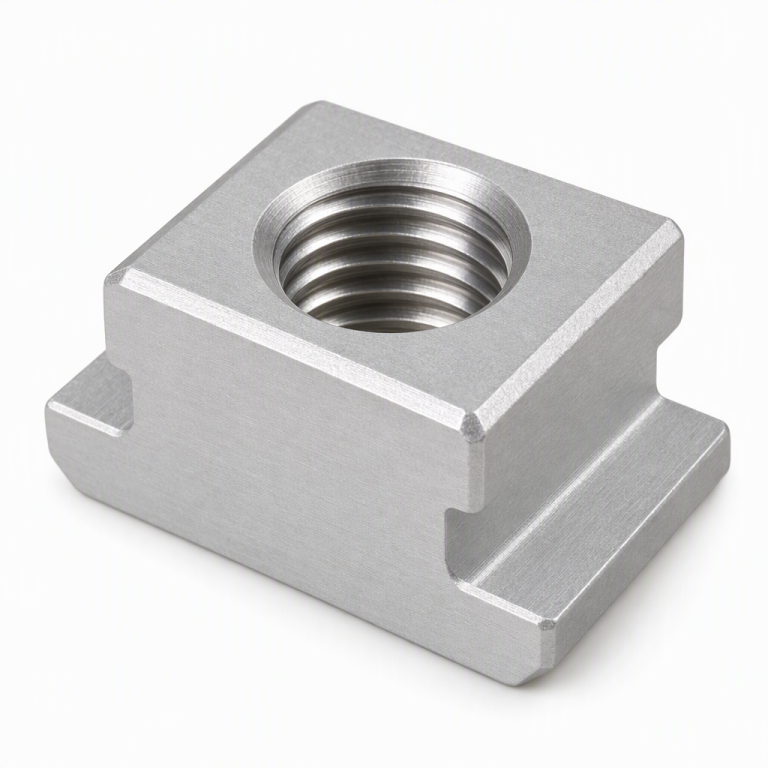
40 series aluminium profiles are slotted extrusions on a 40 mm module with a 10 mm T-slot. The range covers 40×40, 40×80, 40×120, 40×160, 80×80, 80×120, 80×160, 80×200 and 120×120, in light, standard and heavy wall variants. They take M8 T-nuts as standard and M10 on the heavy sections, and they are the usual choice for machine bases, robot cells, gantries and platforms where the frame is sized by deflection rather than by strength.
Below: what the light, standard and heavy variants actually change, how to size a member for span rather than load, and how the joints of a heavy frame should be built.
What defines the 40 series
The module is 40 mm and the slot is 10 mm. The wider slot is what separates this series from 30 series: a 10 mm groove accepts an M8 T-nut with enough bearing area to be genuinely structural, and it can carry a bolt head or a hammer nut that will survive being torqued hard. That is the point at which an aluminium frame stops being a fixture and starts being a machine base.
The series is also where section depth becomes available. A 40 series range that reaches 80×200 gives a member with a very deep web, which is the cheap way to buy stiffness: for the same weight, a deeper section resists bending far better than a thicker one.
Light, standard and heavy — what the variants change
Several 40 series sizes are offered in more than one wall thickness. The outer envelope is identical, so the slot position, the brackets and the accessories are the same; what changes is the wall thickness, and therefore the weight and the stiffness.
| Variant | Wall | Weight | Stiffness | Use it when |
|---|
| Super light | Thinnest | Lowest | Lowest | The frame is large but lightly loaded, and handling weight matters — for example a portable gantry |
| Light | Thin | Low | Moderate | Panels and guarding on a frame that is already stiff enough |
| Standard | Medium | Medium | Good | The default for machine frames and general structures |
| Heavy | Thick | High | Highest | Base members, cantilevers, anywhere a fastener is torqued hard or a load is concentrated |
The trap is choosing a light variant for a member that carries a joint. Stiffness in bending comes mostly from the section depth, but local strength at a fastener comes from the wall thickness. A light 40×80 beam is perfectly adequate in the middle of a span and inadequate at the corner where an anchor connector clamps the slot lip.
The size family
| Section | Slots | Typical role | Notes |
|---|
| 40×40 | 4 | Posts, light frame members, brackets | Available light, standard and heavy |
| 40×80 | 6 | Main beams and uprights of a machine frame | The most-used member in the series; depth in the bending plane is what matters |
| 40×120 | 8 | Base rails, wide openings, gantry beams | Often paired with 80×80 uprights |
| 40×160 / 40×200 | 10–14 | Long spans where a deeper section replaces a bigger square | Cheaper and lighter than an 80×80 for the same stiffness in one direction |
| 80×80 | 8 | Machine bases, robot cell uprights, heavy corners | Stiff in both directions; the standard heavy base member |
| 80×120 / 80×160 / 80×200 | 10–14 | Structural bases, long unsupported spans, platform edges | Where the frame is effectively a beam structure |
| 120×120 | 12 | Very heavy bases and gantry columns | Check whether a bolted steel weldment would be cheaper before going larger |
Sizing a member for span, not for load
Heavy frames are almost always over-designed for strength and under-designed for stiffness. Aluminium is strong enough that a 40×40 member will not yield under any load a hand-built frame will see; what it will do is deflect, and deflection is what makes a machine inaccurate and a guard door stick.
Deflection of a beam scales with the cube of its span. That single relationship drives the whole design process:
- Halving the span reduces deflection to one eighth. A mid-support is almost always cheaper than a bigger profile.
- Doubling the section depth in the bending direction reduces deflection to roughly one eighth as well, which is why a 40×80 beam is far stiffer than a 40×40 in one plane and identical in the other.
- Orientation matters. The same 40×80 member is eight times stiffer standing on edge than lying flat. Check which way the load bends it before choosing the section.
- Bracing beats beefing up. A diagonal or a closed panel turns a flexible rectangle into a rigid triangle or diaphragm for a fraction of the material.
Practical point: decide the span layout first and the sections second. A frame laid out with supports every 900 mm can often use 40×40 where a frame with 1,800 mm bays would need 80×80 — and the extra supports cost far less than the extra aluminium.
Building the joints of a heavy frame
A 10 mm slot can be crushed, and it is expensive to discover that after assembly. Three rules apply to 40 series corners.
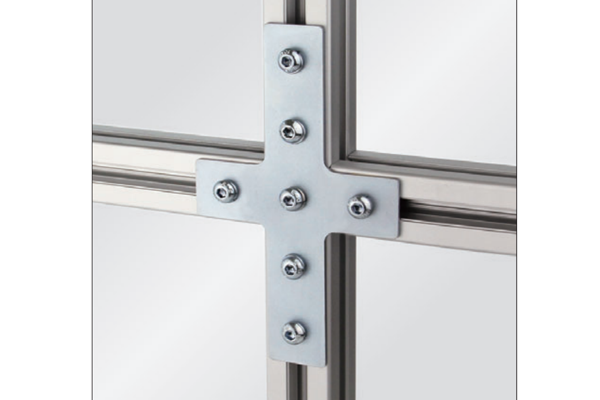
- Use two load paths. An anchor connector alone in a 40 series corner is adequate for a bench but marginal for a machine base. Pair it with a joining plate or use two connectors so the load is spread along the slot.
- Match the bracket to the slot. 40 series brackets are designed for a 10 mm slot; a 30 series bracket will not seat correctly. The full family is listed under connecting elements.
- Tap the ends properly. End taps in a heavy member need a pilot drill and a tapping guide. Doing this on a bench without a jig is the most common cause of a frame that will not pull square.
Heavy frames and vibration
Where a frame carries a driven load — a spindle, a conveyor, a robot — vibration becomes a design input. Two measures help. First, keep the base heavy: adding mass low in the structure reduces the amplitude of the response. Second, close the structure: an open rectangle rings, a triangulated or panelled structure does not. Where a machine tool is involved, bolting the base to the floor through levelling feet that can also be grouted in place is normal practice.
When aluminium stops being the right answer
There is a point at which a bolted aluminium frame is no longer the economical solution. If the structure is a permanent machine base with no requirement to be re-configurable, if the loads are dynamic and high, or if the section required is beyond 120×120, a welded steel weldment with machined mounting faces is usually cheaper and stiffer. The advantage of 40 series is re-configurability, not raw stiffness per kilogram. Where the frame will be modified, moved or re-purposed, aluminium wins; where it will never change, steel is often better value.
Machining and finishing
Heavy frames usually need end taps, drilled and tapped holes and machined mounting faces. We cut to ±0.3 mm with square ends, deburr, and can add counterbores, spot faces and milled pads so that a mounting face is flat without a separate operation. See CNC machining for the processes available.
Satin anodised is the standard finish, in clear, black or bronze. Because a heavy frame is often assembled on site, mill finish is sometimes specified where the frame will be painted after installation. Grades and the dimensional effect of anodising are described under anodised aluminium profiles.
Specifying a 40 series order
Send the section, the wall variant, the slot width, the finish, the cut list and the quantity. If you are still at the layout stage, send the overall envelope and the loads and we will advise on span and section rather than simply quoting what was asked for. Standard sections are quoted within one working day. Related ranges: 30 series, 45 series, 50 series, connecting elements, anchor connectors and levelling feet.