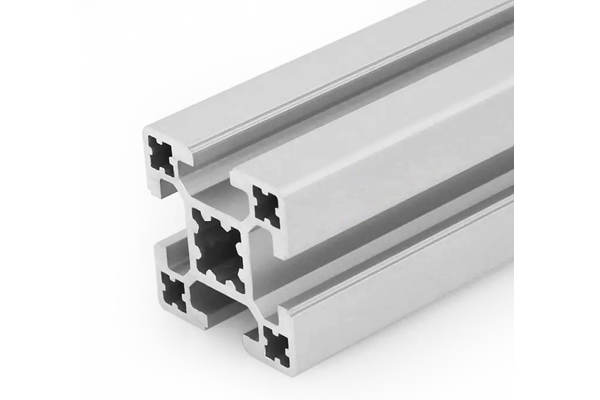
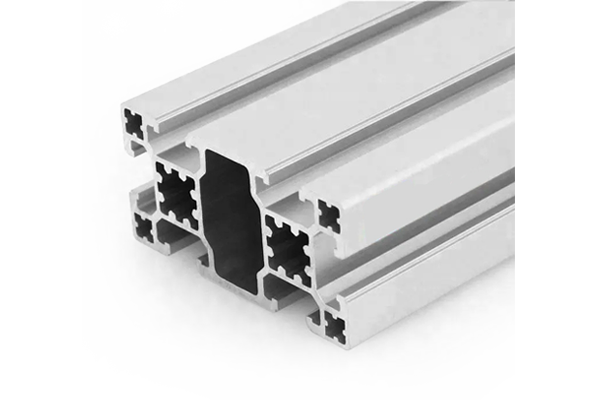
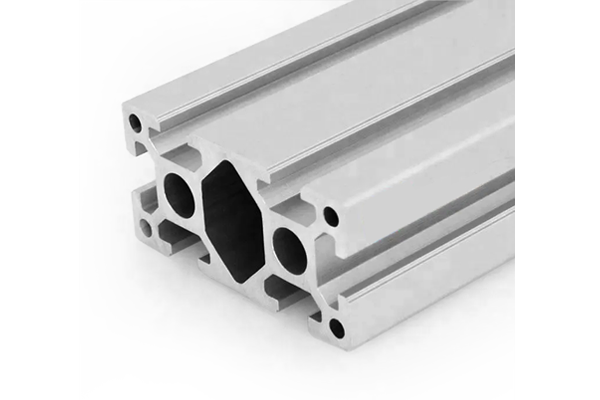
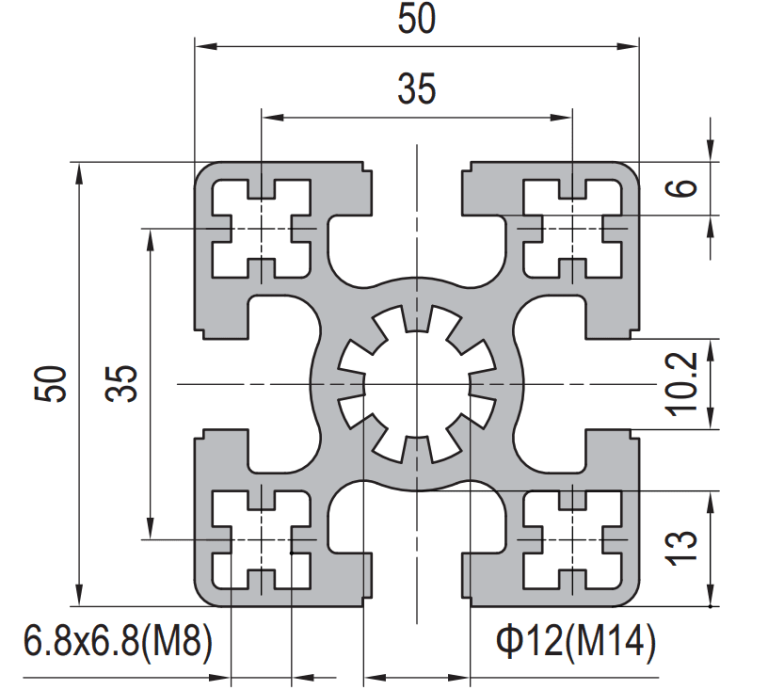
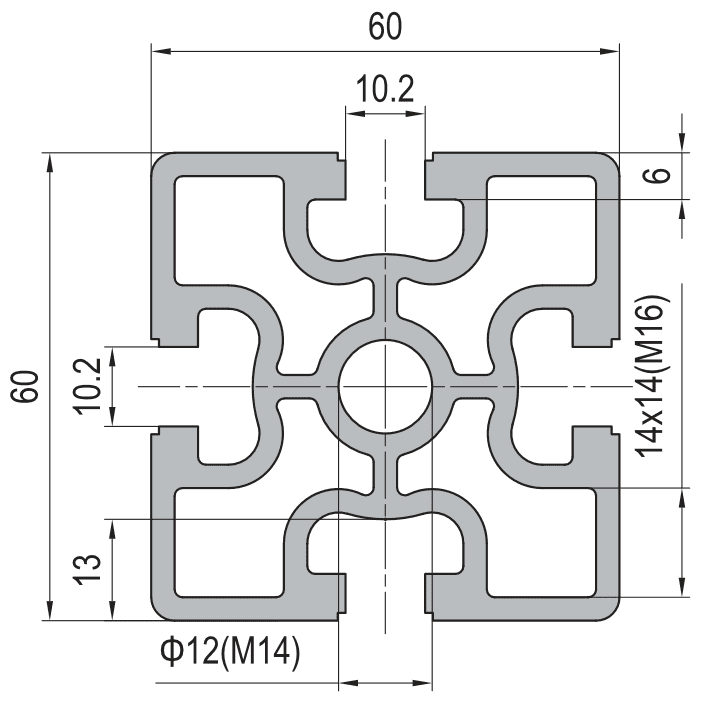
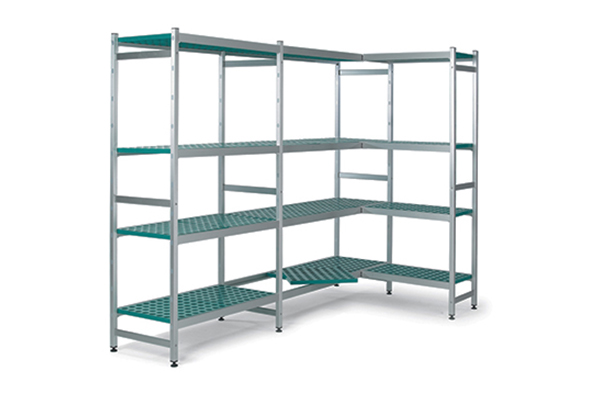
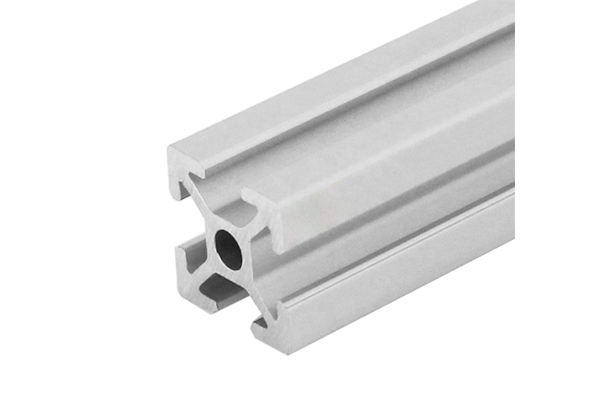
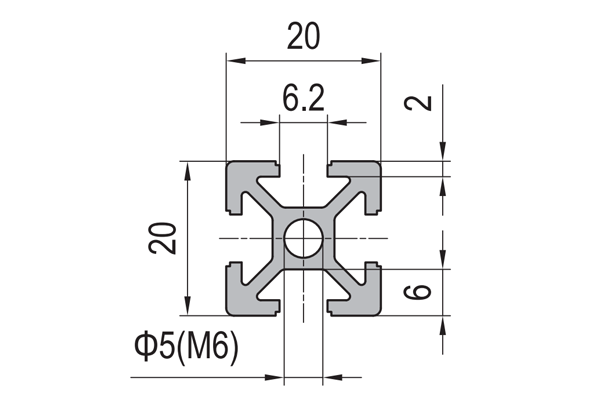
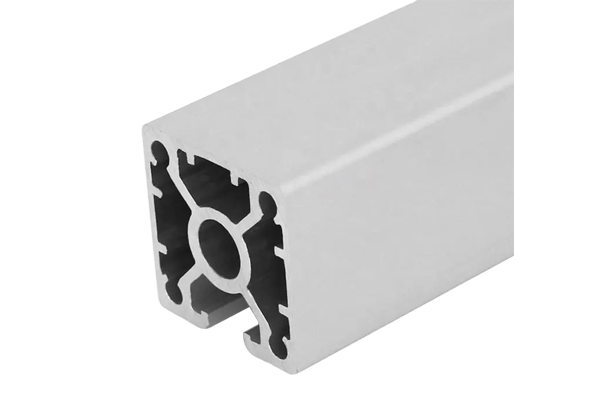
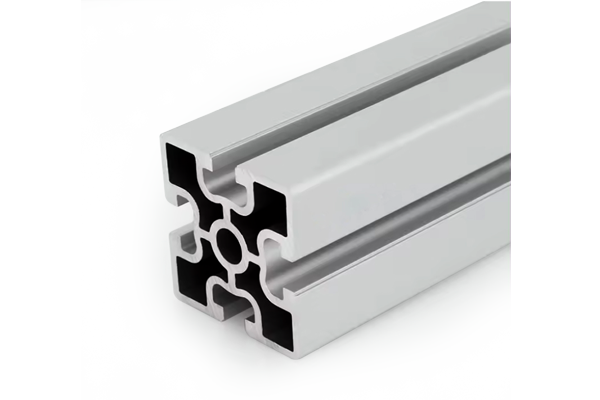
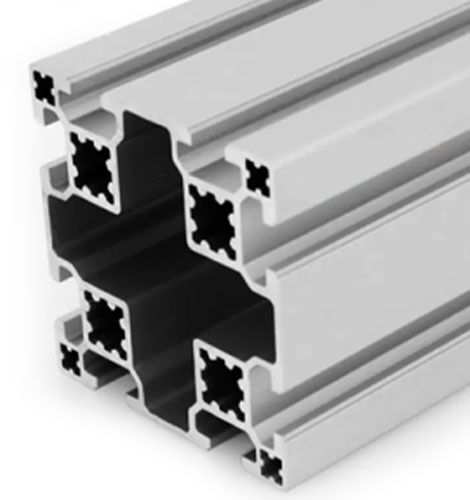
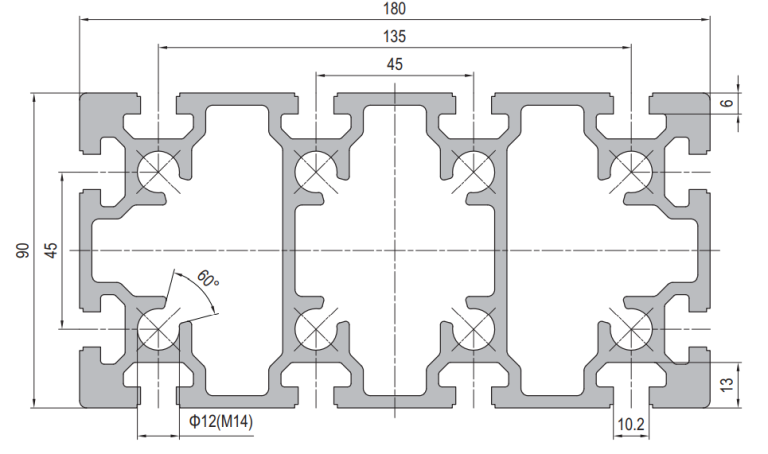
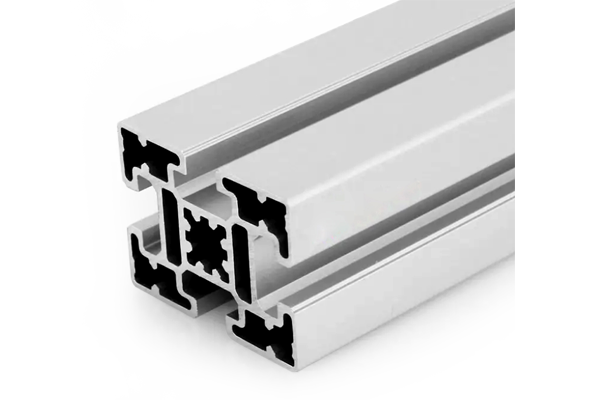
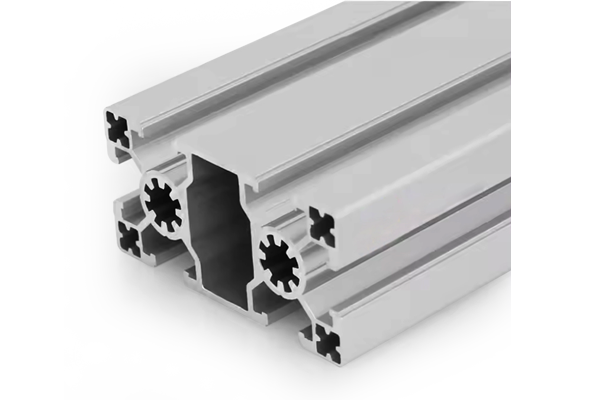
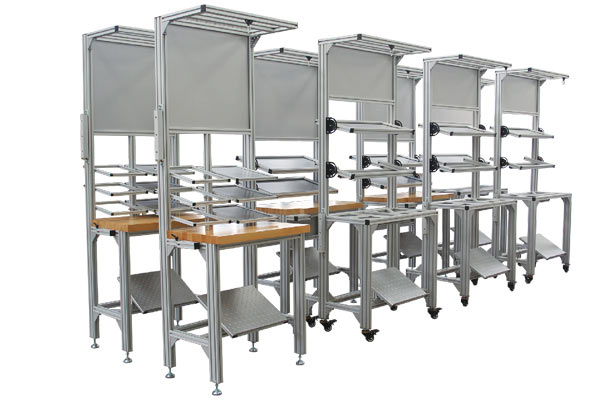
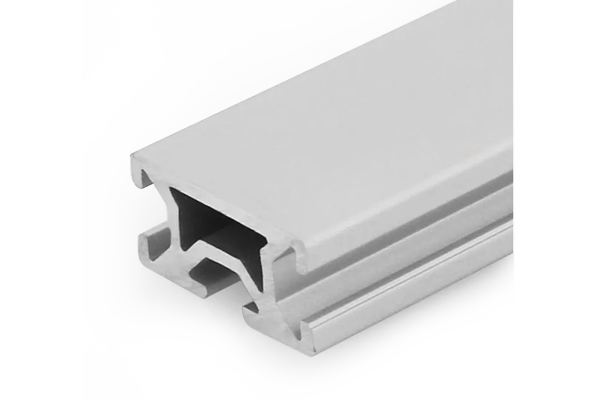
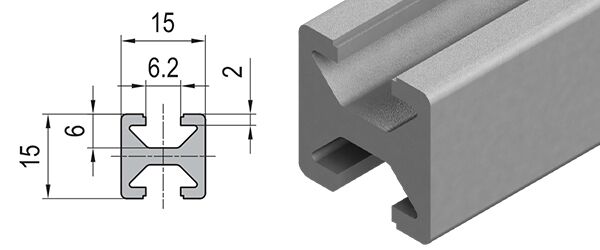
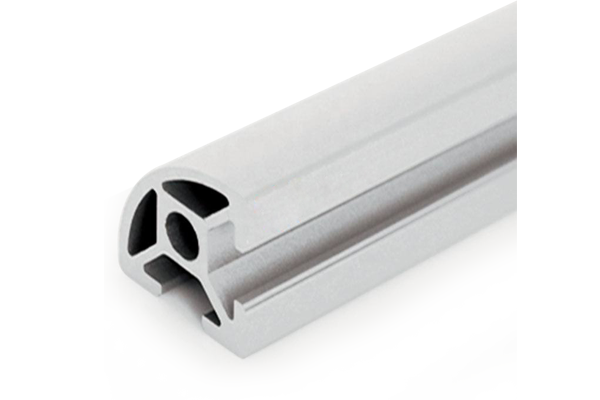
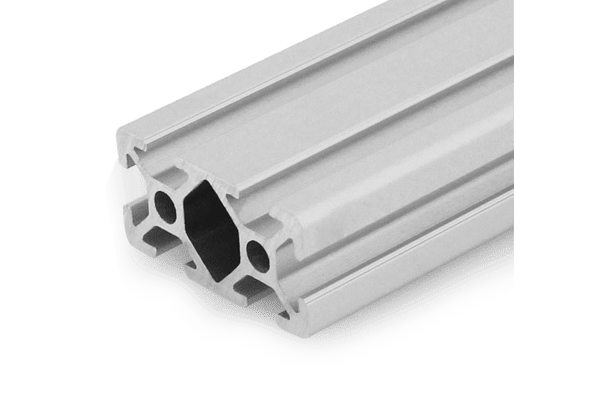
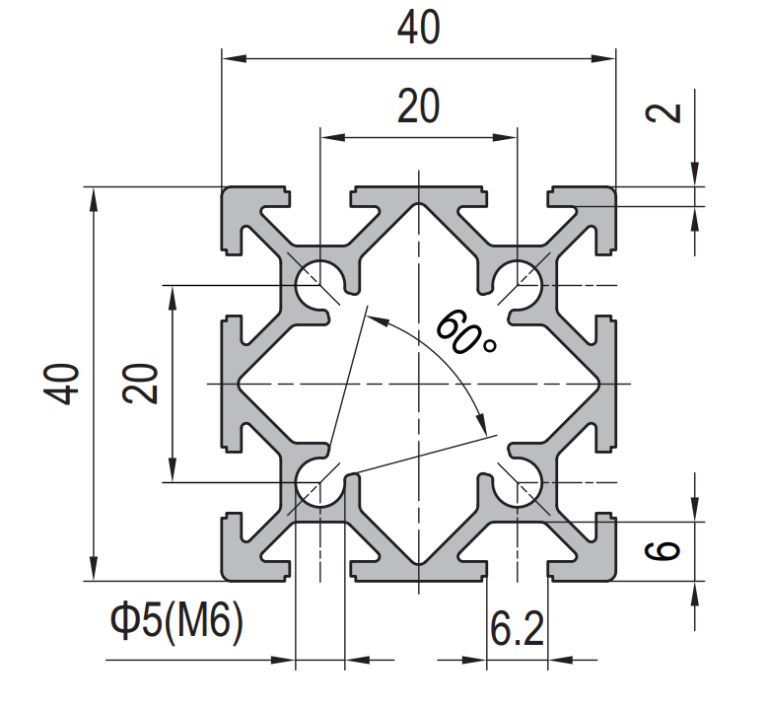
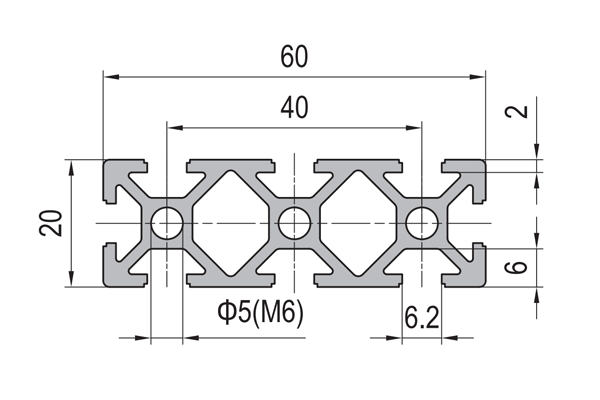
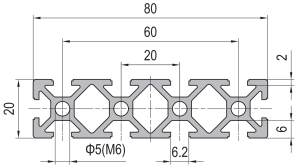
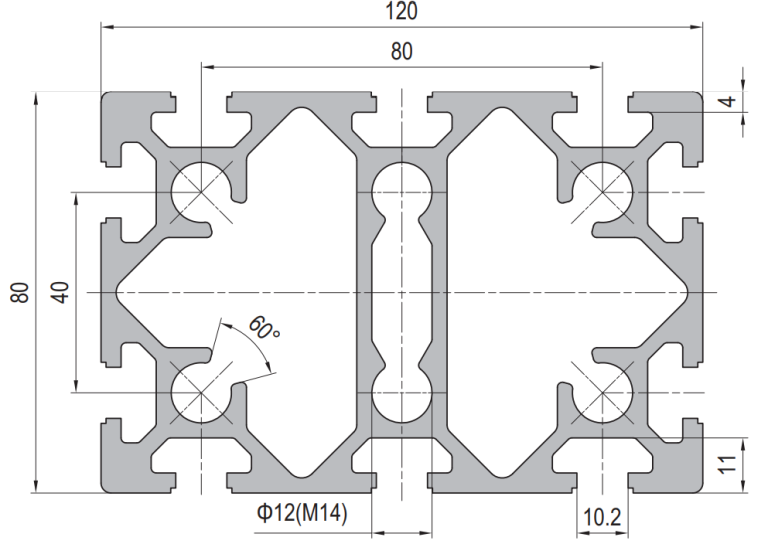
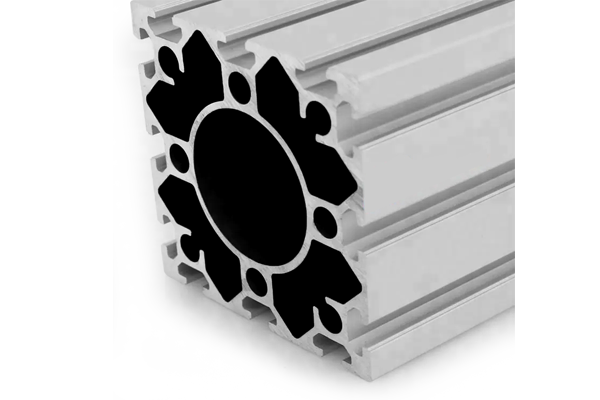
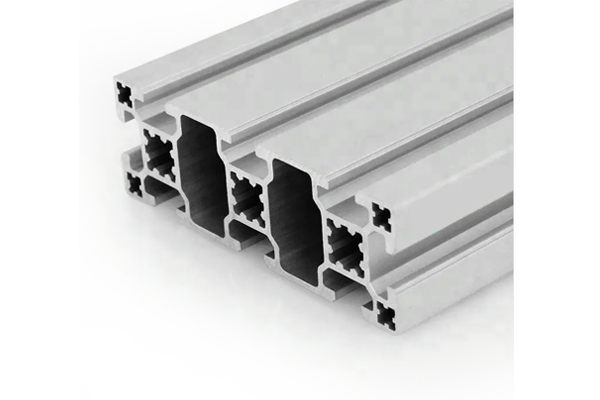
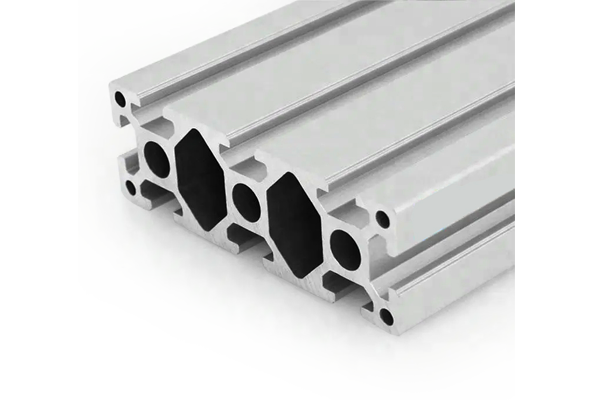
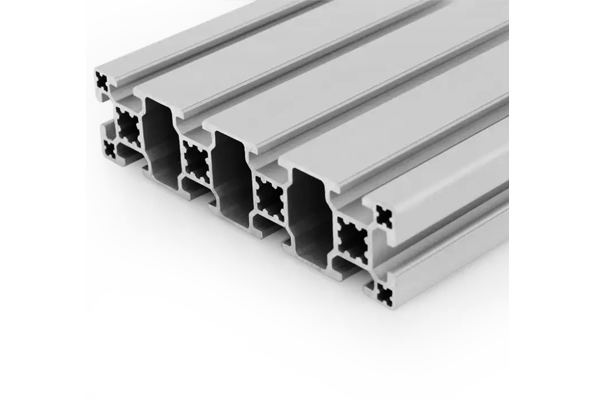
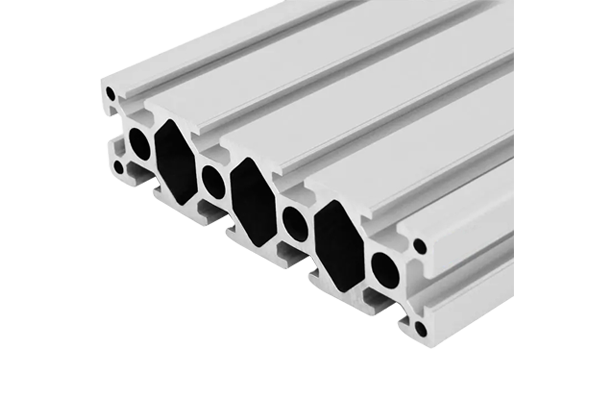
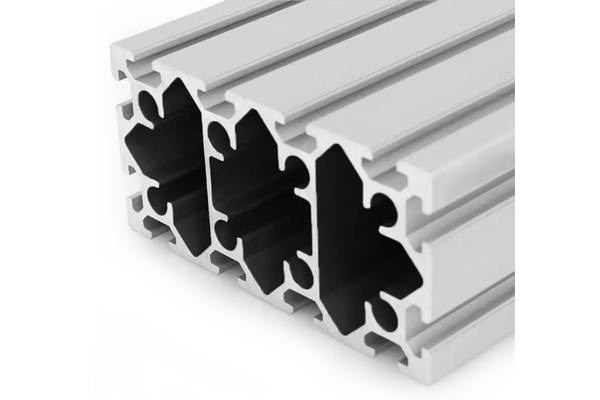
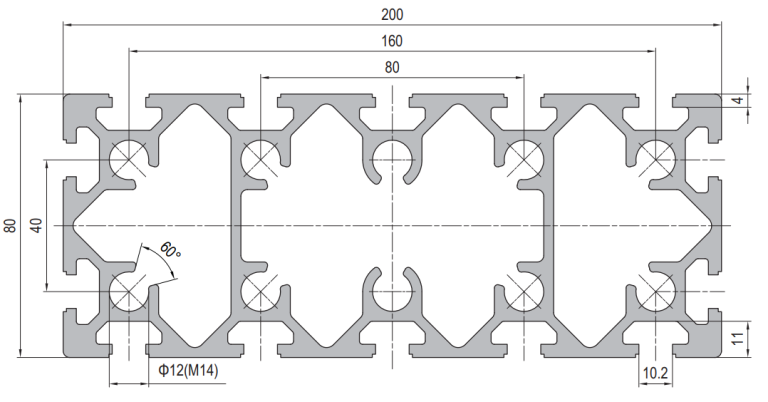
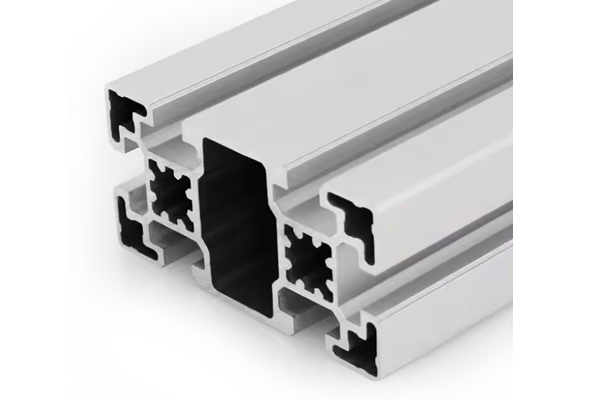
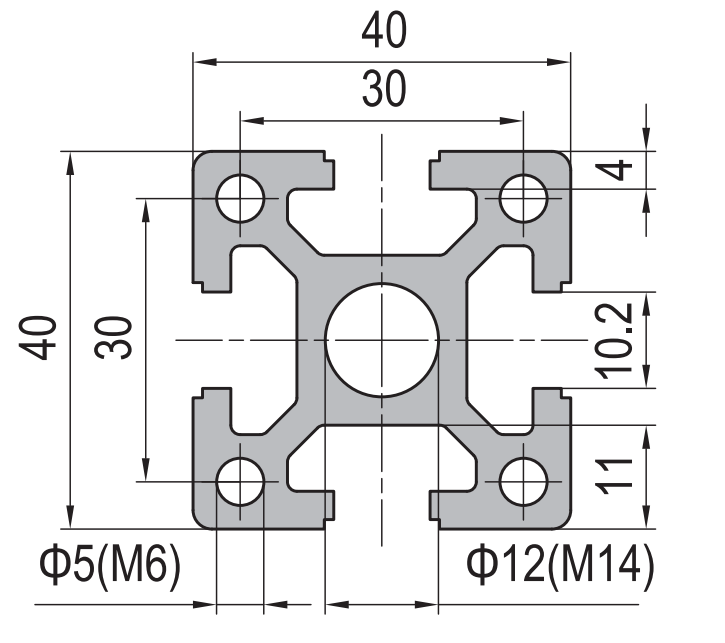
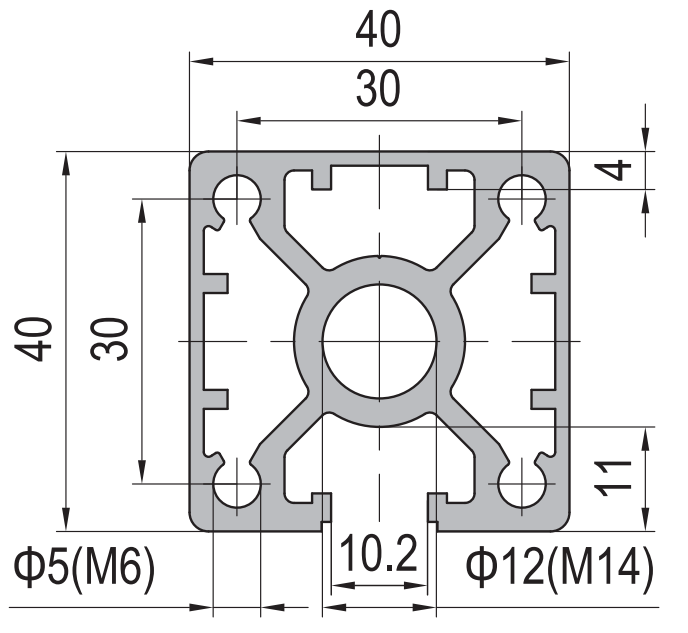
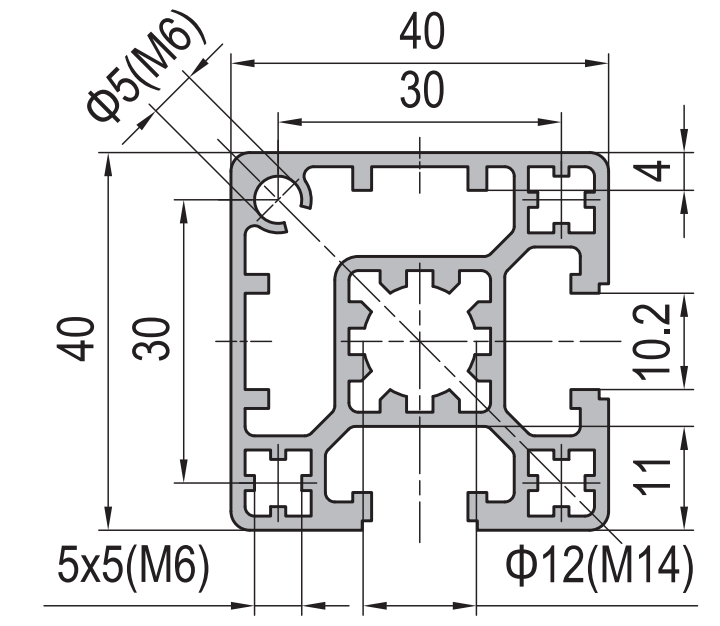
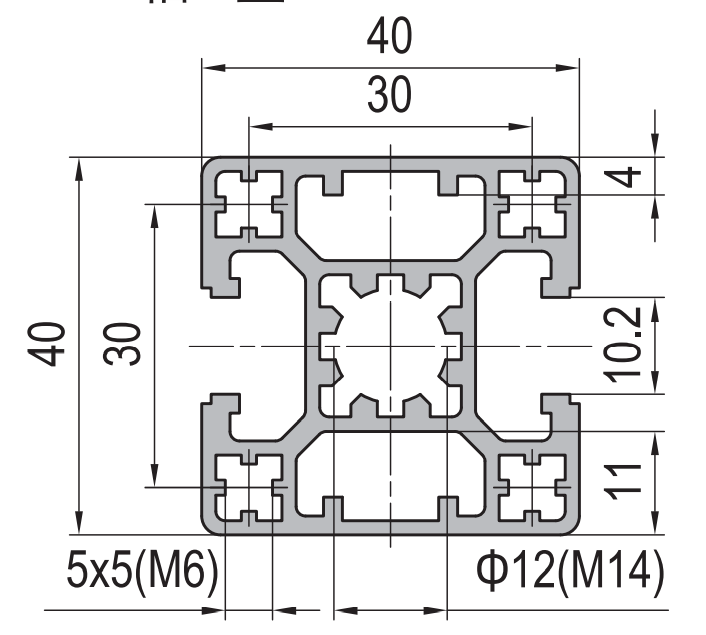
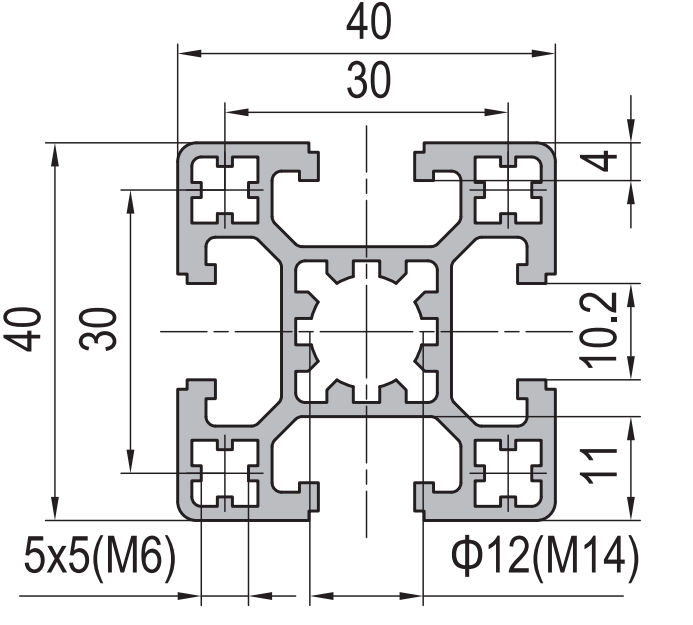
A strut profile is an aluminium extrusion with a continuous T-shaped slot along one or more faces. The slot accepts T-nuts, hammer nuts and profile connectors at any point along its length, so a frame can be assembled, adjusted and dismantled with a hex key instead of a welder. The three slot widths in common use are 6 mm, 8 mm and 10 mm, matched to the 20, 30 and 40 series of profiles.
Below: why slotted framing replaced welded steel, how the slot governs load, and how to choose a series without over-specifying the frame.
Why slotted profiles displaced welded steel framing
Welded steel frames are strong and cheap per kilogram, but they are permanent. Every change means cutting, re-welding, grinding and repainting, and a frame built in a workshop cannot easily be re-dimensioned on site. A slotted aluminium frame is a kit: the same profile can become a workbench today and a machine guard next quarter, and the only tool needed is a hex key.
Three properties do most of the work. The slot gives an infinite number of fixing positions, so a bracket never lands in the wrong place. The aluminium substrate does not rust, which matters in food, pharmaceutical and wash-down environments where painted steel frames fail at the weld seams. And the profile is a standard catalogue item, so a spare metre can be bought years later rather than re-fabricated.
The trade-off is stiffness. Aluminium has roughly one third the elastic modulus of steel, so an aluminium beam deflects about three times as much as a steel beam of the same section. For a frame that carries a static panel this is irrelevant; for a long unsupported span carrying a moving load it is the deciding factor, and it is discussed in more detail on aluminium versus steel machine frames.
Slot width, series and what each one carries
Slot width is the number buyers quote, because it decides which nuts, brackets and hinges will fit. The series number is the nominal module of the profile in millimetres.
| Series | Slot | Typical section range | Typical duty |
|---|
| 15 / 16 series | 5–6 mm | 15×15 to 30×60 | Light guards, sensor rails, small enclosures, lab rigs |
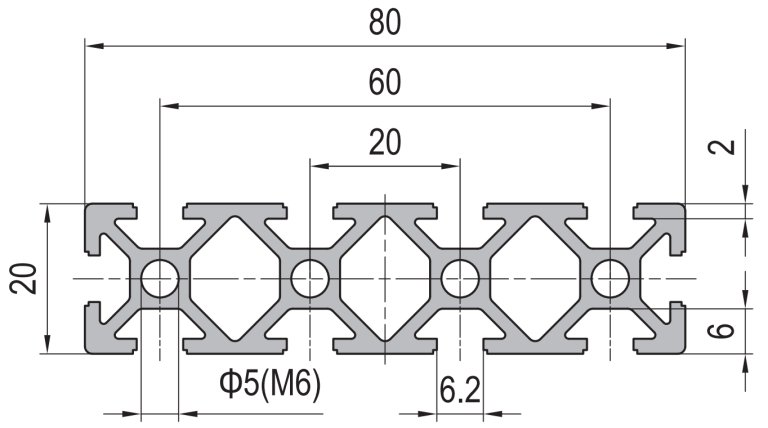
| 20 series | 6 mm | 20×20 to 40×80 | Precision jigs, small automation cells, display structures |
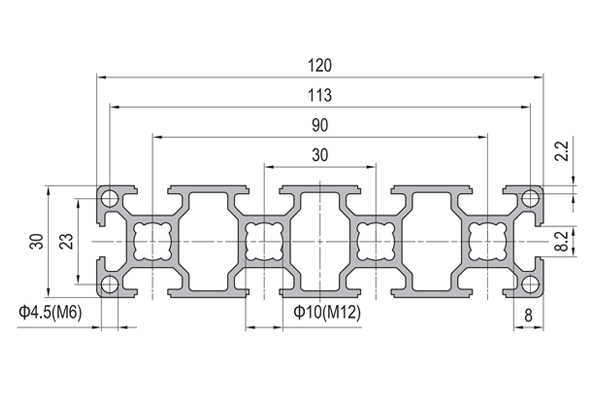
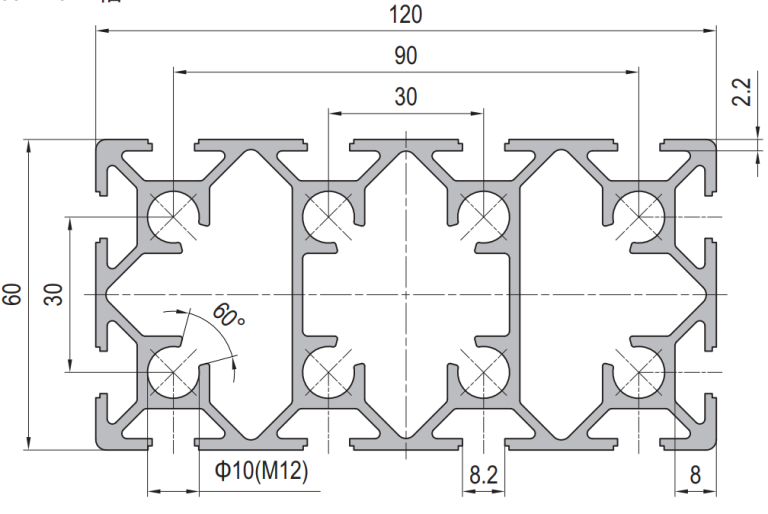
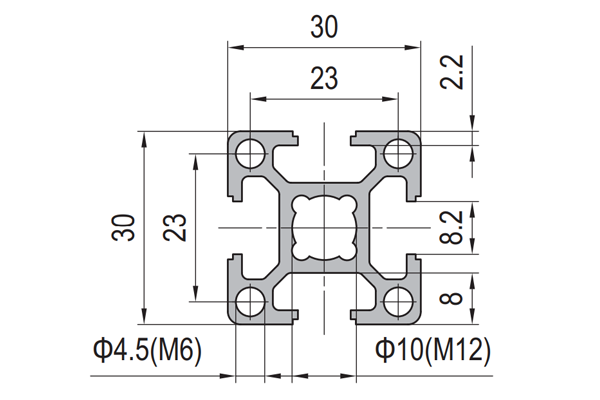
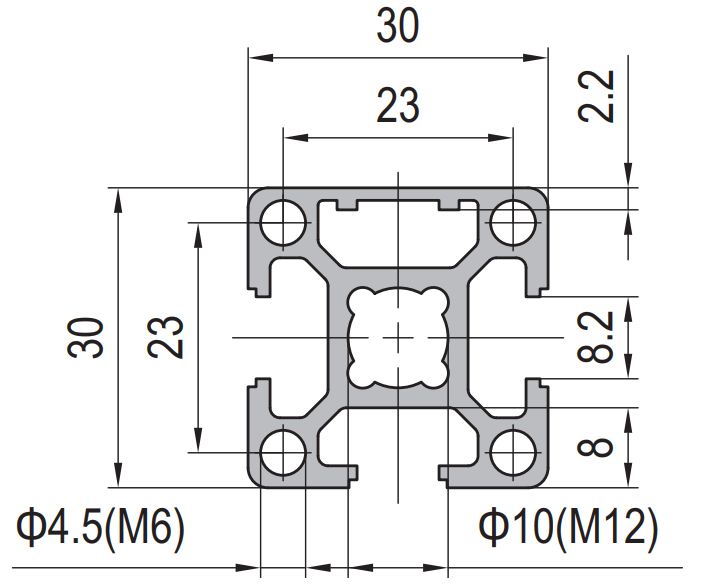
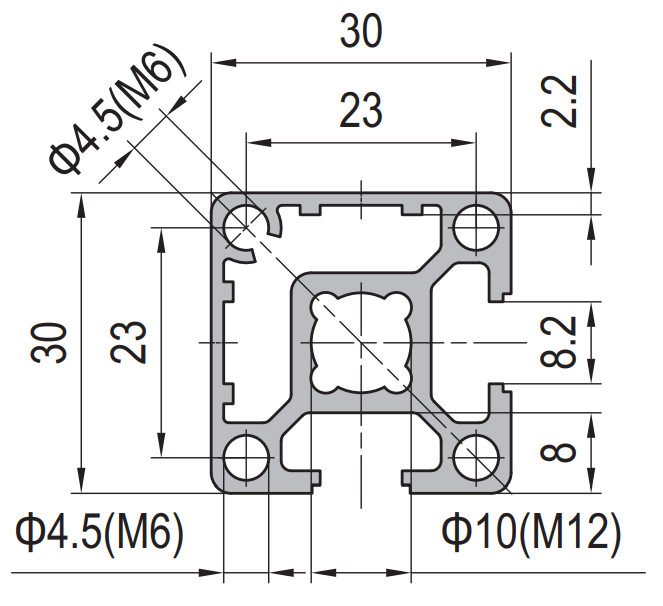
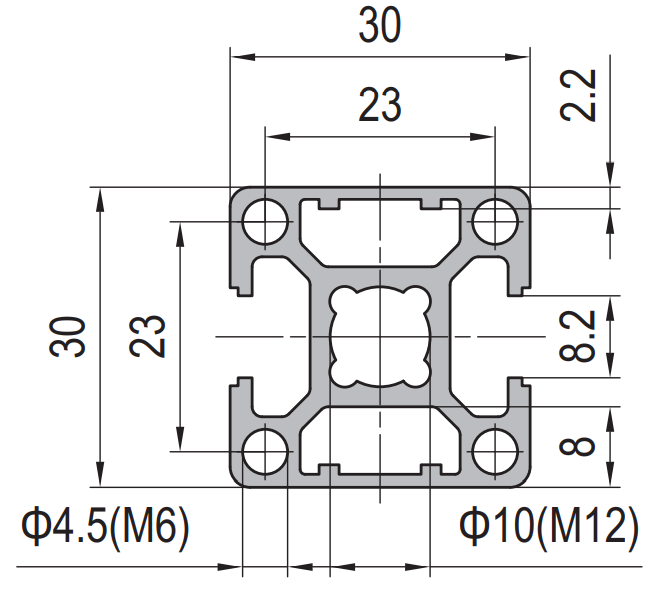
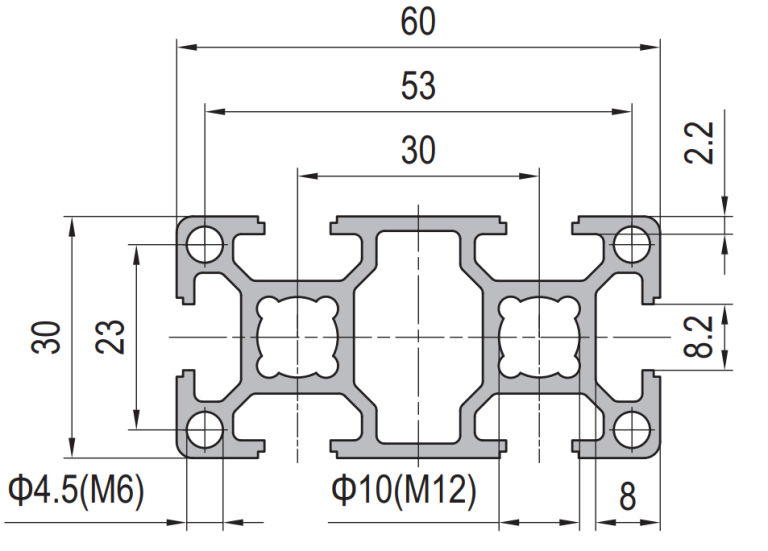
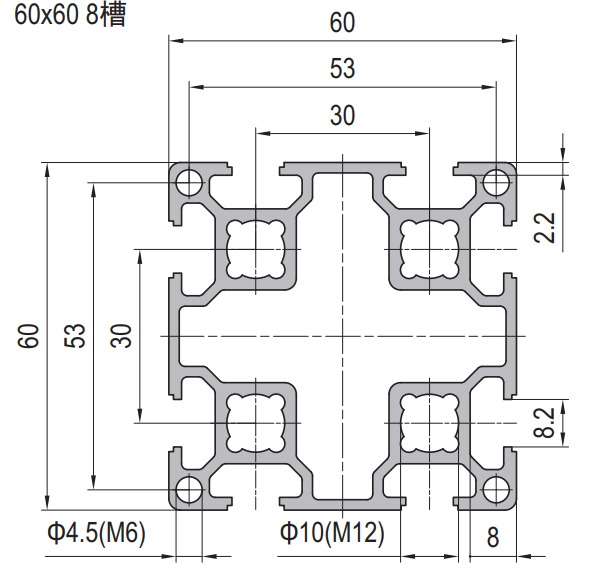
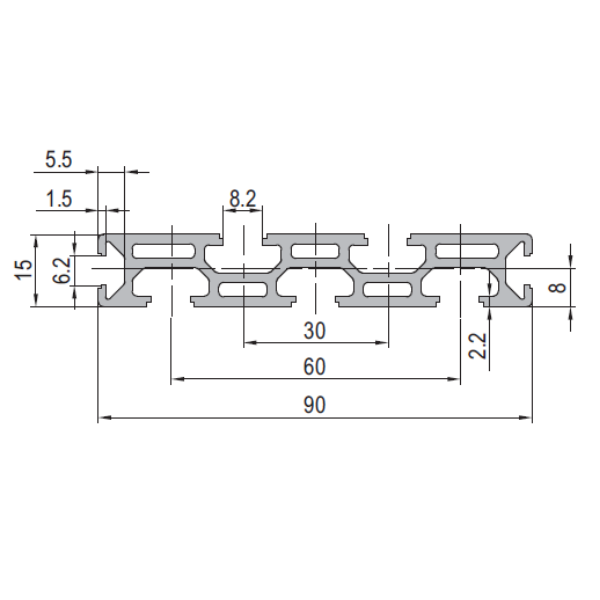
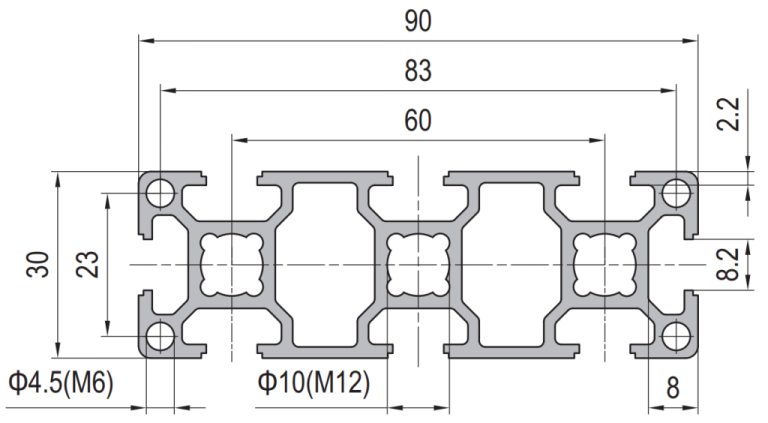
| 30 series | 8 mm | 30×30 to 60×120 | Machine frames, workbenches, conveyor guarding |
| 40 series | 10 mm | 40×40 to 120×120 | Heavy machine bases, robot cells, load-bearing platforms |
| 45 / 50 / 60 series | 10 mm | 45×45 to 120×240 | Very large spans, gantries, structural platforms |
Mixing series in one frame is possible but should be deliberate. A 30 series profile and a 40 series profile share neither the slot width nor the bolt centres, so the joint between them needs an adaptor plate rather than a standard bracket. Where a frame has a light upper section and a heavy base, that adaptor is normally cheaper than upgrading the whole frame.
How the slot governs load capacity
Two limits decide what a strut frame can carry, and they are frequently confused.
The beam limit
The profile itself behaves like any beam: deflection scales with the cube of the span, so doubling an unsupported length multiplies deflection by eight. That is why a 40×40 profile that feels rigid at 600 mm can look springy at 1,200 mm. The practical fix is almost never a bigger profile — it is a shorter span, a diagonal brace, or a second support. Section properties for each size are available on request, and the 40 series and 30 series pages discuss the sizes in detail.
The joint limit
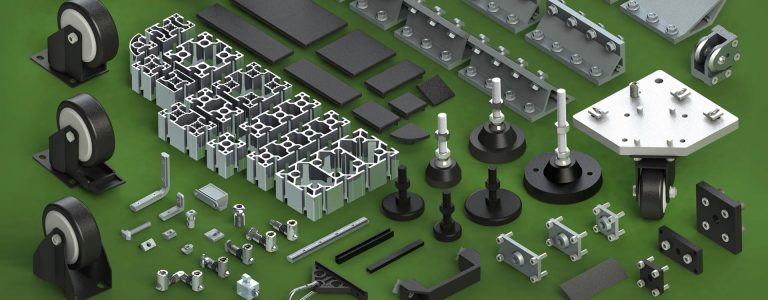
Frames fail at connections far more often than in the middle of a profile. A single anchor connector in a 30 series corner will slip or crush the slot lip long before the profile yields. The usual remedies are to distribute the load over more connectors, to use a joining plate in addition to a corner bracket, or to switch to a heavier series at the joint only. The whole accessory family is described under connecting elements.
Practical point: if you are unsure, over-specify the joints and under-specify the profile. Adding a second bracket costs a few cents; changing every profile in the frame costs the whole order.
Cutting, machining and tolerance
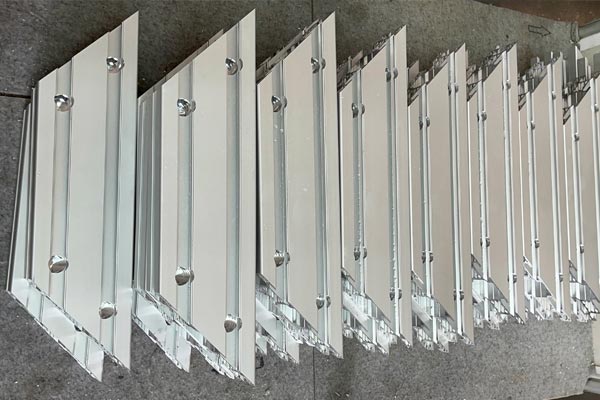
Slotted profiles are supplied either as random mill lengths or cut to a cut list. Squareness matters more than absolute length: a frame is only as square as its cuts, and a 0.5 mm error over a 1,000 mm member shows up as a visible gap at the corner. Standard practice is to cut to ±0.3 mm with the ends square to within 0.2 mm, deburred and, where the end face is visible, lightly chamfered.
Dimensional inspection is normally carried out against EN 755-9 or the equivalent national standard, with the customer drawing taking precedence wherever it is tighter. Where a frame is supplied as a kit, we mark each member to the cut list so it can be assembled without re-measuring.
Finishing options
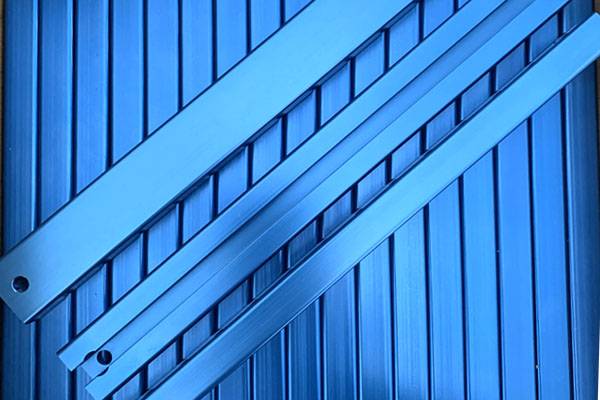
Satin anodised is the default because it survives handling and cleaning, and because the finish is integral to the metal rather than a coating that can be chipped off at a slot edge. Clear, black and bronze are held as standard shades; the grades and the dimensional effect of anodising are described on the anodised aluminium profiles page. Powder coating is used mainly where a corporate colour has to be matched, and mill finish is occasionally specified where the frame will be painted on site.
Where slotted profiles are used
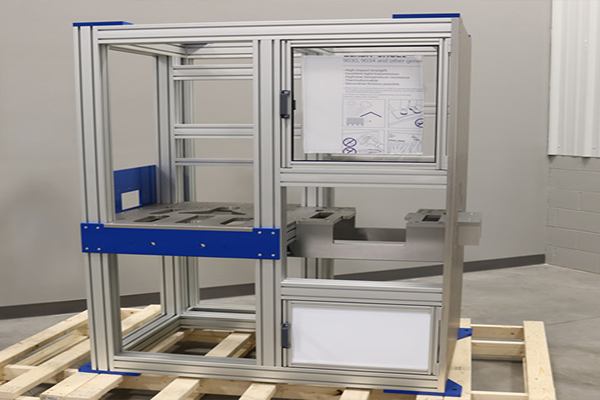
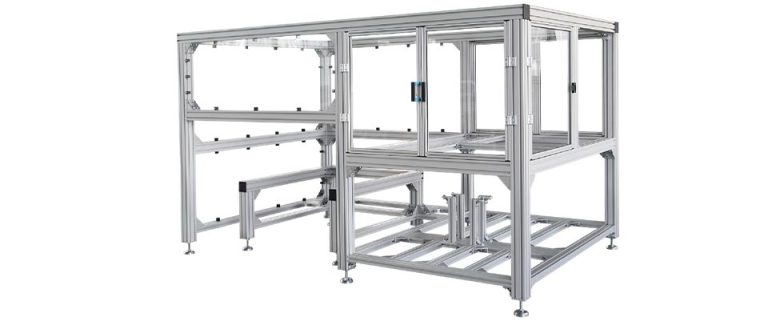
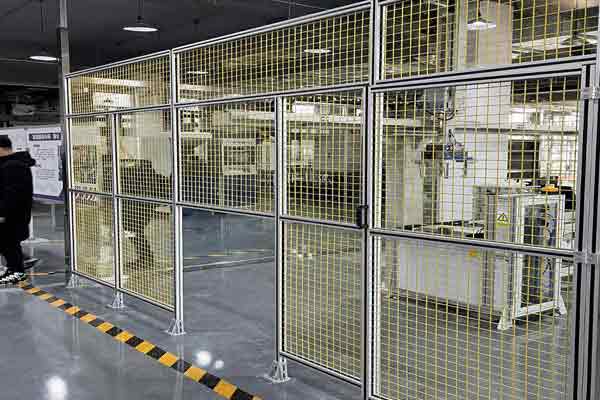
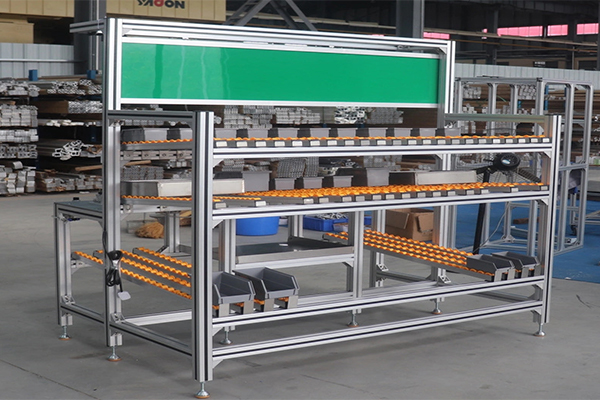
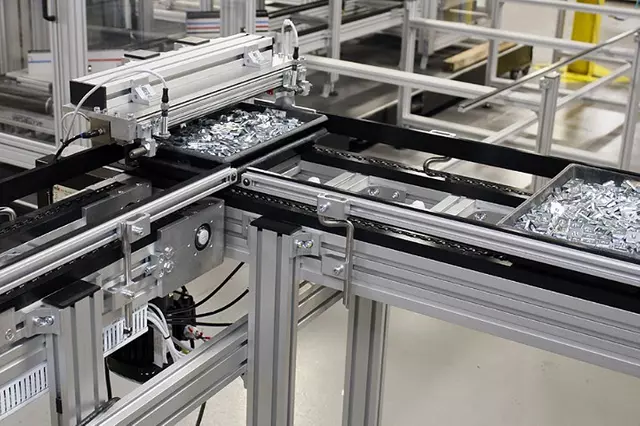
Machine frames and basesThe frame carries the machine, the guarding and the cable route in one structure, and can be re-dimensioned when the process changes.
Workbenches and assembly stationsBench tops, lighting arms, tool rails and ESD earthing all mount in the same slot system.
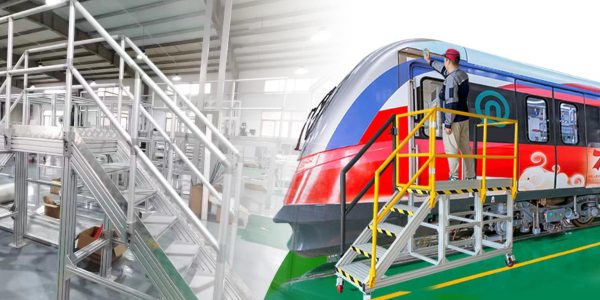
Stairways, platforms and access structuresHandrails, kick plates and walking surfaces are built from the same family; see stairway and platform systems.
Laboratory and test rigsReconfigurable structures where the layout changes between projects and nothing can be welded.
Retail and exhibition buildsReusable, transportable frames that are assembled on site without specialist labour.
Specifying a strut profile order
Four things decide the price and the lead time.
- Series and section — for example 30 series, 30×60, 8 mm slot. A catalogue code plus the slot width removes all ambiguity.
- Cut list or mill lengths — cut-to-length is normally cheaper than cutting on site once labour is counted, but it locks the dimensions in.
- Finish — mill, anodised or powder coated, with the film thickness stated if anodised.
- Machining — holes, counterbores, threads and end taps. Doing these at the factory avoids a second setup and keeps the frame square.
Send a cut list or a sketch with the overall envelope and we will confirm the series, the accessories and the commercial terms. Orders against standard sections are normally quoted within one working day. Related ranges: aluminium sections, connecting elements, fastening elements and CNC machining.